
By Pantea Rinnemaa
Not until recently did I truly understand what Hannah Arendt meant by the banality of evil. Yet I had not recognised how quietly, how efficiently, banality works—not only through bureaucrats and systems, but through fatigue, distance, and the slow erosion of outrage.

I must confess that I, too, became gradually numbed by it.
What frightened me was not only the persistence of injustice, but my own diminishing capacity to respond. I felt that I lacked strategies, channels, and perhaps even the mandate not merely to react—but to act, to interrupt the normalisation of cruelty.
It began, for me, with Russia’s invasion of Ukraine. It intensified with the women-led uprising in Iran—the movement known in Farsi as Zan, Zendegi, Azadi (Woman, Life, Freedom). That uprising unfolded in parallel with my years as a PhD student. While I was writing about ethics, power, and responsibility, young women were cutting their hair in the streets. While I was refining arguments, they were risking their lives.
Some days I imagined buying a one-way ticket to Tehran—to stand with my people, to cut my already short hair, to scream Zan, Zendegi, Azadi until my voice dissolved into the chorus. And then I would remember my dissertation, the years of labour invested in it, the fragile promise of a future that depended on its completion. Responsibility pulled me in two directions: toward the street and toward the desk. I chose the desk.
“Zan, Zendegi, Azadi”
Then came reports of starving children in Gaza. Once again, I felt myself retreating. I heard the familiar sentence escape my own mouth: “I have stopped listening to the news just to survive.” Survival became indistinguishable from disengagement. I told myself I lacked the authority to change global realities. I mistook powerlessness for innocence.
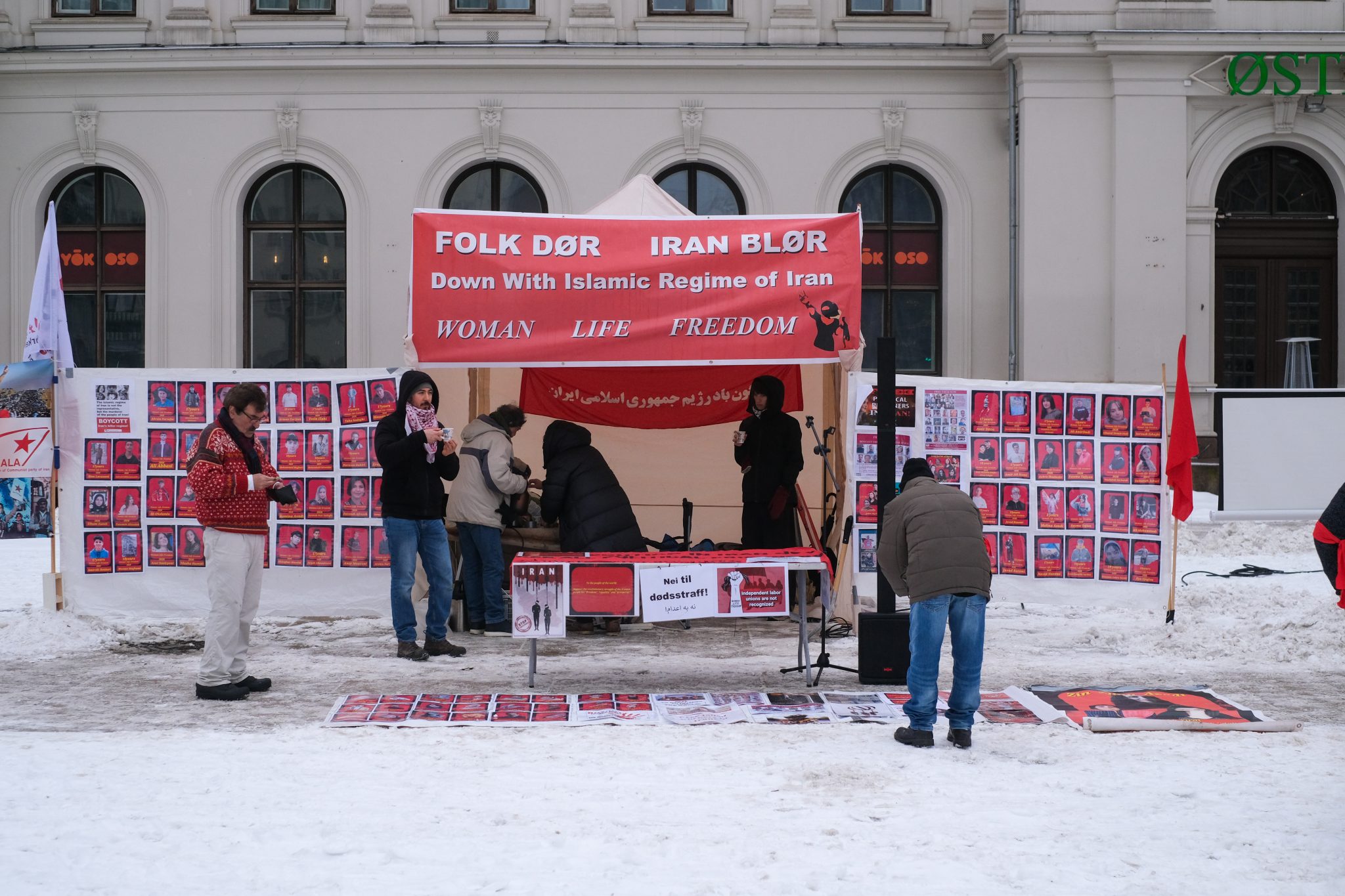
In late January, when many were preparing for the Persian New Year celebrations, news arrived of further massacres in Iran. Ordinary people—so many young people—stood unarmed, their hands raised, signalling, “I am not armed,” and were met with bullets. Their bravery was indescribable; the price they paid, irreversible.
It was then that I realised the banality of evil does not only describe perpetrators. It also describes spectators. It lives in the sigh, in the tear shed at a safe distance, in the whispered gratitude: “Thank God I am not there.” It thrives when journalists attribute silence to technicalities—“The internet is down; it is difficult to know”—and when public voices grow cautious, as though fear of a regime could travel across borders and settle even in democracies.
“Let’s make Iran free again!”
I attended protests in Gothenburg. I searched for cameras, for reporters willing to amplify the voices of the diaspora. Often, there were none. Activists were not active; politicians hesitated. Silence became ambient.
And yet, the Iranian diaspora has repeatedly demonstrated that distance need not entail indifference. They have insisted on being the voice of the silenced. I often wonder what sustains their energy and courage, especially as they carry collective trauma into societies that do not always recognise it. I have experienced, personally, how attention shifts elsewhere—toward other geopolitical dramas, other headlines—while those who died for freedom fade from conversation because they were not someone’s colleague, neighbour, or friend.
Arendt warned us that evil can become ordinary when it is routinised, administratively processed, and intellectually abstracted. But perhaps there is another banality we must resist: the banality of helplessness.
So, I ask: Are there others, like me, who feel infected by this quiet normalisation? And if so, is there a vaccine?
Perhaps the antidote is not a sudden heroism but a disciplined refusal—to refuse indifference, to refuse the comfort of distance, to refuse the idea that thought absolves us from action. If the banality of evil rests on unthinking compliance, then its counterforce may lie in what Arendt called the life of the mind: a thinking that does not withdraw from the world but returns to it, insistently, demanding that we answer for our position within it.
To think, then, is not enough. But neither is it nothing.
Between the street and the desk, between despair and responsibility, there must be a space where the search for truth and solidarity meet—where the written word and the demonstration are not enemies, but different forms of refusing to let injustice become ordinary.
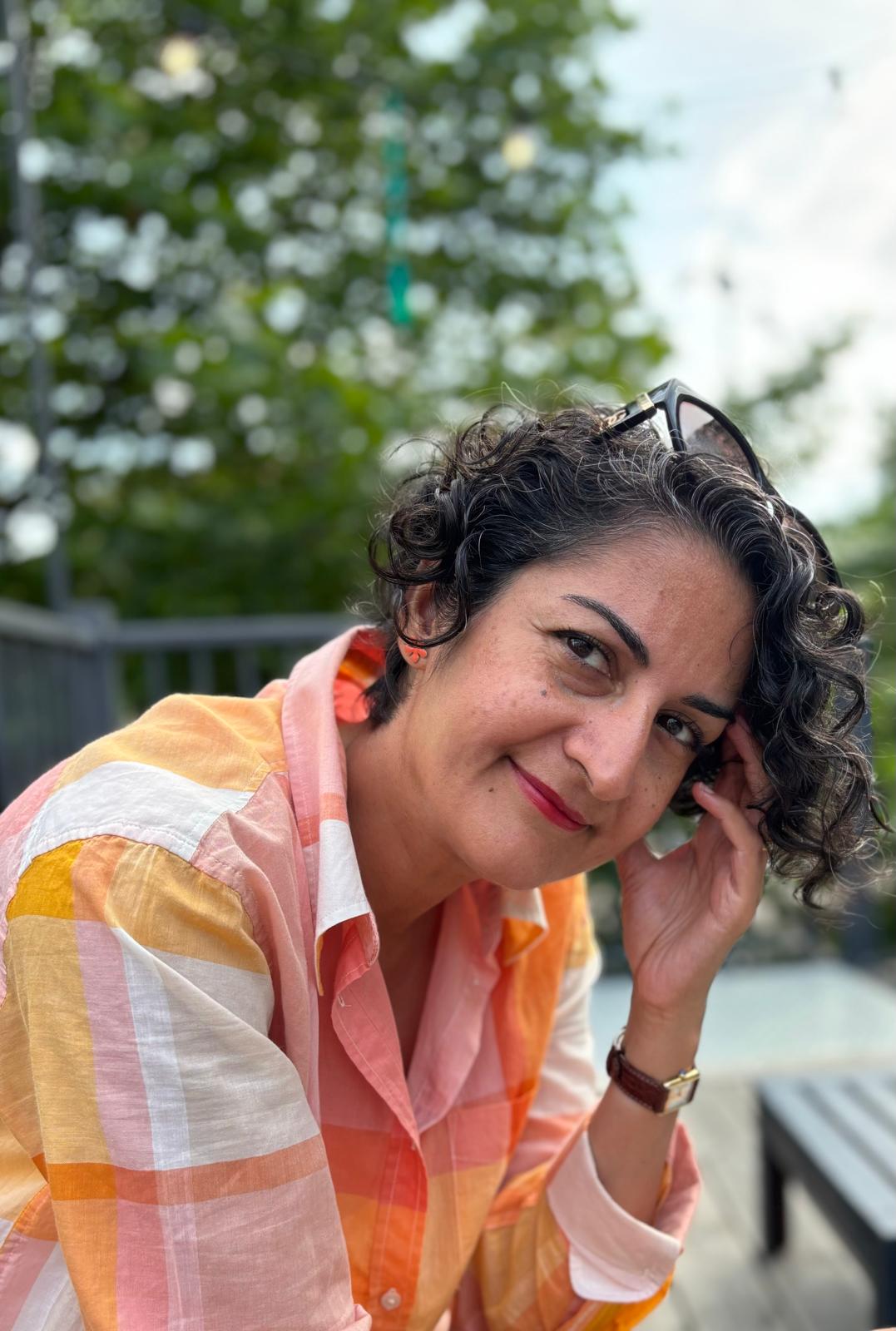
Pantea Rinnemaa holds a PhD in subject didactics and is interested in social issues,
particularly those relating to people’s living conditions. In her writing, she seeks to combine the rigour of research with a personal touch.
Ledare #12 – Kampen mot tiden för att fånga samtiden
Pantea Rinnemaa: Hjälplöshetens banalitet? – att tolka Hannah Arendt genom iransk diaspora
Sara Shamloo Ekblad: Sex frågor om poesi till Sam Carlquist
Sam Carlquist: Nyskrivet – Sommarhus (dikt)
Annika Eriksdotter, Carola Nordbäck och Eva Sharp: Samtidskonst i kyrkorum: vidgade sinnen och existentiella djup
Andreas Engström: Kristna klassiska verk i kyrkorummet, Del 2: Johann Sebastian Bachs Matteus- och Johannespassionen
Petra Werner: Lasse Holmqvist och rapsoderna – berättelsen om muntlig tradition i tidig television
Andreas Engström: Vem var kvinnan på vinden i Jane Eyre? – Wide Sargasso Sea, ett postkolonialt portalverk
Andreas Engström: Varför inte låta sagorna vara sagor? – Dvořáks opera Rusalka på Kungliga operan
Sara Shamloo Ekblad: Nya grepp för en ny publik – intervju med Emil Nilsson i Stockholms konserthus nystartade ungdomsråd
Sara Shamloo Ekblad: Underbart är kort eller femte gången gillt: Intervju med Finn Hellman, vinnare av Short Dox Radiodokumentär 2026
Eli Getreu: Dagbok – del VI
Soly Erlandsson: Istället för en neuropsykiatrisk etikett – erkänna det generationsöverskridande traumat!
Simon Carlfjord: Längtans Arkitektur – en kritik av Nobel Center
Sara Shamloo Ekblad: ”Estniska är som balsam för själen” – Wendela Forneman Jobsson om estnisk körmusik och den sjungande revolutionen
Sonia Engström: Musikens bildspråk – Mikalojus Konstantinas Čiurlionis, en litauisk föregångare
Simon Carlfjord: Den Andres Intelligens – ett nytt sätt att förstå AI
Sara Shamloo Ekblad: Sex frågor om poesi till Desidera Jungelin
Desideria Jungelin: Nyskrivet – 2 dikter




13 svar på ”The banality of helplessness? – Reading Hannah Arendt through the Iranian diaspora”