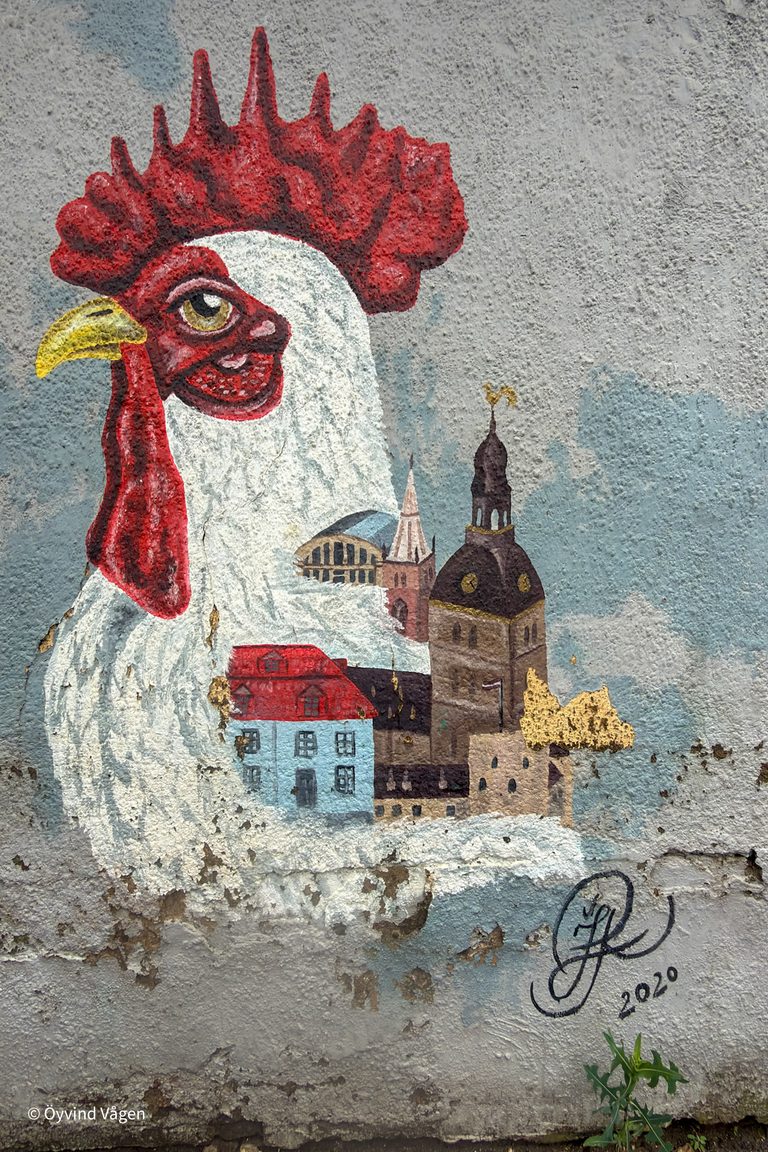
It’s Written on the Wall I – Street Art the Riga Edition

This photo gallery from the Streets of Riga is the first instalment in a series of four focusing on street art and wall scribblings around the world; the next three will be: Rome, Berlin and Athens. As part of this project, we are embracing the vibrant energy of street art in general, and wall slogans as a way to amplify unheard voices. This concept is akin to what we call ’Written on the Wall’.

Av Øyvind Vågen

From the secret symbols of Christians in the Catacombs of Rome, through Mexican murals and the wall newspapers of the Chinese Cultural Revolution, to today’s mix of abandoned and provocative slogans and aphorisms, wall slogans have travelled back and forth from the voice of power to the megaphones of the poor. We explore this in a photo essay series that depicts and reflects on graffiti from around the world. This, too, is true to the magazine’s name and purpose: a kind of critical dialogue conducted through marginal notes, graffiti on the fringes of existence, if you will. When we started this cultural journal back in 2018, one of the core ideas was to revisit and highlight the concept of writing – or, as it more often is, scribbling – on the wall as a form of a layman’s wall newspaper, but the idea really did not materialise, despite the occasional blogpost, until now.

Fortsätt läsa ”It’s Written on the Wall I – Street Art the Riga Edition”

House of Nisaba: New Stories of Painting 

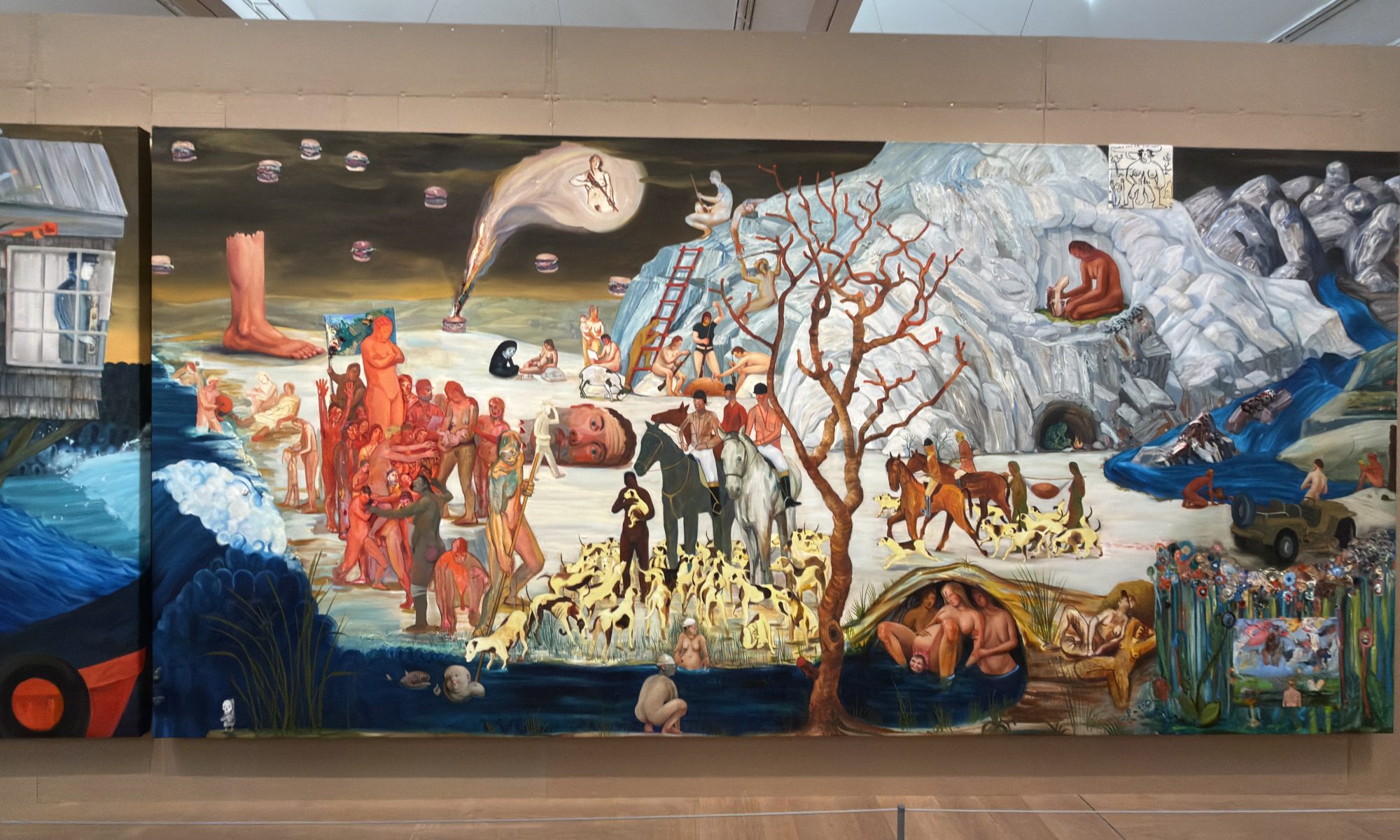
House of Nisaba: New Stories of Painting at Moderna Museet asks what figurative painting can still do in a fractured present. Our new art correspondent, Chiara Gelmini, follows the exhibition as a temporary house of images, where myth, memory, politics, bodies, and allegory become tools for thinking when linear narratives no longer suffice.

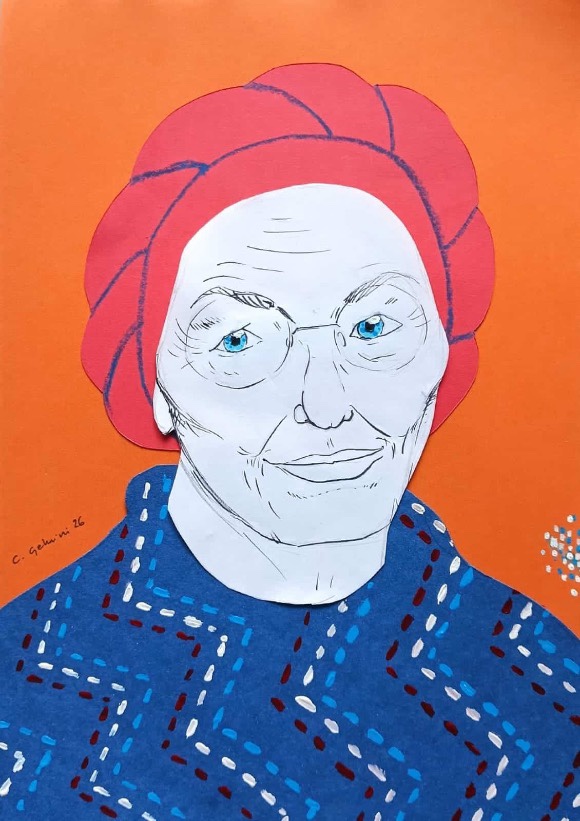
By Chiara Gelmini

How is painting doing today?

It is with this question that I enter House of Nisaba: New Stories of Painting. Curated by Hendrik Folkerts, currently Chief Curator of Programme at Kunsthaus Zürich, the exhibition is co-organised by Moderna Museet and Kunsthaus Zürich, where it will be presented in 2027. The project, therefore, takes the form of a passage: not only between two institutions, but also between different questions concerning painting, narrative and the capacity of images to produce knowledge in the present. 

Fortsätt läsa ”House of Nisaba: New Stories of Painting ”

Welcome to Art Basel 2026? Inside and Outside the Fair

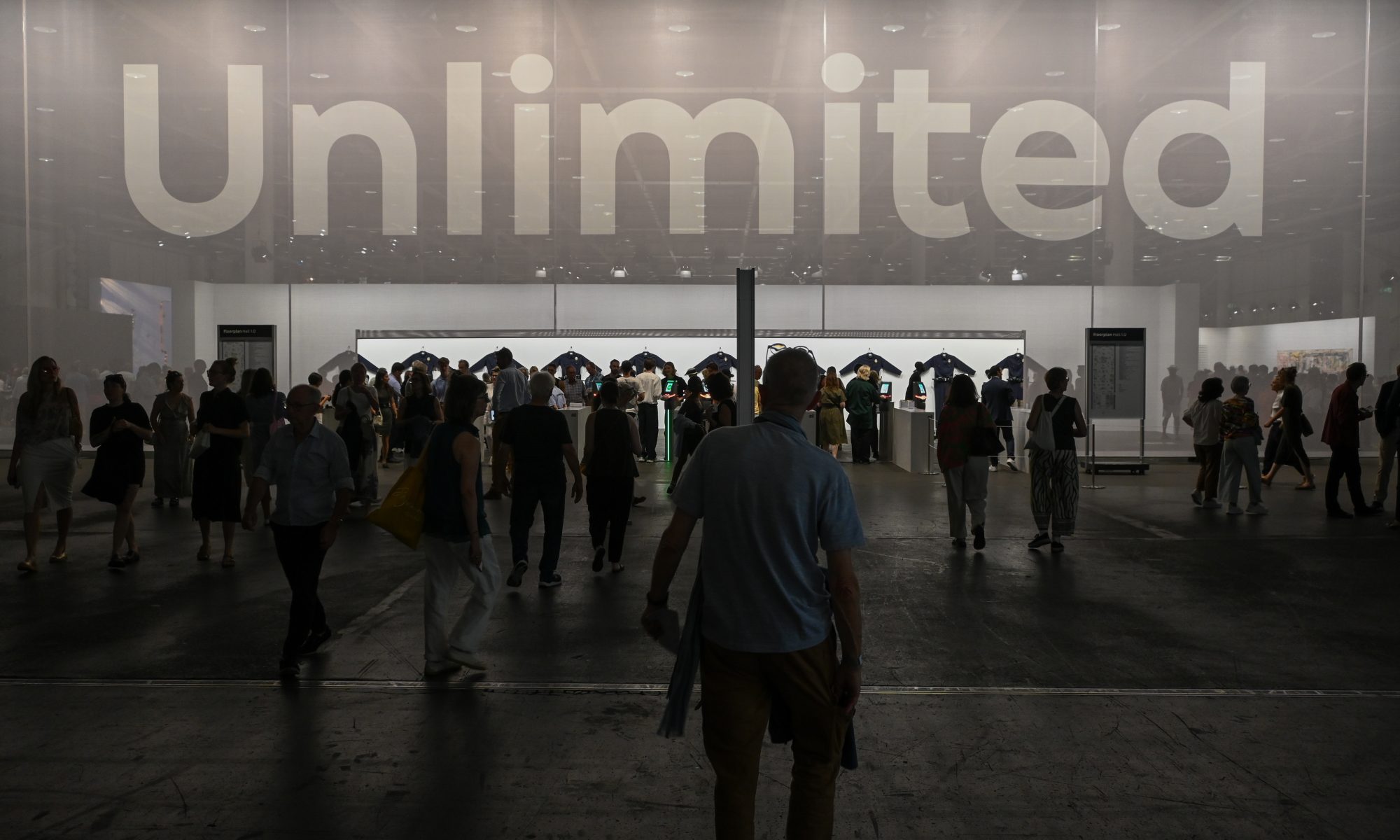
Art Basel gives the public rare physical proximity to the places where contemporary art is priced, ranked, and consecrated. The harder question is whether that proximity also becomes access.

By Chiara Gelmini

Seeing the market, encountering art, crossing the city

During its preview days (16-17 June) and public days (18-21 June), Art Basel 2026 attracted 90,000 visitors. In the halls of Messe Basel, 290 galleries from 43 countries and territories gathered alongside collectors, curators, museum directors, artists, and representatives of more than 270 international institutions. During the fair’s opening hours, Hauser & Wirth sold Pablo Picasso’s Le peintre et son modèle dans un paysage (1963), offered with an asking price of $35 million.

Read more of our English Content here and more of our Art Content here.

Fortsätt läsa ”Welcome to Art Basel 2026? Inside and Outside the Fair”

The banality of helplessness? – Reading Hannah Arendt through the Iranian diaspora

Blå och vit flagga med lejon

By Pantea Rinnemaa

Not until recently did I truly understand what Hannah Arendt meant by the banality of evil. Yet I had not recognised how quietly, how efficiently, banality works—not only through bureaucrats and systems, but through fatigue, distance, and the slow erosion of outrage.

Fortsätt läsa ”The banality of helplessness? – Reading Hannah Arendt through the Iranian diaspora”

Is it possible to move on after the Holocaust? A psychological perspective on the ongoing disaster in Gaza.

By Soly Erlandsson

Soly Erlandsson, Untitled, 1983. Chalk on watercolour canvas. Inspired by the author’s
Involvement in Amnesty. 

“Why can we never stop worrying about Nazism?” That question begins Birgitta Almgren’s highly readable book about Sweden and Nazi Germany: The Dream of North. Nazi infiltration 1933–1945 (Carlssons, 2005). Her question is justified and relevant to me, since Nazi Germany’s crimes against the Jews of Europe have never left me unmoved, despite the years that have passed. On my bookshelf are rows of books about the Second World War, about Hitler’s grandiose ideas of a thousand-year empire, about how people were considered inferior and did not belong to the Aryan race, were forcibly transferred to concentration and labour camps in Germany and occupied Austria, France and Poland. Despite reading detailed, expert and deeply shocking accounts of Nazi Germany, and the unforgivably cruel treatment of European Jews, I have never been able to fully understand how this could continue – in full view, in front of an open curtain – for so many years. 

Fortsätt läsa ”Is it possible to move on after the Holocaust? A psychological perspective on the ongoing disaster in Gaza.”

Ecosystems in crisis – Who takes responsibility for our future, and can the balance be restored?

How do our choices and political decisions affect the balance of nature? What does sustainable development mean in practice – and are we prepared to make the choices and sacrifices required to save our planet? Soly Erlandsson discusses our contemporary relationship to the environment, drawing on George Henrik von Wright’s eco-philosophy.

By Soly Erlandsson

Humans’ role in nature is pale and not at all prominent. Surely it is meant that we should, to some extent, merge with our origins? In ourselves, we are not strong. Therefore, we take our strength from the surrounding elements – a kind of human chlorophyll, which gives us colour and nourishment (Photo & text by the author of the article,, 1973).
Fortsätt läsa ”Ecosystems in crisis – Who takes responsibility for our future, and can the balance be restored?”

‘When The Last Letter Is Gone / The Last of The Demons Is Done’

Isac Bashevis Singer (circa 1980), photo: Gotfryd Bernard

I. B. Singer’s short story ‘The Last Demon’ appears on the surface to be exactly what it says it is: a (very) short story about a demon that is the last of his kind dealing with the quandary concerning what demons should do and why there even should be demons when ‘man himself is a demon.’ Much the same way as Adorno once deemed it, if not as often claimed but later rebuked or nuanced impossible, as ‘barbaric to write poetry after Auschwitz,’ to which Primo Levi chimed in and said, ‘After Auschwitz, it is no longer possible to write poetry except about Auschwitz.’

Fortsätt läsa ”‘When The Last Letter Is Gone / The Last of The Demons Is Done’”

It “May Be Pointless or Even Criminal,” But They “Still Operate on Infants,”

“Chronicle of a Single Day.” is a text from the volume Voices from the Warsaw Ghetto (written in the Warsaw Ghetto in August 1941 and here read in the English translation) whose reoccurring themes are hunger and confinement. The text in question is undoubtedly the most literary in this volume; it refers openly to Thomas Mann’s The Magic Mountain and nods to many other literary texts; the ramblings and wanderings of both the body and the mind of the protagonist make one think of James Joyce’s Ulysses, where the main protagonist Leopold Bloom is not starving, but all the same in Episode Four of the book obsessed with items of food, with kidneys and other intestinal, and carries them around with him; much in the same way as this text’s protagonist figuratively speaking carries with him, and during his walks confronts with, those who are already dead and those who are not yet dead (which seems, despite some alluding to former and present societal divides, like the mentioning of the ricksha-carried chair of the Judenrat, to be the only two categories of people still left); to the flesh that already is or soon shall become grass (Isaiah 40:6).

Fortsätt läsa ”It “May Be Pointless or Even Criminal,” But They “Still Operate on Infants,””

The Children Take their Revenge

Still depicting the two Kelink from ”Unzere Kinder”.

Already in one of the first scenes of the film Unzere Kinder (that follows after the newsreel prologue that depicts the harsh reality of Jews being mass-deported to the Auschwitz extinction camp and what happened to them and their belongings there), the children from the orphanage who belong to the minimal number of surviving Polish-Jewish children protest and confront the two from the exile in the Soviet Union returning, Kleinkünstler who essentially are playing themself and in a sketch perform a sentimentalized version of the wartime events (“because that is not how it was”), opens up the divide (in the context of the film) between the children who were forced to become survival artists (compare the quote from one of the boys, “It was my job to trick the German gendarmes”) and the returning artists who survived the war exiled deep into Soviet Russia.

Fortsätt läsa ”The Children Take their Revenge”

Morals and Mores of the Warsaw Ghetto

One of the milk cans used to hide documents. From the Ringelblum ”Oyneg Shabbos” Archive.

This article is about the declining morals and mores of the Jewish inhabitants in the wartime Warsaw Ghetto that was presumably written on 4th July 1942. It is derived from the “Street” section of Volume One of The Ringelblum Archive Underground Archive of the Warsaw Ghetto (Published by Żydowski Instytut Historyczny im. Emanuela Ringelbluma; Warsaw). The text is attributed to Stanisław Różycki, and its complete title in translation reads as follows: “4th July. Warsaw, ghetto. A study [of] ‘Ulica’ [The Street]. The appearance and the social life of the street in the ghetto” (hereafter referred to as the Morality of the Street). The original text is written in Polish and on the archive’s website, described as: ”handwritten, notebooks, ink, Polish, 150×197 mm, 31 sheets, 31 pages”. In the transcribed and translated (to English) form I am analyzing and quoting here [insert link to the full source text]), the text consists of around 8.800 words, including footnotes, spread over 19 A4 pages.

Fortsätt läsa ”Morals and Mores of the Warsaw Ghetto”

It is not even the beginning of the end. But it is, perhaps, the end of the beginning

THE YIDDISH POET AVROM SUZKEVER.

When one reads the poem “Grains of Wheat” by Avrom Sutzkever (written in the ghetto of Vilna and here read and analyzed in English translation, see here for the full text) and stumble upon the line “As if protecting a baby -,/I run with the Yiddish word,” is it hard not to start associating to the poet’s firstborn child that was slaughtered in the ghetto the day after he was born; the child was just alive so long it took for the mother of the poet to forget that her grandchild was doomed to be killed from the moment he was born, the same way as Herod once “killed all the male children in Bethlehem and in all that region that were two years old or under” (Matthew 2:16). Maybe it is during this short time, during this split second of dissonance, that the poem is written, that the poem takes place. The poet may be unable to save his Jewish child but is now trying to save the Yiddish word (and all that is written with it and within it) with his written words. 

Fortsätt läsa ”It is not even the beginning of the end. But it is, perhaps, the end of the beginning”

Speed, power and exercises of meditation – the youngest generation of composers at the Kalv composer academy

By Mihaela Rusu

Sometimes life can be surprising. A Facebook post brought me here, to Sweden, in the middle of nature, to express my admiration for contemporary music and Swedish culture, together with other musicologists, composers, and performers.

Fortsätt läsa ”Speed, power and exercises of meditation – the youngest generation of composers at the Kalv composer academy”

The future of music criticism? Reflections from the first international workshop of music journalism in Kalv, Svenljunga

By Luminița Duțică

On the 8th to 11th of August 2019, the picturesque small village of Kalv, in a remote area in south west Sweden, hosted the 16th edition of a festival for contemporary music. The Kalv Festival is among the oldest and probably the most important festival of its kind in the country. For the first time, this edition also included a workshop in musical journalism.

Fortsätt läsa ”The future of music criticism? Reflections from the first international workshop of music journalism in Kalv, Svenljunga”

Det nya alfabetet – vad är det, och hur många? / The new alphabet – what is that, and how many?

Av Miriam Rasch

[svenska, english below] Vad är ett alfabet? Jag gillar frågor som är både fånigt enkla och samtidigt förvirrande. I den bemärkelsen är öppningsdagarna för ett nytt långtidsprojekt 2019-2021 vid Haus der Kulturender Welt (HKW) i Berlin med titeln Das neue Alphabet nog så tillfredsställande. Men allvarligt talat, vad är egentligen ett alfabet? Och kan nya förekomster av alfabet verkligen födas?

Fortsätt läsa ”Det nya alfabetet – vad är det, och hur många? / The new alphabet – what is that, and how many?”