Is it possible to move on after the Holocaust? A psychological perspective on the ongoing disaster in Gaza.

By Soly Erlandsson

Soly Erlandsson, Untitled, 1983. Chalk on watercolour canvas. Inspired by the author’s
Involvement in Amnesty. 

“Why can we never stop worrying about Nazism?” That question begins Birgitta Almgren’s highly readable book about Sweden and Nazi Germany: The Dream of North. Nazi infiltration 1933–1945 (Carlssons, 2005). Her question is justified and relevant to me, since Nazi Germany’s crimes against the Jews of Europe have never left me unmoved, despite the years that have passed. On my bookshelf are rows of books about the Second World War, about Hitler’s grandiose ideas of a thousand-year empire, about how people were considered inferior and did not belong to the Aryan race, were forcibly transferred to concentration and labour camps in Germany and occupied Austria, France and Poland. Despite reading detailed, expert and deeply shocking accounts of Nazi Germany, and the unforgivably cruel treatment of European Jews, I have never been able to fully understand how this could continue – in full view, in front of an open curtain – for so many years. 

Fortsätt läsa ”Is it possible to move on after the Holocaust? A psychological perspective on the ongoing disaster in Gaza.”

Eli Getreus Dagbok del V – julen 1938

Av Eli Friedrich Getreu (1920–2005)
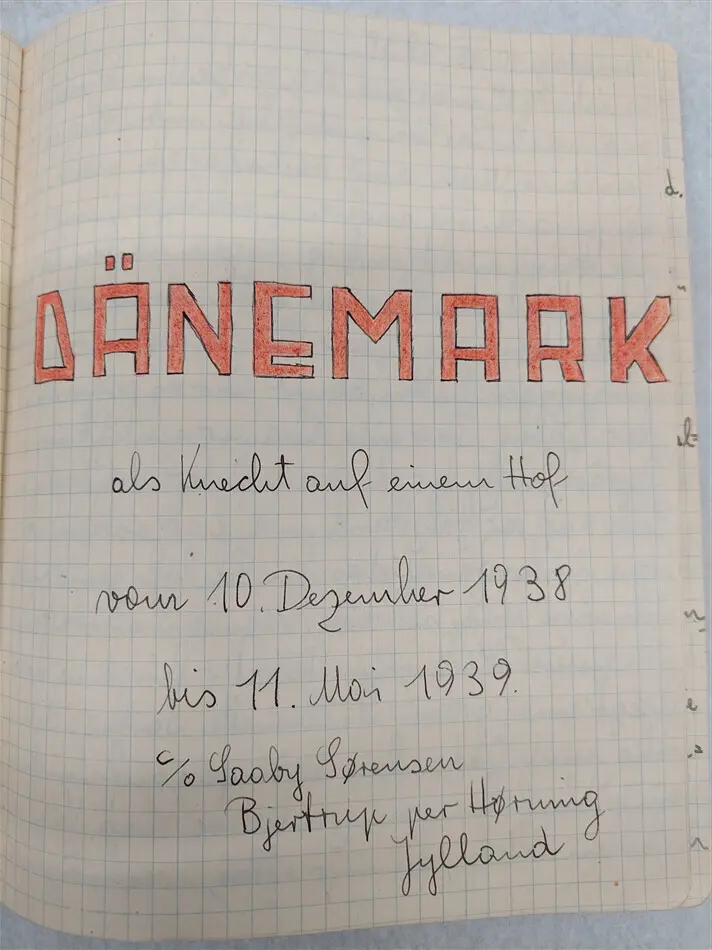
Det är här den femte delen i den serie med utdrag vi publicerar ur Eli Getreus dagbok och här får vi följa med när dagboksförfattaren som nyanländ jordbruksmedarbetare för första gången firar jul på en dansk bondgård. Eli var Øyvind Vågens morfar och föddes på väg till Wien 1920 som son till judiska föräldrar som invandrat dit från dåvarande Galizien (nuvarande västra Polen/östra Ukraina) och kom att engagera sig i en judisk ungdomsrörelse som syftade till att utbilda sig till jordbrukare och sedan flytta till Israel – Eretz – för att odla upp det heliga landet. De två första delarna – som skildrar Kristallnatten/Novemberprogromerna respektive en tågresa genom Tyskland och Danmark precis innan krigsutbrottet – går att läsa här och här. Den tredje delen som skildrar hur han strax före andra världskrigets utbrott reser från Danmark, där han arbetade som dräng för att lära sig jordbruk hos en jysk bonde, till England för att hälsa på sina föräldrar som flytt ditt undan judeförföljelserna i det av Tyskland annekterade Österrike finns att läsa här. Den fjärde delen som skildrar själva arbetet på gården i Danmark går att läsa här. Hela dagboken finns att läsa (i faksimil på tyska) på Förintelsemuseets hemsida där finns också ett album med foton som han tog under tiden han skrev dagboken. BBC gjorde nyligen ett inslag om Englandsvistelsen som står att finna till exempel här.

Fortsätt läsa ”Eli Getreus Dagbok del V – julen 1938”

Går det att gå vidare efter Förintelsen? Ett psykologiskt perspektiv på den pågående katastrofen i Gaza

Av Soly Erlandsson

Soly Erlandsson, Utan titel, 1983. Krita på akvarellduk. Inspirerad av författarens engagemang i Amnesty.

”Varför kan vi aldrig upphöra att sysselsätta oss med nazismen?” Den frågan inleder Birgitta Almgrens högst läsvärda bok om Sverige och Nazityskland: Drömmen om Norden. Nazistisk infiltration 1933 – 1945 (Carlssons, 2005). Hennes fråga är berättigad och för mig högst relevant, eftersom Nazitysklands brott mot Europas judar aldrig lämnat mig oberörd, trots år som passerat. I bokhyllan står rader av böcker om andra världskriget, om Hitlers grandiosa föreställningar om ett tusenårigt rike, om hur människor som ansågs underlägsna och inte tillhörde den ariska rasen tvångsförflyttades till koncentrations- och arbetsläger i Tyskland och det ockuperade Österrike, Frankrike och Polen. Trots läsningen av detaljerade, sakkunniga och djupt skakande skildringar om Nazityskland, samt den oförlåtligt grymma behandlingen av de europeiska judarna, har jag aldrig helt kunnat förstå hur detta kunde fortgå – fullt synligt, inför öppen ridå – under så många år.

Fortsätt läsa ”Går det att gå vidare efter Förintelsen? Ett psykologiskt perspektiv på den pågående katastrofen i Gaza”

Eli Getreus Dagbok del IV – Danmark 8–29 januari 1939

Av Eli Friedrich Getreu (1920–2005)

Det är här den fjärde delen i de serie med utdrag vi publicerar ur Eli Getreus dagbok och. Eli var Øyvind Vågens morfar och föddes på väg till Wien 1920 som son till judiska föräldrar som invandrat dit från dåvarande Galizien (nuvarande västra Polen/östra Ukraina) och kom att engagera sig i en judisk ungdomsrörelse som syftade till att utbilda sig till jordbrukare och sedan flytta till Israel – Eretz – för att odla upp det heliga landet. De två första delarna – som skildrar Kristallnatten/Novemberprogromerna respektive en tågresa genom Tyskland och Danmark precis innan krigsutbrottet – går att läsa här och här. Den tredje delen som skildrar hur han strax före andra världskrigets utbrott reser från Danmark, där han arbetade som dräng för att lära sig jordbruk hos en jysk bonde, till England för att hälsa på sina föräldrar som flytt ditt undan judeförföljelserna i det av Tyskland annekterade Österrike finns att läsa här. Hela dagboken finns att läsa (i faksimil på tyska) på Förintelsemuseets hemsida där finns också ett album med foton som han tog under tiden han skrev dagboken. BBC gjorde nyligen ett inslag om Englandsvistelsen som står att finna till exempel här.

Fortsätt läsa ”Eli Getreus Dagbok del IV – Danmark 8–29 januari 1939”

‘When The Last Letter Is Gone / The Last of The Demons Is Done’

Isac Bashevis Singer (circa 1980), photo: Gotfryd Bernard

I. B. Singer’s short story ‘The Last Demon’ appears on the surface to be exactly what it says it is: a (very) short story about a demon that is the last of his kind dealing with the quandary concerning what demons should do and why there even should be demons when ‘man himself is a demon.’ Much the same way as Adorno once deemed it, if not as often claimed but later rebuked or nuanced impossible, as ‘barbaric to write poetry after Auschwitz,’ to which Primo Levi chimed in and said, ‘After Auschwitz, it is no longer possible to write poetry except about Auschwitz.’

Fortsätt läsa ”‘When The Last Letter Is Gone / The Last of The Demons Is Done’”

It “May Be Pointless or Even Criminal,” But They “Still Operate on Infants,”

“Chronicle of a Single Day.” is a text from the volume Voices from the Warsaw Ghetto (written in the Warsaw Ghetto in August 1941 and here read in the English translation) whose reoccurring themes are hunger and confinement. The text in question is undoubtedly the most literary in this volume; it refers openly to Thomas Mann’s The Magic Mountain and nods to many other literary texts; the ramblings and wanderings of both the body and the mind of the protagonist make one think of James Joyce’s Ulysses, where the main protagonist Leopold Bloom is not starving, but all the same in Episode Four of the book obsessed with items of food, with kidneys and other intestinal, and carries them around with him; much in the same way as this text’s protagonist figuratively speaking carries with him, and during his walks confronts with, those who are already dead and those who are not yet dead (which seems, despite some alluding to former and present societal divides, like the mentioning of the ricksha-carried chair of the Judenrat, to be the only two categories of people still left); to the flesh that already is or soon shall become grass (Isaiah 40:6).

Fortsätt läsa ”It “May Be Pointless or Even Criminal,” But They “Still Operate on Infants,””

The Children Take their Revenge

Still depicting the two Kelink from ”Unzere Kinder”.

Already in one of the first scenes of the film Unzere Kinder (that follows after the newsreel prologue that depicts the harsh reality of Jews being mass-deported to the Auschwitz extinction camp and what happened to them and their belongings there), the children from the orphanage who belong to the minimal number of surviving Polish-Jewish children protest and confront the two from the exile in the Soviet Union returning, Kleinkünstler who essentially are playing themself and in a sketch perform a sentimentalized version of the wartime events (“because that is not how it was”), opens up the divide (in the context of the film) between the children who were forced to become survival artists (compare the quote from one of the boys, “It was my job to trick the German gendarmes”) and the returning artists who survived the war exiled deep into Soviet Russia.

Fortsätt läsa ”The Children Take their Revenge”

Morals and Mores of the Warsaw Ghetto

One of the milk cans used to hide documents. From the Ringelblum ”Oyneg Shabbos” Archive.

This article is about the declining morals and mores of the Jewish inhabitants in the wartime Warsaw Ghetto that was presumably written on 4th July 1942. It is derived from the “Street” section of Volume One of The Ringelblum Archive Underground Archive of the Warsaw Ghetto (Published by Żydowski Instytut Historyczny im. Emanuela Ringelbluma; Warsaw). The text is attributed to Stanisław Różycki, and its complete title in translation reads as follows: “4th July. Warsaw, ghetto. A study [of] ‘Ulica’ [The Street]. The appearance and the social life of the street in the ghetto” (hereafter referred to as the Morality of the Street). The original text is written in Polish and on the archive’s website, described as: ”handwritten, notebooks, ink, Polish, 150×197 mm, 31 sheets, 31 pages”. In the transcribed and translated (to English) form I am analyzing and quoting here [insert link to the full source text]), the text consists of around 8.800 words, including footnotes, spread over 19 A4 pages.

Fortsätt läsa ”Morals and Mores of the Warsaw Ghetto”

It is not even the beginning of the end. But it is, perhaps, the end of the beginning

THE YIDDISH POET AVROM SUZKEVER.

When one reads the poem “Grains of Wheat” by Avrom Sutzkever (written in the ghetto of Vilna and here read and analyzed in English translation, see here for the full text) and stumble upon the line “As if protecting a baby -,/I run with the Yiddish word,” is it hard not to start associating to the poet’s firstborn child that was slaughtered in the ghetto the day after he was born; the child was just alive so long it took for the mother of the poet to forget that her grandchild was doomed to be killed from the moment he was born, the same way as Herod once “killed all the male children in Bethlehem and in all that region that were two years old or under” (Matthew 2:16). Maybe it is during this short time, during this split second of dissonance, that the poem is written, that the poem takes place. The poet may be unable to save his Jewish child but is now trying to save the Yiddish word (and all that is written with it and within it) with his written words. 

Fortsätt läsa ”It is not even the beginning of the end. But it is, perhaps, the end of the beginning”