
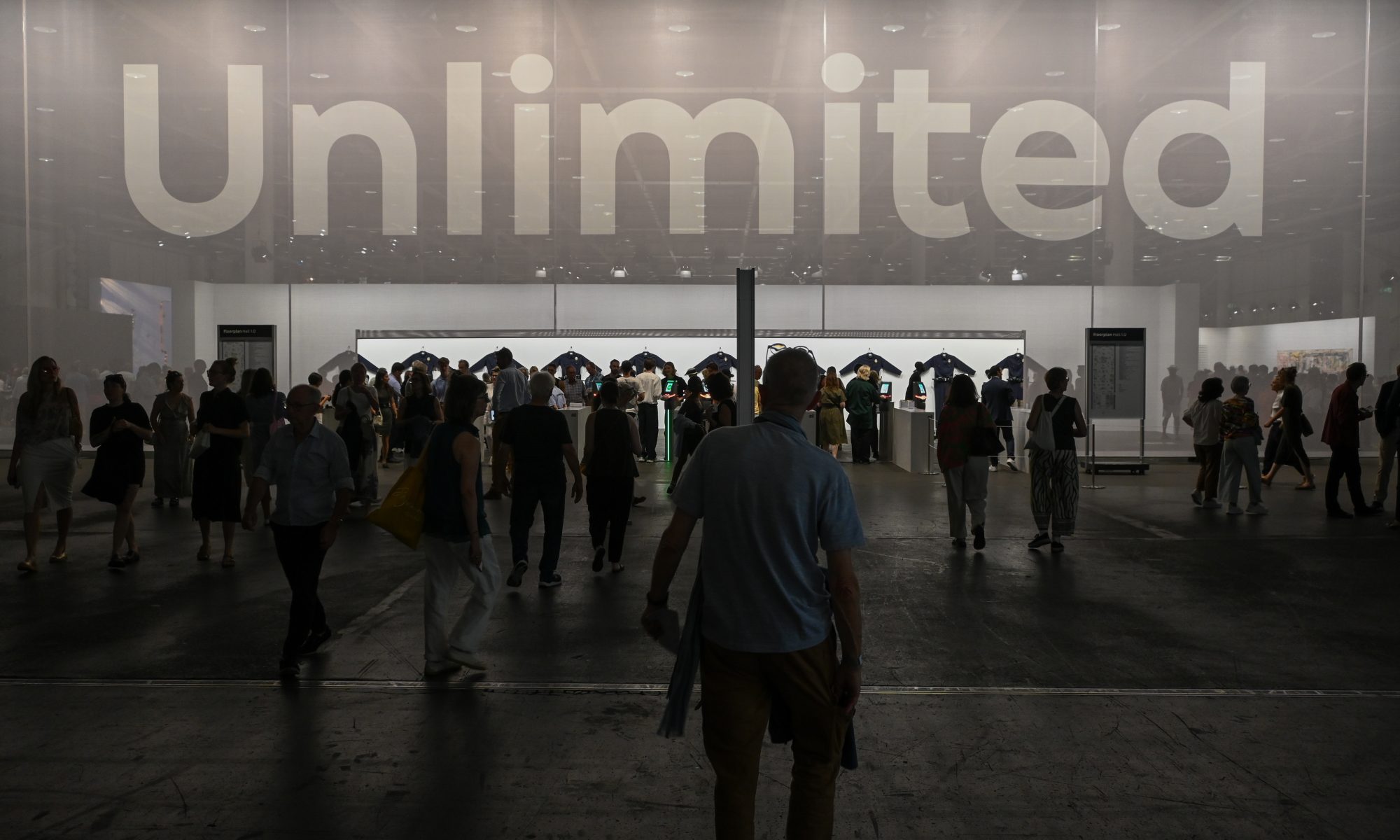
Art Basel gives the public rare physical proximity to the places where contemporary art is priced, ranked, and consecrated. The harder question is whether that proximity also becomes access.
By Chiara Gelmini
Seeing the market, encountering art, crossing the city
During its preview days (16-17 June) and public days (18-21 June), Art Basel 2026 attracted 90,000 visitors. In the halls of Messe Basel, 290 galleries from 43 countries and territories gathered alongside collectors, curators, museum directors, artists, and representatives of more than 270 international institutions. During the fair’s opening hours, Hauser & Wirth sold Pablo Picasso’s Le peintre et son modèle dans un paysage (1963), offered with an asking price of $35 million.
Read more of our English Content here and more of our Art Content here.
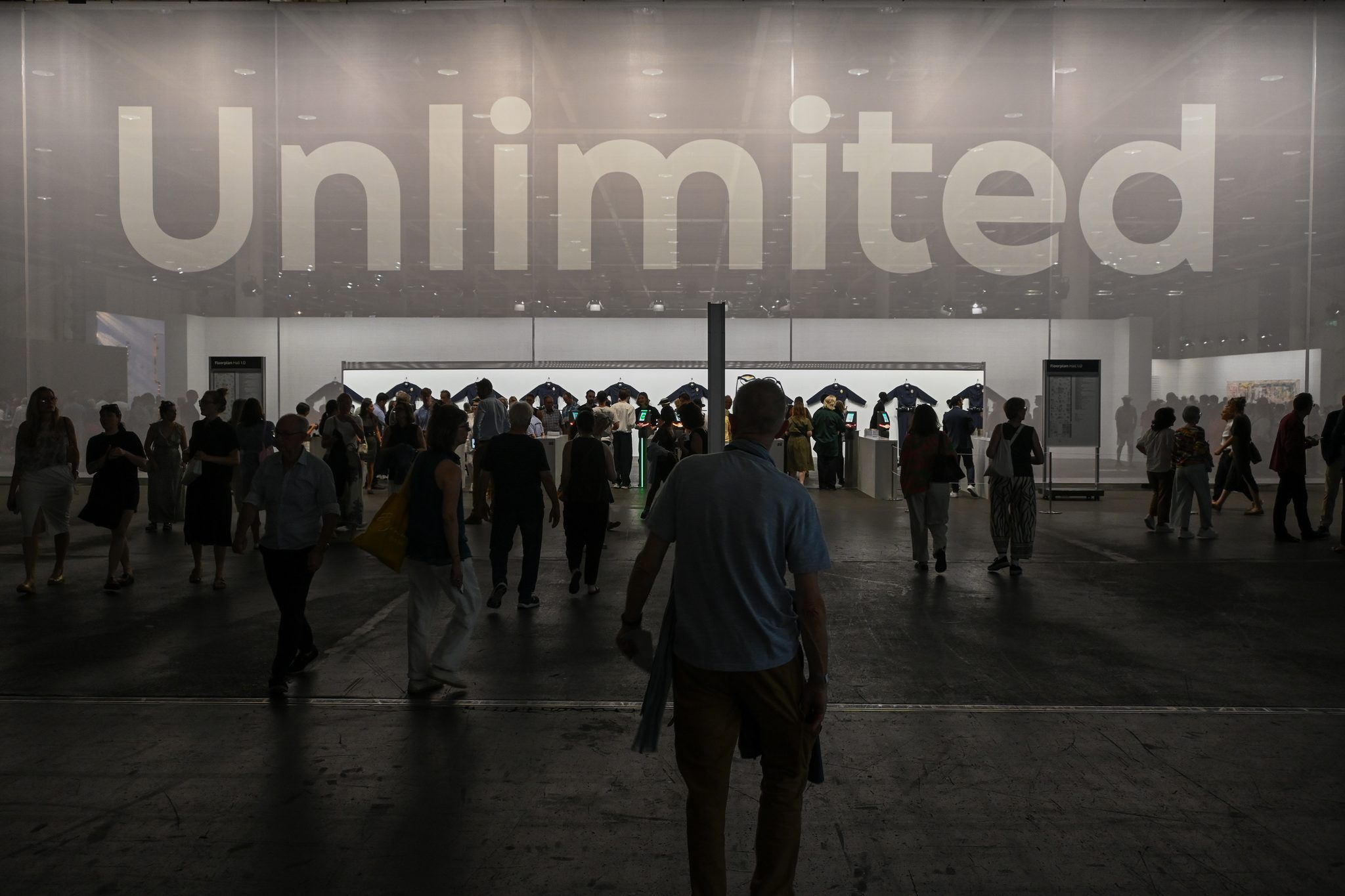
This is part of Art Basel’s fascination: the visitor holding an admission ticket may stand near a transaction worth tens of millions of dollars. For a few days, members of the public can enter one of the main arenas in which economic value, professional reputation, and the contemporary canon are negotiated
”Being in the room does not necessarily mean being included in the conversation.”
They can encounter works that would otherwise be difficult to see, recognise established artists, discover new ones, and move through the same spaces as the professionals who shape the market and its institutions.
That opportunity matters. Familiarity can foster curiosity, and proximity can reduce the intimidation that often surrounds contemporary art. But what kind of access does such a fair actually offer? Being in the room does not necessarily mean being included in the conversation.
An art fair is not a museum
Art Basel was founded in 1970 by the Basel gallerists Trudl Bruckner, Balz Hilt, and Ernst Beyeler. Its primary function remains commercial: to connect galleries, collectors, institutions, and professionals; to sell artworks; to build relationships; and to consolidate artists’ reputations.
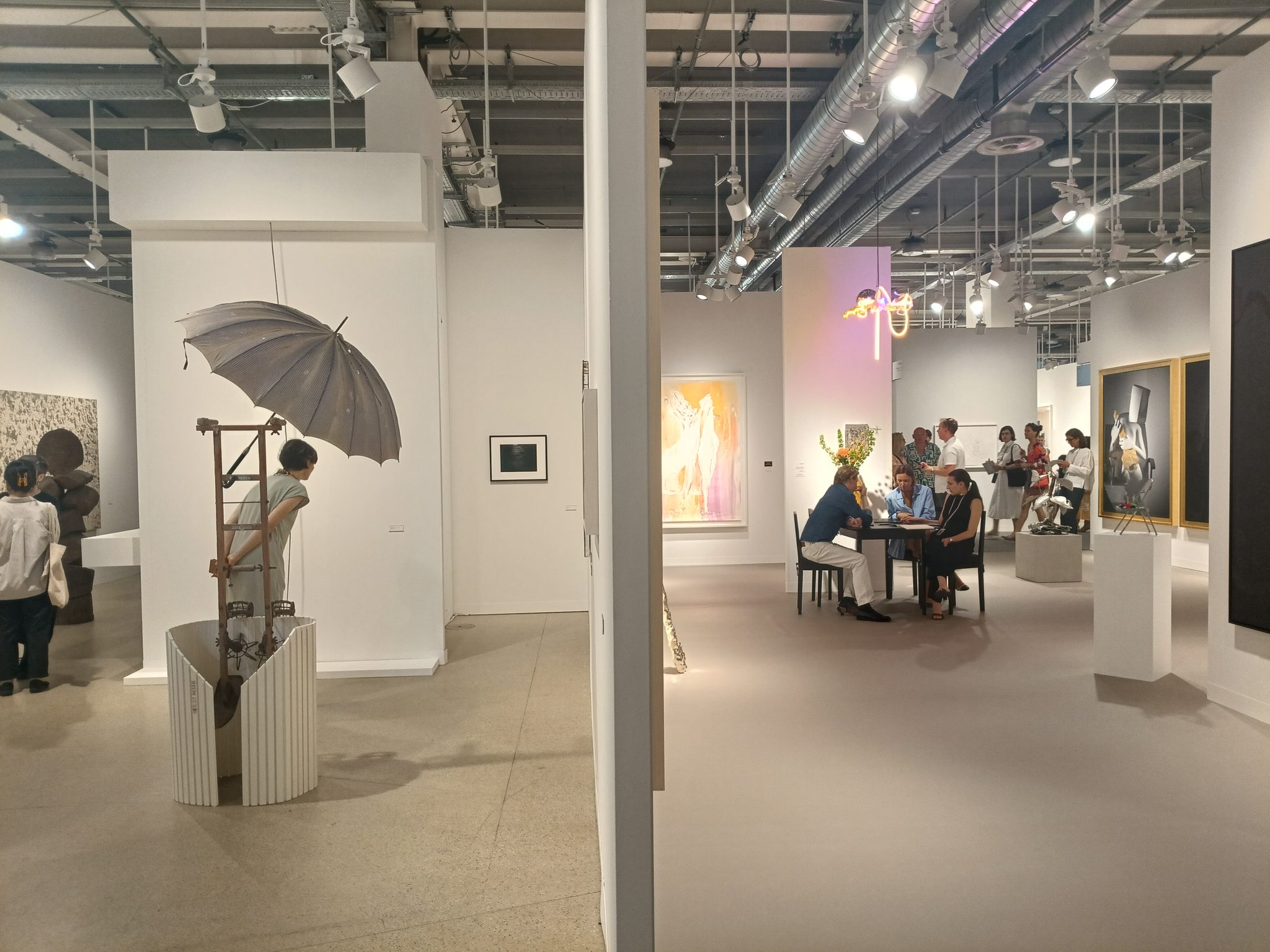
Yet the fair now presents itself as more than a marketplace. Beyond its main Galleries sector, the 2026 edition included several platforms with distinct functions. Unlimited presented projects whose scale, duration, or format exceeded the limits of the conventional booth. Zero 10 made its European debut with works shaped by digital technologies, generative systems, and cross-media experimentation. Statements focused on solo presentations by emerging artists, while Basel Exclusive invited galleries to reserve major works for their first public unveiling at the fair. Conversations, the Art Basel Awards, public commissions, and 21 Parcours projects extended the programme through talks, awards, and interventions across the city.
”The programme was public in intention, but not always equally public in the way it was made navigable.”
On the official website, these initiatives were framed through the language of discovery, dialogue, direct experience, and public engagement. Inside the halls, however, the richness of the programme was not always easy to read. For visitors who had not studied the programme in advance, it could be difficult l to know where one sector began or ended, what distinguished a special project from the rhythm of gallery booths, or which routes had been designed to guide them.
The problem was not a lack of content. It was a lack of immediately legible geography. The programme was public in intention, but not always equally public in the way it was made navigable.
Sales are not a deviation from Art Basel’s identity; they are its core purpose. But once a fair of this scale invites a much broader paying public and presents itself as an extensive cultural programme, the question changes. It is no longer only what the fair contains, but how it receives those who enter.
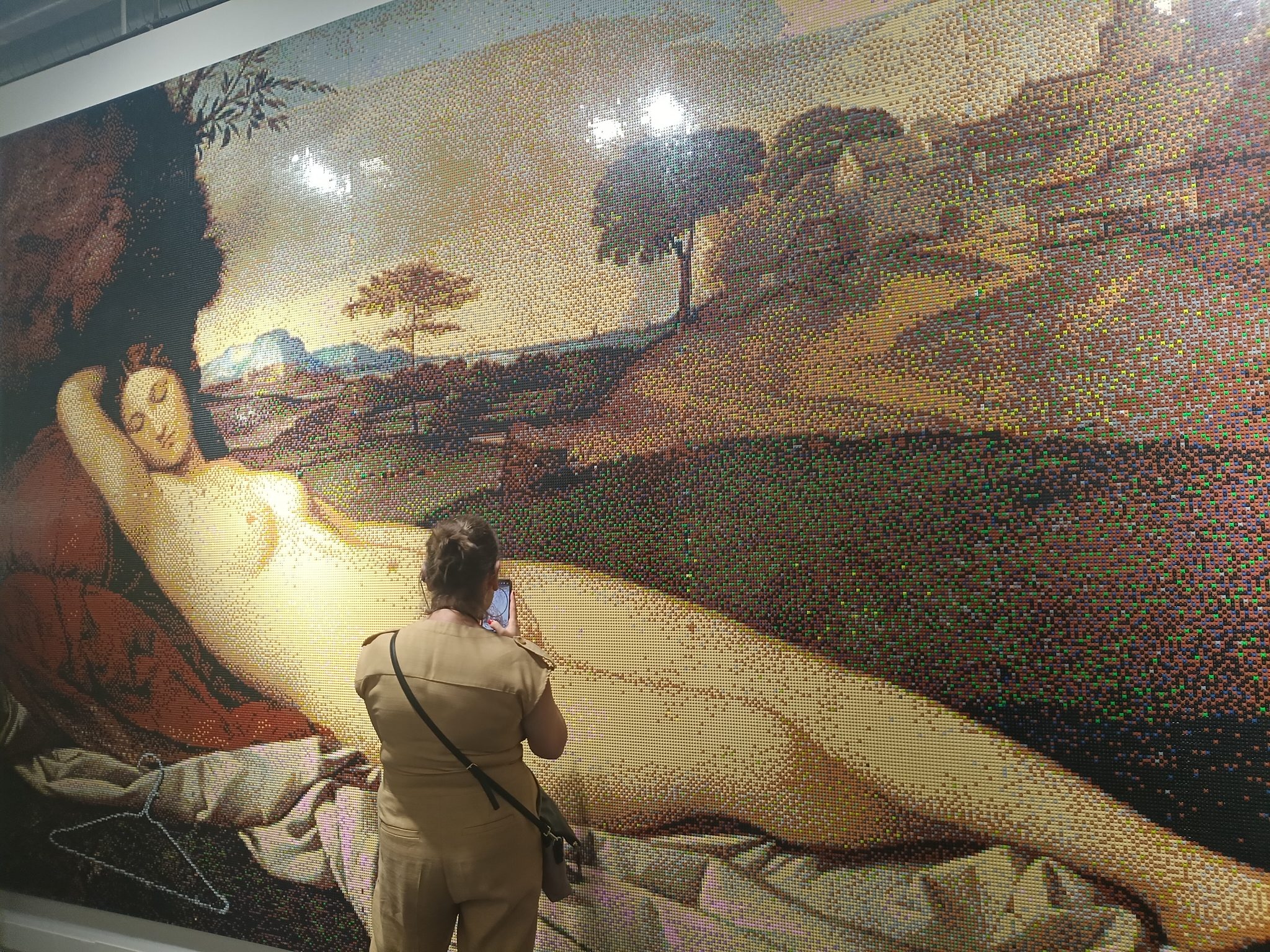
Art Basel and the galleries: two responsibilities
Art Basel does not run on its 290 galleries alone. An entire ecosystem of staff supports the fair and receives its visitors: information desks scattered across the halls, guides, coordinators, and even a welcome table at the airport baggage claim, ready to greet arrivals before they reach Messeplatz. The infrastructure of hospitality is real and considerable. Whether it reaches every visitor in the same way is another question.
Two actors shape that experience. The first is Art Basel as an organisation, responsible for the visitor-facing framework: signage, orientation, information, tours, and the coordination of staff working for the fair.
One assistant I spoke with, KS – a Museum Studies master’s student in Berlin staffing one of the information points – described the problem plainly. She would have liked to give every visitor the same energy and attention, but the rhythm of the fair and the demands on her time did not always allow it. The infrastructure was there; what it could not always guarantee was the quality of each encounter.
The staff members I met remained helpful and courteous even towards the end of the event. When they were unsure whether a press pass granted access to guided tours, they sought clarification from their coordinators. The episode suggested not indifference, but a gap in internal communication within an event operating on an enormous scale.
The second actor is the individual gallery. Galleries are responsible for their booths, the materials they provide, and the relationships they establish with visitors. Here, the experience became more uneven. In many spaces, visitors were free to look at the works but were rarely invited to engage with an artist’s practice or a gallery’s curatorial profile. Nor were they always offered even basic written information about the artists, the works, or the gallery itself.
”The question is not whether every booth should provide a guided tour. It is whether a minimum threshold of interpretation is available to those who do not yet belong to the system.”
Conversations appeared to focus primarily on visitors already legible as collectors, clients, curators, or established professionals. For someone outside those circles, the result could be the awkward sensation of being admitted but not addressed: free to look, given little way into context or conversation, and kept at the edge of an implicit hierarchy of attention.
The question is not whether every booth should provide a guided tour. It is whether a minimum threshold of interpretation is available to those who do not yet belong to the system.
Unlimited: beyond the booth, not always beyond spectacle
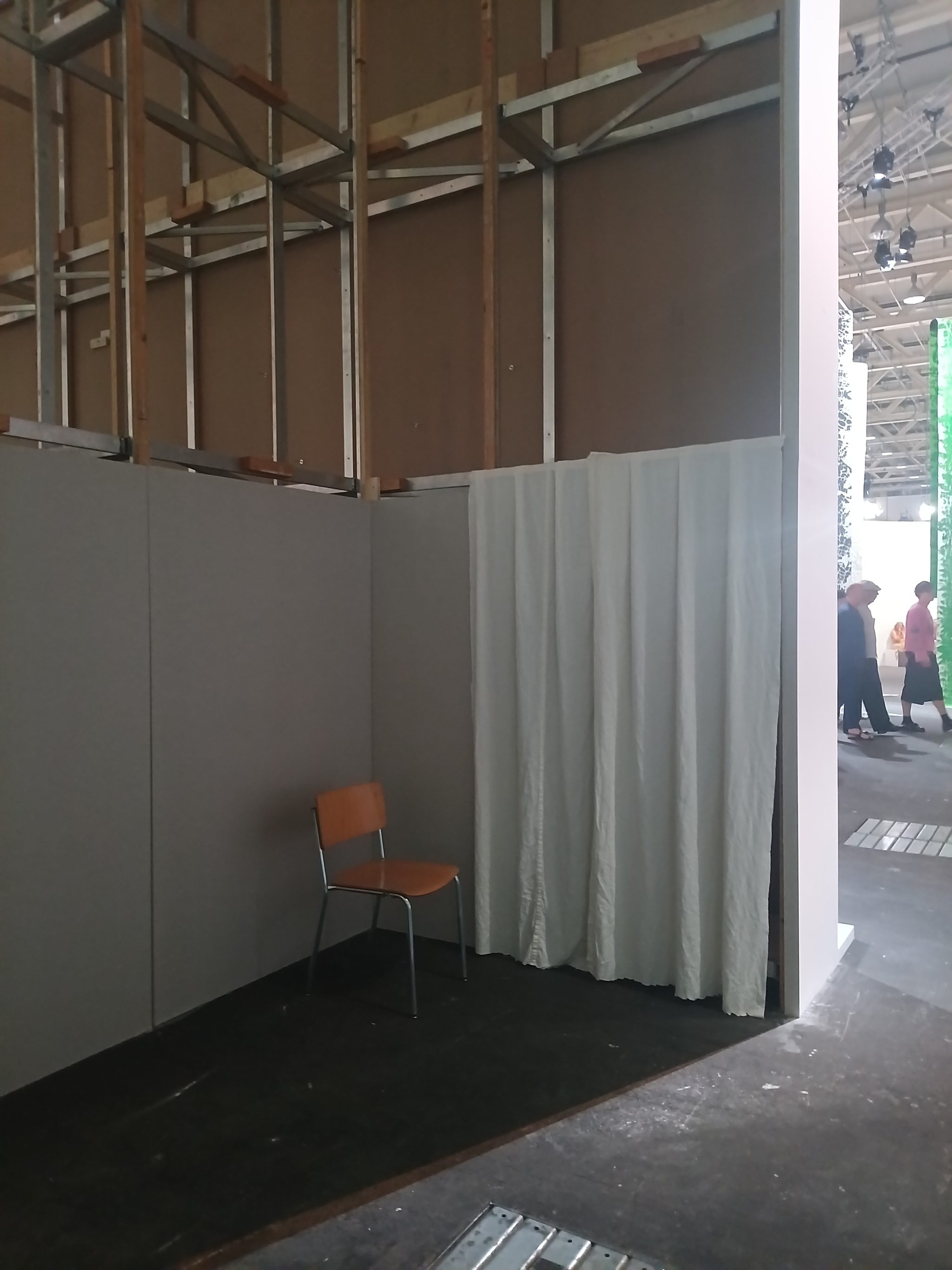
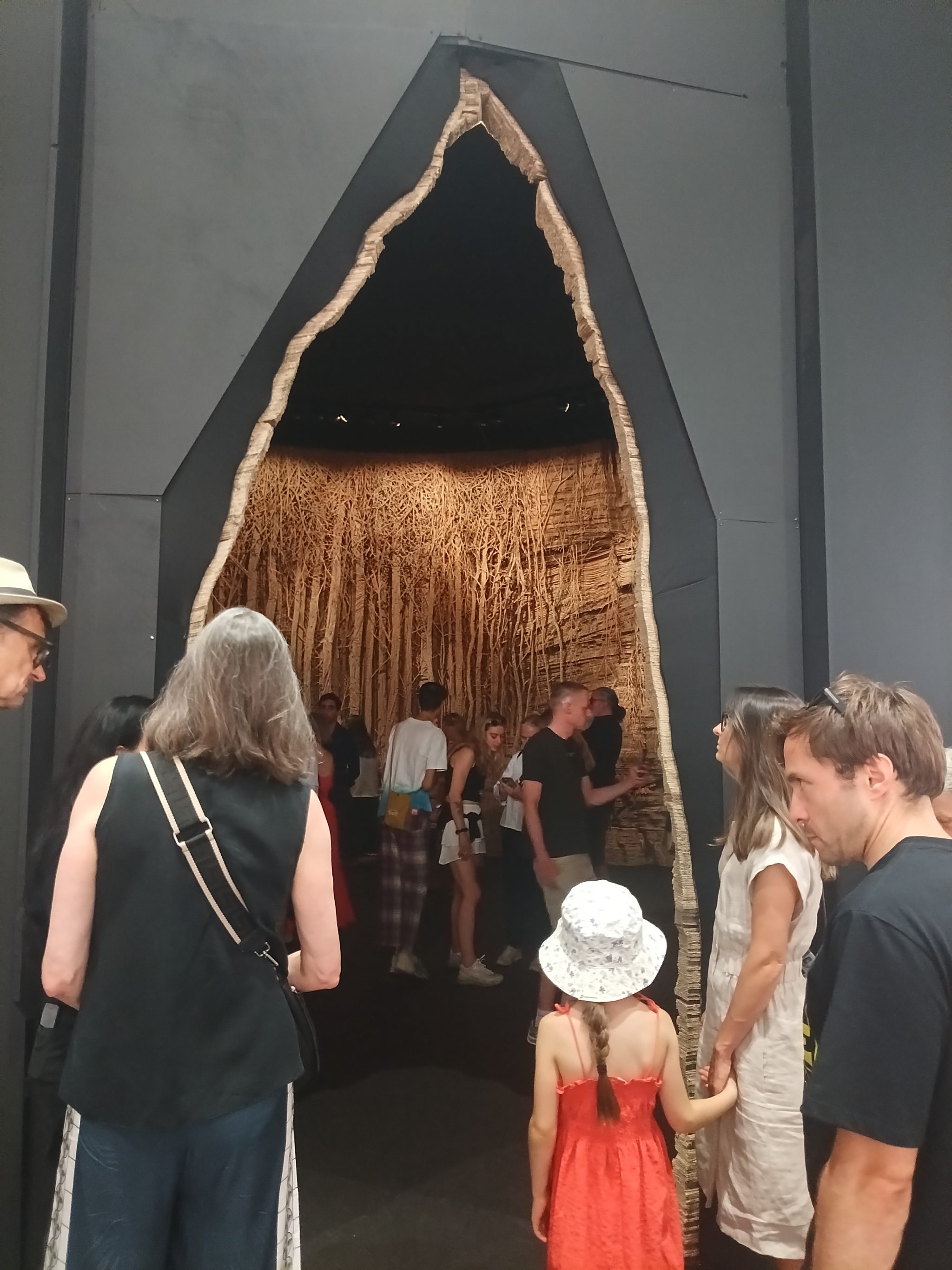
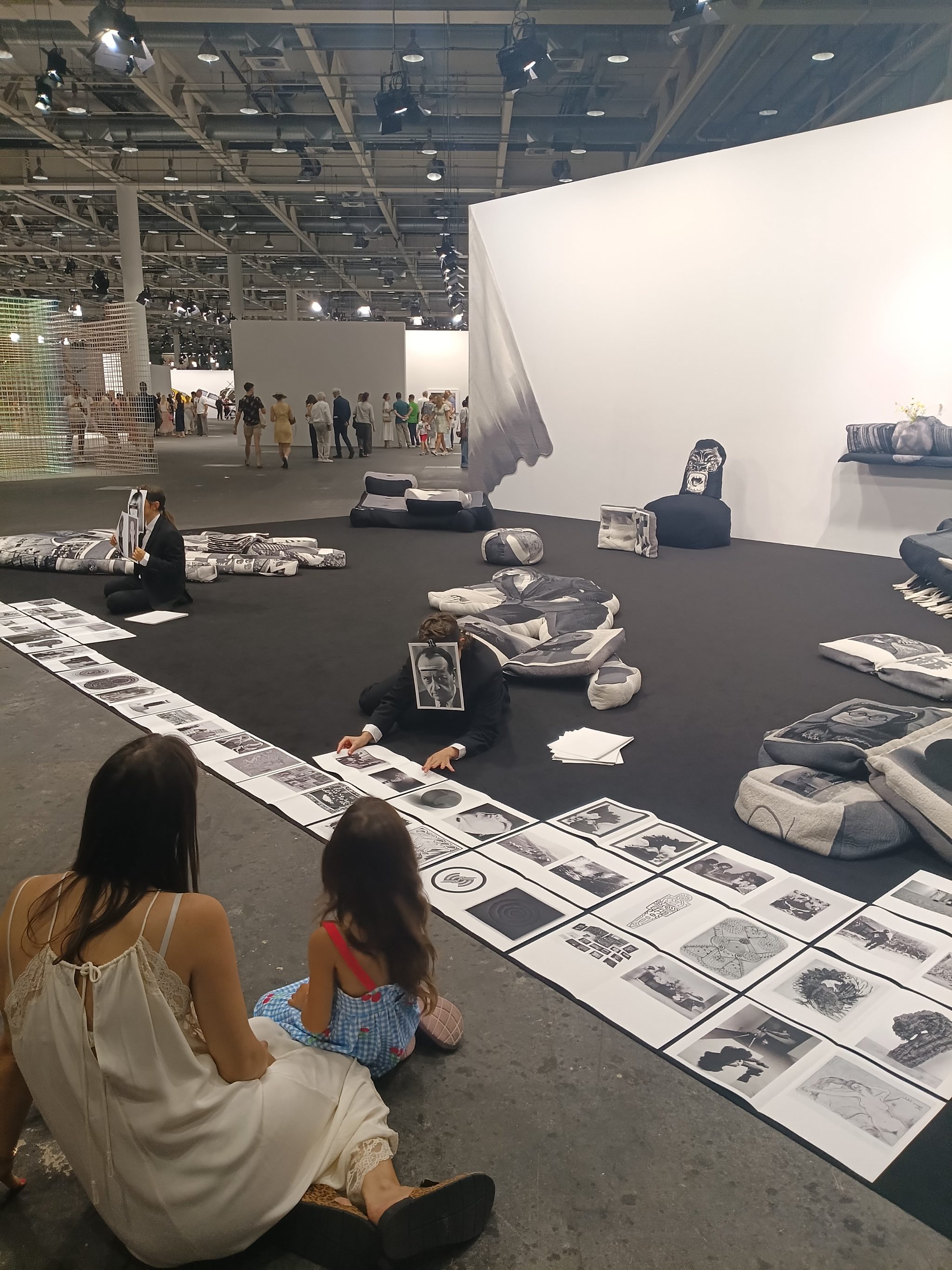
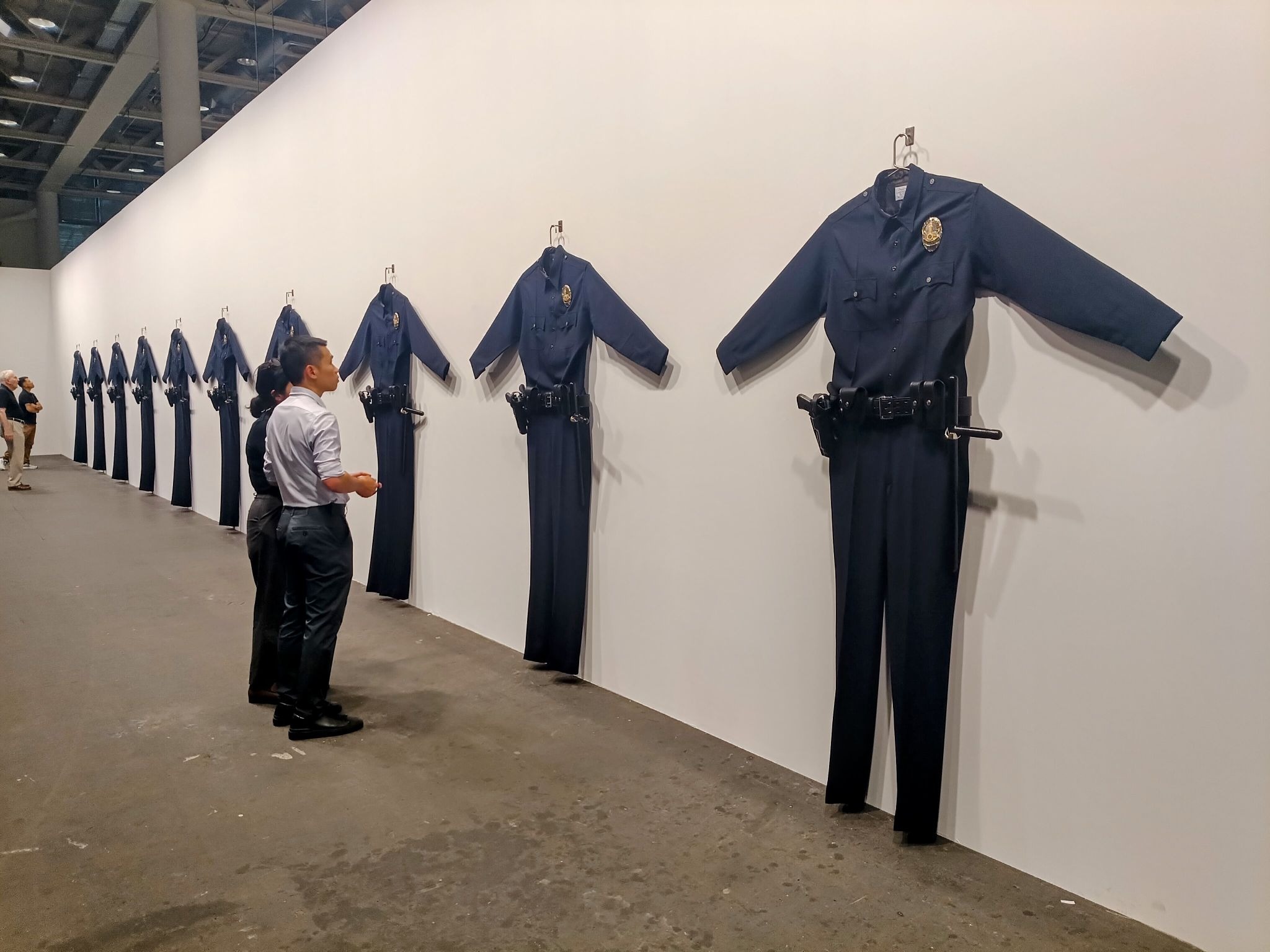
Unlimited is Art Basel’s platform for works that exceed the conventional gallery booth because of their scale, duration, or spatial demands. In 2026, Hall 1 of Messe Basel hosted 59 projects presented by 66 galleries: monumental installations, large-scale sculptures, extensive photographic series, film and video projections, immersive environments, and live performances.
The sector resembled a vast exhibition hall rather than a sequence of commercial stands. Works were given room to unfold, and visitors could move around them freely. Its open layout, recognisable names, and concentration of visually striking pieces made it one of the fair’s most crowded and immediately accessible areas, including for visitors with no professional connection to the art market.
That accessibility is one of Unlimited’s strengths. It offers the public an exceptional opportunity to encounter works that could hardly be shown in a conventional booth. At the same time, its emphasis on scale raises a familiar question: does monumentality amplify the thought contained within an artwork, or does it risk replacing that thought with impact?
The sector included artists with broad public recognition, such as Ai Weiwei, represented by Iron Grass (2014) at Magician Space, and Yayoi Kusama, with Flowers That Bloom in the Cosmos (2022) at David Zwirner, alongside figures central to the contemporary canon.
Some works seemed to need their scale; others seemed primarily to perform it. Kusama’s Flowers That Bloom in the Cosmos, instantly recognisable and endlessly photographed, leans towards the second register. It offers an immediate immersive encounter, but its visual language risks being consumed at the speed of the image.
”Unlimited is at its strongest when scale is not simply a measurement but an internal necessity.”
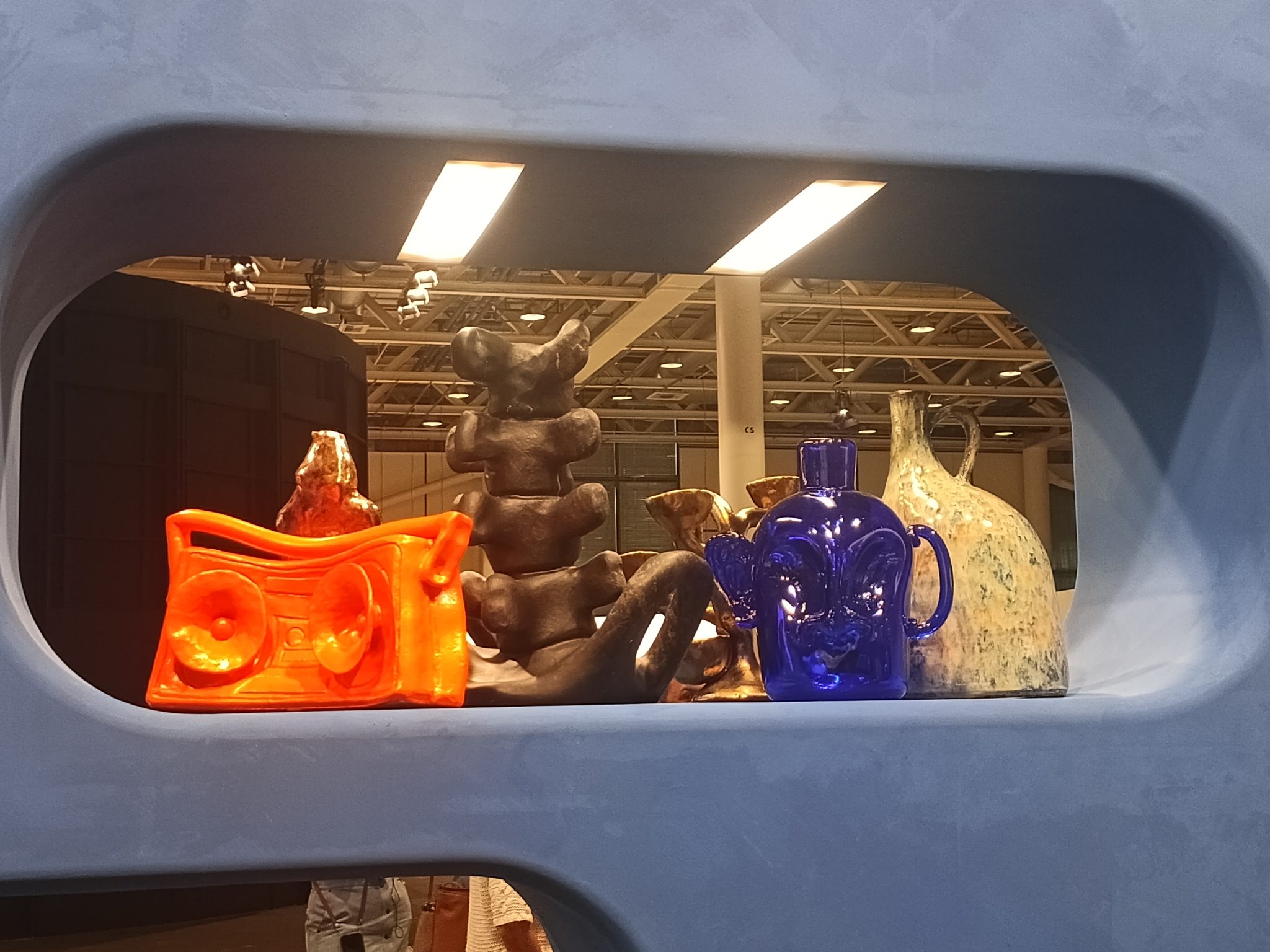
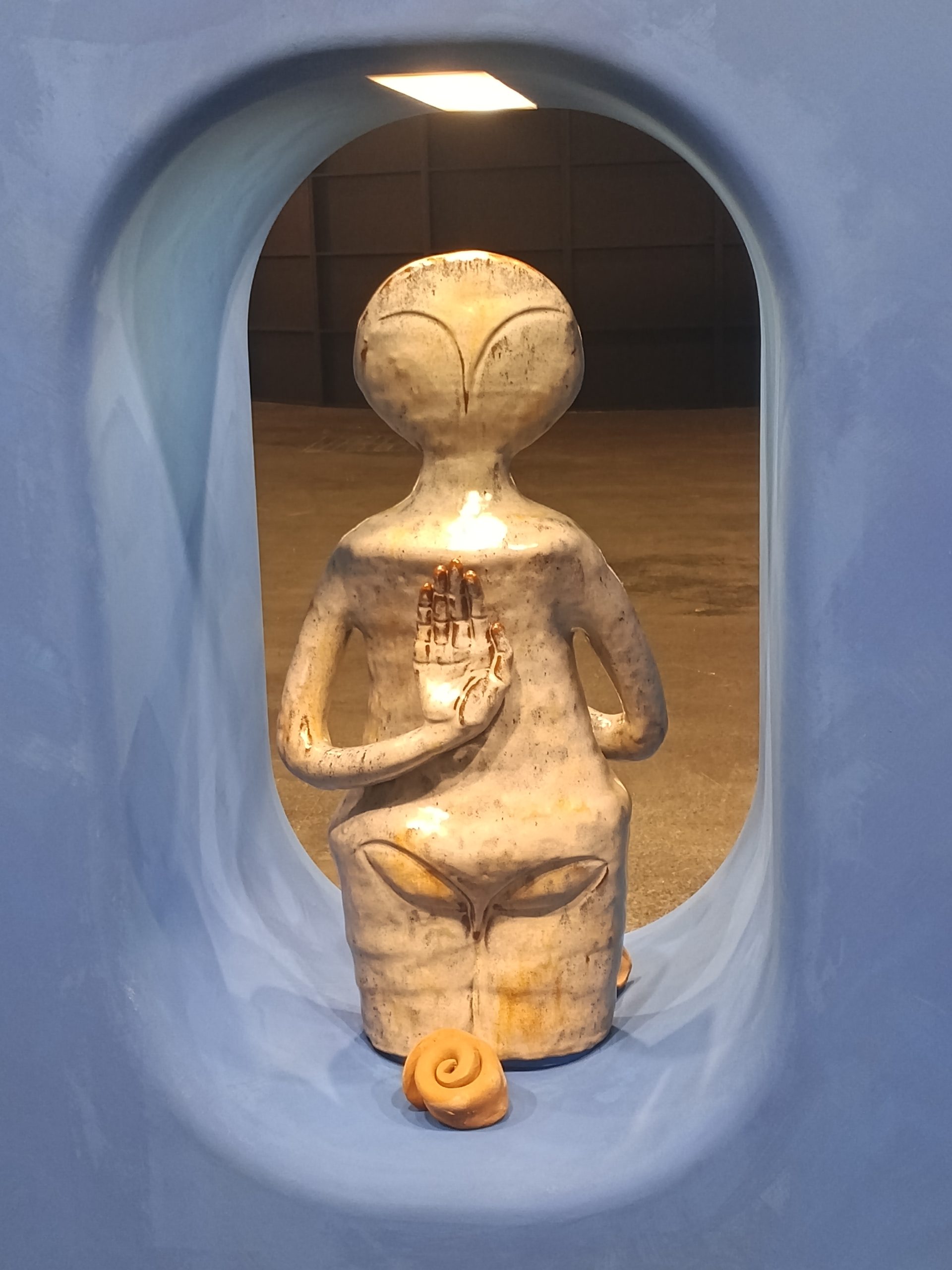
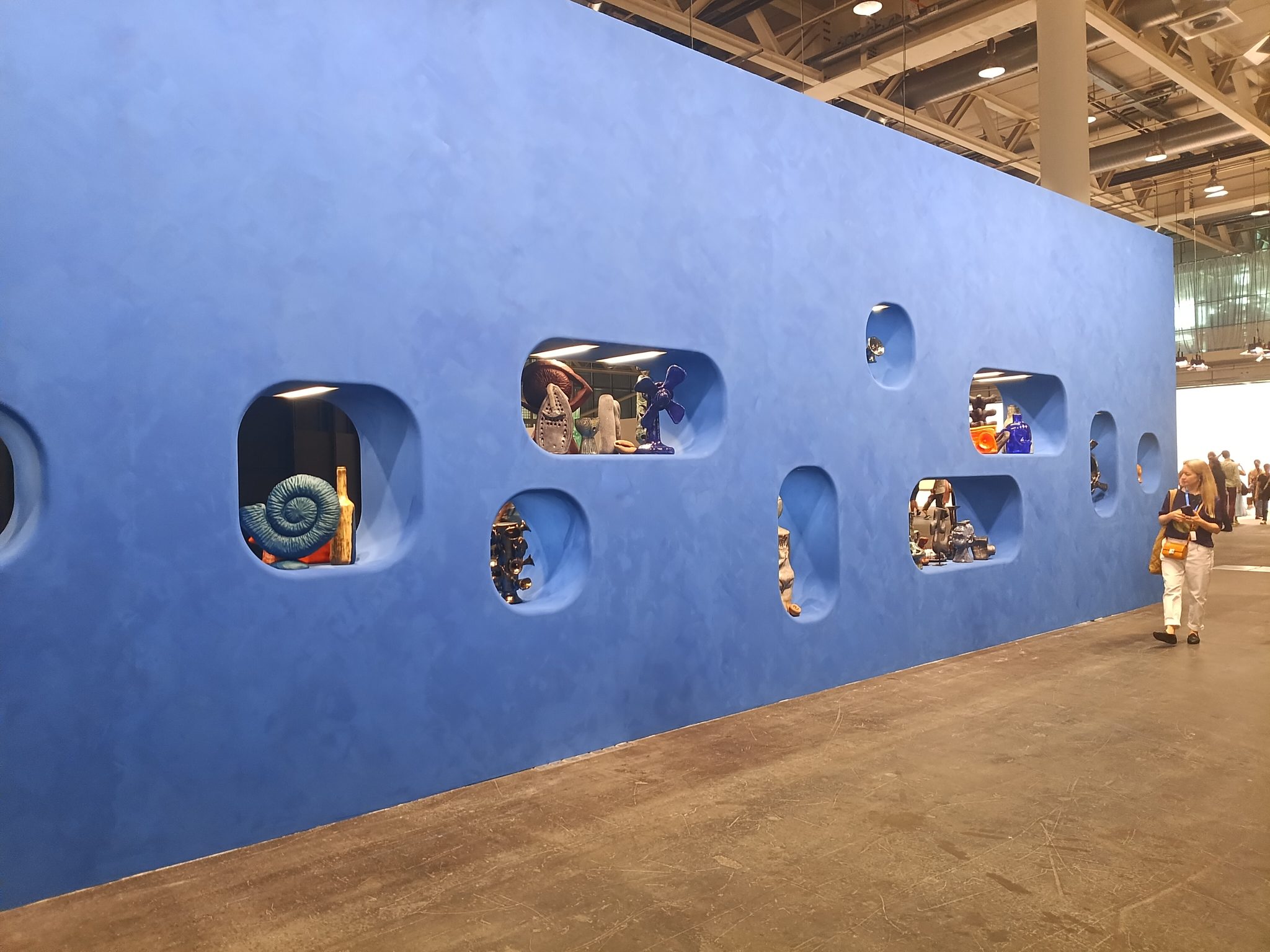
Woody De Othello’s two sides that hold truth (2026) works differently. Dozens of sculptures in ceramic, glass, stone, and wood occupy the niches of a twelve-metre-long wall, replacing the traditional hero and pedestal with domestic objects and anthropomorphic presences. The monument remains, but its content has been quietly overturned. Scale does not amplify a single dominant gesture; it makes room for multiplicity, for the unheroic, and for objects that would not ordinarily be granted a pedestal at all.
Unlimited is at its strongest when scale is not simply a measurement but an internal necessity – when monumentality does not replace meaning, but serves it.
The fair and its variations
Art Basel week also generates a constellation of independent satellite fairs. These events do not belong to the official programme, although their dates, audiences, and visibility are inseparable from the gravitational force of the main fair.
Because photo basel and Liste differ in scale, specialisation, and market position, they help reveal that the distance between exhibitors and the non-professional public is not an Art Basel problem alone. It may be partly embedded in the art-fair format itself.
photo basel, held at the Volkshaus in Kleinbasel, is Switzerland’s only international art fair devoted specifically to photography-based art. It brings together specialised galleries in a smaller, more intimate setting, presenting historical and contemporary photography alongside practices that expand the medium through scientific, technological, and experimental processes.
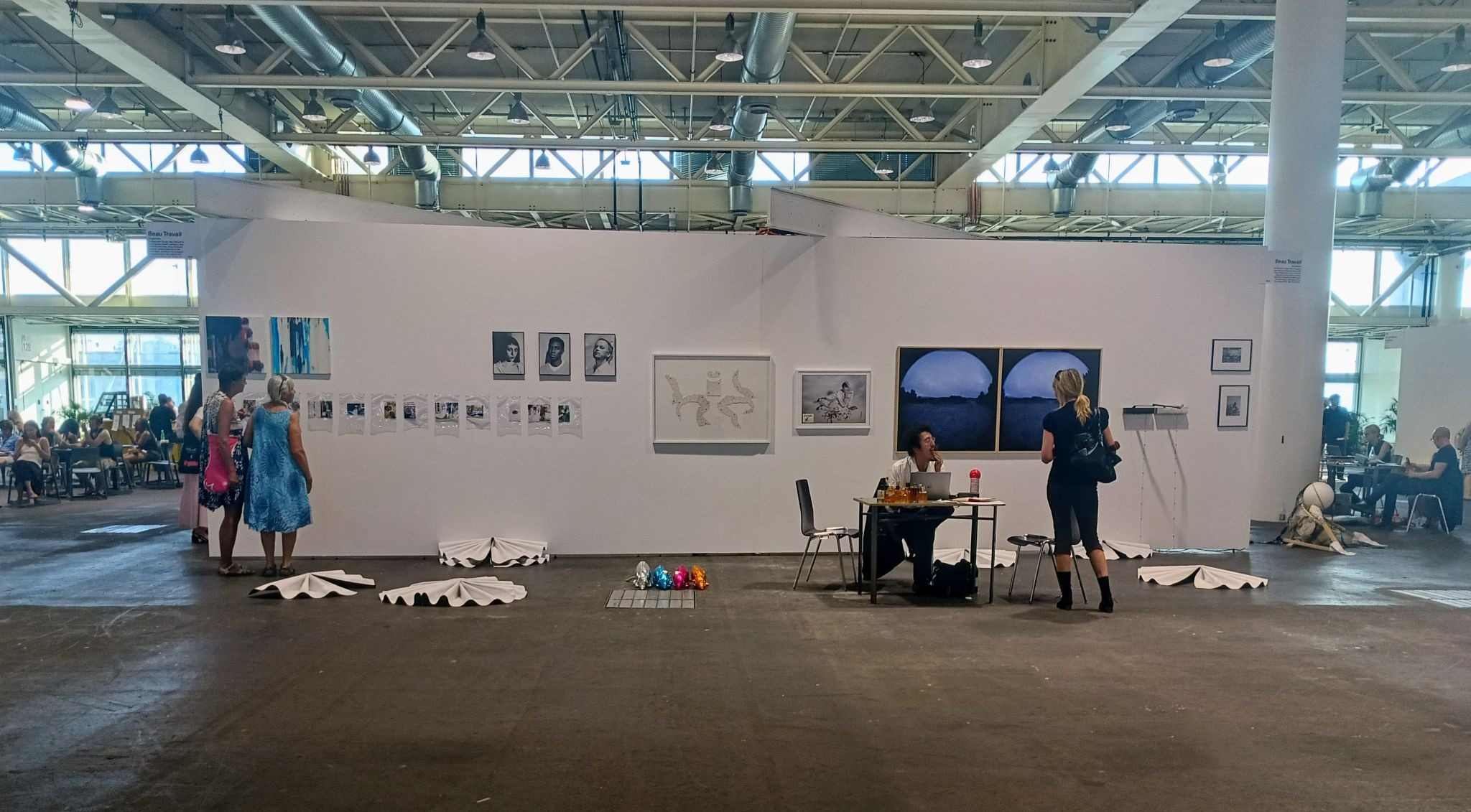
Liste Art Fair Basel has operated since 1996 as an influential international platform for younger galleries and recent developments in contemporary art. In 2026, it brought together 105 galleries from 36 countries in Hall 1.1 of Messe Basel. Its emphasis on emerging artists, younger galleries, and less-established positions gives it a more exploratory character than Art Basel’s main sector, although it remains a selective commercial fair.
Yet several encounters showed how quickly the quality of a visit could change. At photo basel, a representative from Ljubljana’s Galerija Fotografija spoke passionately about the gallery’s programme. A Berlin-based artist explained a process in which brain waves, recorded through a medical device, were converted into a spectrum of light and then photographically imprinted using a Polaroid process. He patiently walked the people gathered around him through each step, addressing the two children among his listeners with the same seriousness. They followed with visible wonder, asking how a thought could become a colour.
It was a small reminder of what becomes possible when an artist has both the time and the willingness to share a process – not only with art-world insiders, but with anyone curious enough to ask.
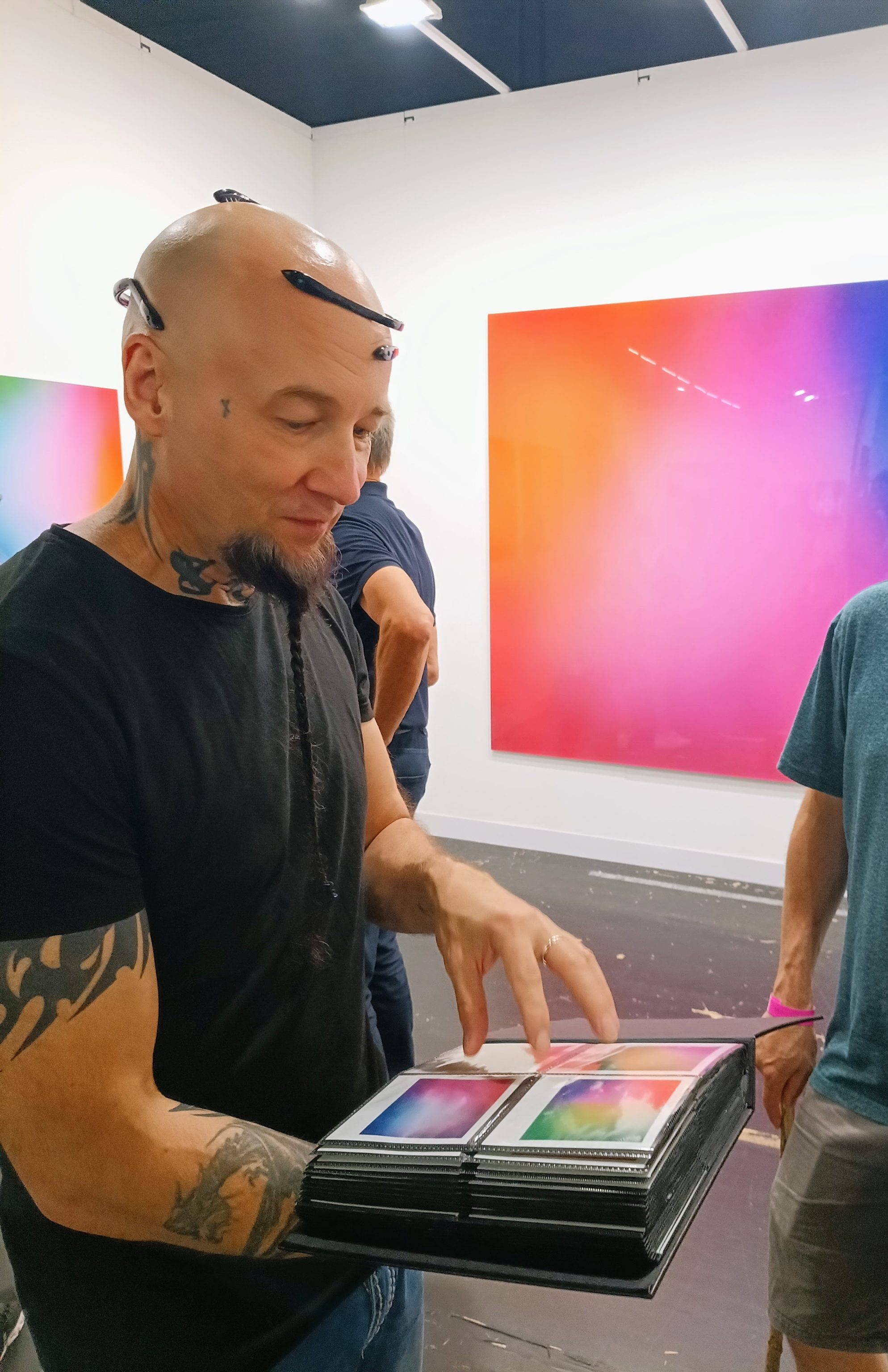
When someone engaged visitors and explained the works, it was often the artists themselves. At Liste, near closing time at Ravnikar Gallery’s booth, I stepped behind a partial wall to look more closely. A smiling man came over, set a wall-mounted sculpture spinning, and invited me to do the same. Only afterwards did I realise that he was the artist whose work the gallery was presenting.
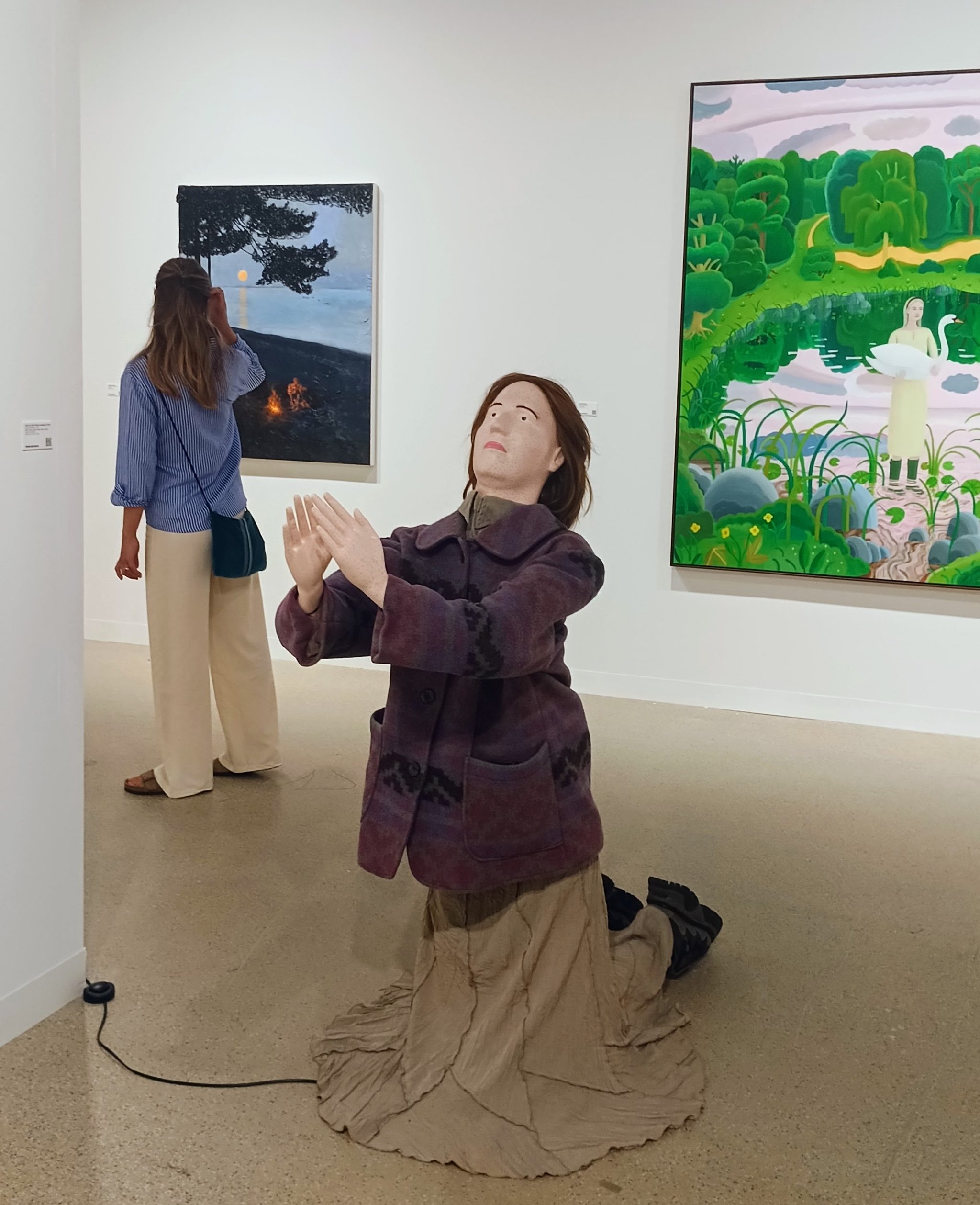
At Art Basel, the booth of Tim Van Laere Gallery stood out both for the ironic energy of the works and for the staff’s willingness to discuss them. At one point, with a quick and playful leap, one of them pressed a switch, activating the pleading voice of a sculpture depicting a kneeling woman.
A small gesture created a point of contact. The artwork was activated, and so was the space between the person presenting it and the person looking. Spectatorship briefly became participation.
These episodes demonstrate that interpretation and exchange are not incompatible with sales. On the contrary, they can form part of a gallery’s cultural and professional identity. Precisely because they may require only a few minutes, their relative scarcity becomes all the more apparent.
From the booth to the city
The most interesting reversal, however, took place outside the exhibition halls.
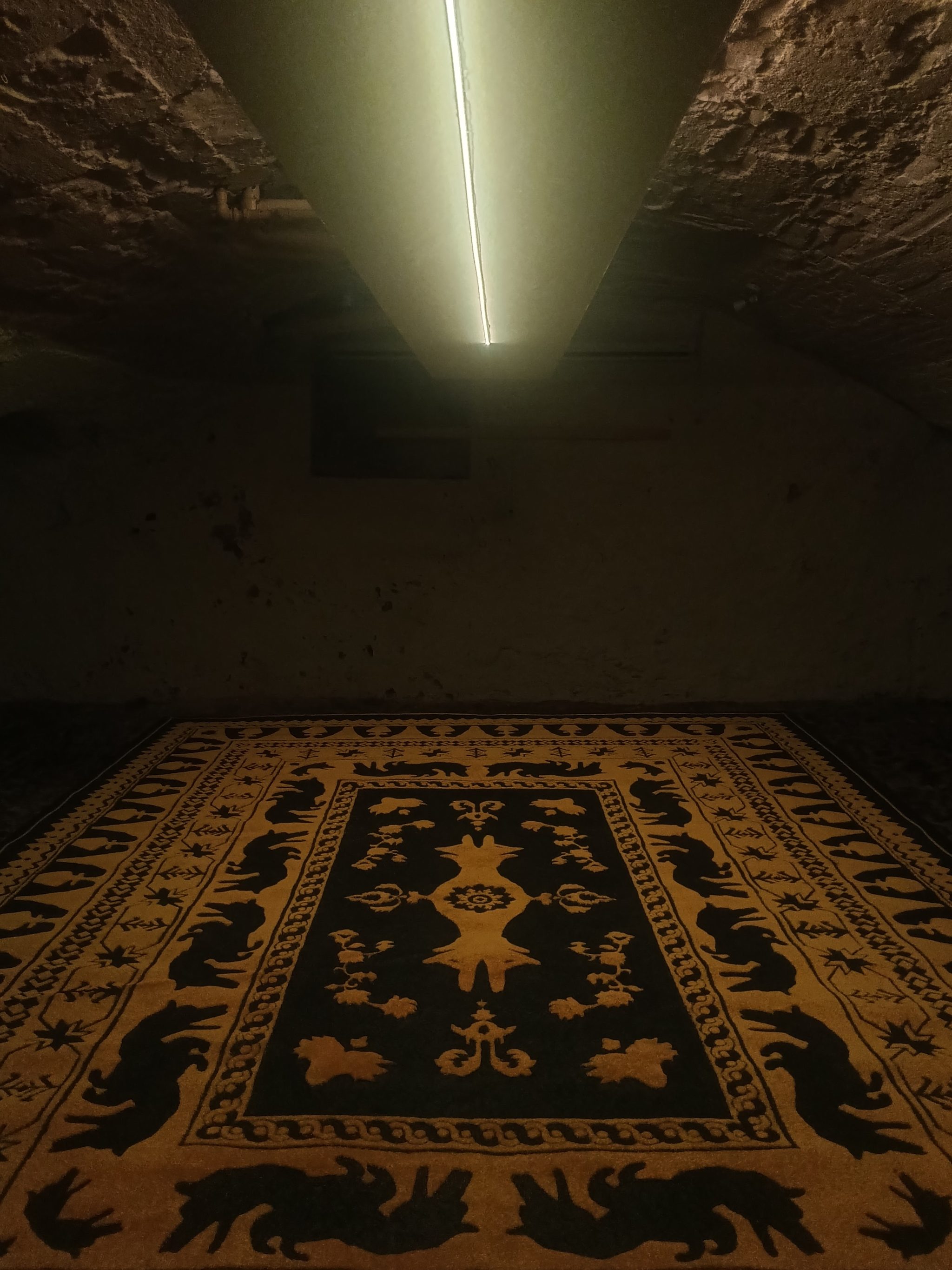
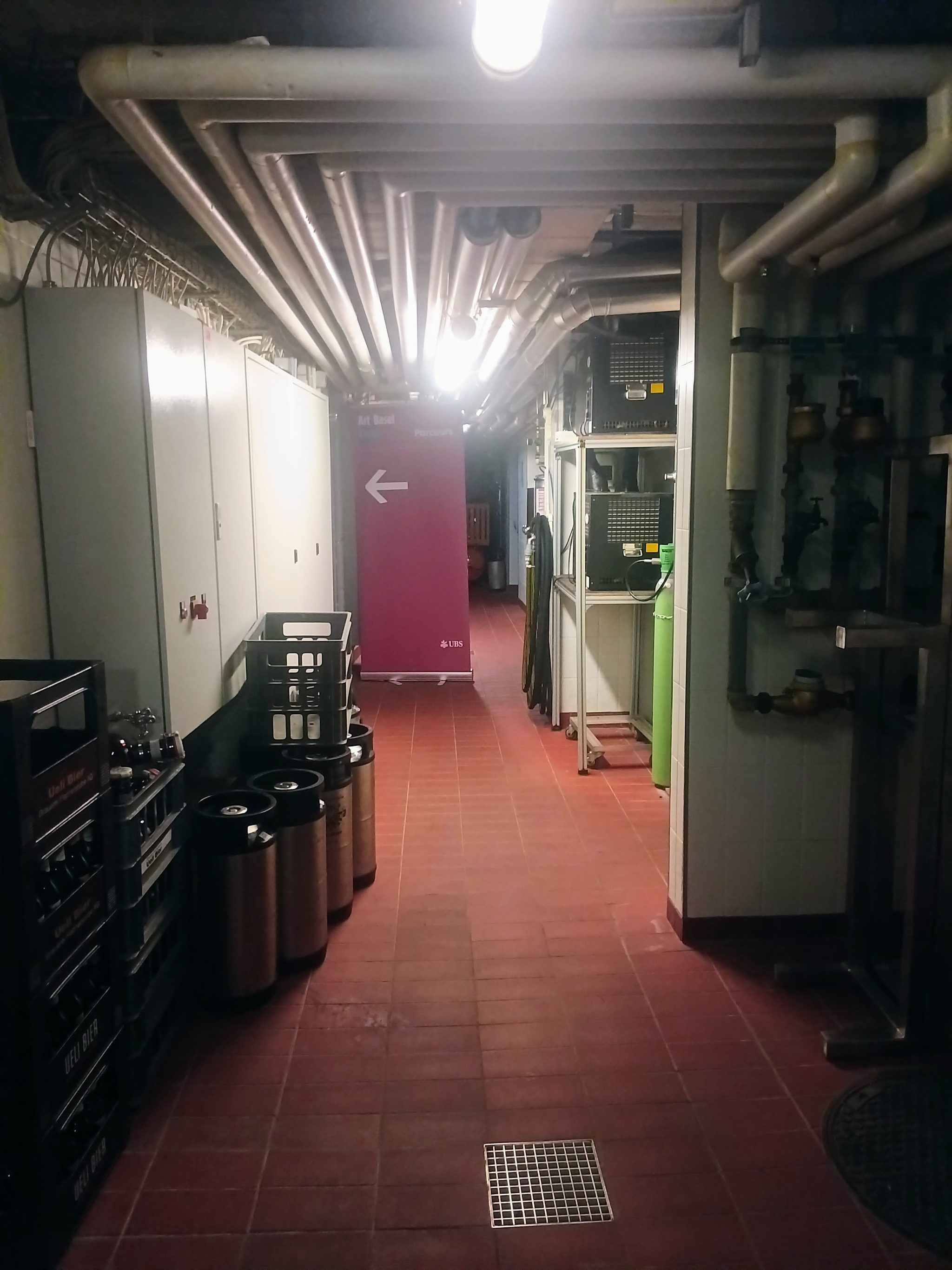
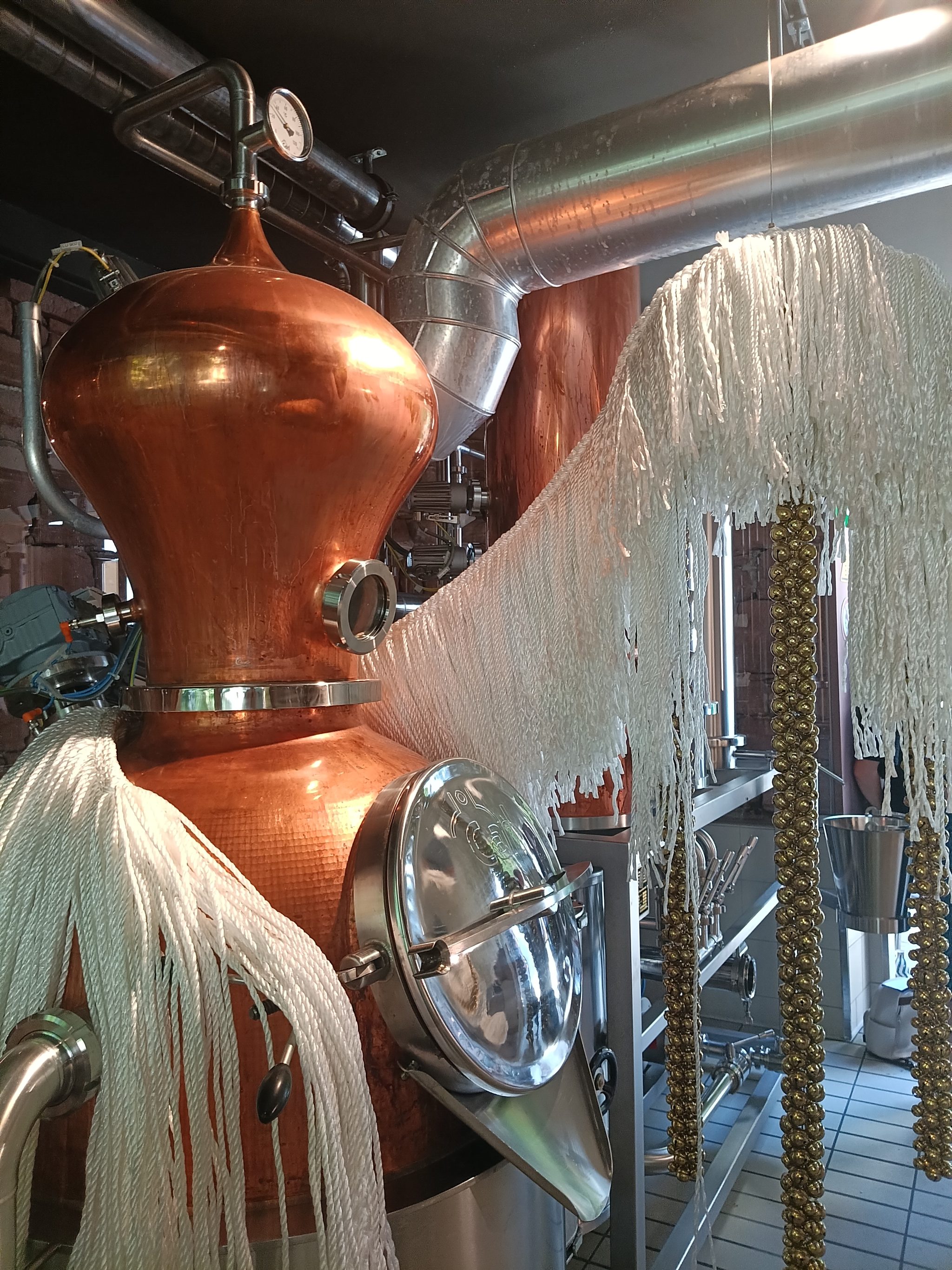
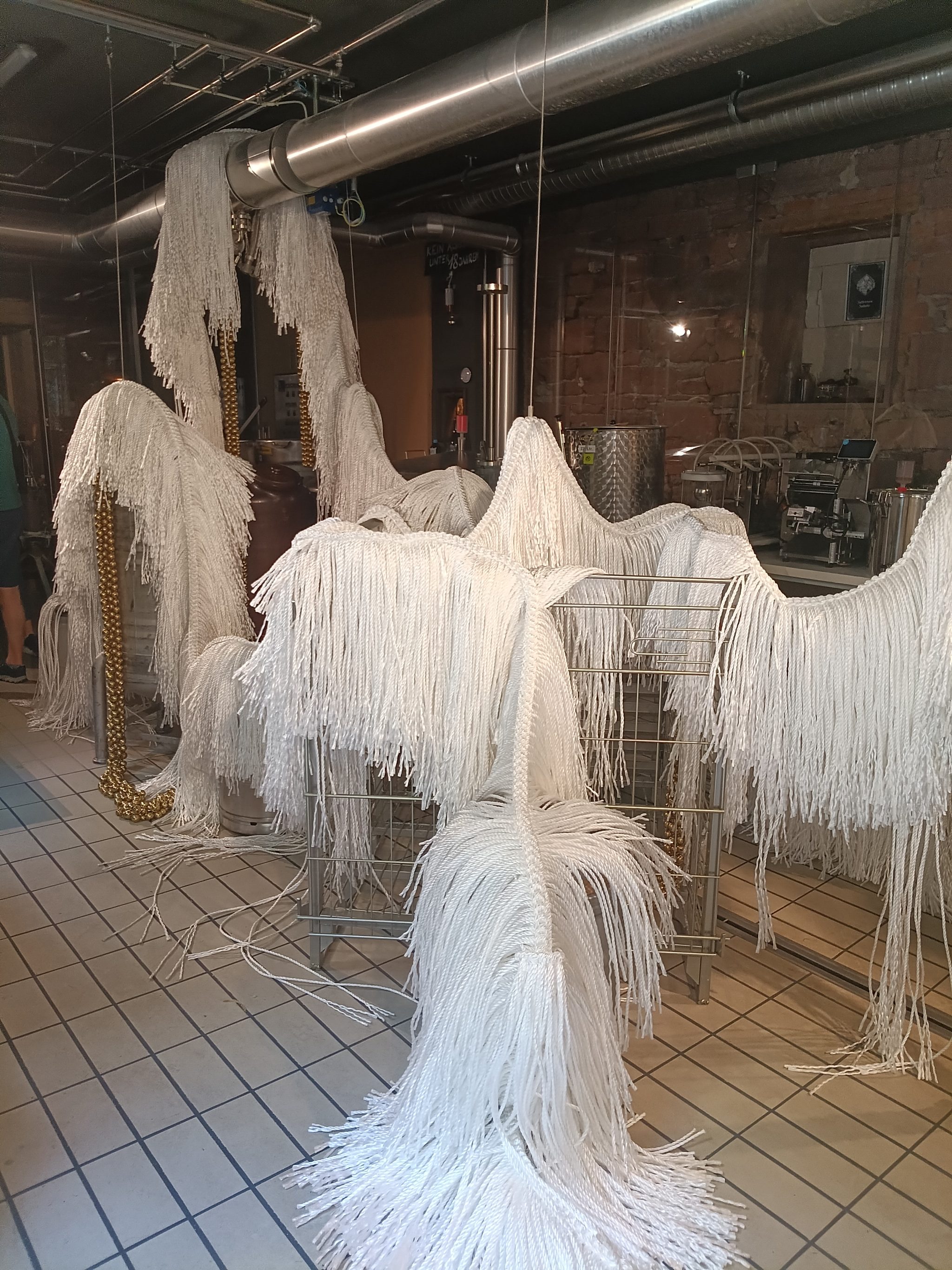
Curated in 2026 by Stefanie Hessler around the theme of conviviality, Parcours brought 21 interventions into Basel’s civic, architectural, and social spaces. A church, an artisanal distillery, the cellars of the Ueli brewery and restaurant, a hotel, and even an employment centre became exhibition venues.
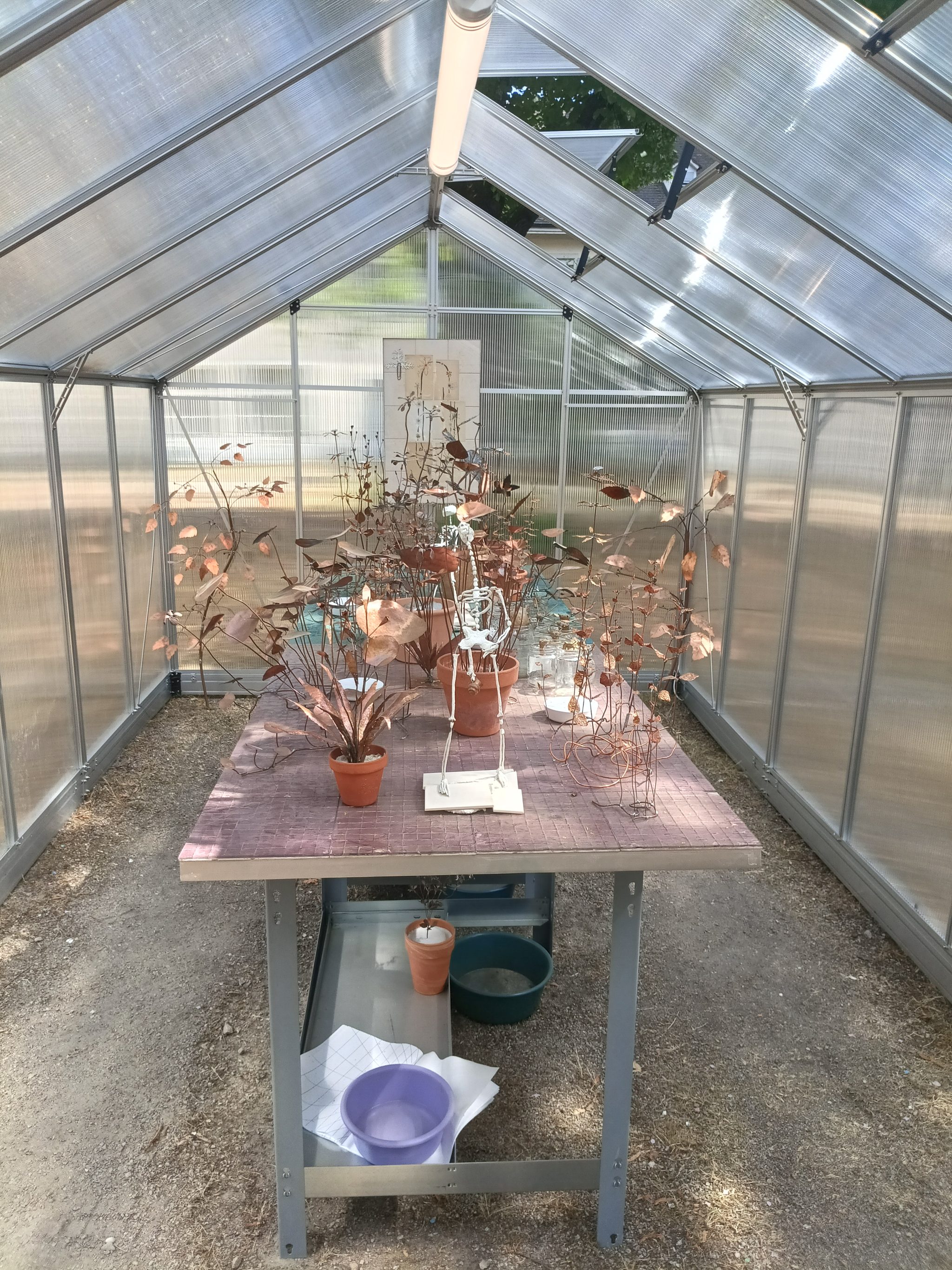
Here, visitors could not simply move from one booth to the next. They had to follow a map, find their bearings, look for an entrance, cross the city, and discover places normally outside the art circuit. Parcours made its curatorial logic tangible by turning navigation itself into part of the experience.
The sites became part of how the works were understood. The projects entered into dialogue with architecture, social functions, memories, and previous uses. Themes such as colonialism, appropriation, ecology, diaspora, and the transmission of memory acquired a different resonance because they were no longer suspended within the neutral environment of the fair, but situated across public spaces throughout the city.
”Art Basel seemed more open when it stepped outside Art Basel.”
Not every location proved equally decisive. In some cases, the venue functioned more as an evocative backdrop than as an element that deepened or amplified the work. Even so, the shift mattered. Art Basel seemed more open when it stepped outside Art Basel.
An entire ecosystem also developed around the event: city galleries extended their opening hours, while exhibitions, performances, parties, and independent initiatives multiplied across Basel.
Among them was Basel Social Club, a non-profit platform founded by art professionals in 2022 that explicitly positions itself outside the conventional fair model. Free of charge and open to everyone, its 2026 edition occupied a vacant multi-storey office building, combining exhibitions and performances with food, music, an art-book fair, and opportunities for social encounter.
This model, too, should be assessed without naïveté. Informality does not automatically equal inclusion, nor does a party erase the dynamics and hierarchies of professional or social belonging. Nevertheless, the shift from the halls to a more hybrid context changes both the possibilities for encounter and the perception of the artworks.
Access, attention, and knowledge
Art Basel 2026 confirmed once again its central role in the international art market, concentrating capital, institutional influence, reputation, and attention within a single place and week.
But its public value cannot be measured by counting entries alone.
Opening the doors allows a broad public to approach the people, artworks, and mechanisms shaping contemporary art today. It is a valuable opportunity. Yet physical admission does not automatically coincide with access to knowledge, and sharing the same space does not guarantee the beginning of a relationship.
”Perhaps Art Basel’s most significant cultural effect lies in what it temporarily makes possible: a city threaded through with art; unexpected places opened to the public; a curiosity that may begin inside the halls but find, elsewhere, the space to grow.”
Responsibility is distributed across different actors. Art Basel shapes the overall visitor experience through its routes, information, and public-facing staff; individual galleries decide how – and with whom – they communicate. The art-fair format itself imposes rhythms, priorities, and hierarchies that cannot simply be erased.
Could the fair become a genuinely hybrid space – without denying its commercial nature – while becoming more welcoming, legible, and responsive to the curiosity of those who enter without a professional role or financial stake?
The exceptions demonstrate that another approach is possible even within the market: sometimes it is enough to describe an artwork, explain a technique, or activate a switch. More ambitious forms of openness would have to be imagined and designed. Above all, they would have to be desired.
Perhaps Art Basel’s most significant cultural effect lies not only in what it exhibits or sells, but in what it temporarily makes possible: a city threaded through with art; unexpected places opened to the public; a curiosity that may begin inside the halls but find, elsewhere, the space to grow.
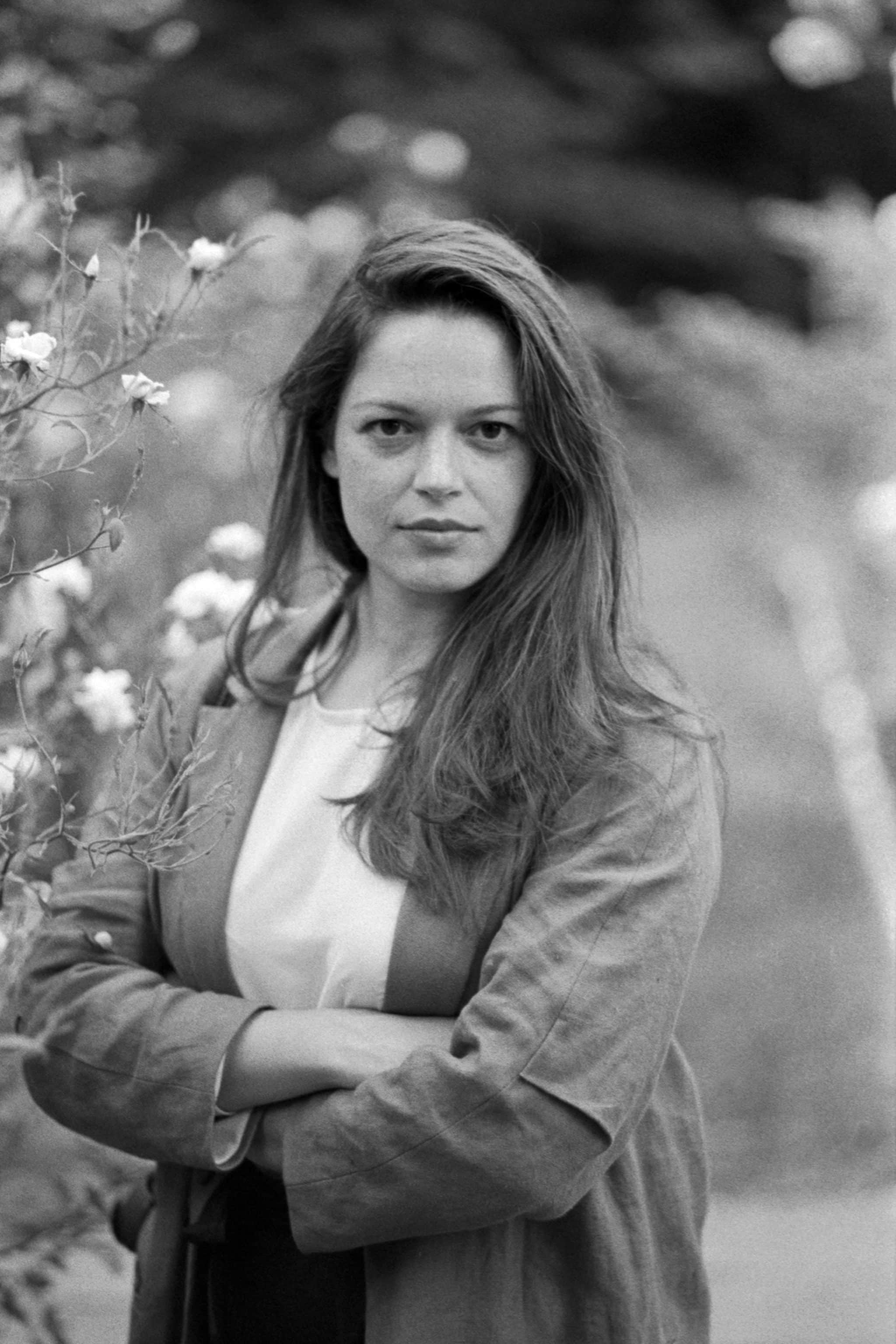
Chiara Gelmini is an Italian art writer, curator and interdisciplinary artist. With a background in visual and performing arts and aesthetics, she works across contemporary art, music, performance and cultural education. Her work is shaped by travel, cultural crossings and the porous thresholds between places, disciplines and artistic languages. Her writing explores the relationships between artworks, exhibition contexts and audiences, and art as a space for encounter. Photo: Serena Bobbo