Splitternya Uråldriga

Av Kae Tempest

Översättning från engelska av Øyvind Vågen

Kae Tempest (född 1985) är en prisbelönt brittisk spoken word-artist, poet, skivartist, författare och dramatiker som tilldelades 2012 års Ted Hughes Award, utdelat 2013, för sin långdikt Brand New Ancients som här återges i utdrag i svensk översättning. Den som vill läsa det engelska originalet kan göra det hos webbplatsen Genius eller se honom läsa ur dikten på Letters Live. En analys av dikten finns att läsa på Glasgow Women’s Librarys webbplats. Han har även skrivit en hyllad debutroman, The Bricks That Built the Houses.

Förr i världen
var myterna berättelserna vi använde för att förklara oss själva.

Men hur kan vi förklara hur vi hatar oss själva,
vad vi har gjort oss själva till,
hur vi klyver oss själva i två,
hur vi överkomplicerar 
oss själva?

Men vi är fortfarande mytiska.
Vi sitter fortfarande fast för gott någonstans mellan det hjältemodiga och det ömkansvärda.
Vi är fortfarande gudalika;
det är det som gör oss så monstruösa.
Men det känns som vi har glömt att vi är mycket mer än summan av alla
de saker som tillhör oss
Fortsätt läsa ”Splitternya Uråldriga”

It is not even the beginning of the end. But it is, perhaps, the end of the beginning

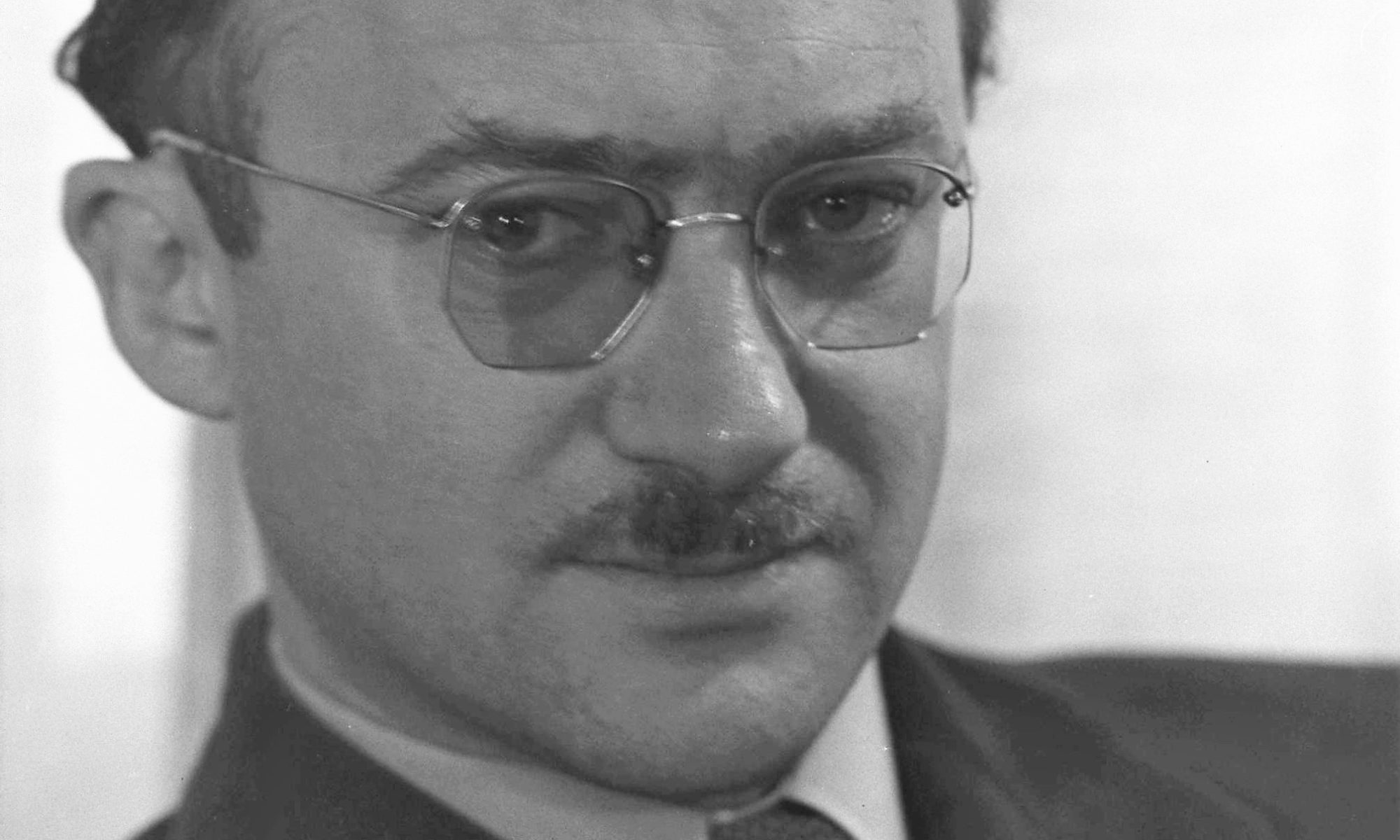
THE YIDDISH POET AVROM SUTZKEVER.

When one reads the poem “Grains of Wheat” by Avrom Sutzkever (written in the ghetto of Vilna and here read and analyzed in English translation, see here for the full text in another English translation) and stumbles upon the line “As if protecting a baby -,/I run with the Yiddish word,” it is hard not to think of the poet’s firstborn child that was slaughtered in the ghetto the day after he was born; the child was alive just long enough for the mother of the poet to forget that her grandchild was doomed to be killed from the moment he was born, the same way as Herod once “killed all the male children in Bethlehem and in all that region that were two years old or under” (Matthew 2:16). Maybe it is during this short time, during this split second of dissonance, that the poem is written, that the poem takes place. The poet may be unable to save his Jewish child but is now trying to save the Yiddish word (and all that is written with it and within it) with his written words. 

Fortsätt läsa ”It is not even the beginning of the end. But it is, perhaps, the end of the beginning”