
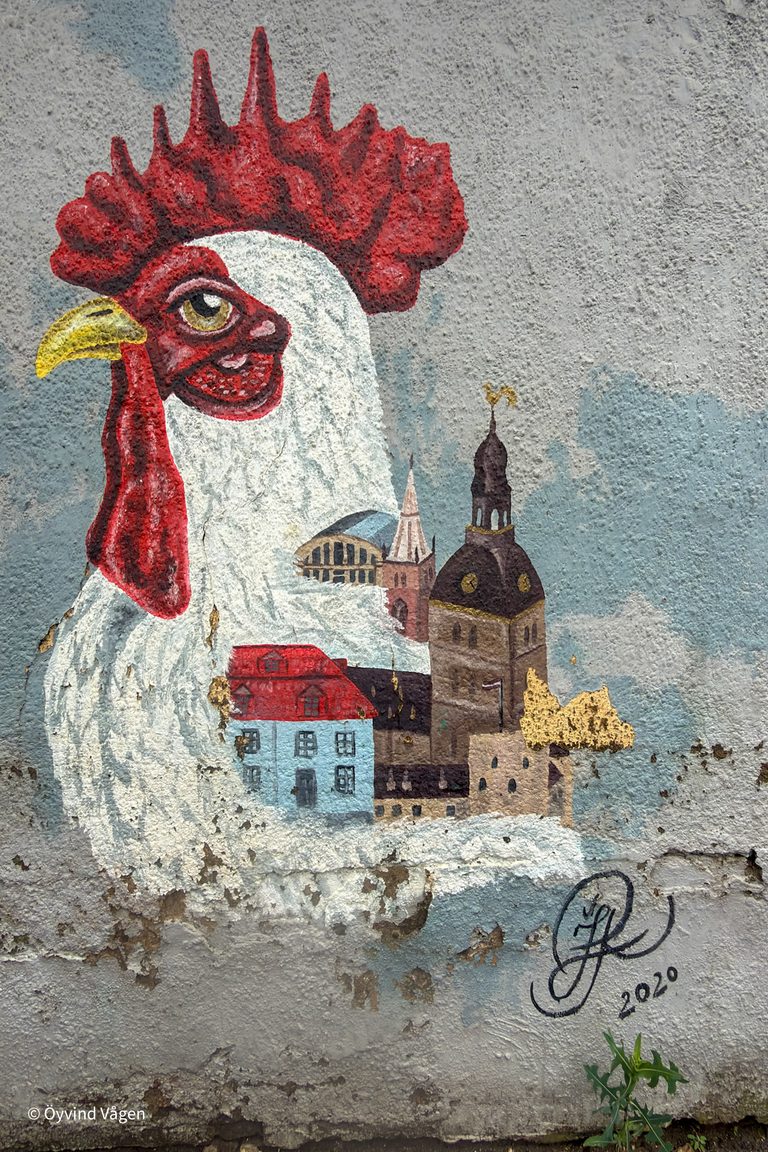
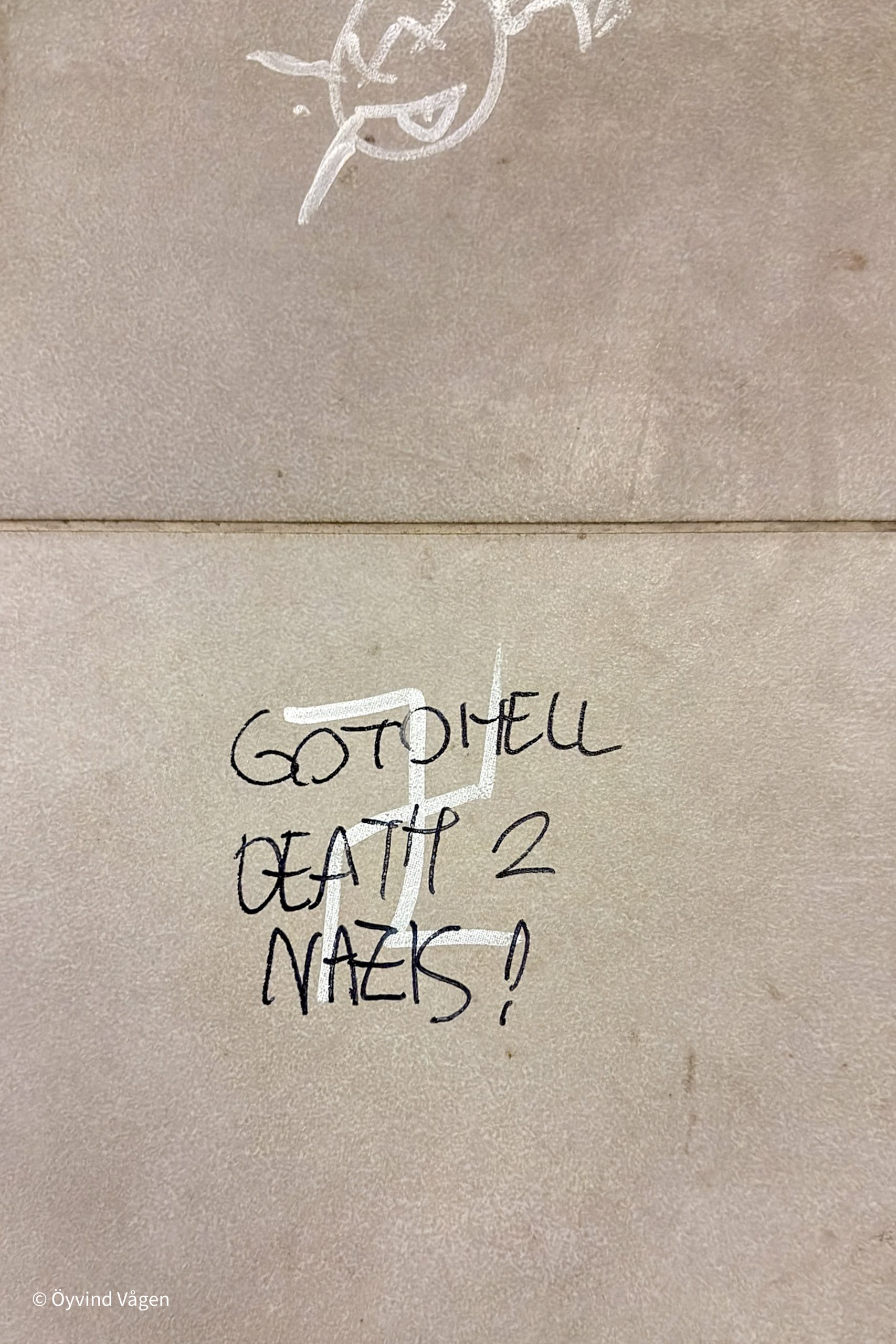
This photo gallery from the streets of Riga is the first instalment in a series of four focusing on street art and wall scribblings around the world; the next three will be Rome, Berlin and Athens. As part of this project, we are embracing the vibrant energy of street art in general, and wall slogans as a way to amplify unheard voices. This concept is akin to what we call ’Written on the Wall’.
By Öyvind Vågen
READ MORE: PHOTO FEATURES FROM ESPINHO AND VENICE/OSLO/TRIESTE.
From the secret symbols of Christians in the Catacombs of Rome, through Mexican murals and the wall newspapers of the Chinese Cultural Revolution, to today’s mix of abandoned and provocative slogans and aphorisms, wall slogans have travelled back and forth from the voice of power to the megaphones of the poor. We explore this in a photo essay series that depicts and reflects on graffiti from around the world. This, too, is true to the magazine’s name and purpose: a kind of critical dialogue conducted through marginal notes, graffiti on the fringes of existence, if you will. When we started this cultural journal back in 2018, one of the core ideas was to revisit and highlight the concept of writing – or, as it more often is, scribbling – on the wall as a form of a layperson’s wall newspaper, but the idea really did not materialise, despite the occasional blog post, until now.
Listening to the Walls of Riga or The City as a Palimpsest
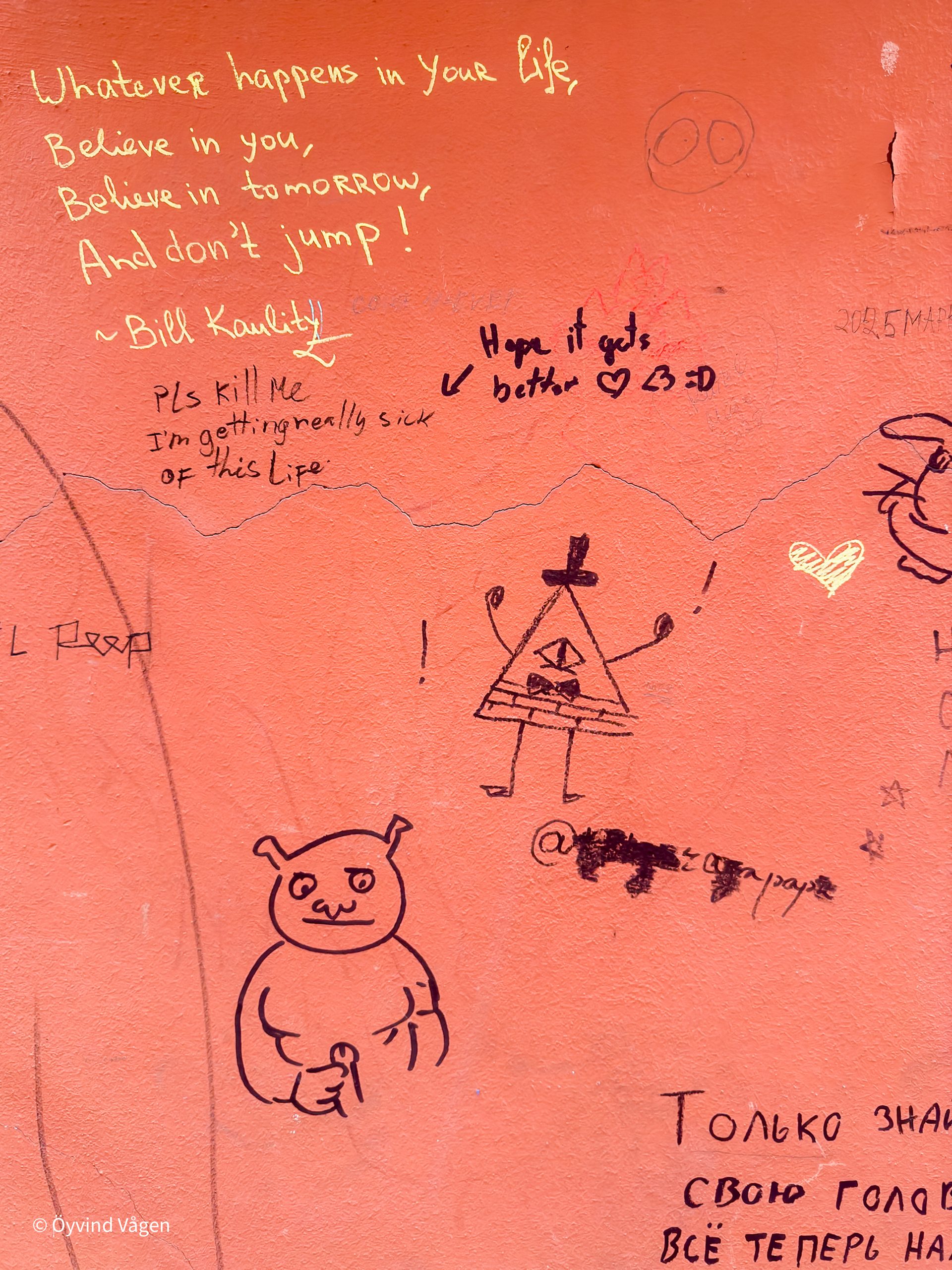
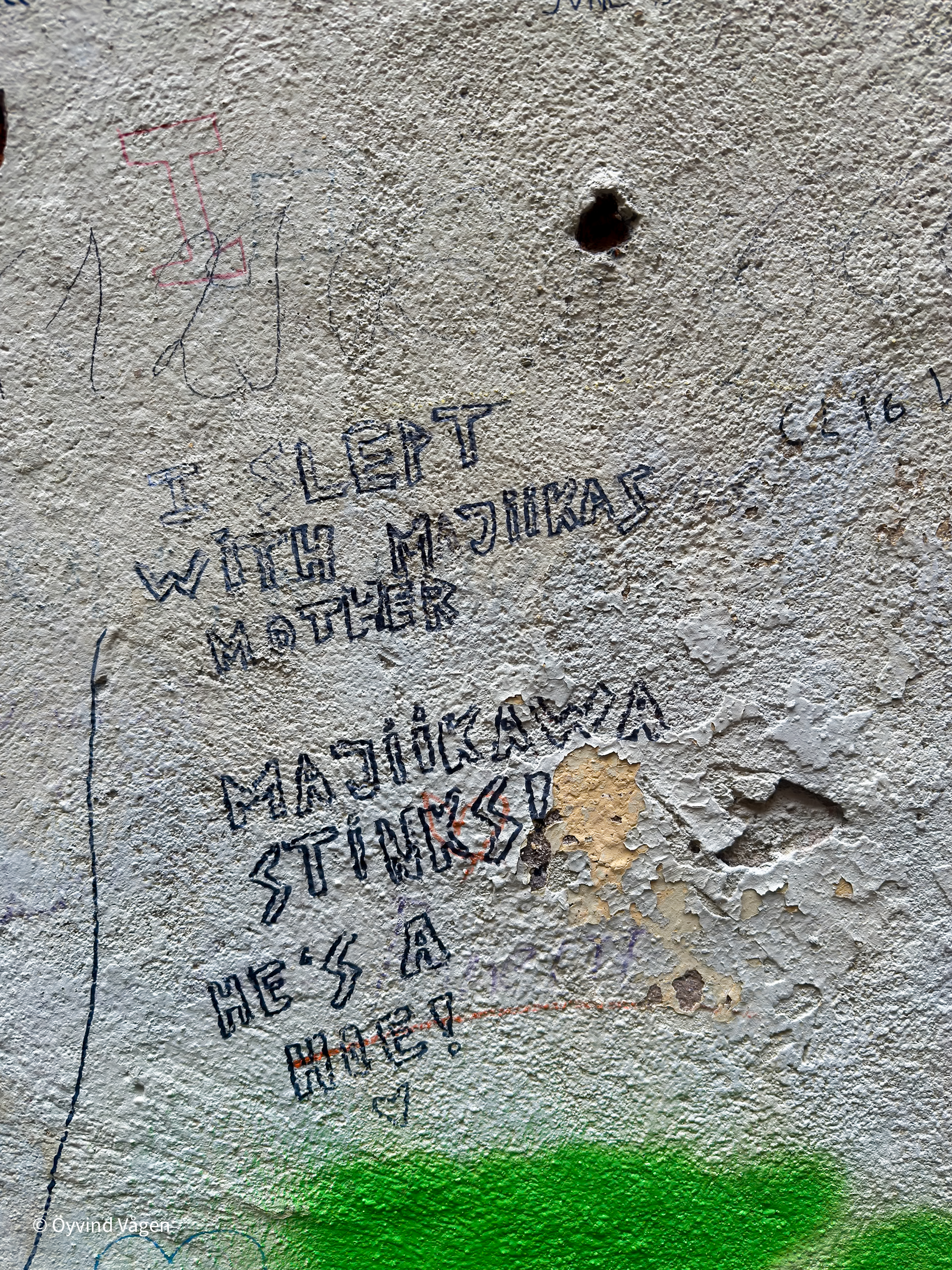
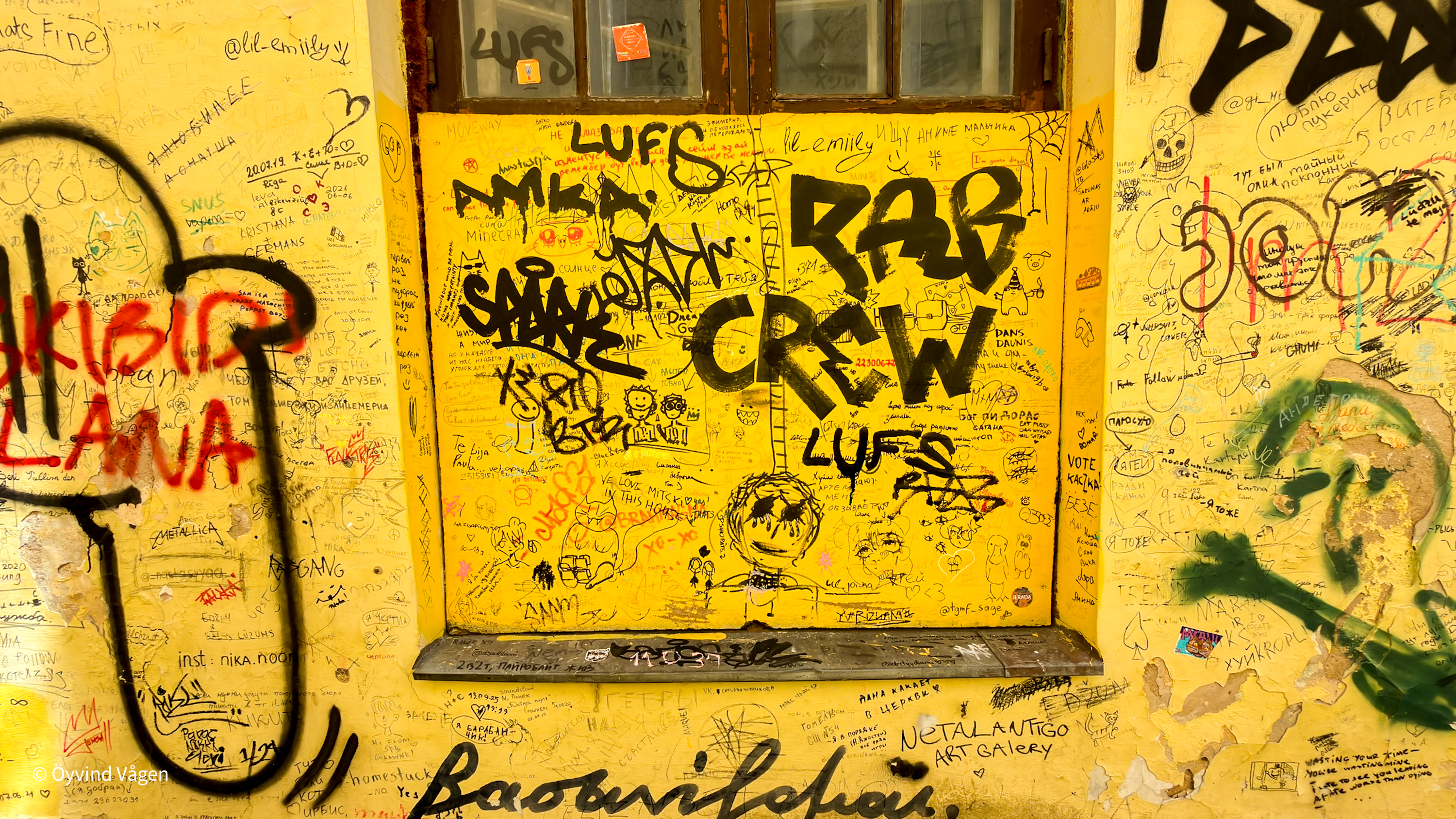
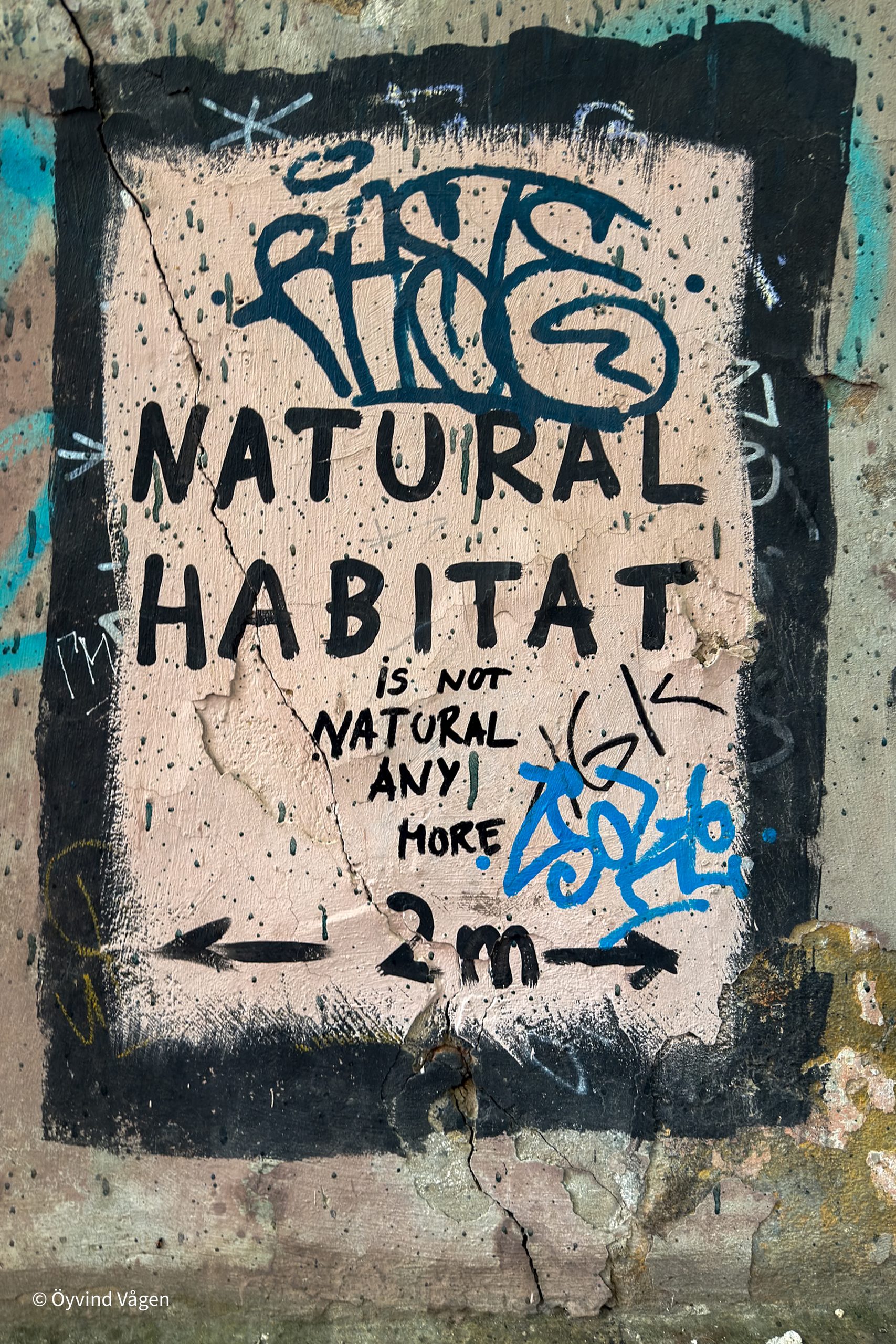
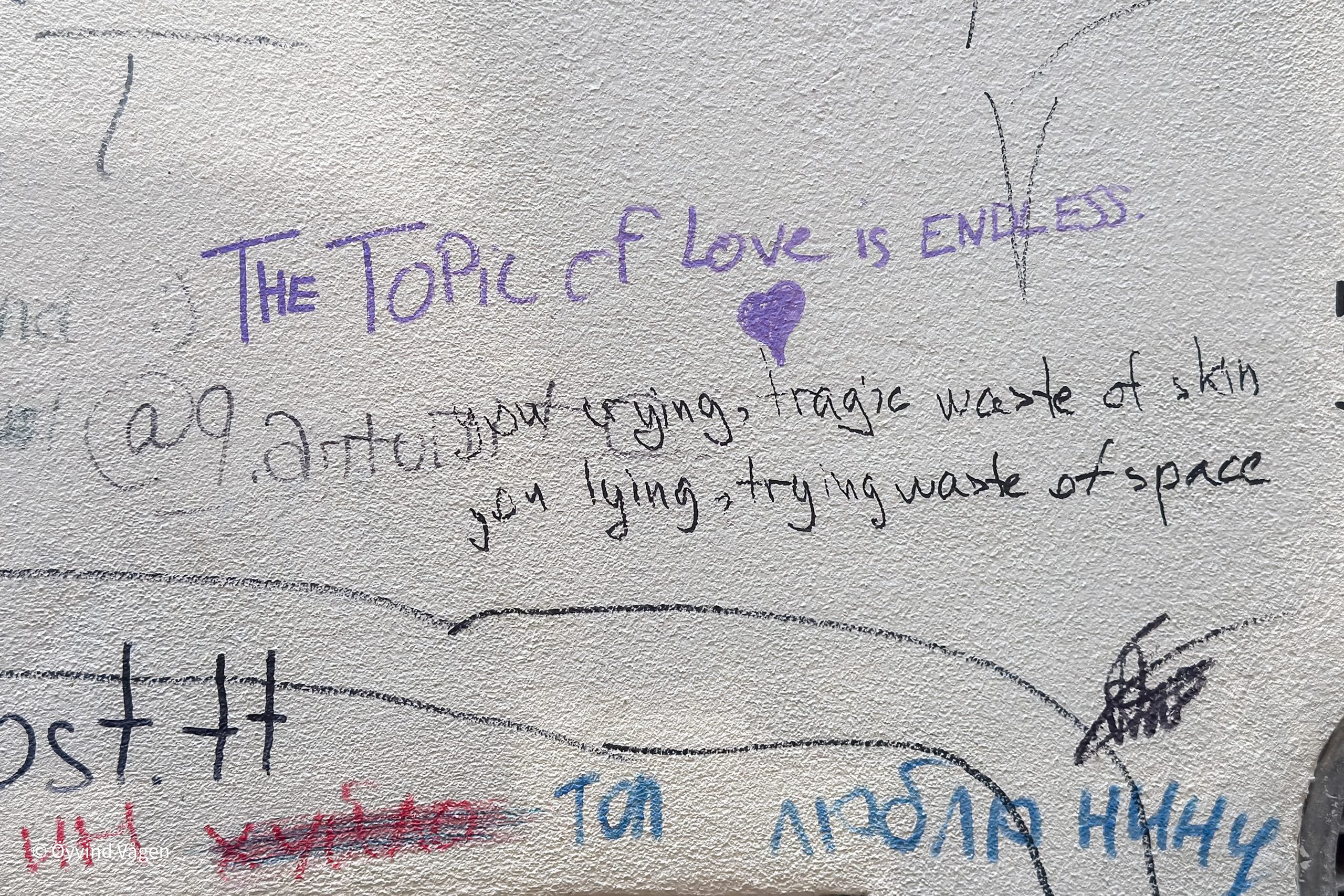
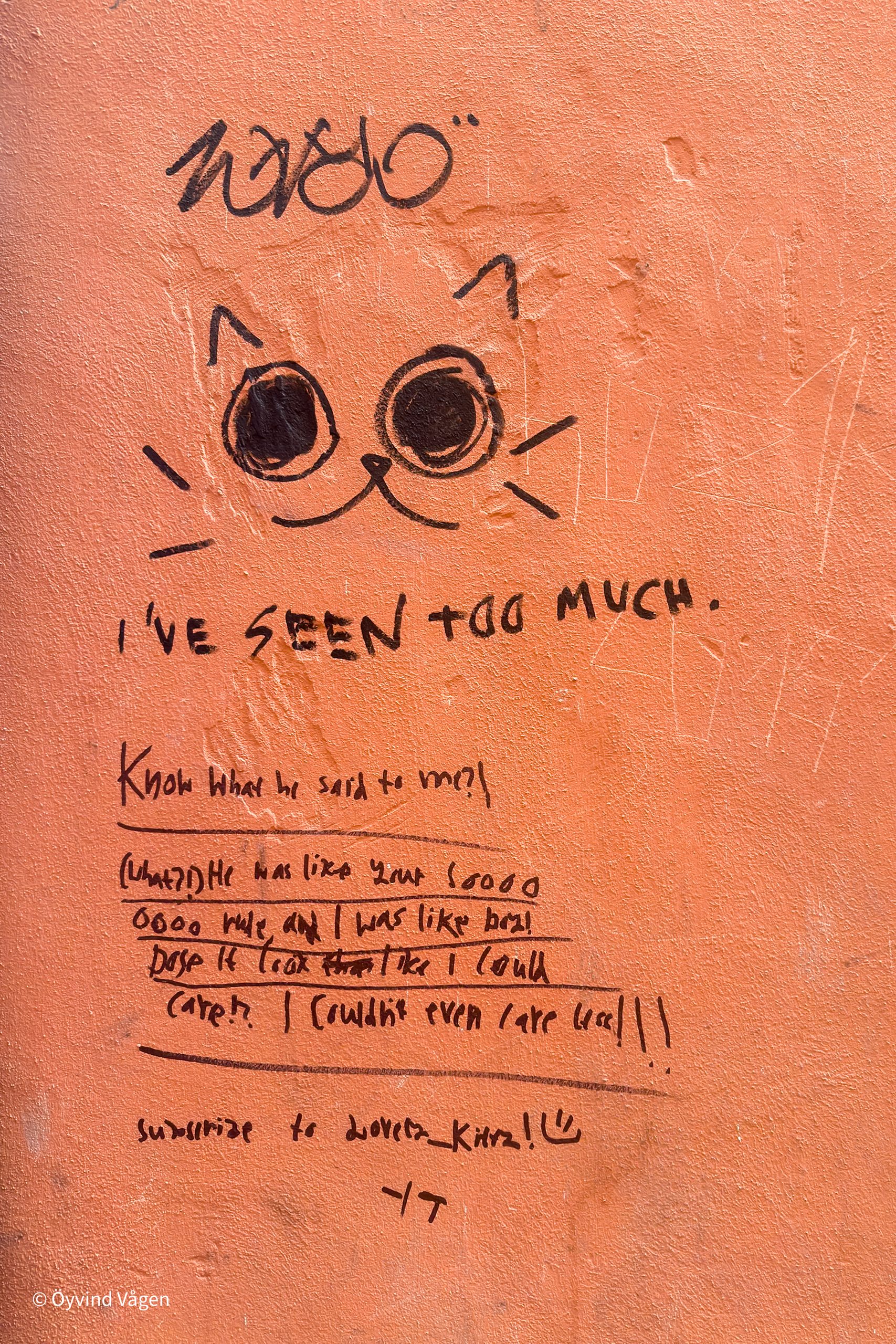
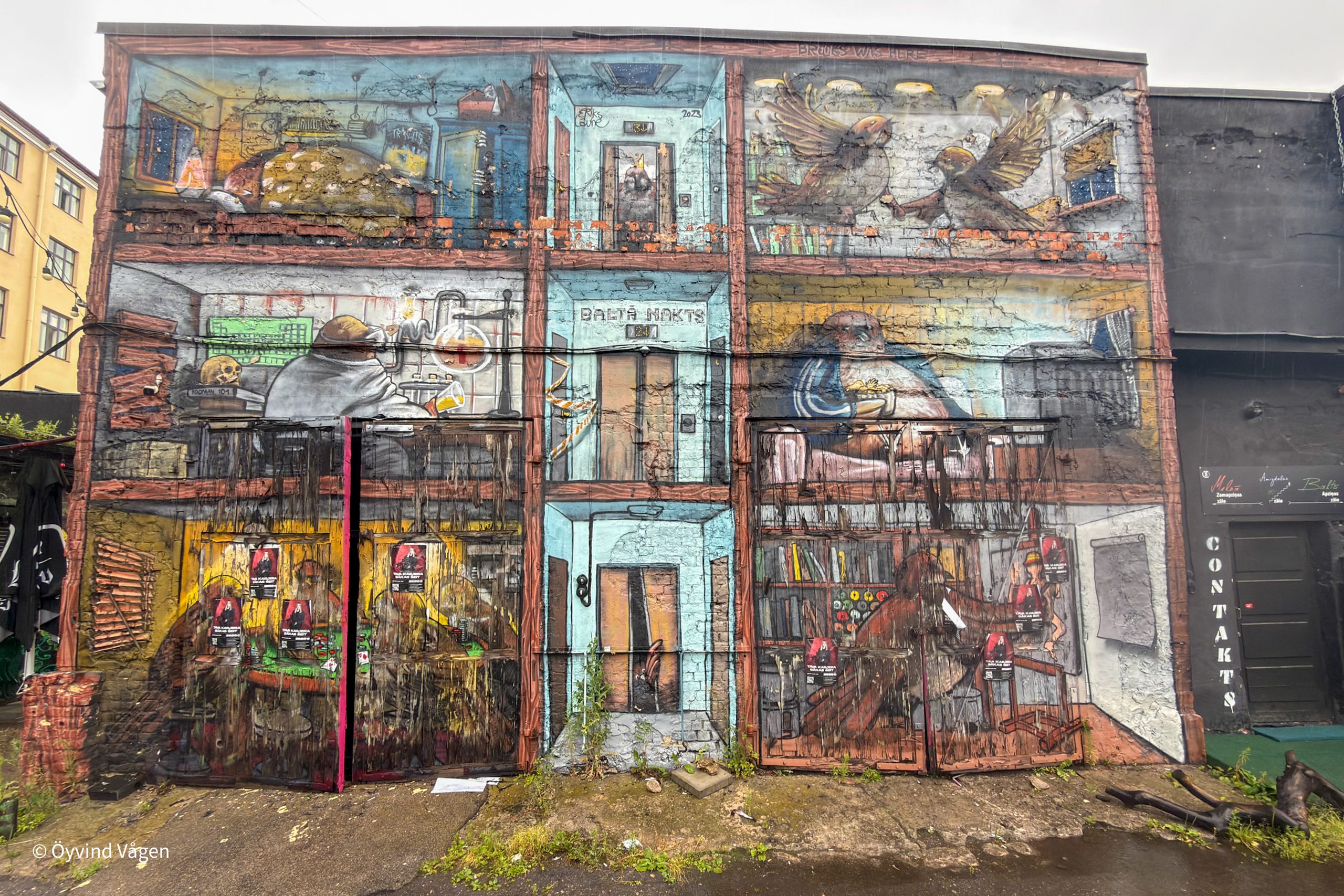
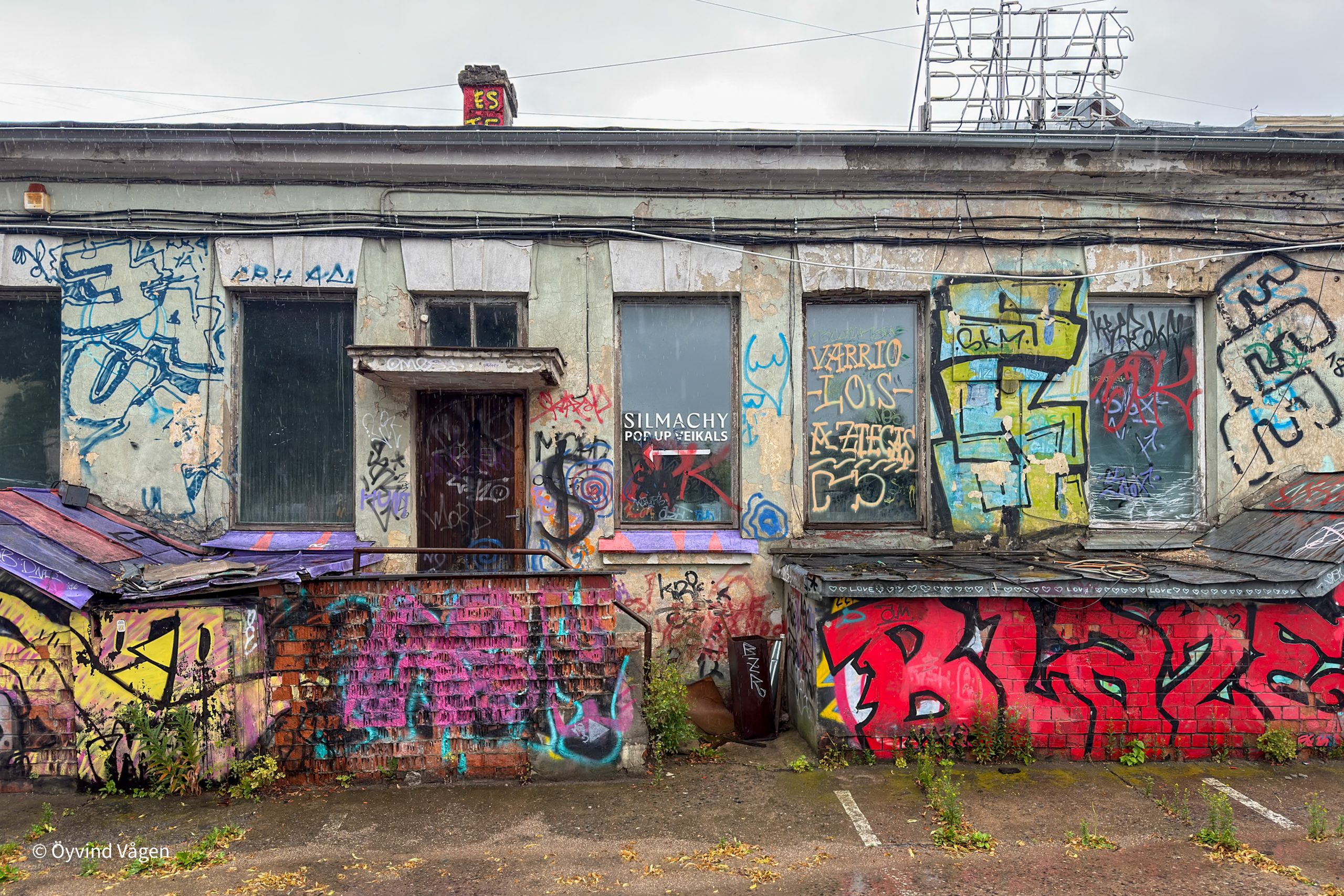
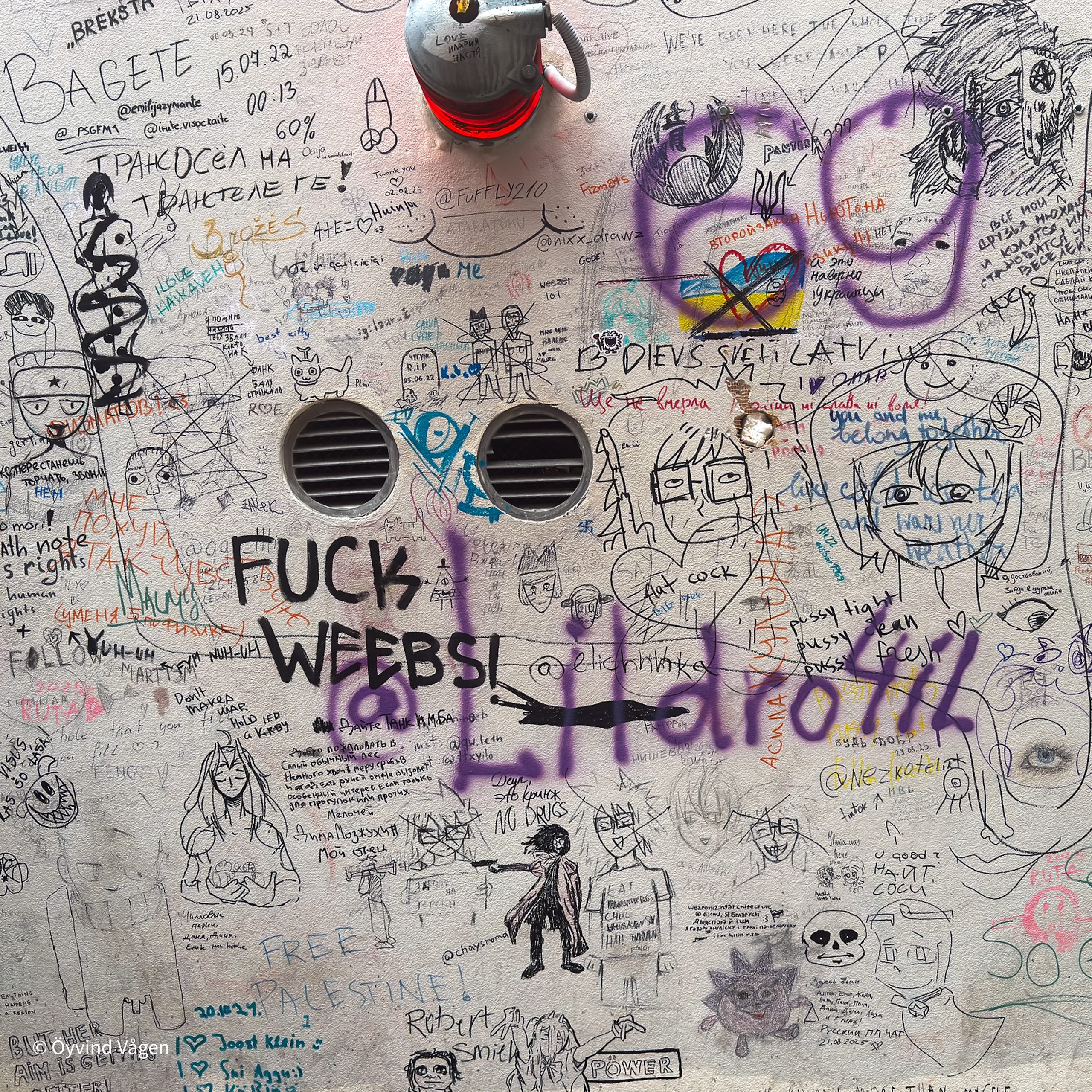
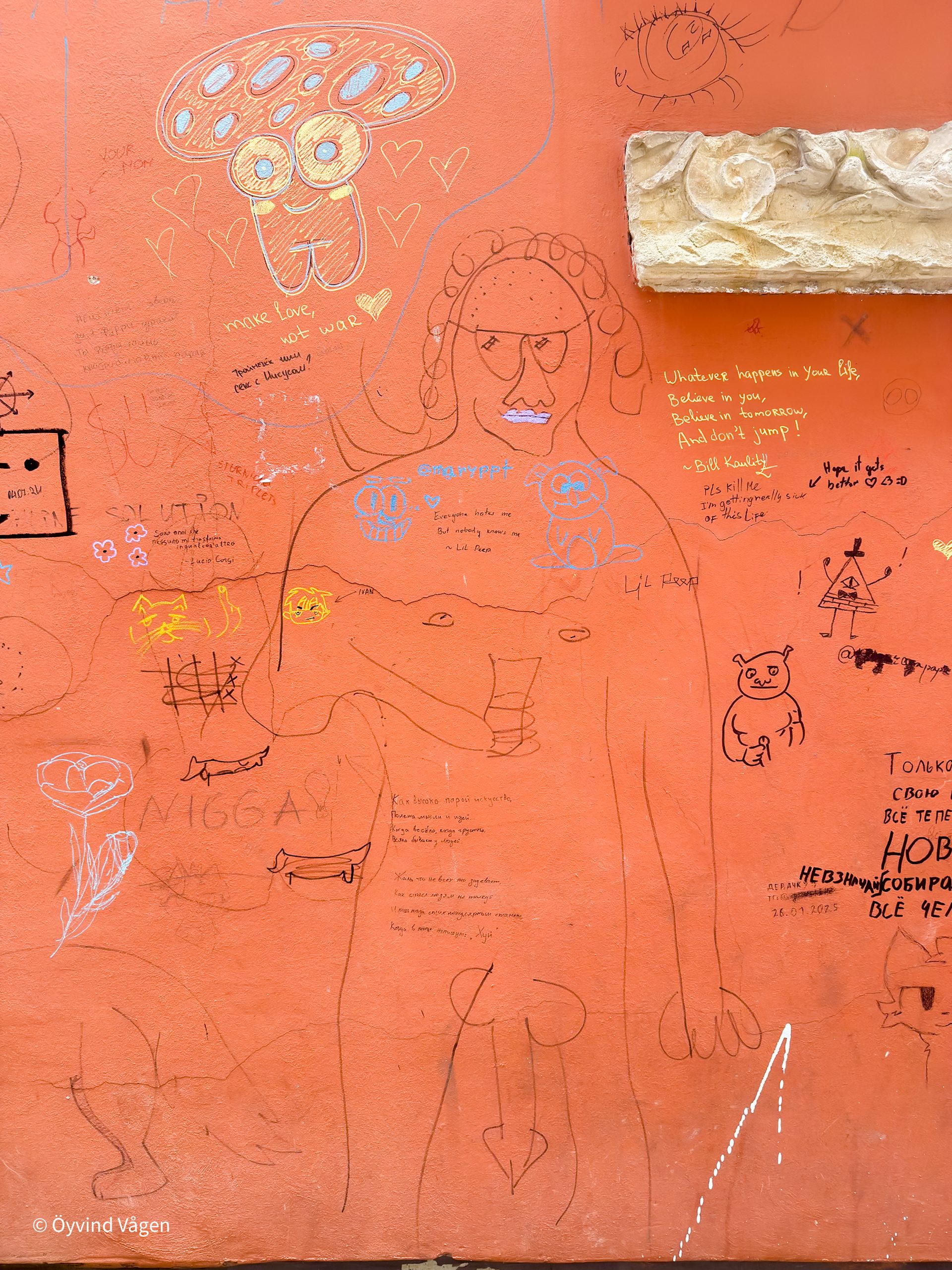
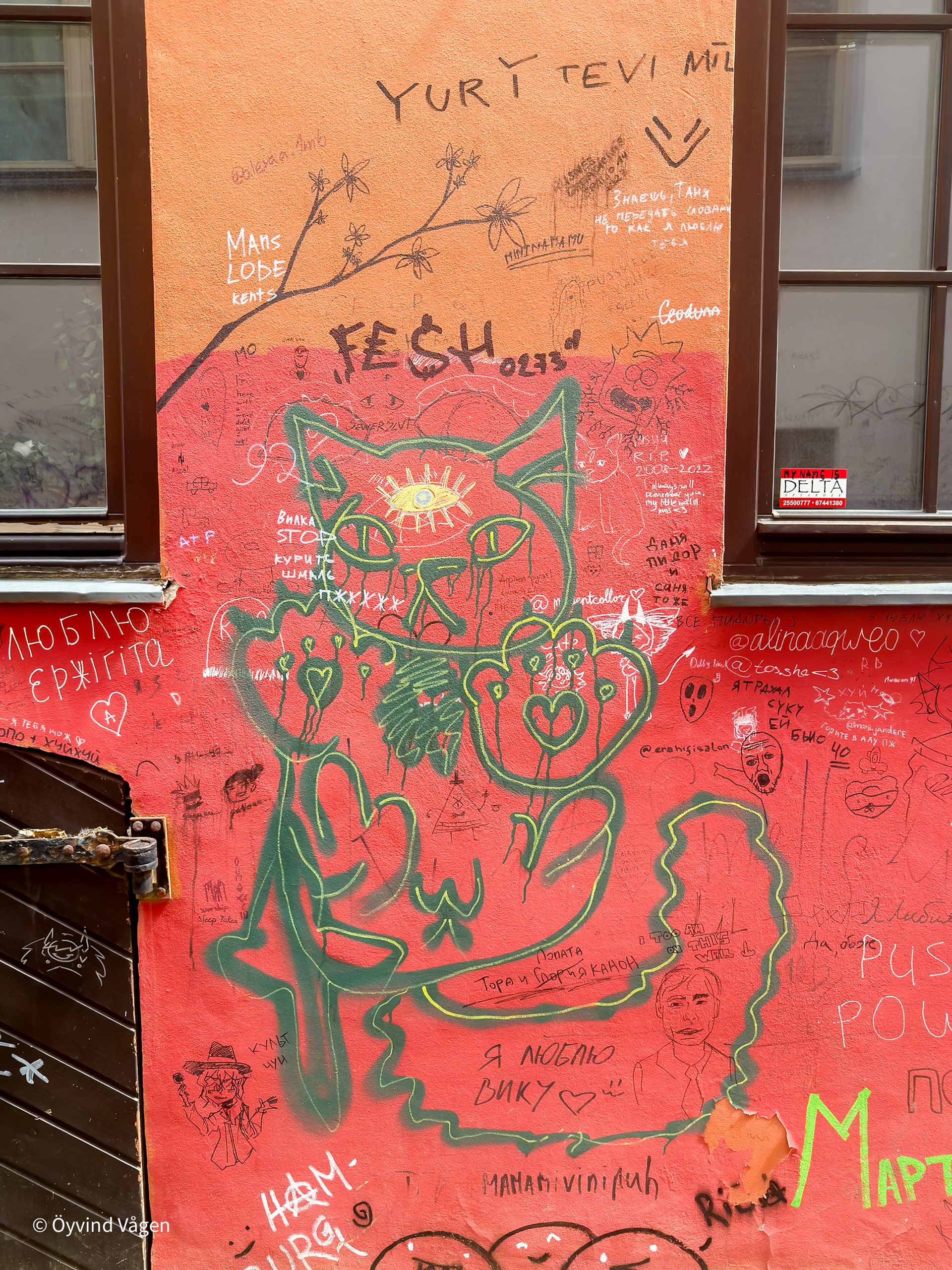
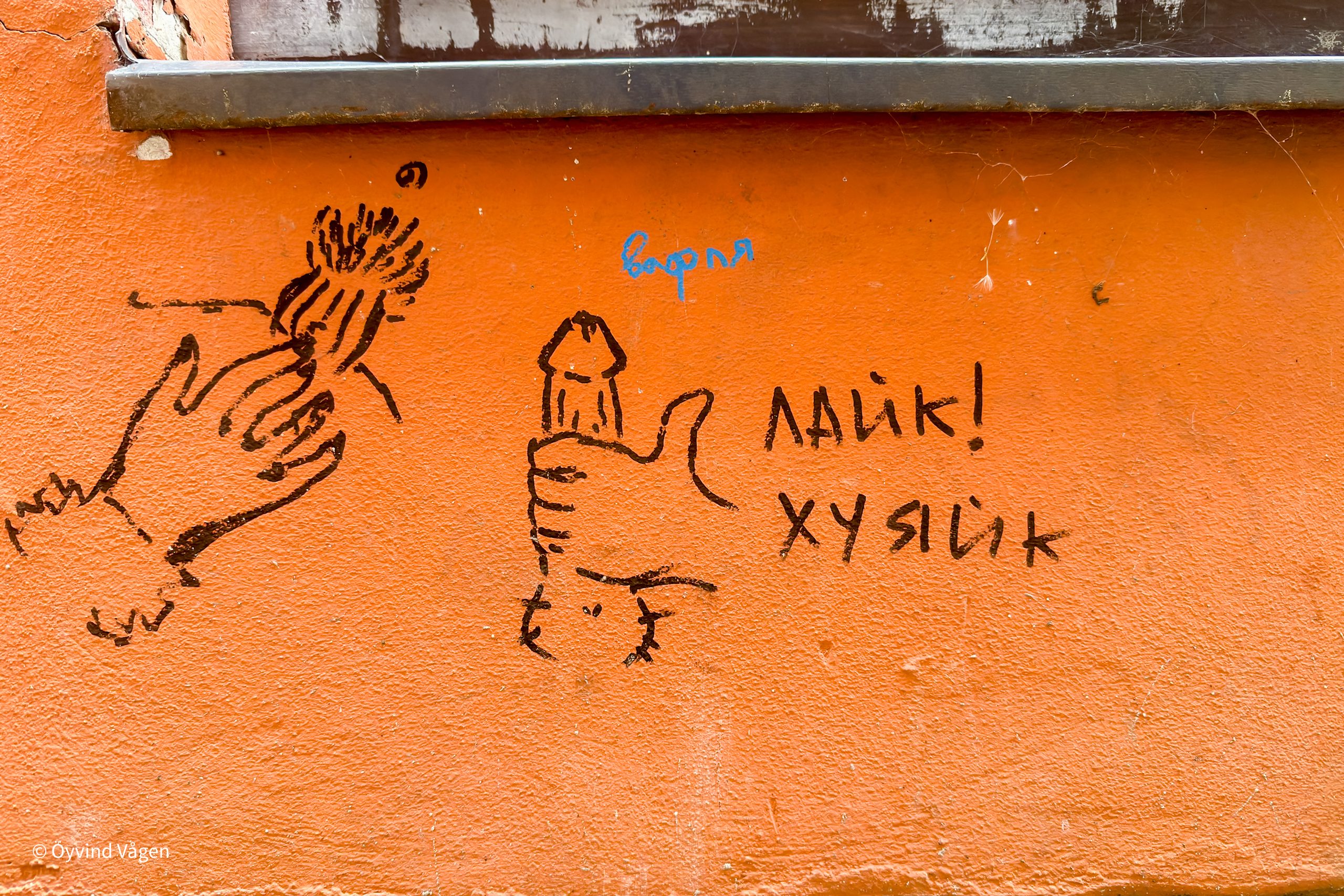
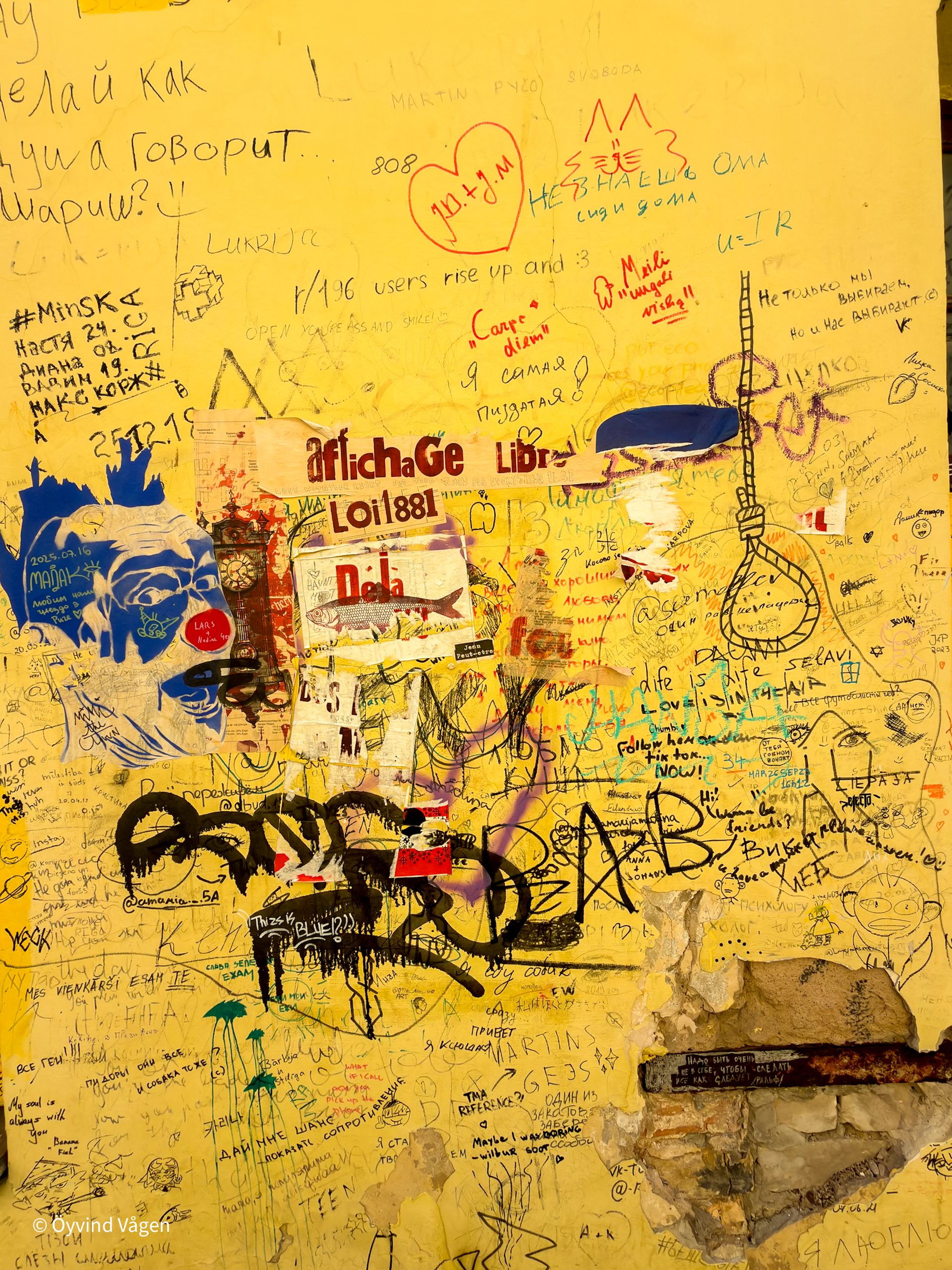
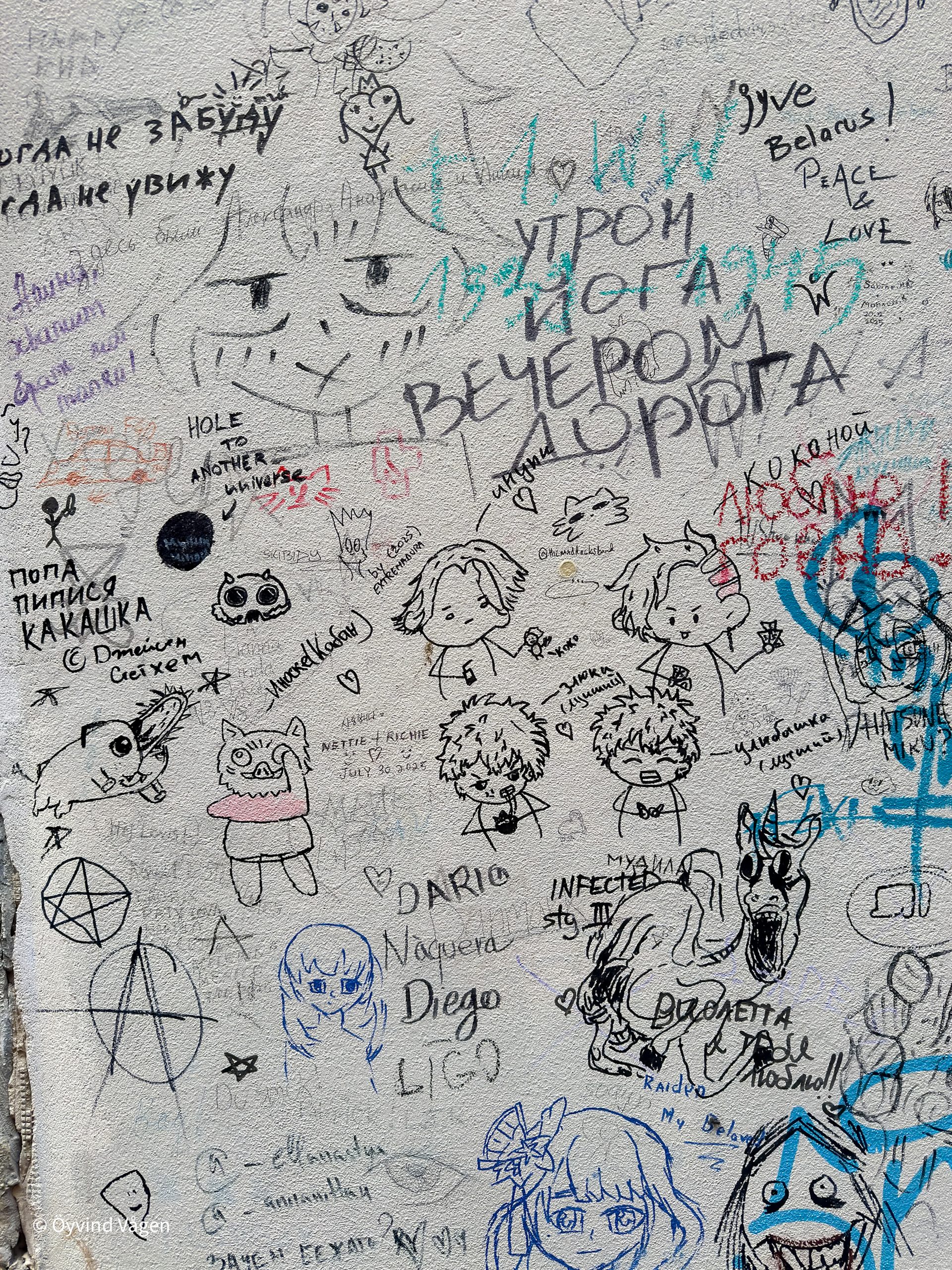
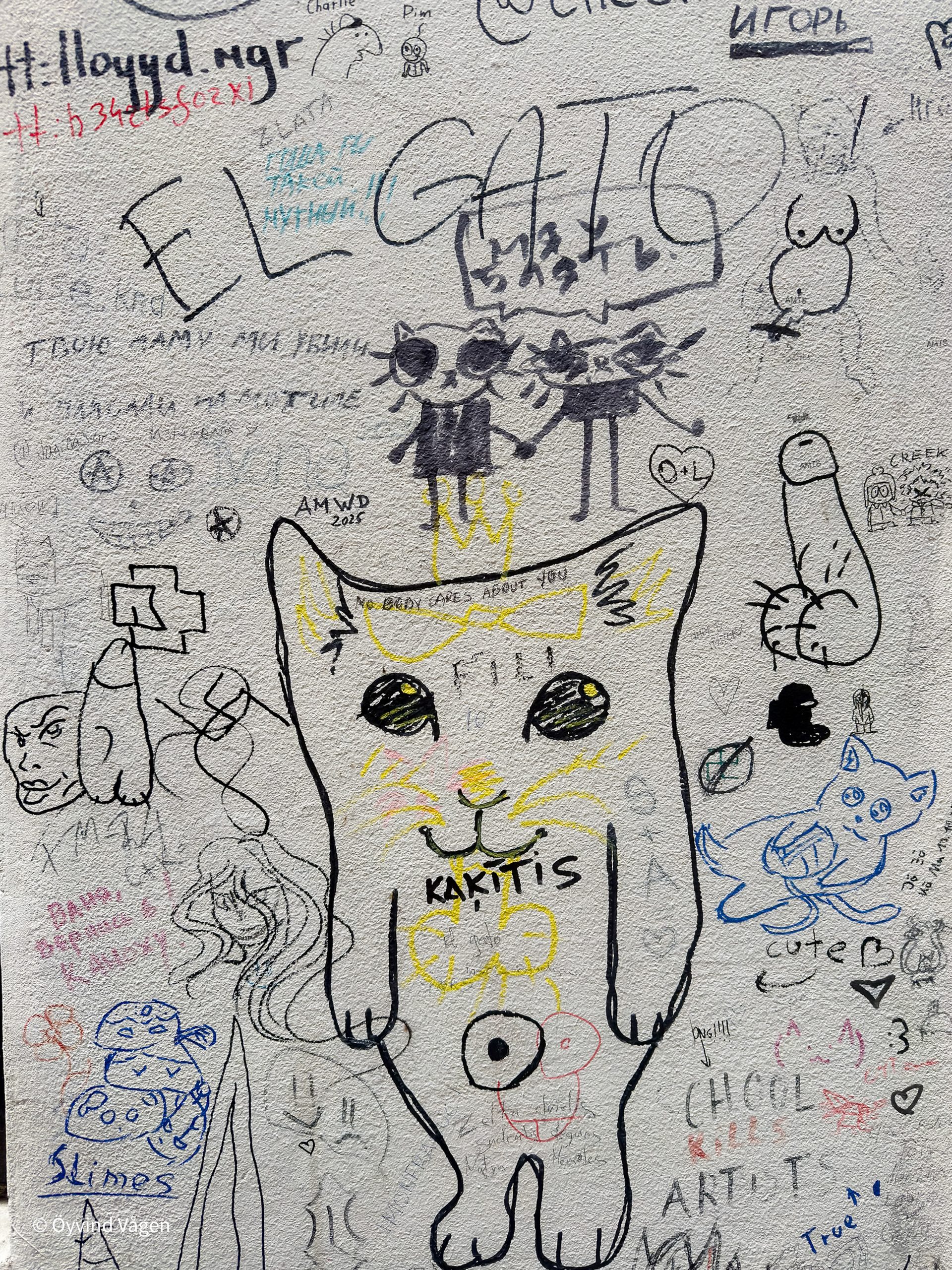
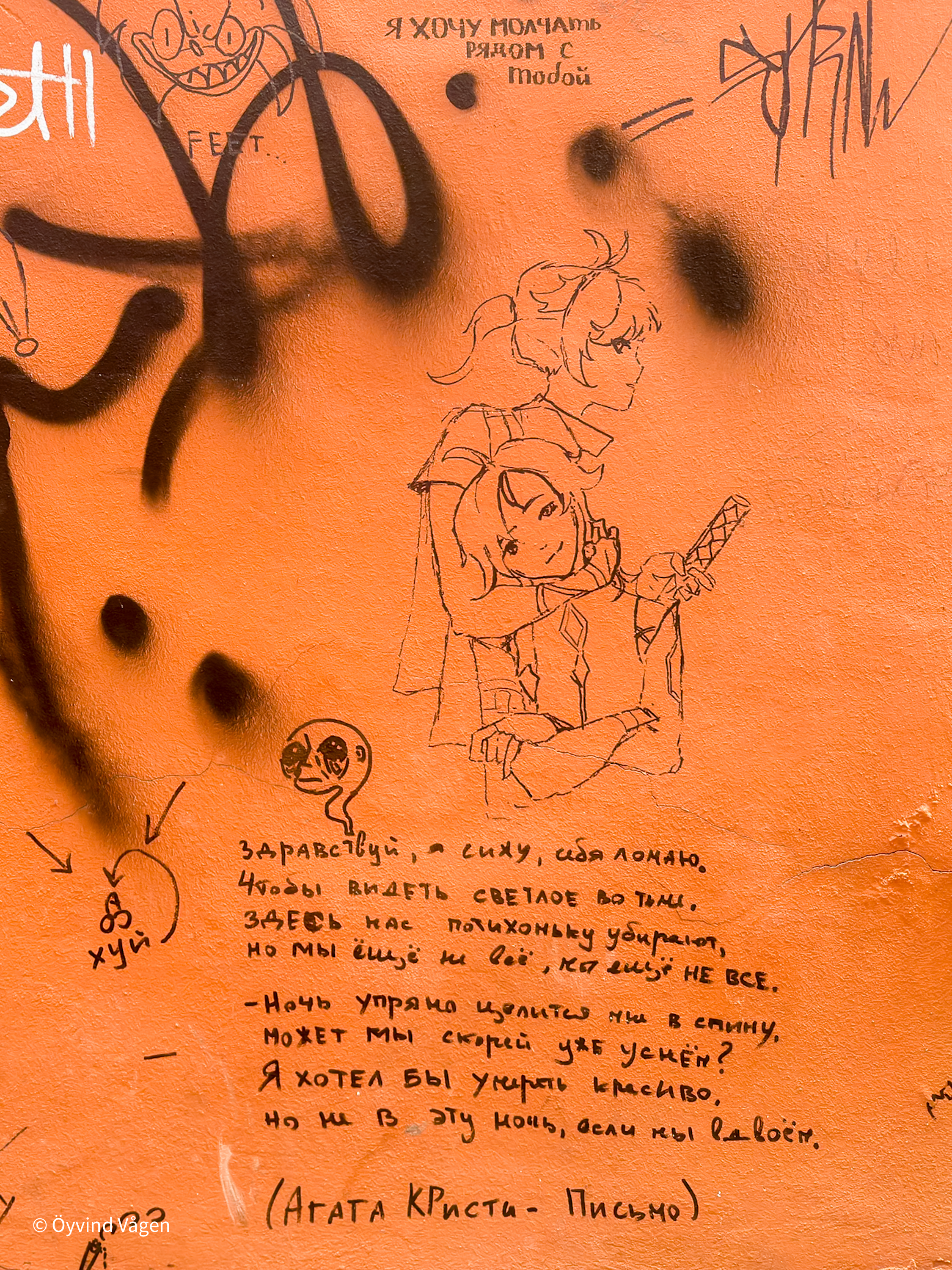
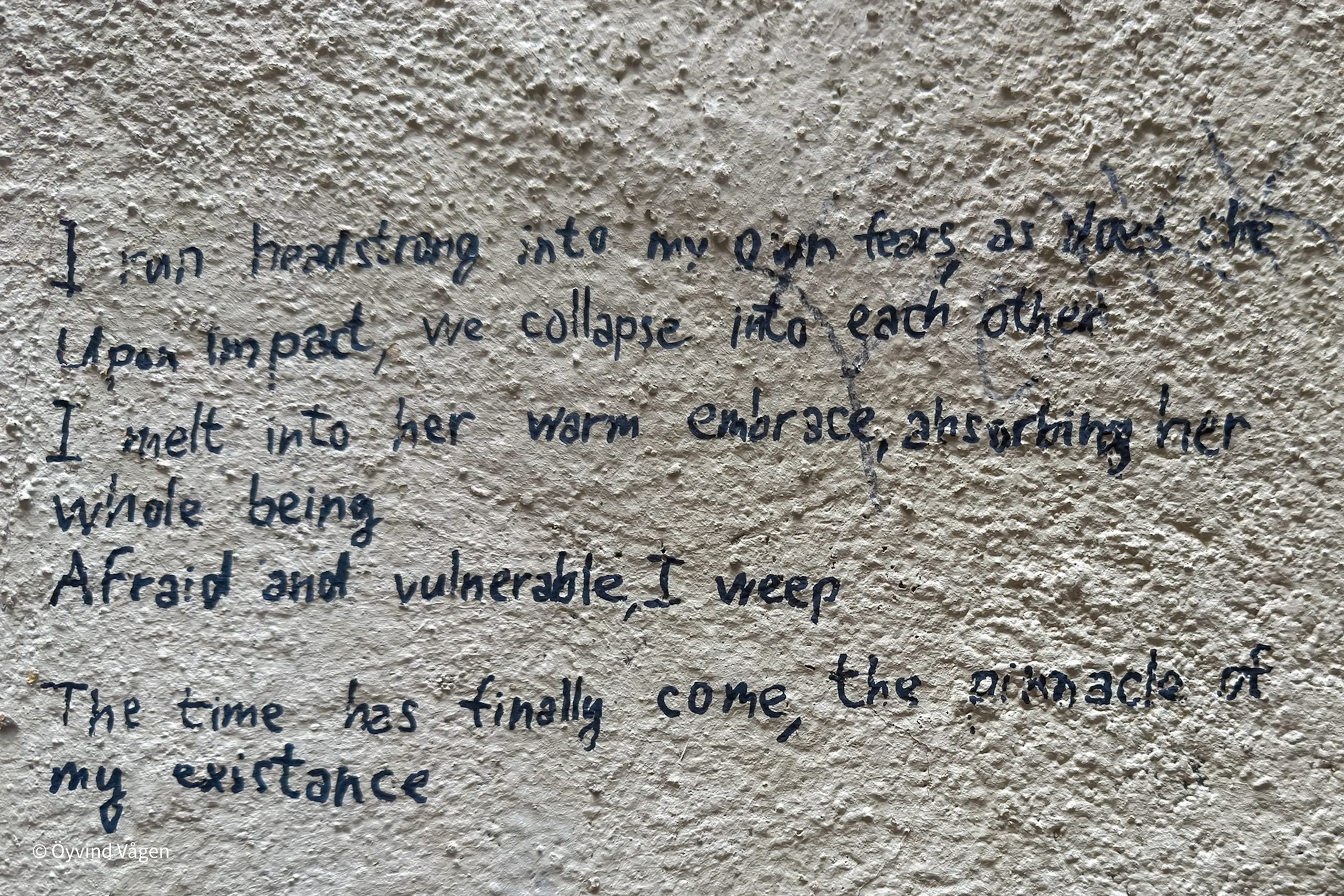
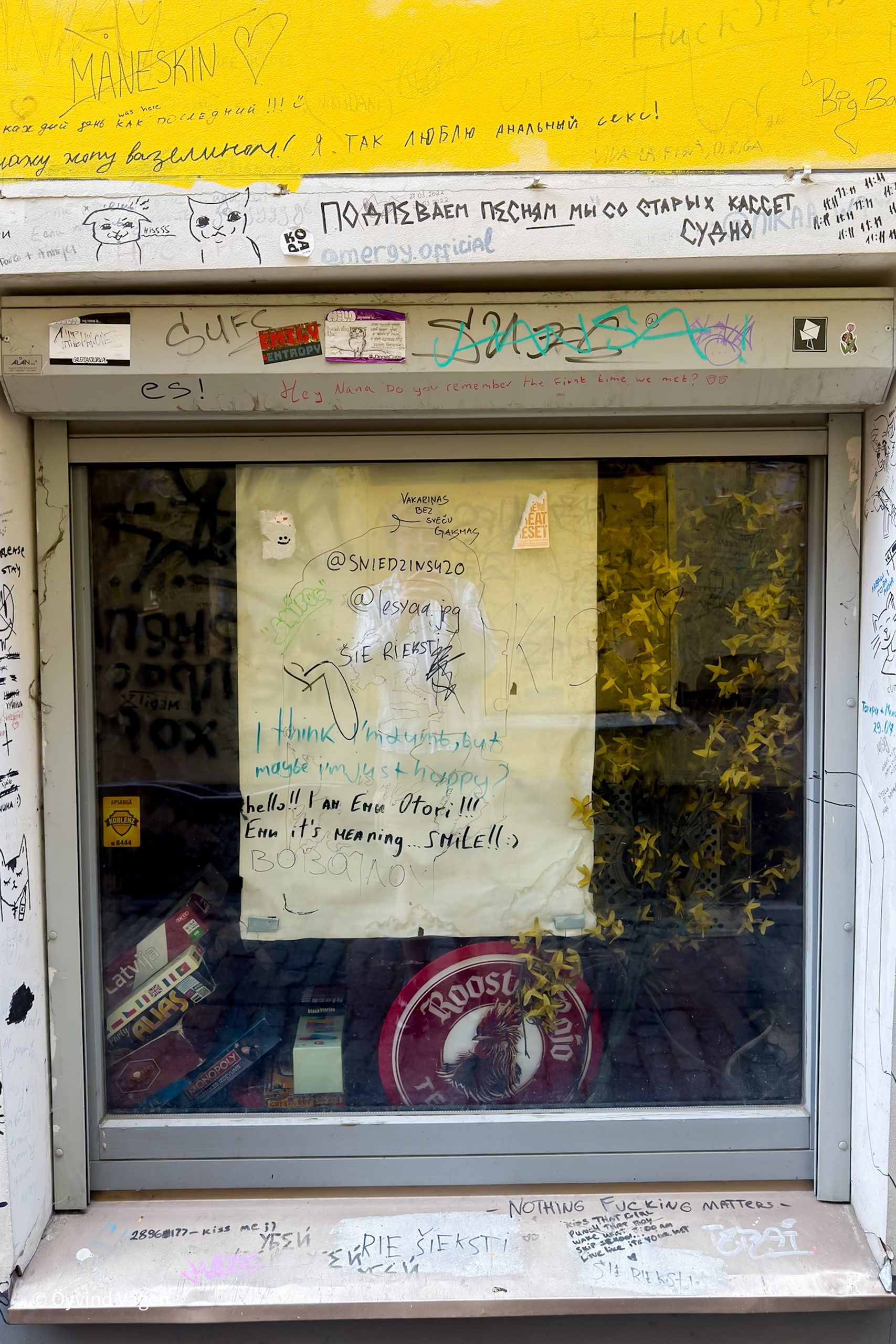
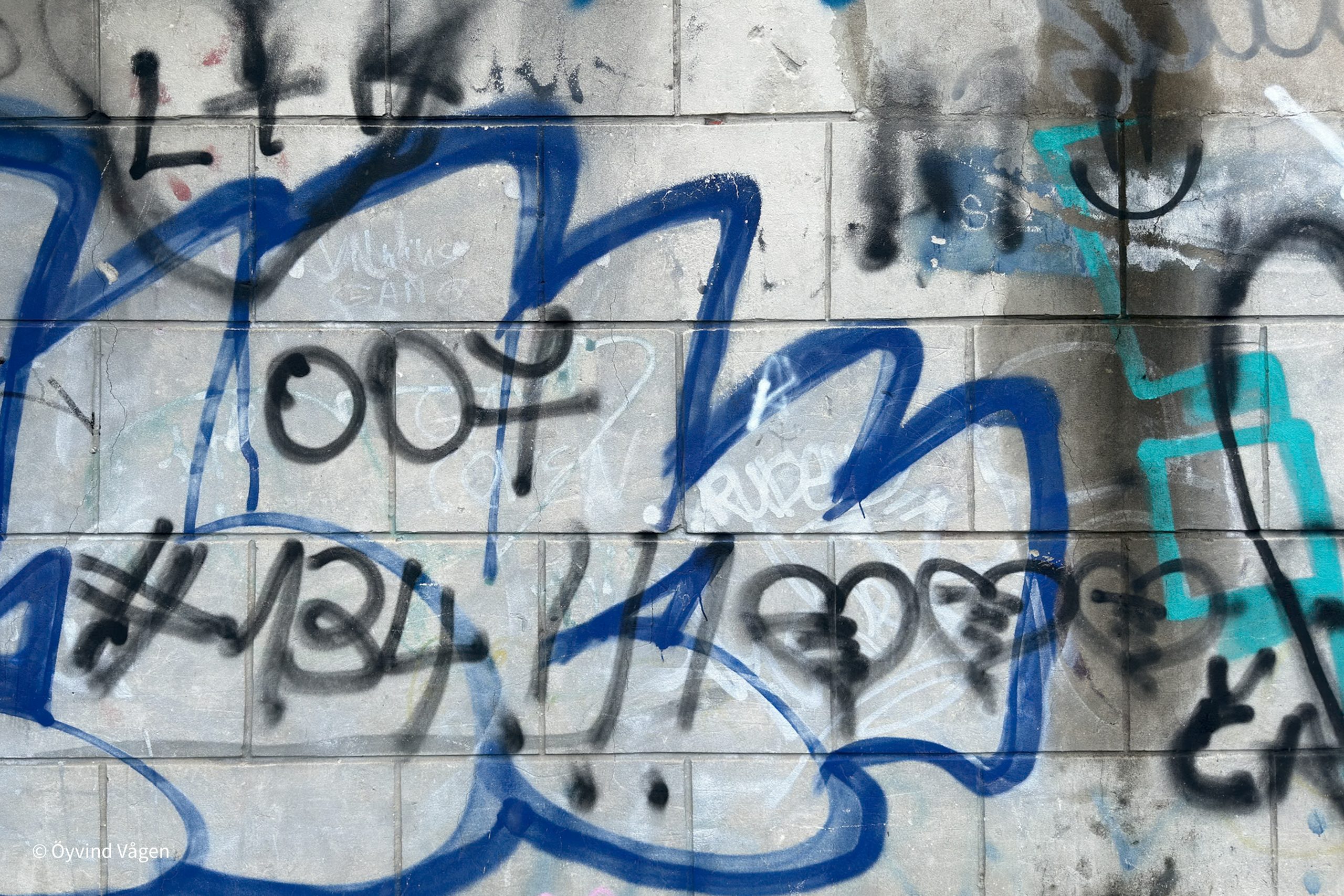
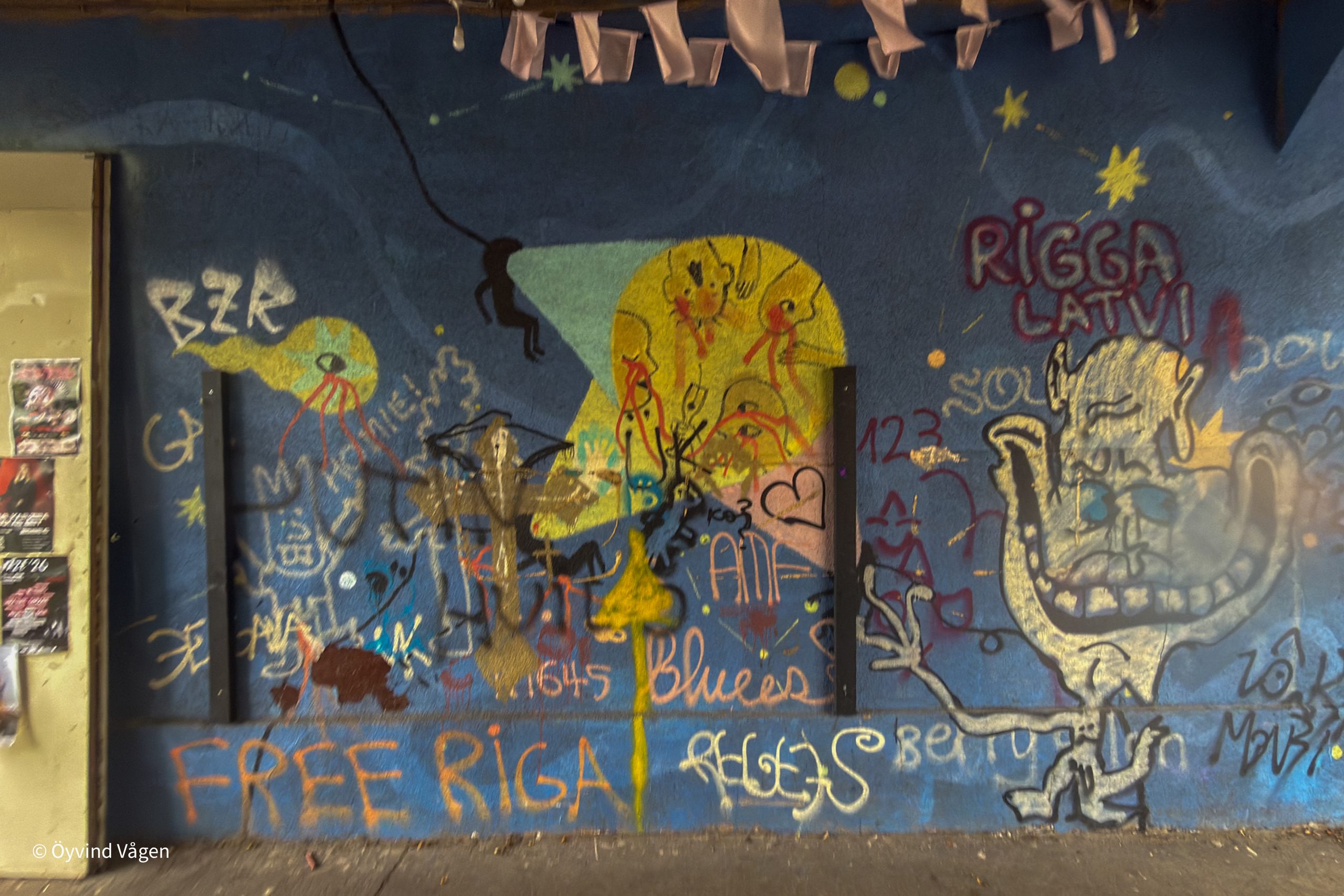
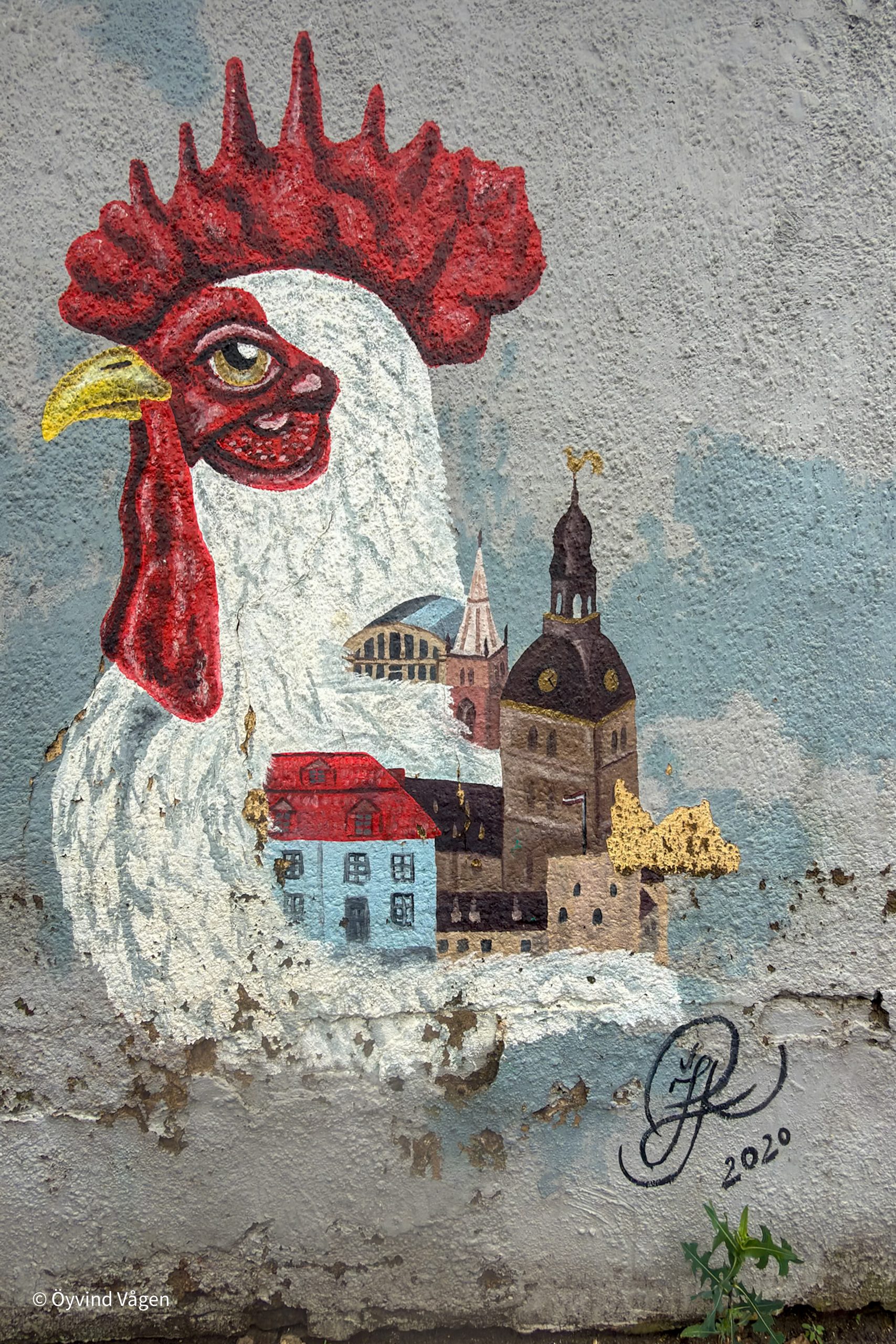
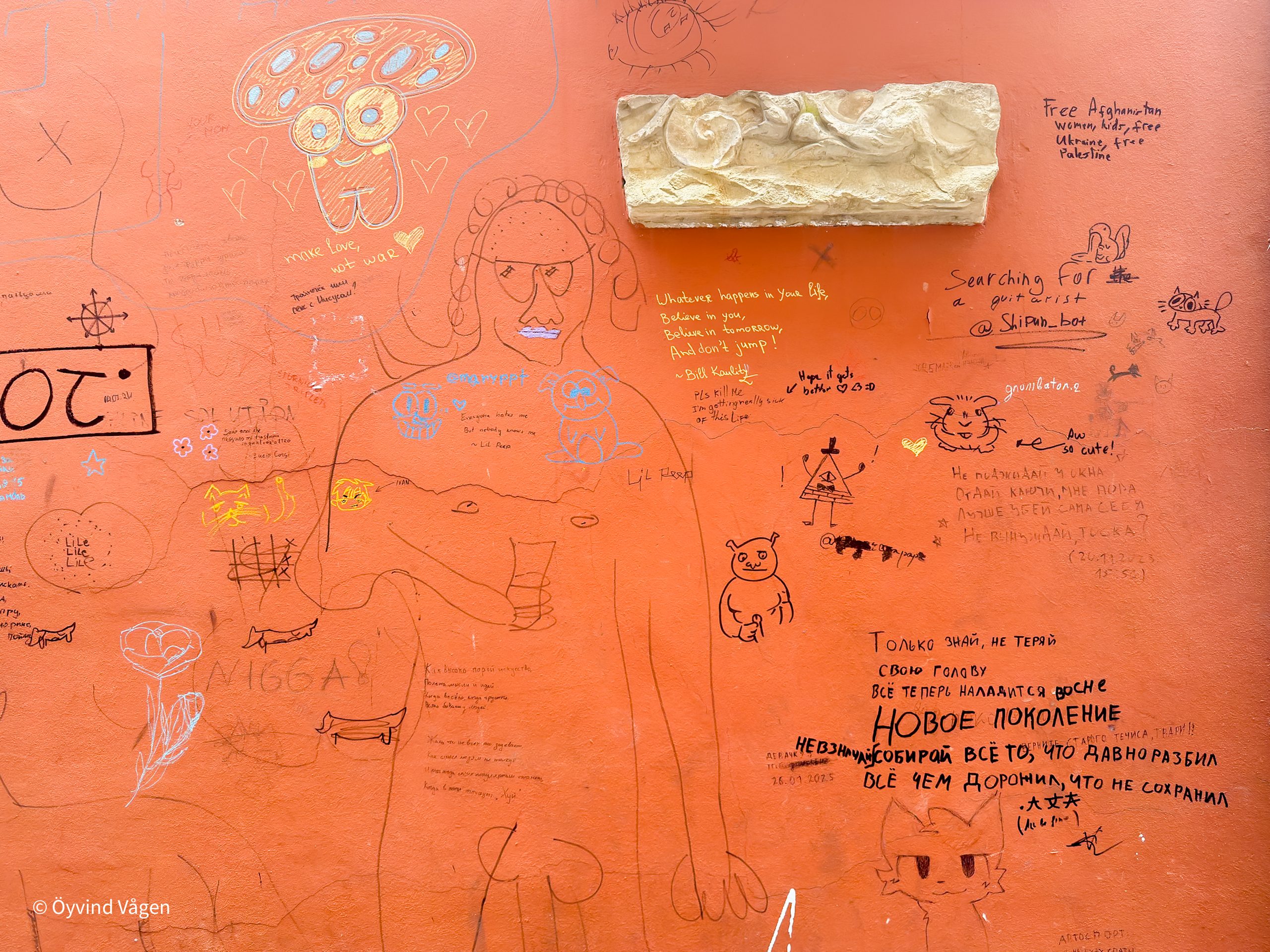
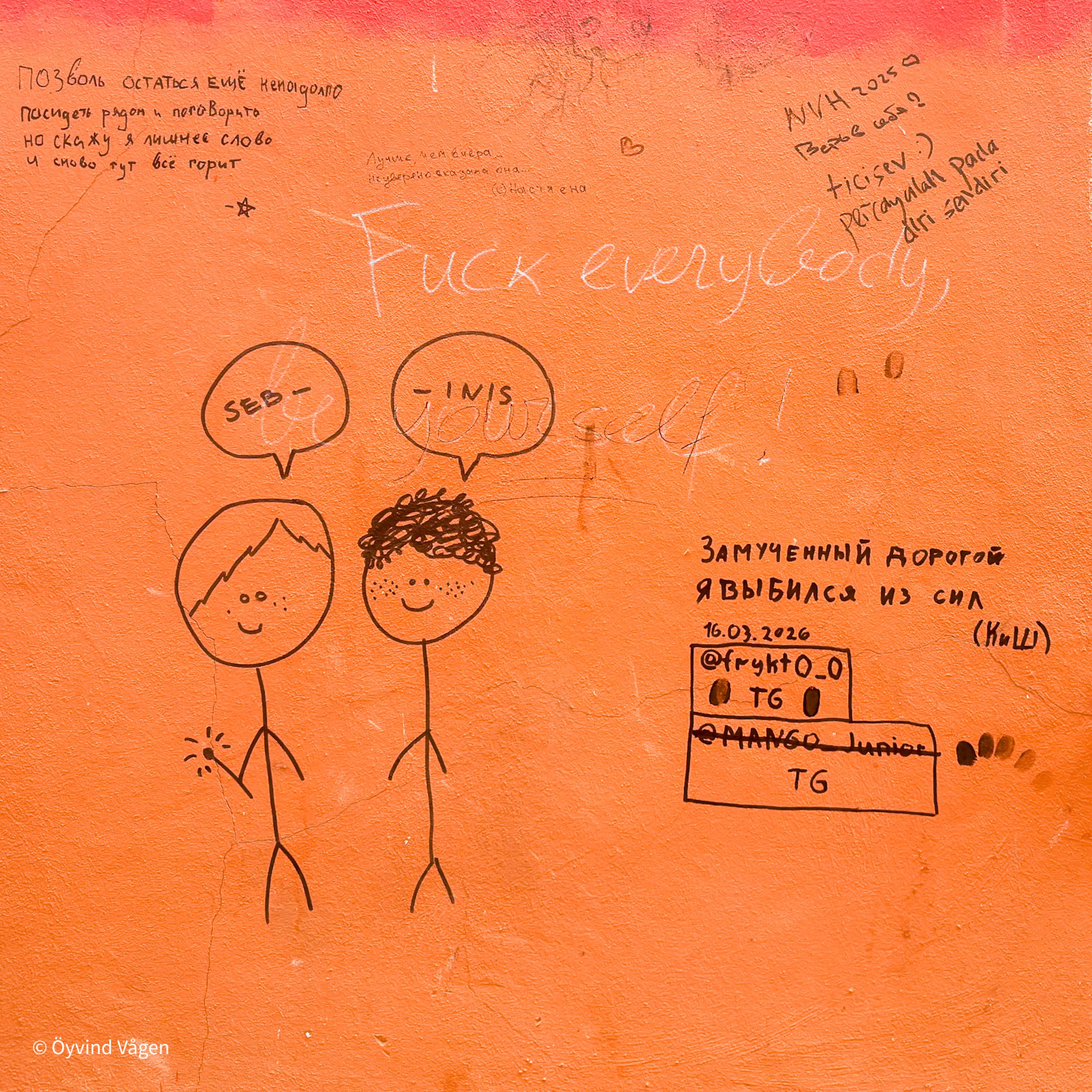
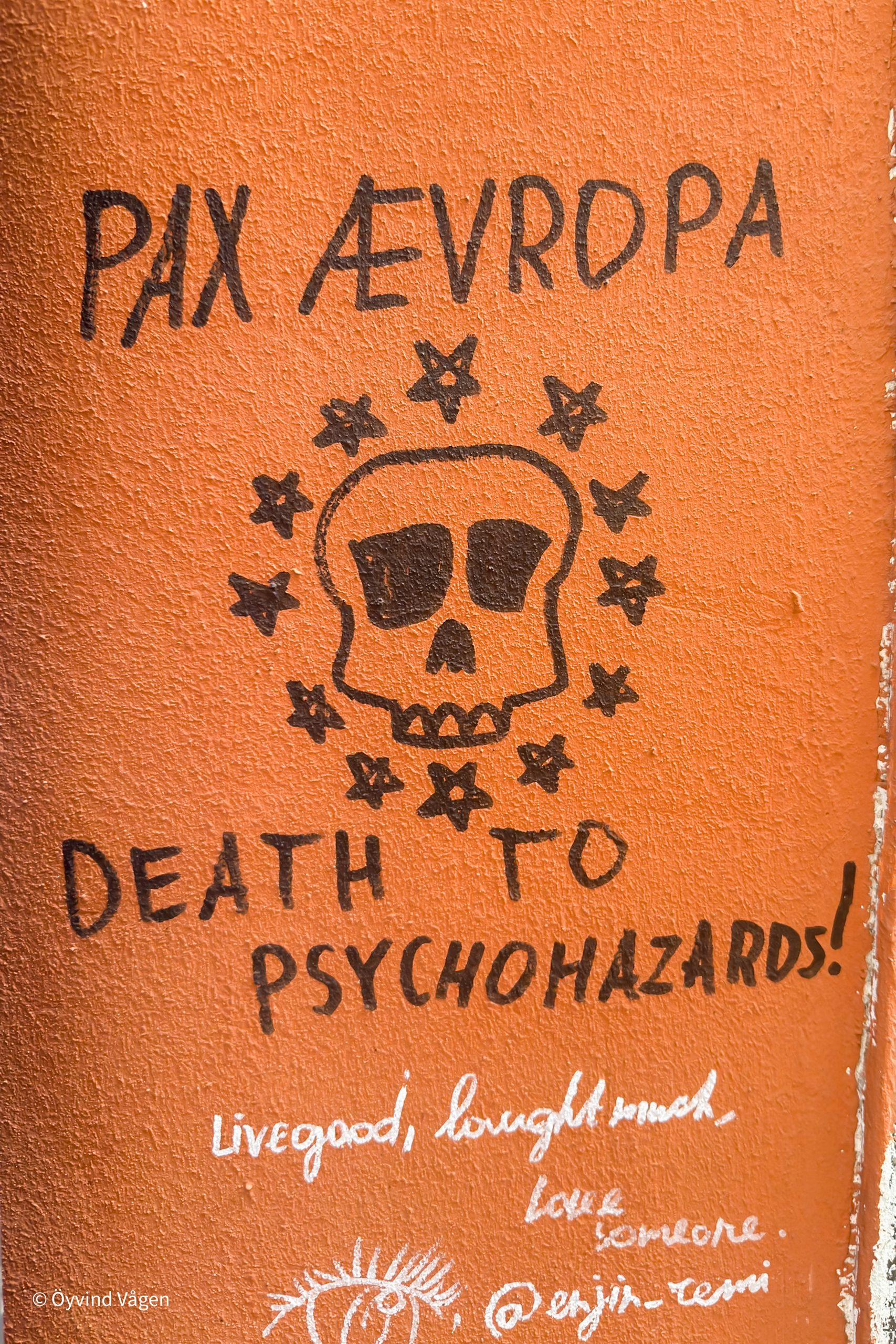
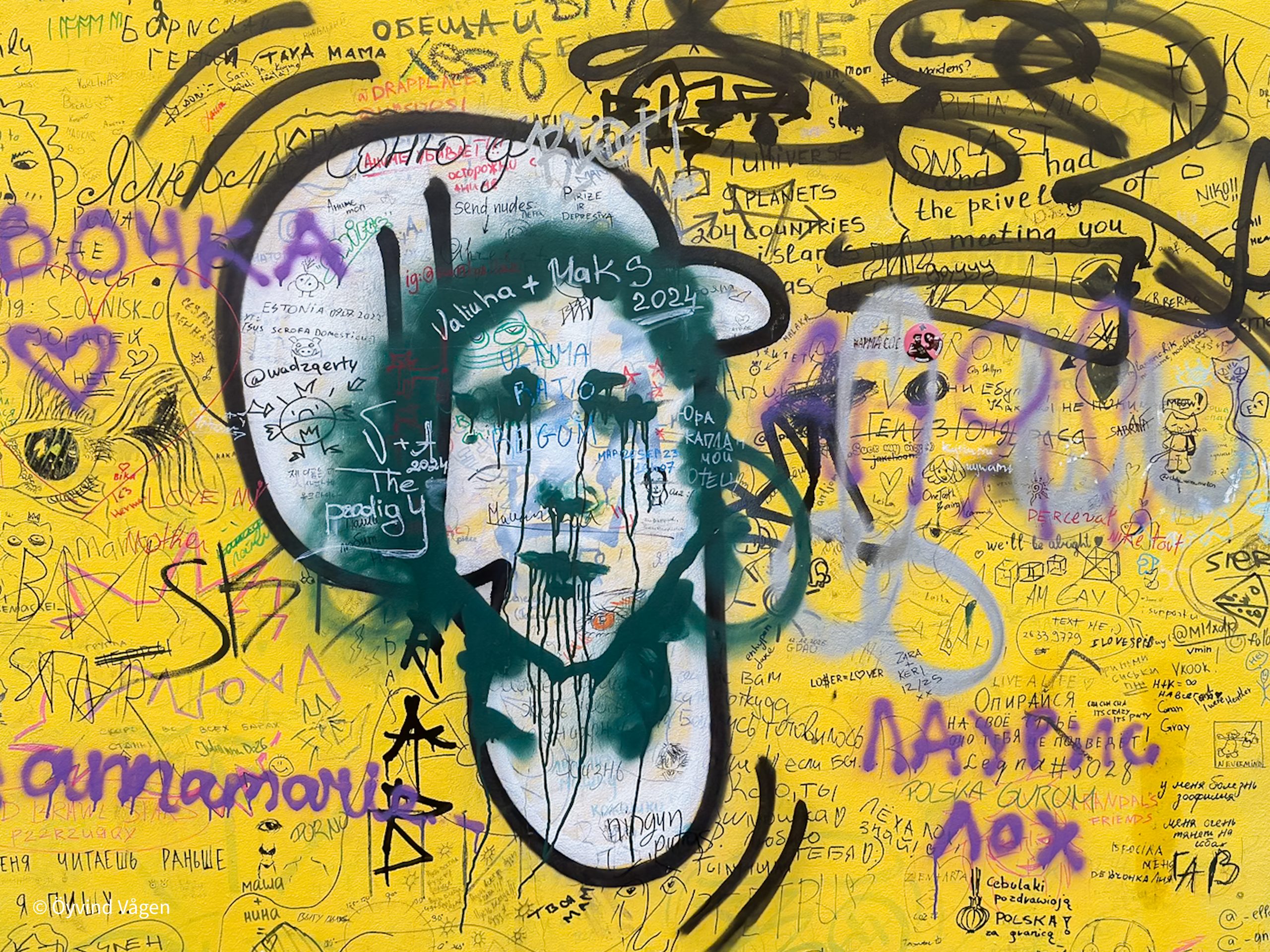
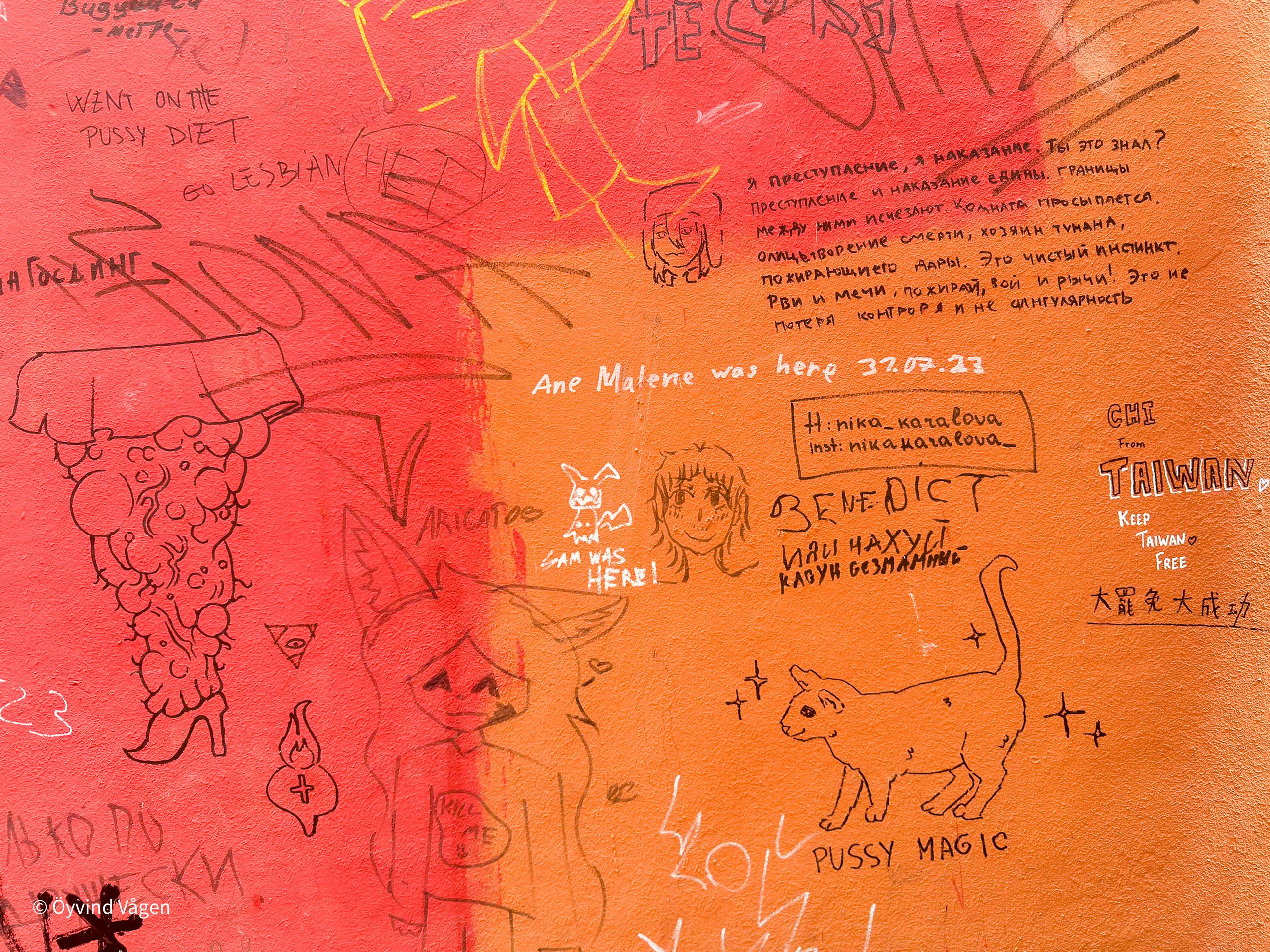
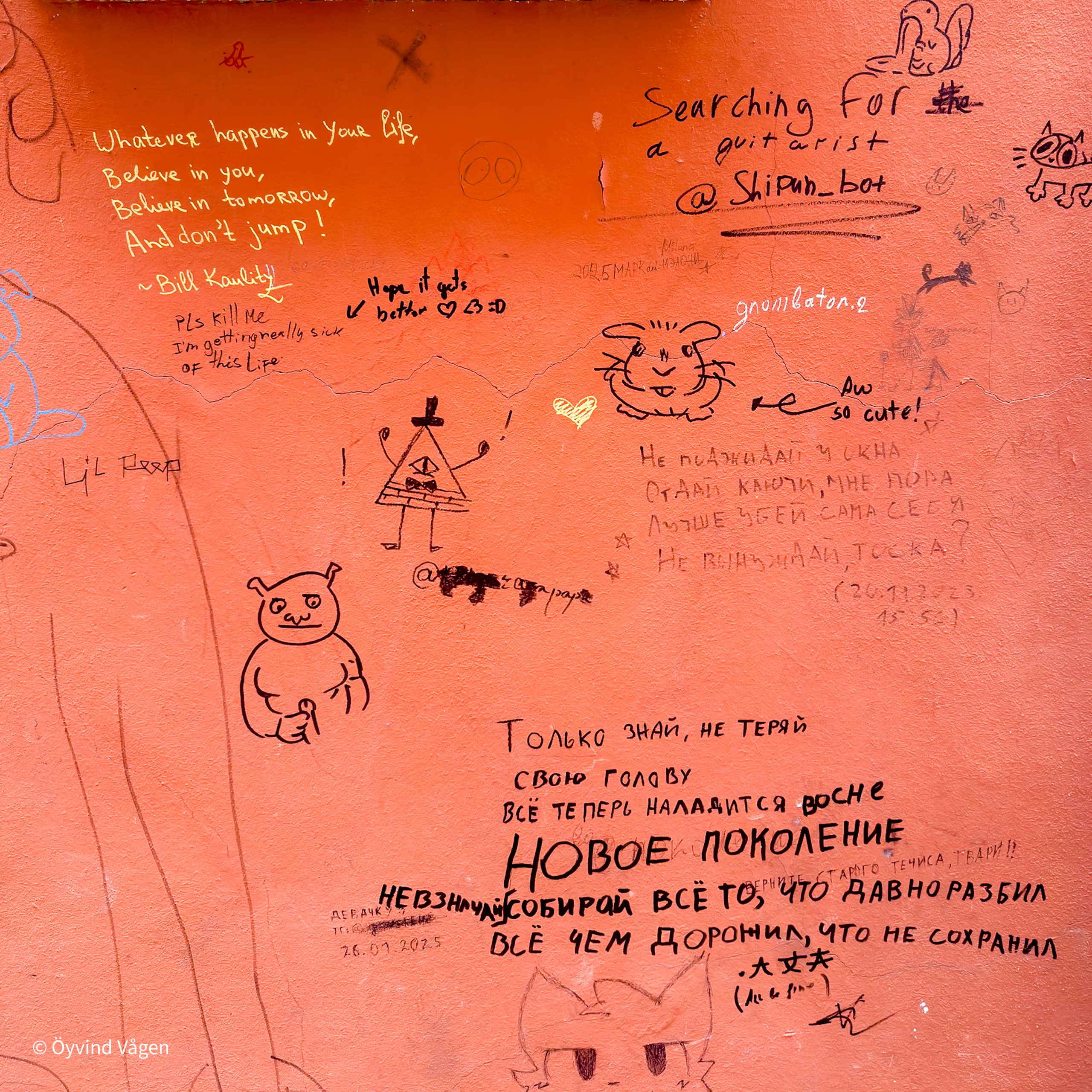
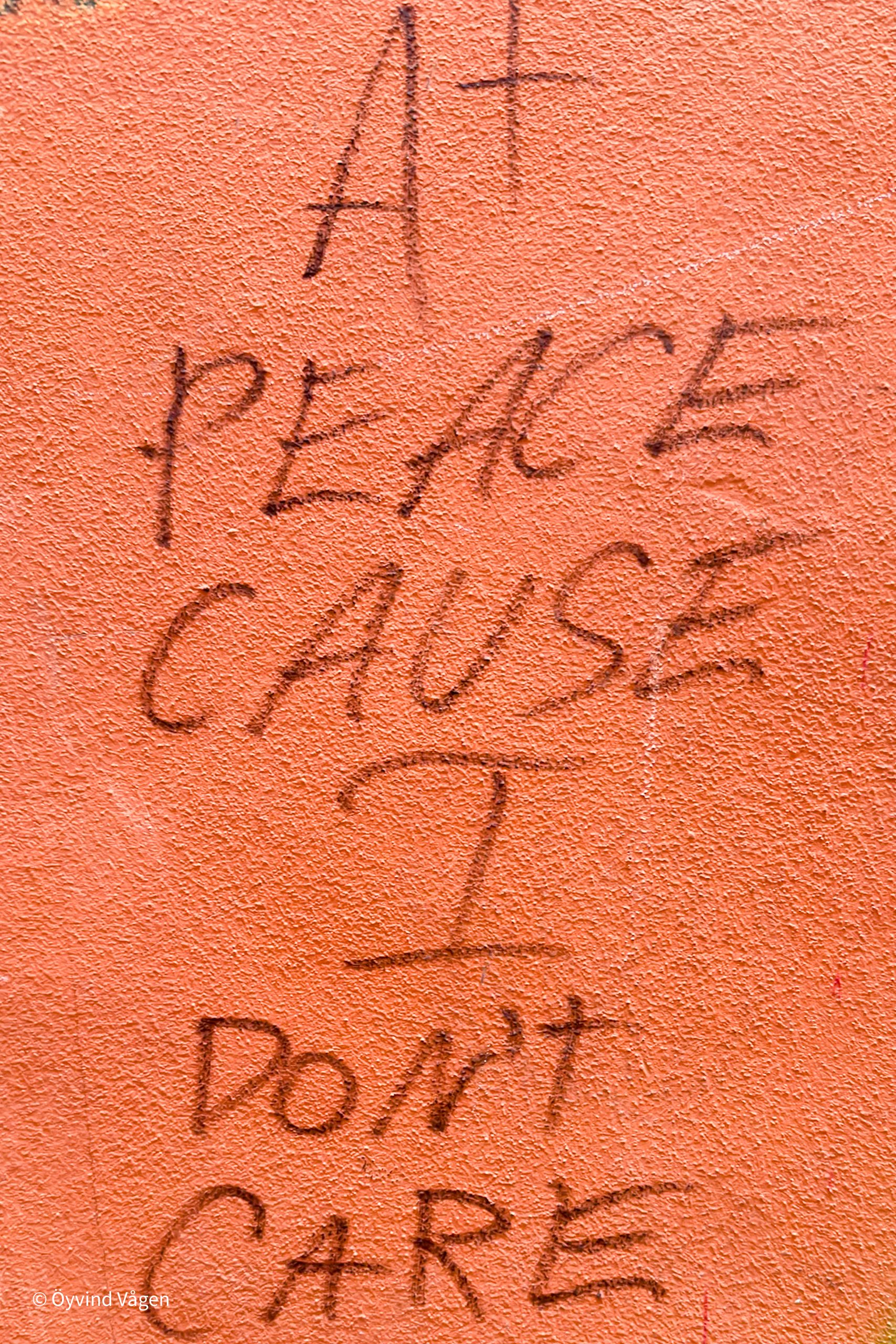
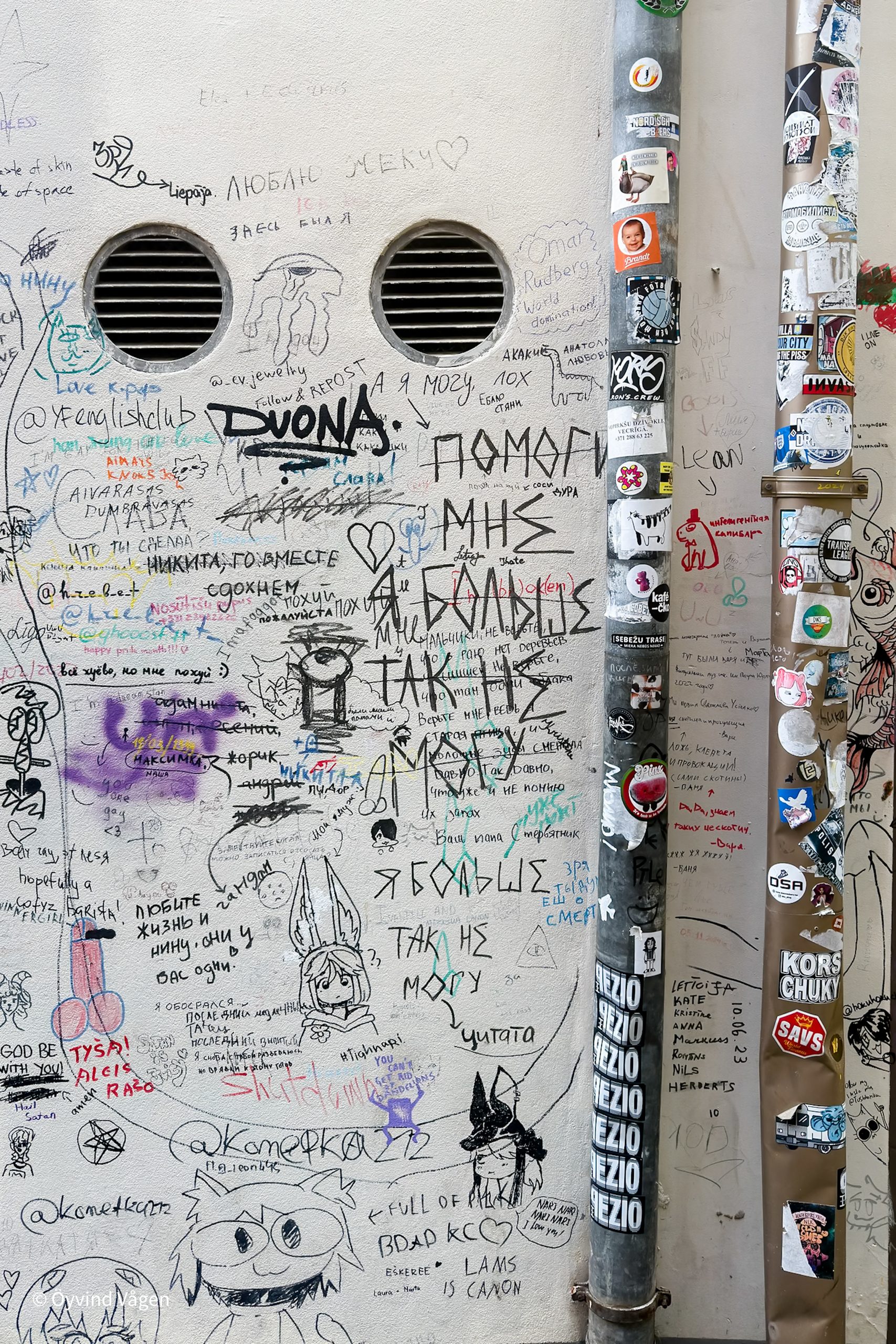
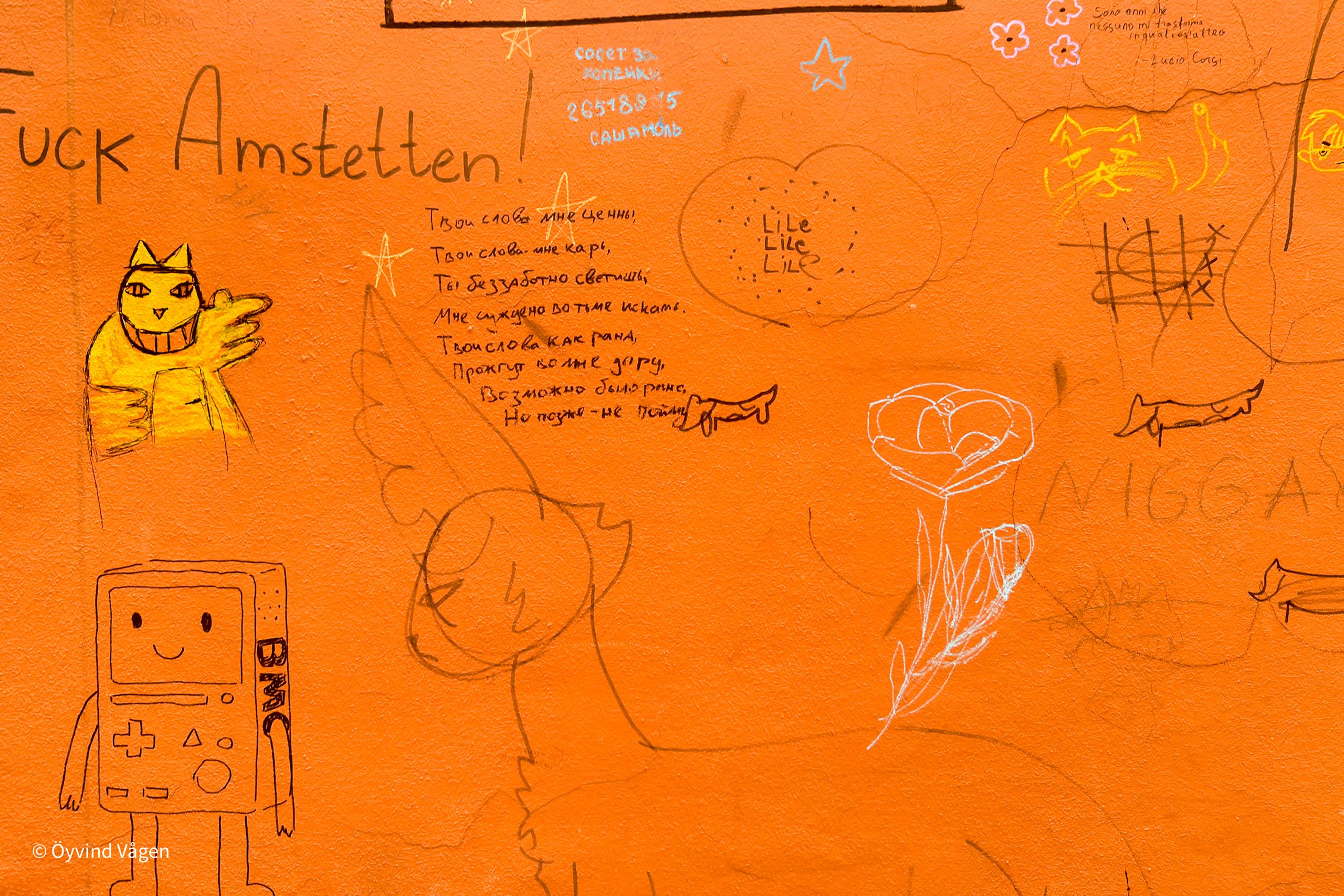
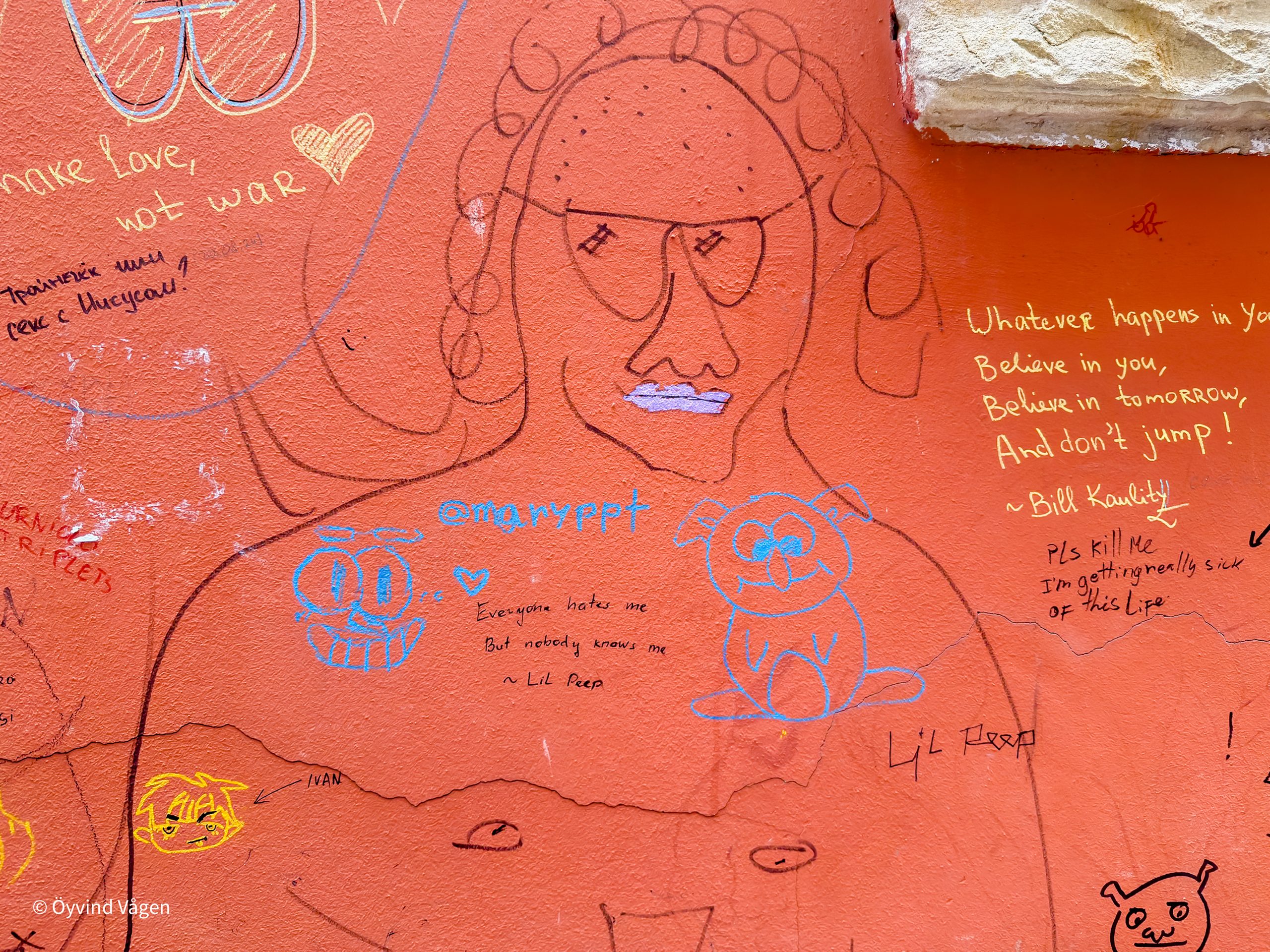
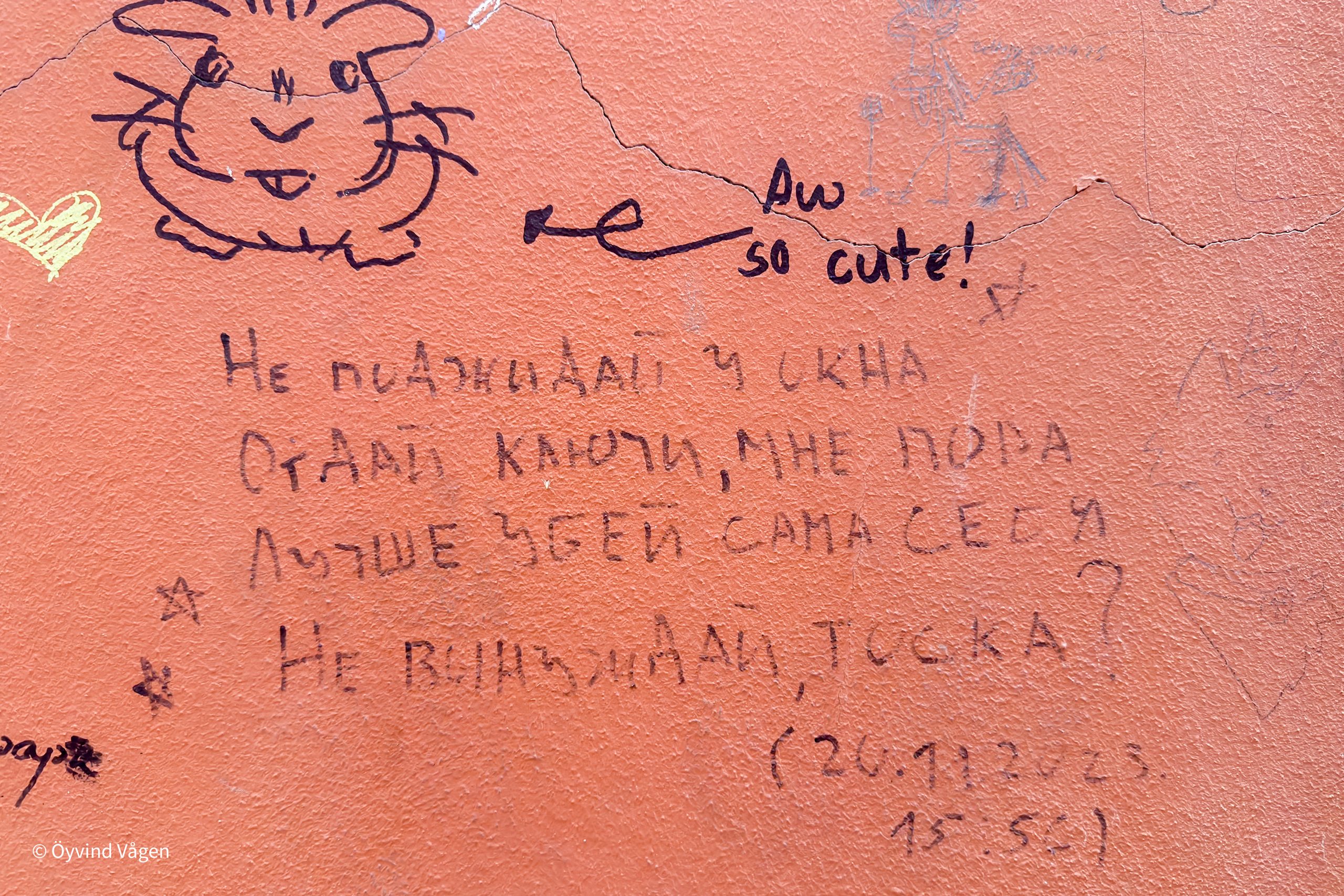
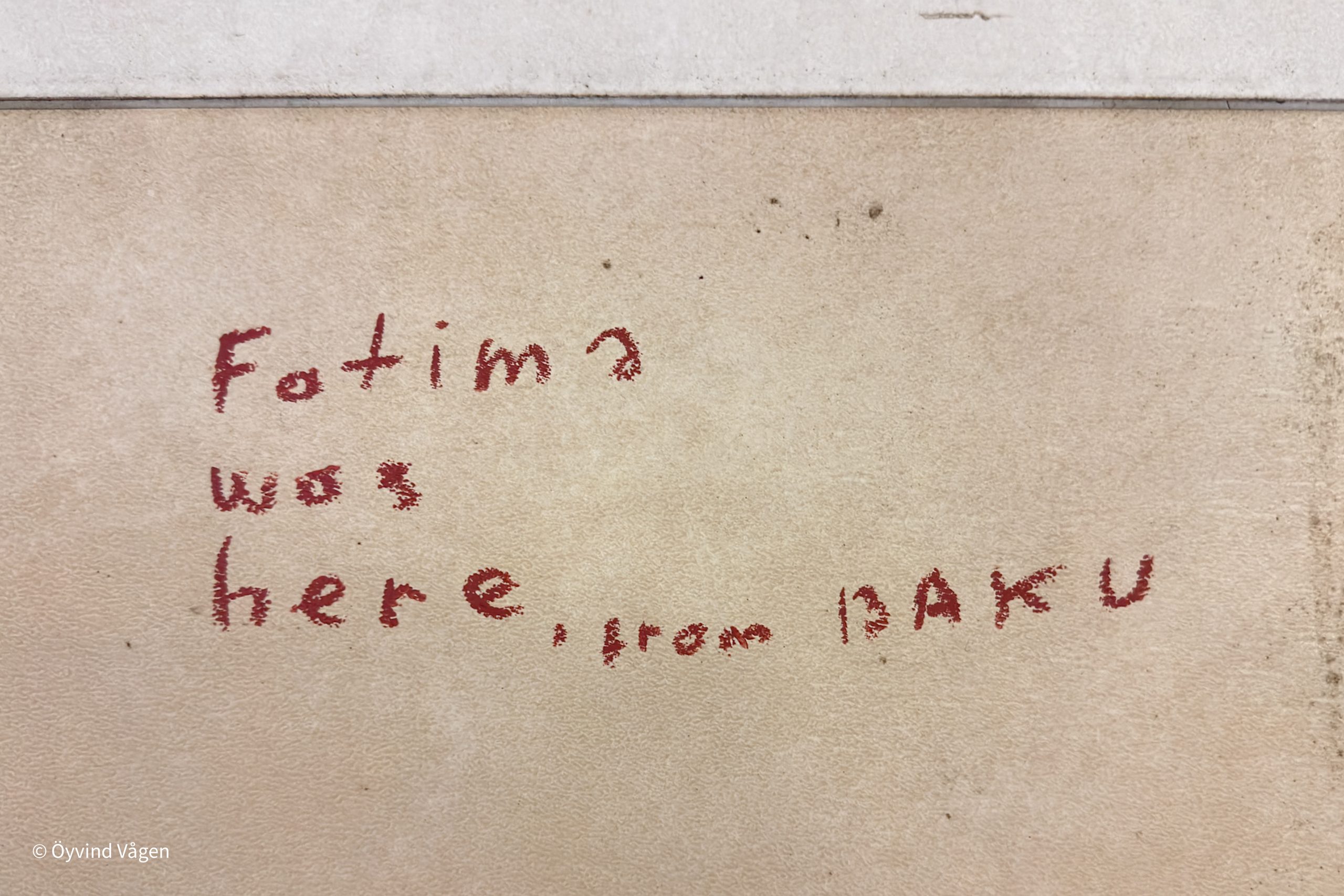
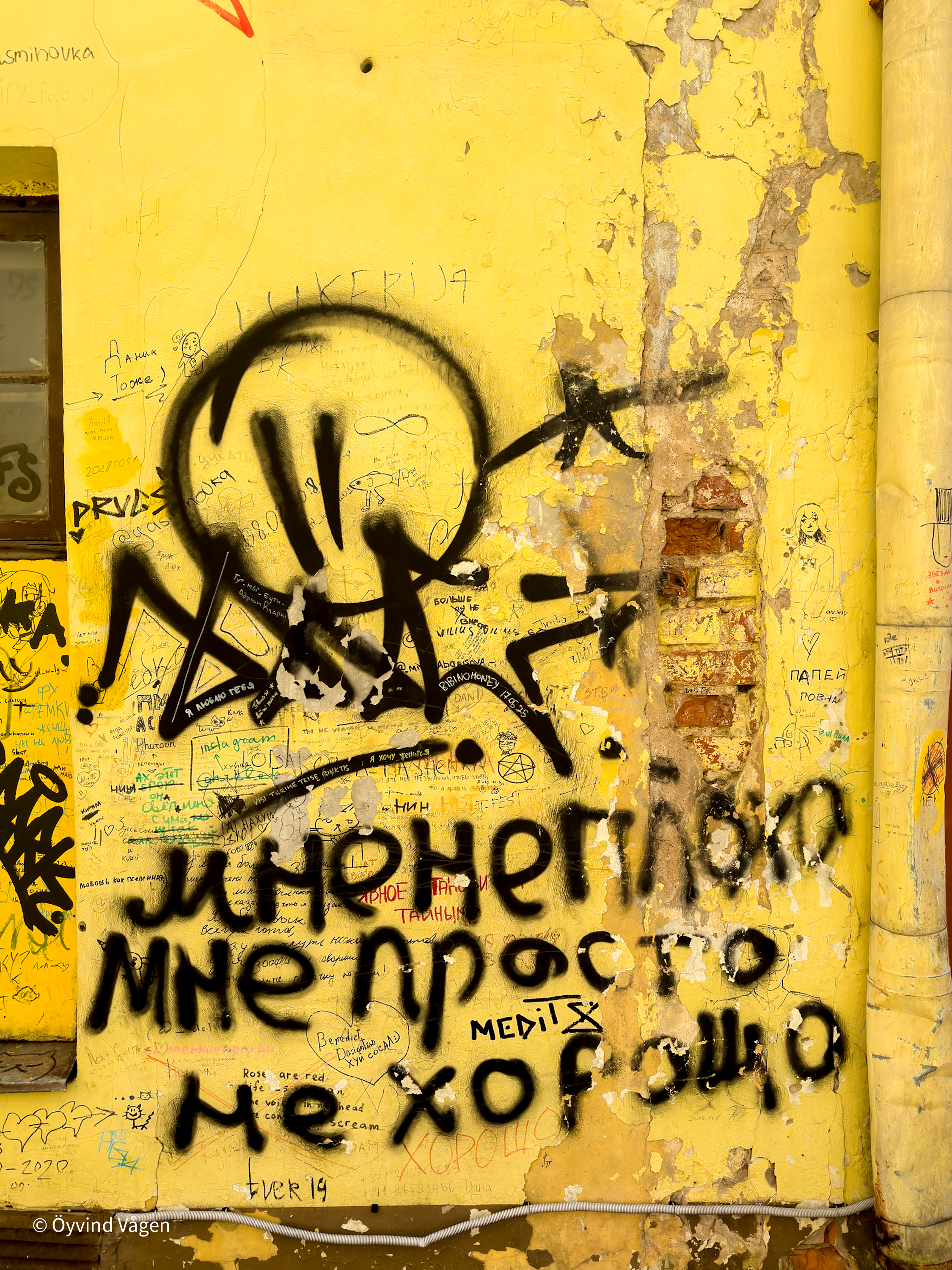
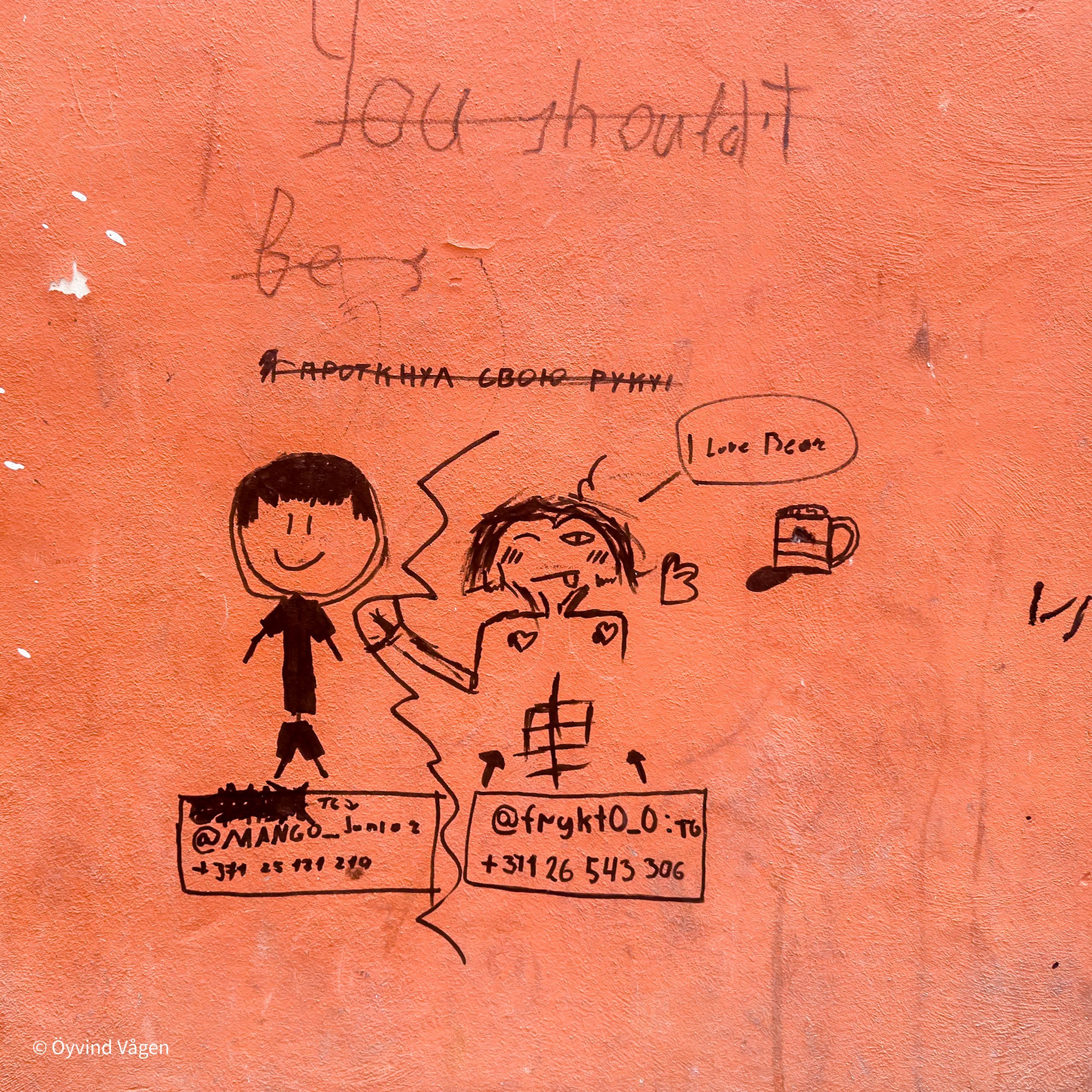
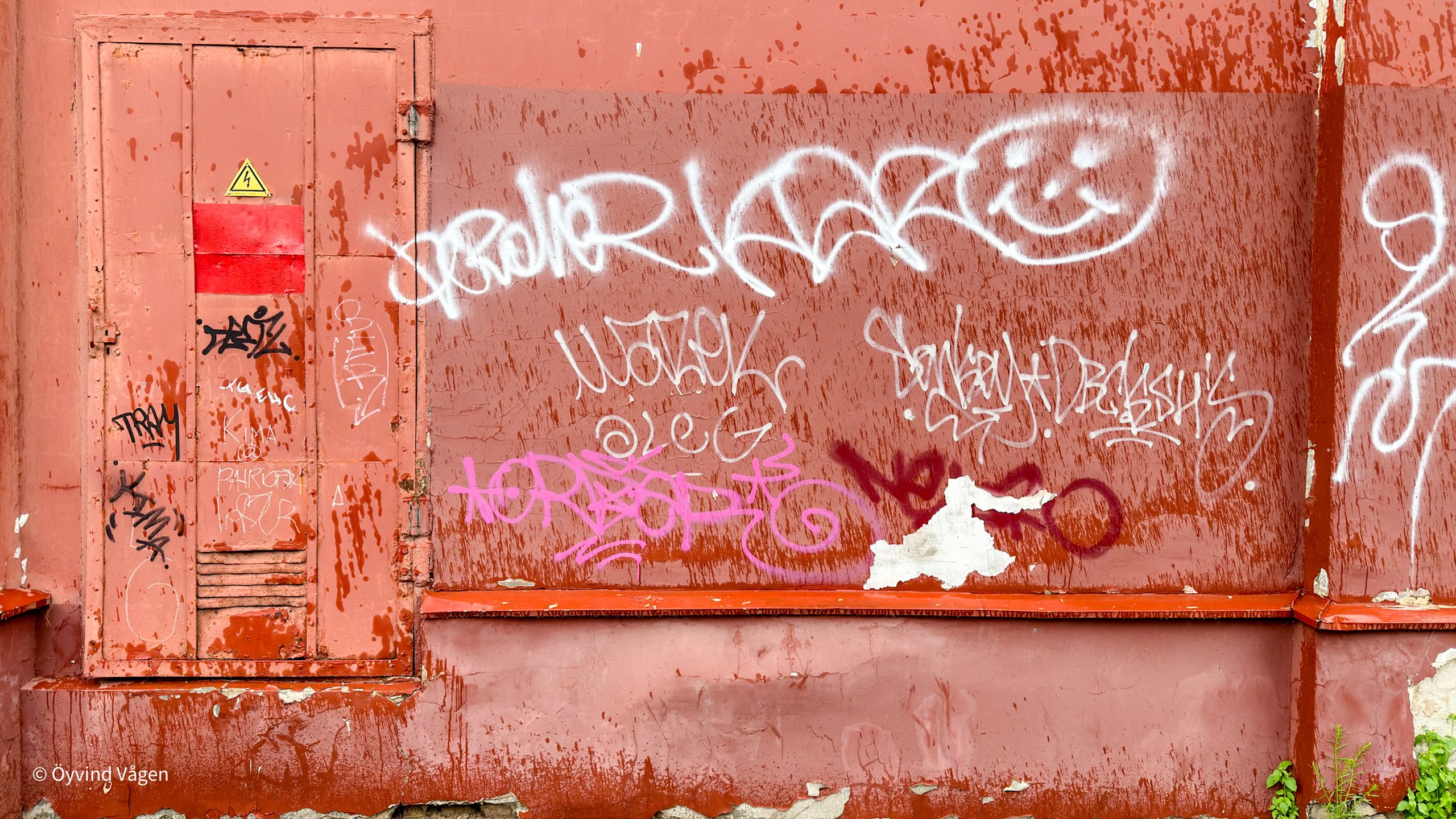
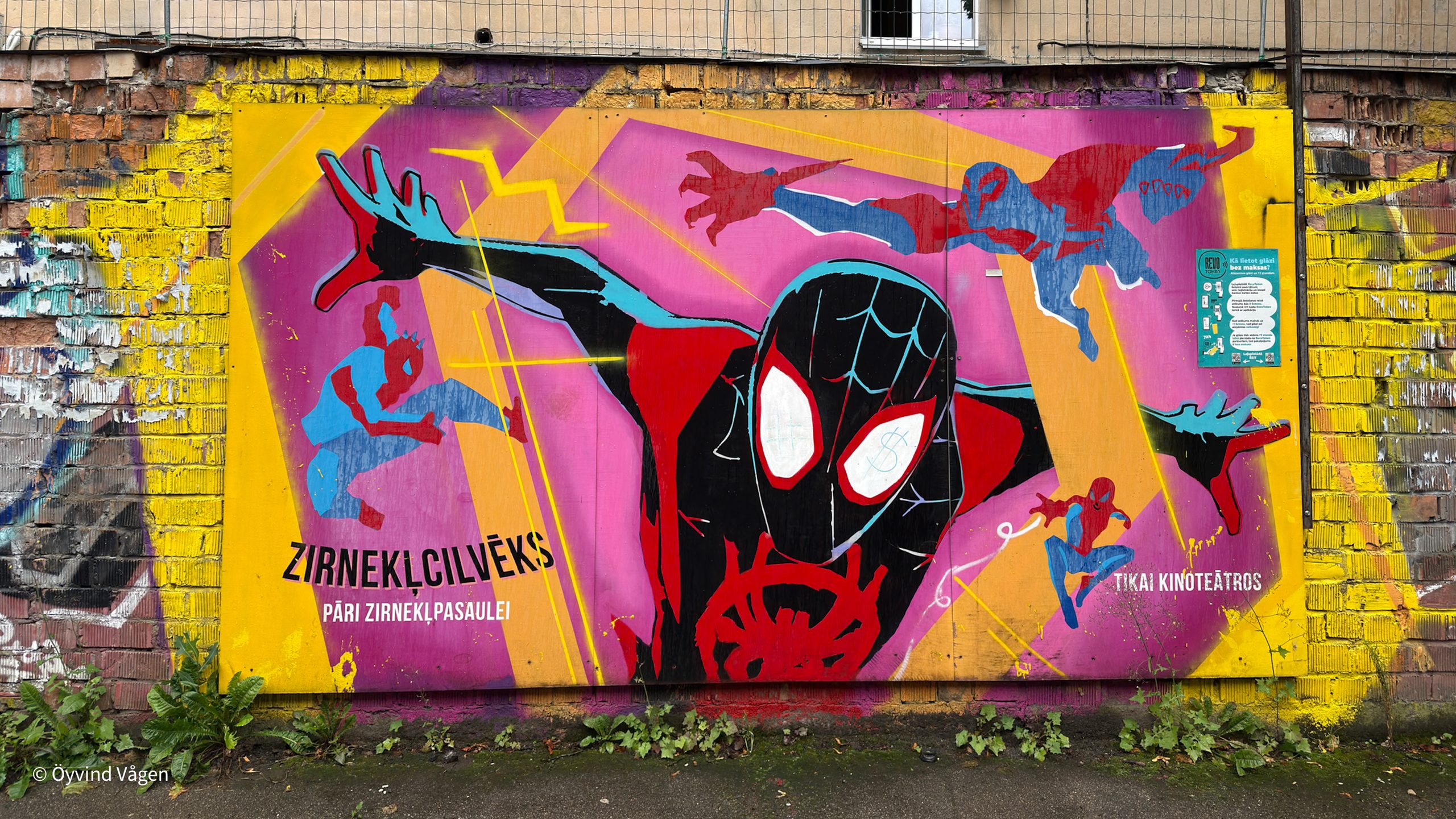
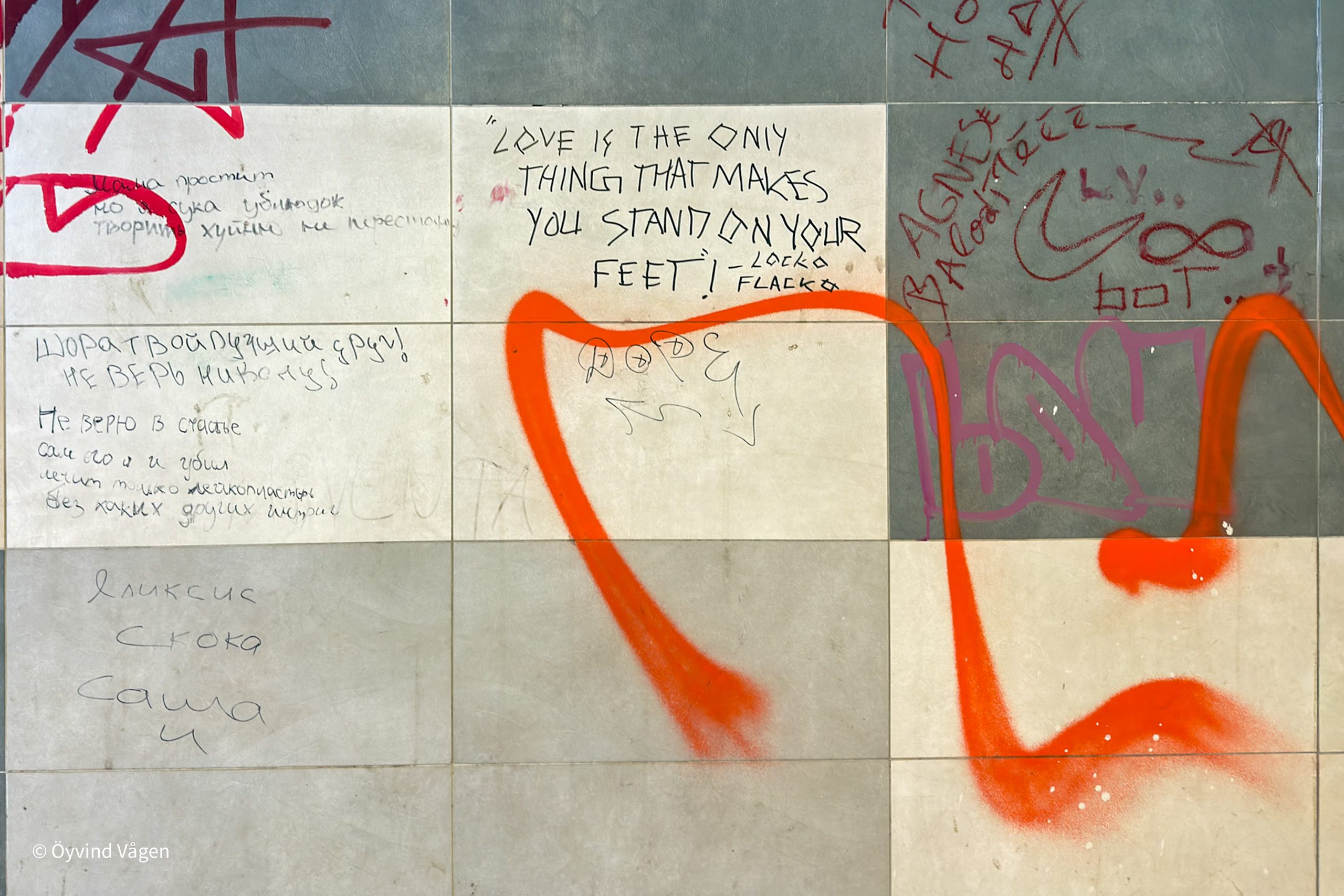
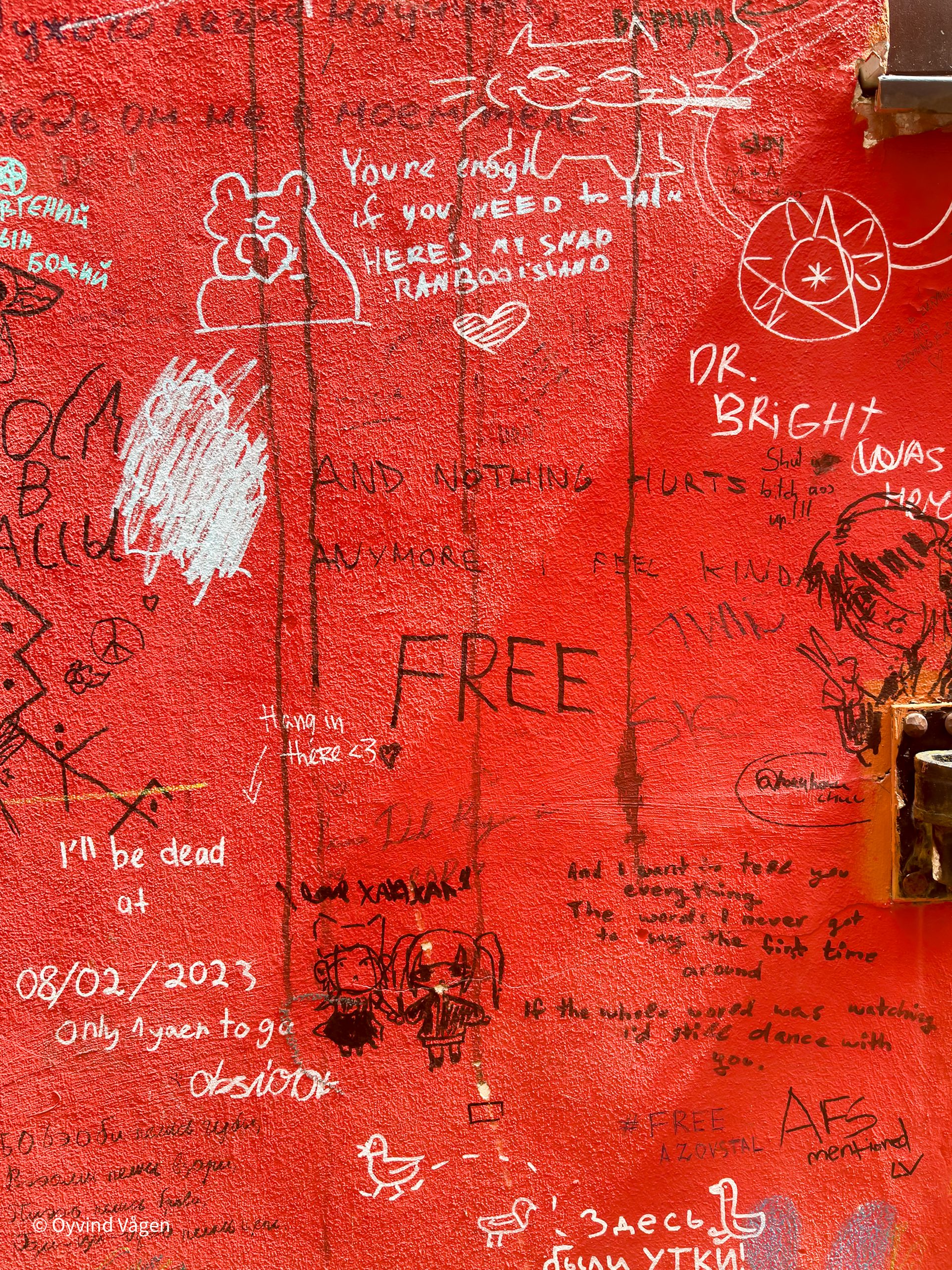
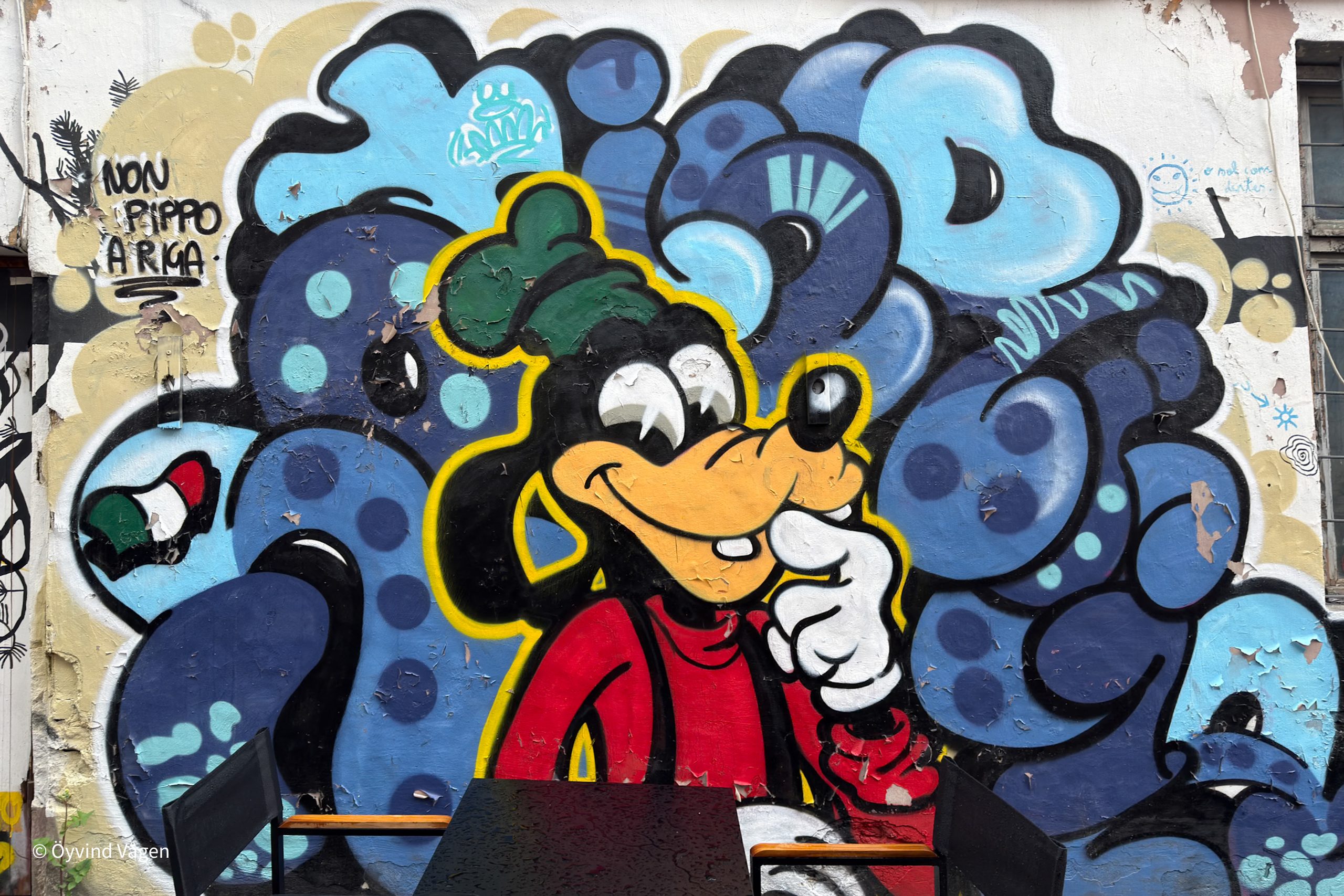
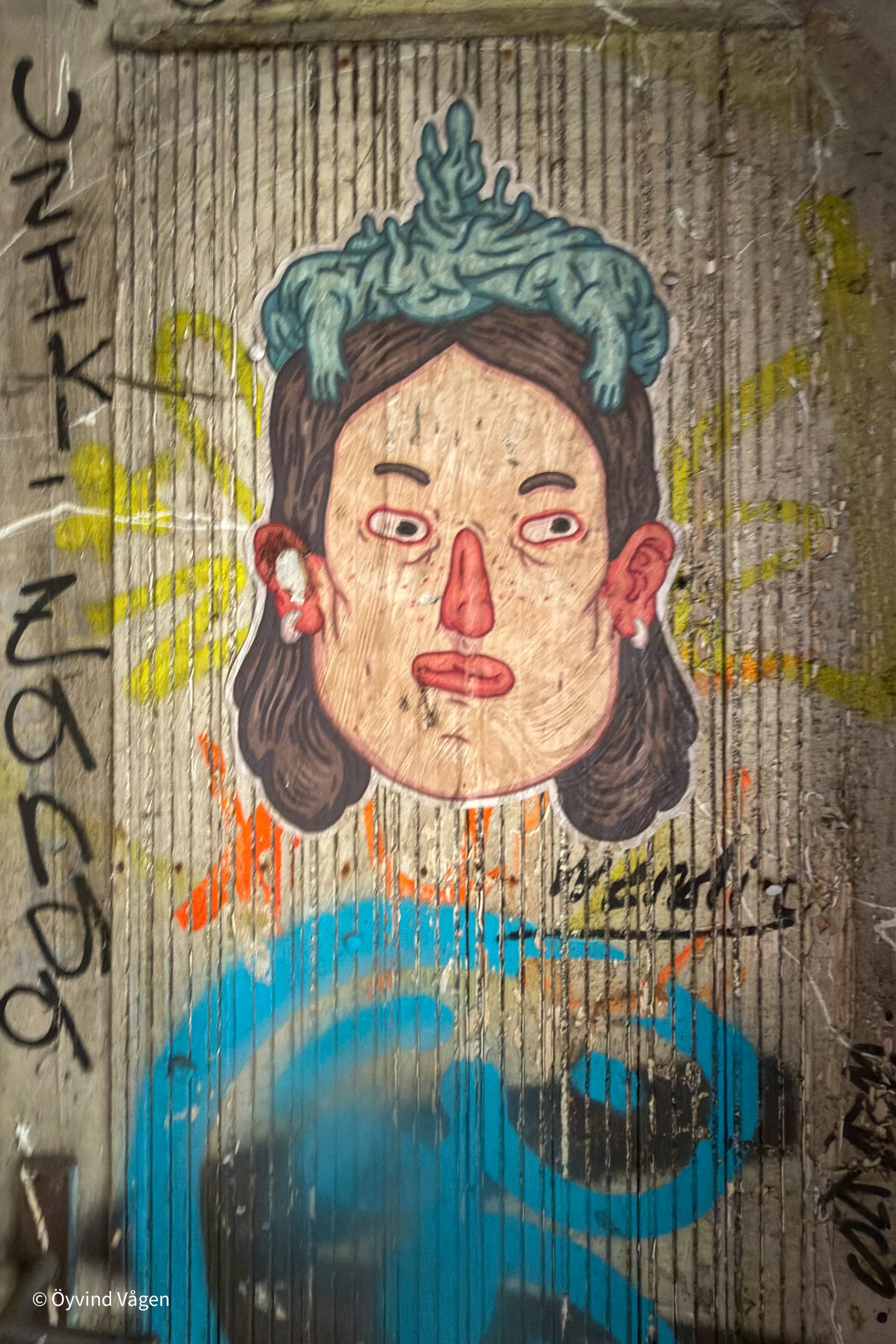
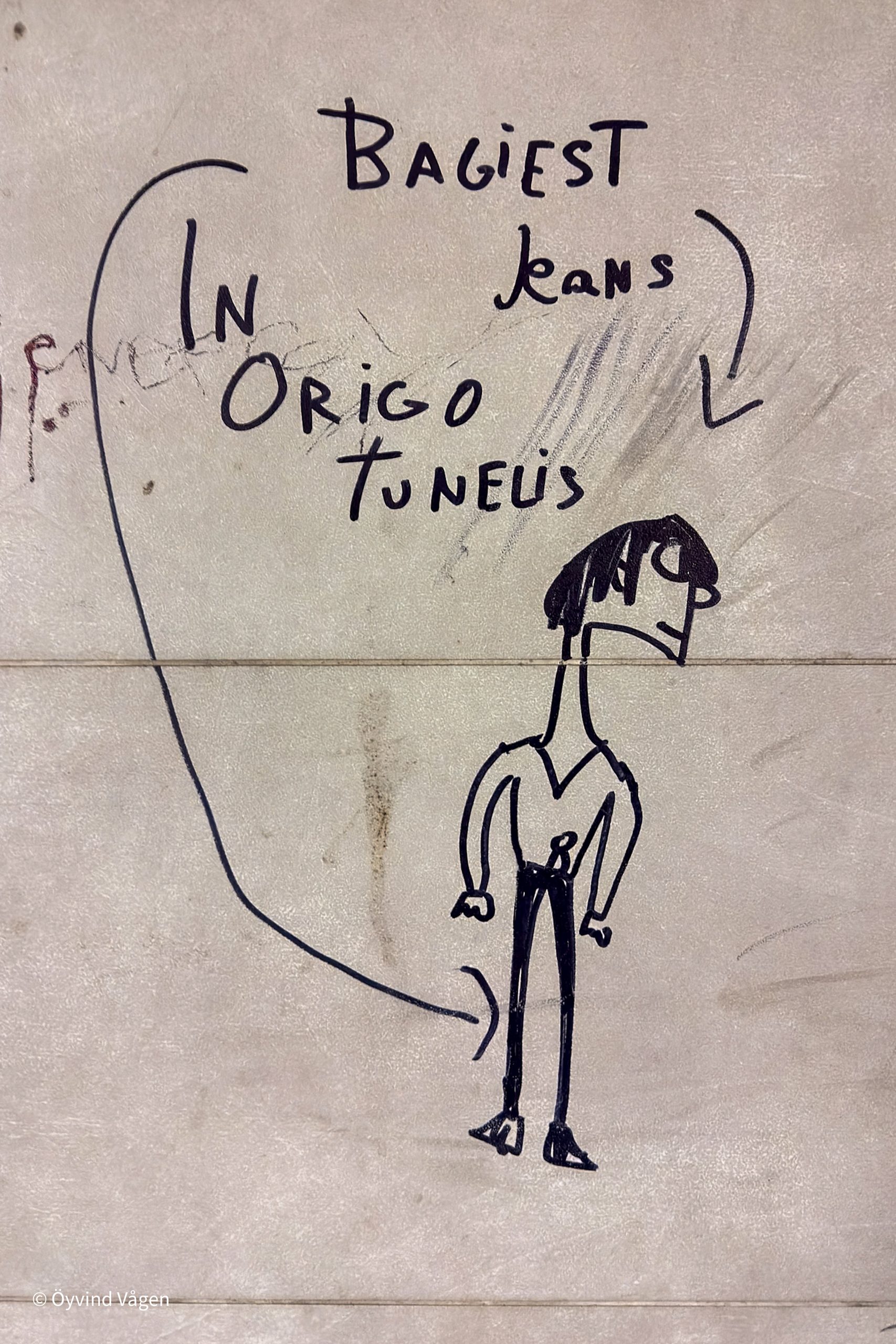
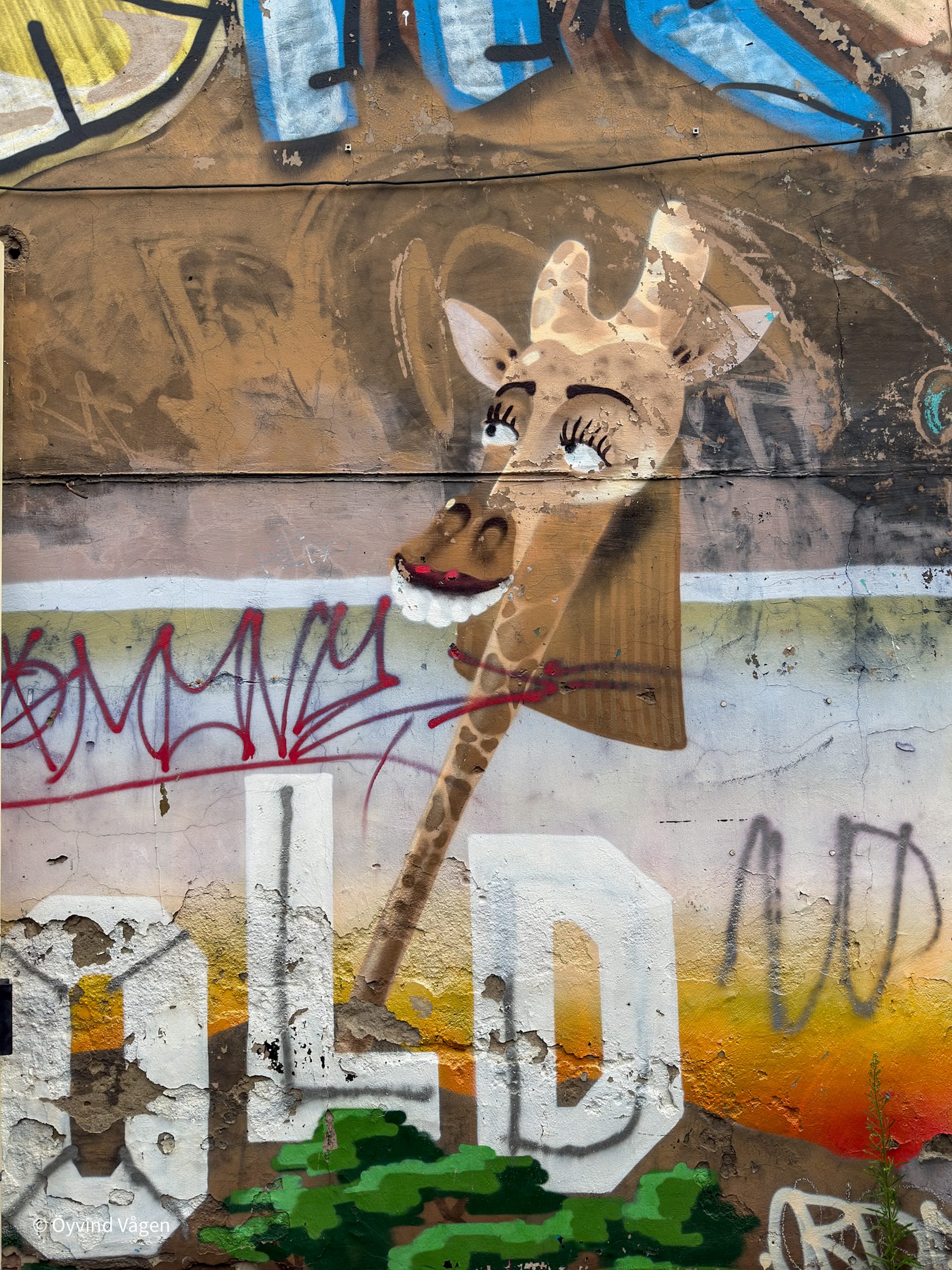
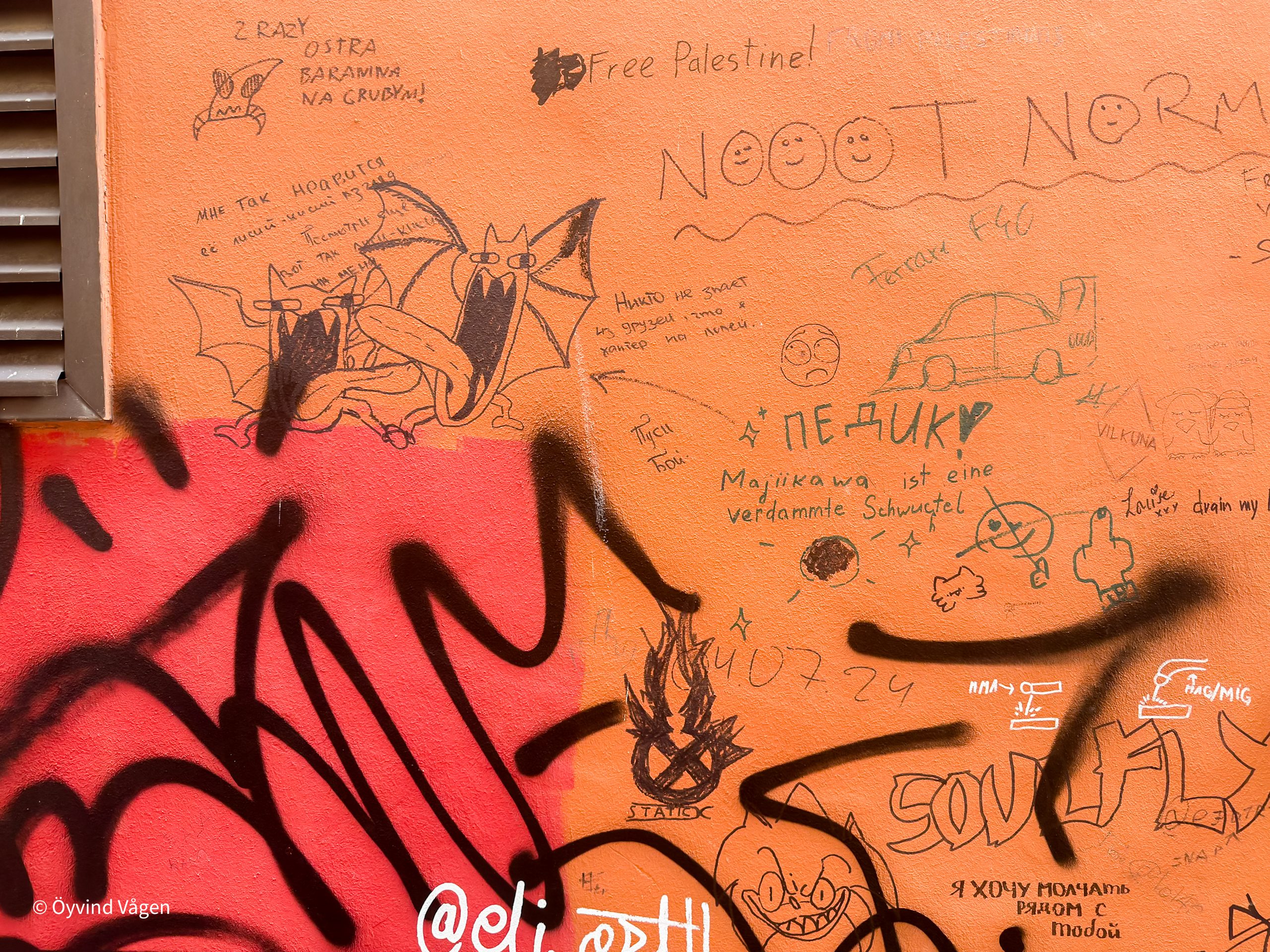
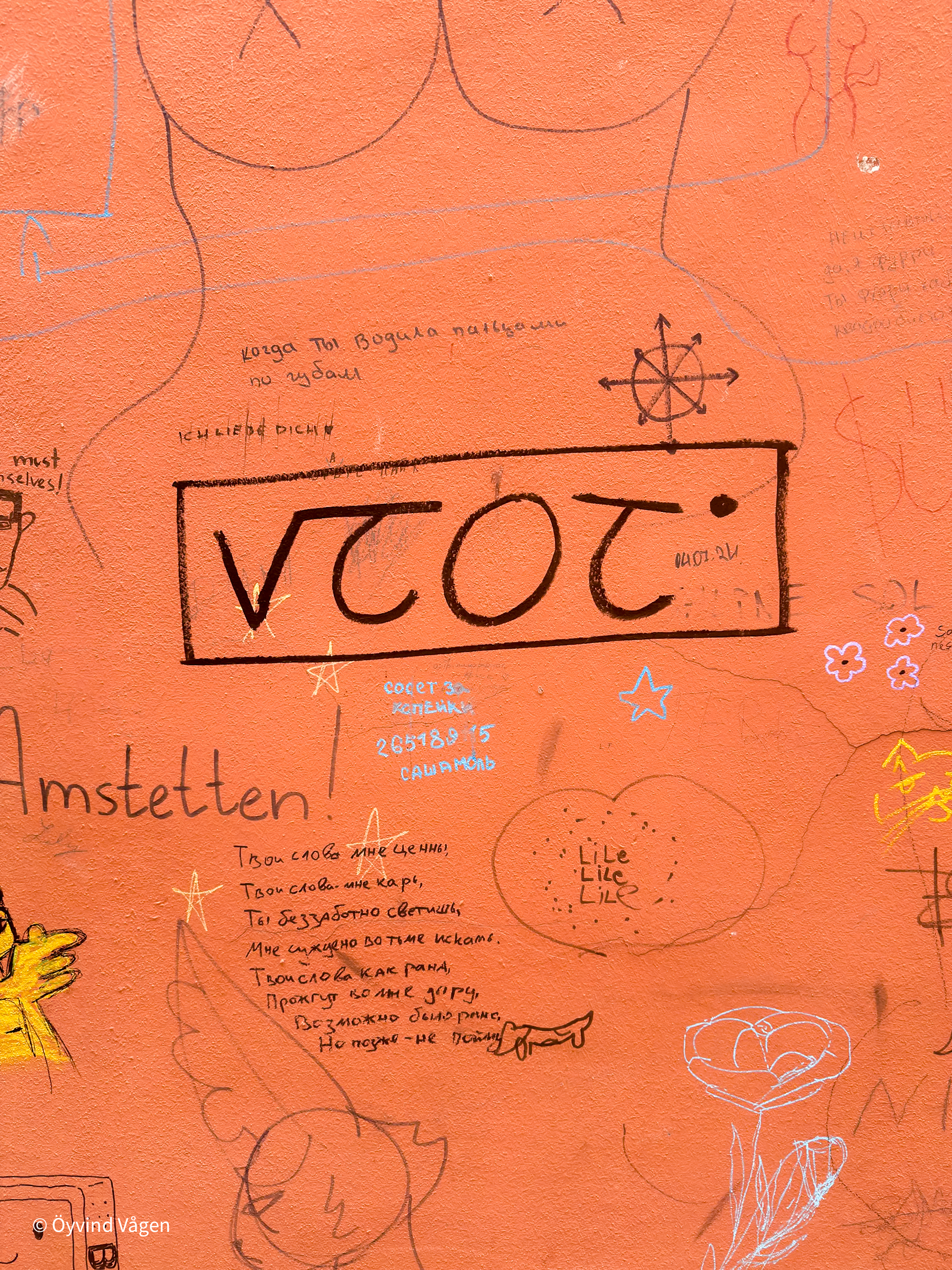
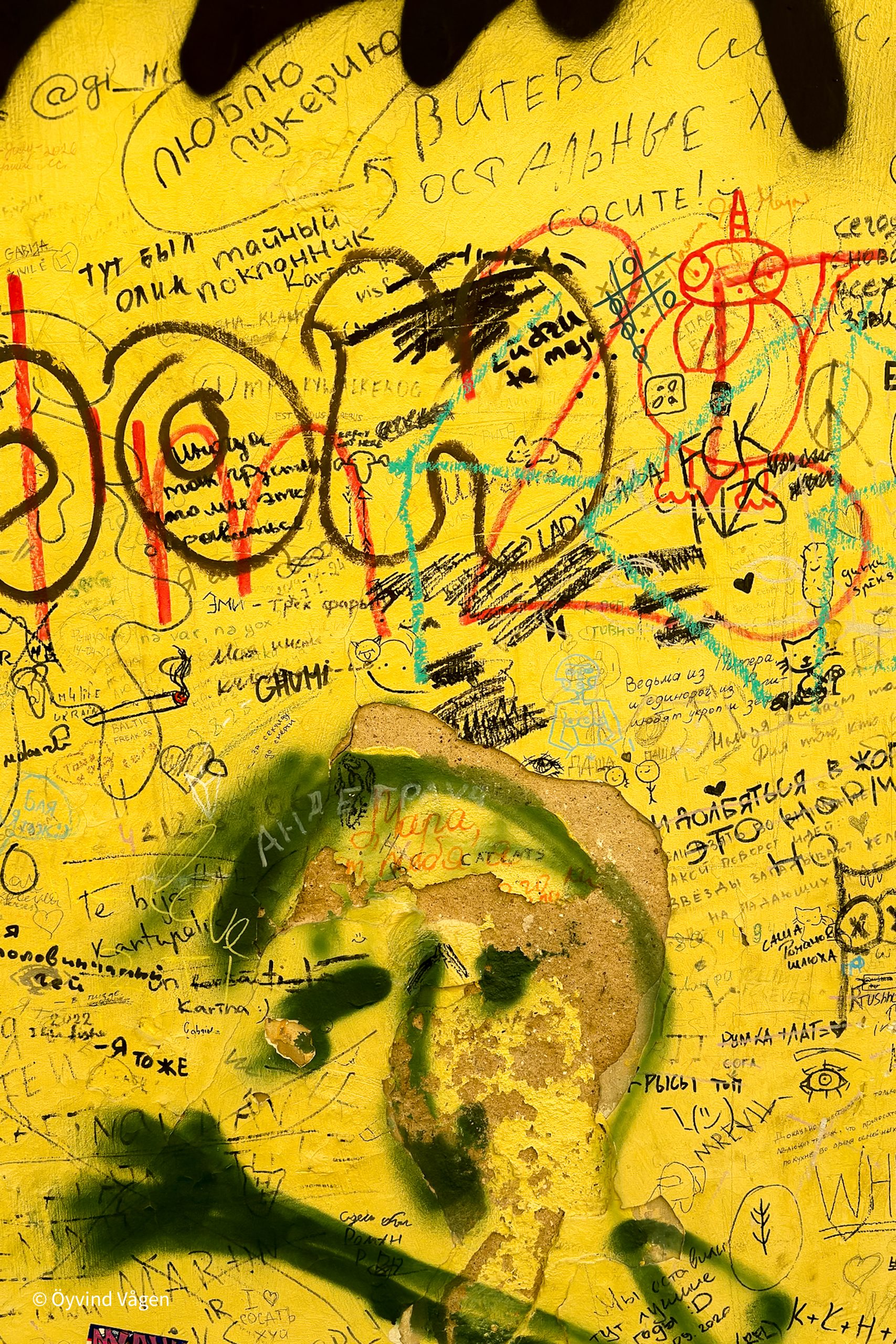
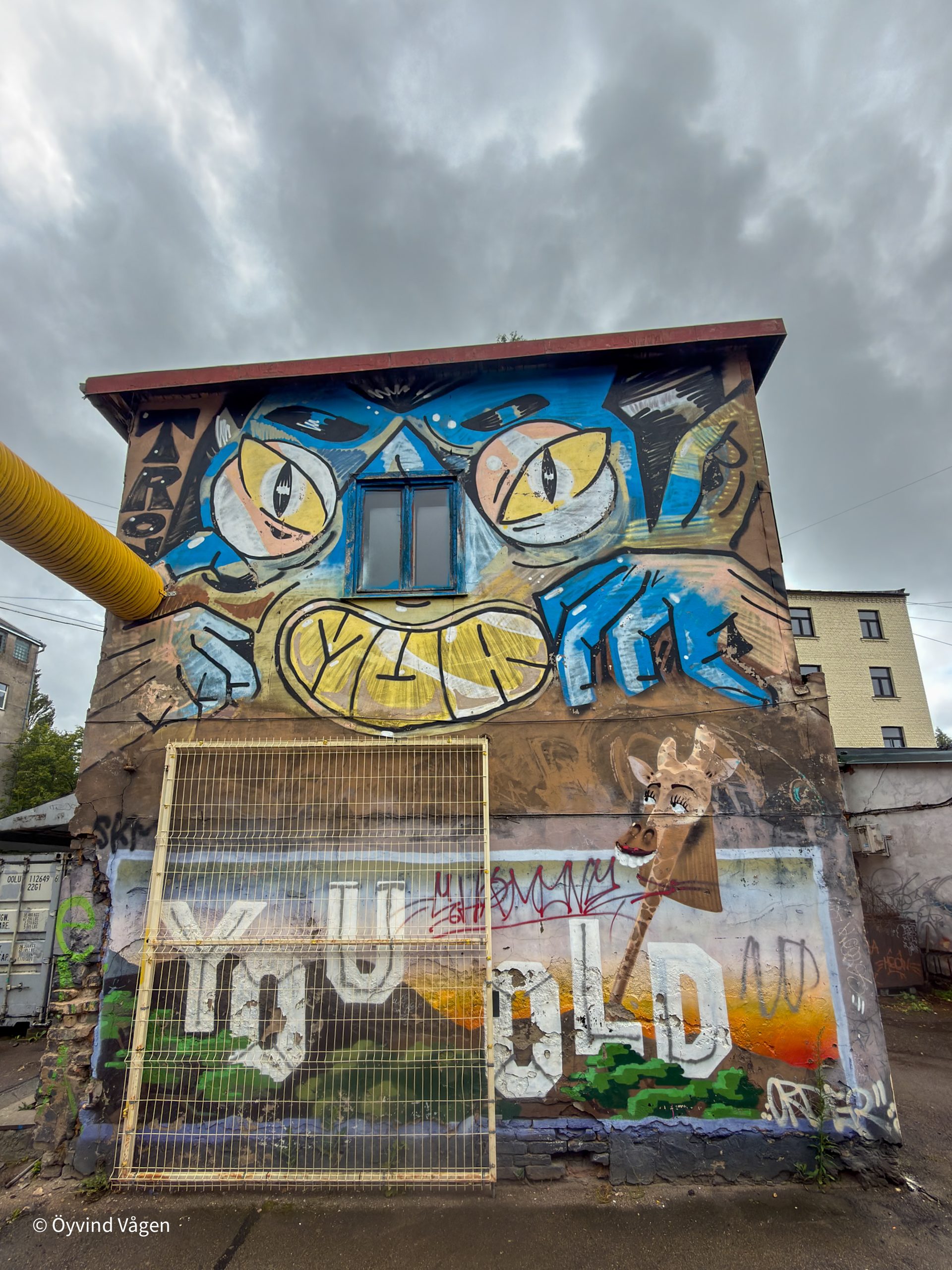
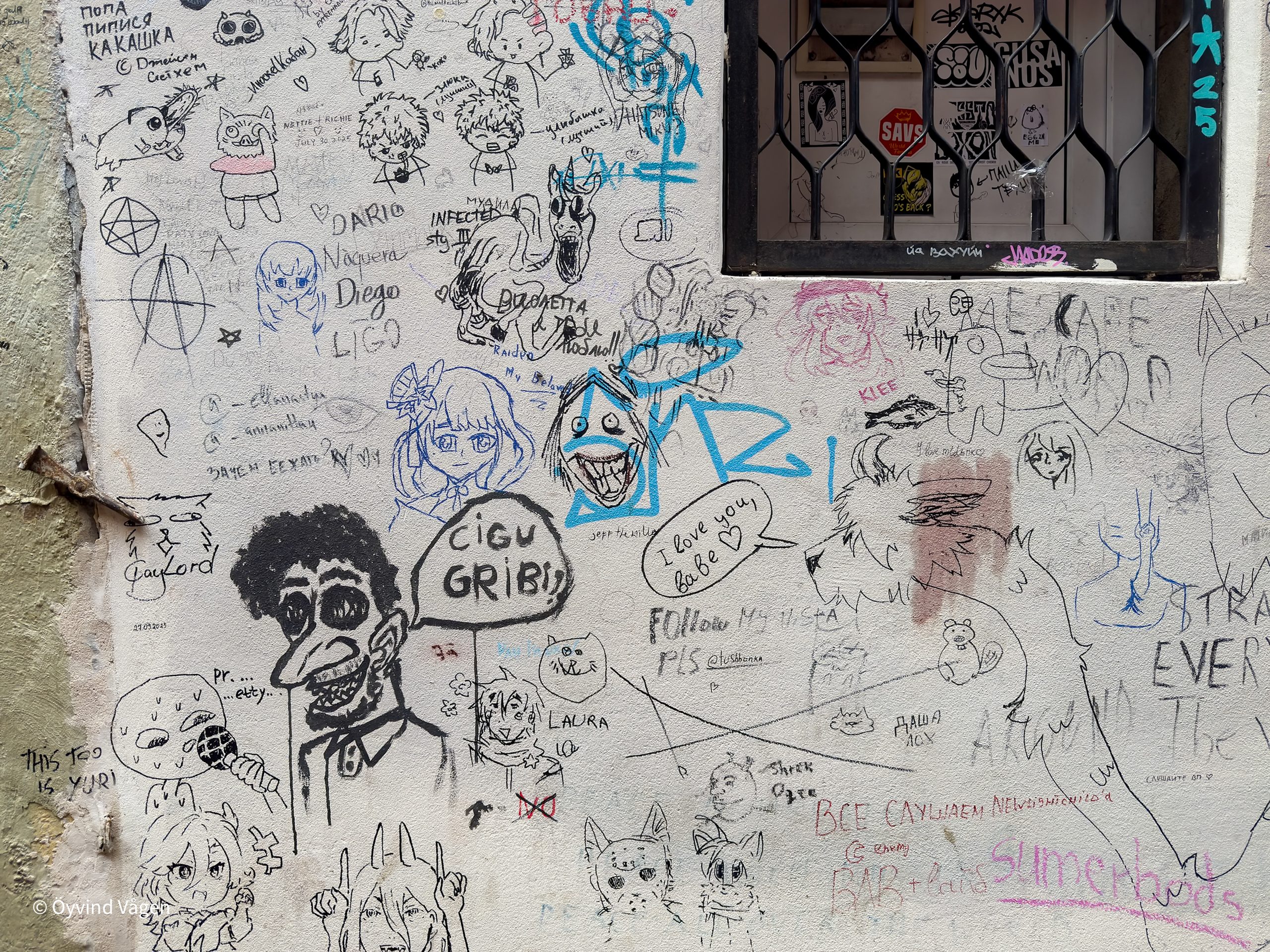
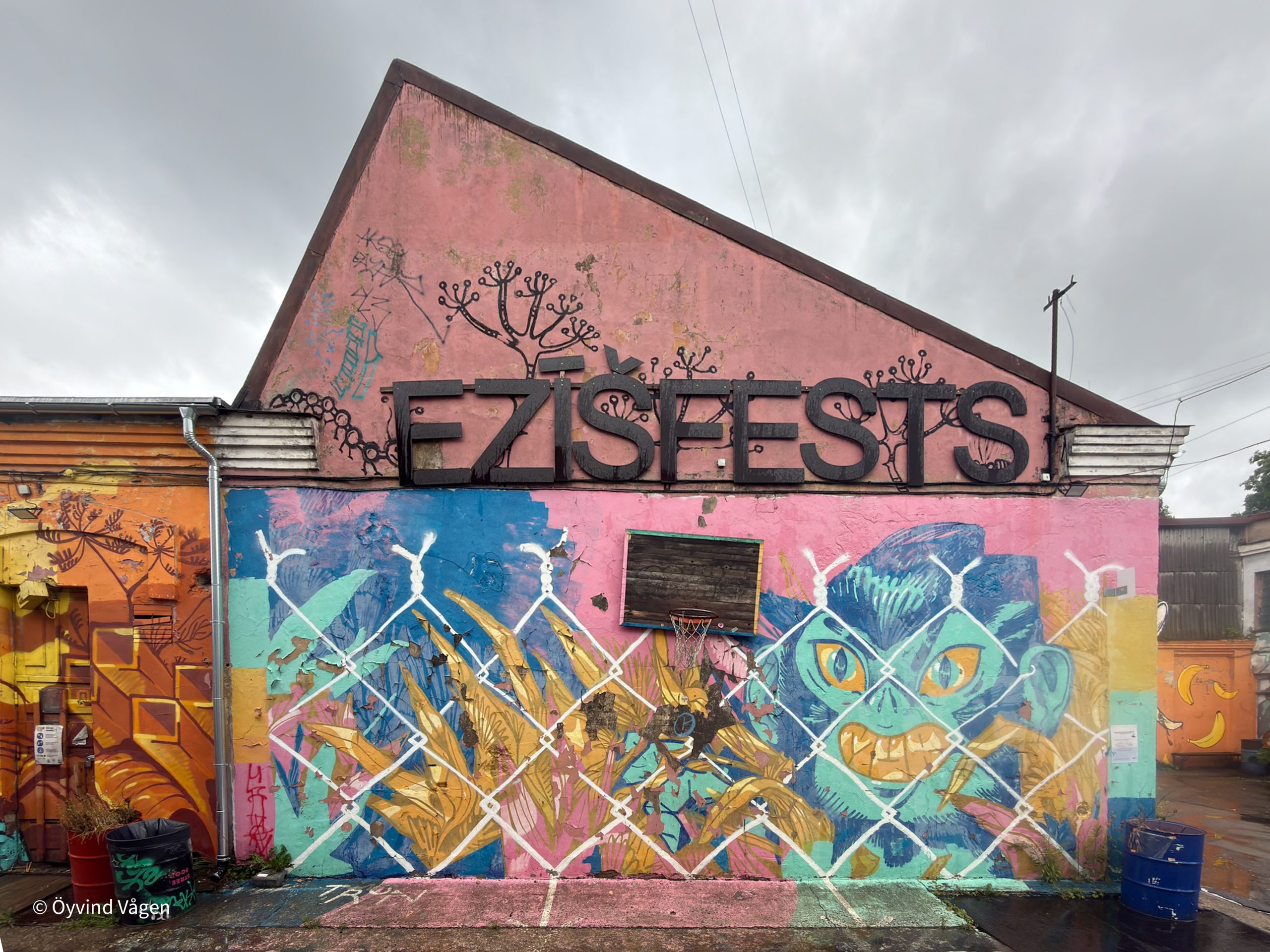
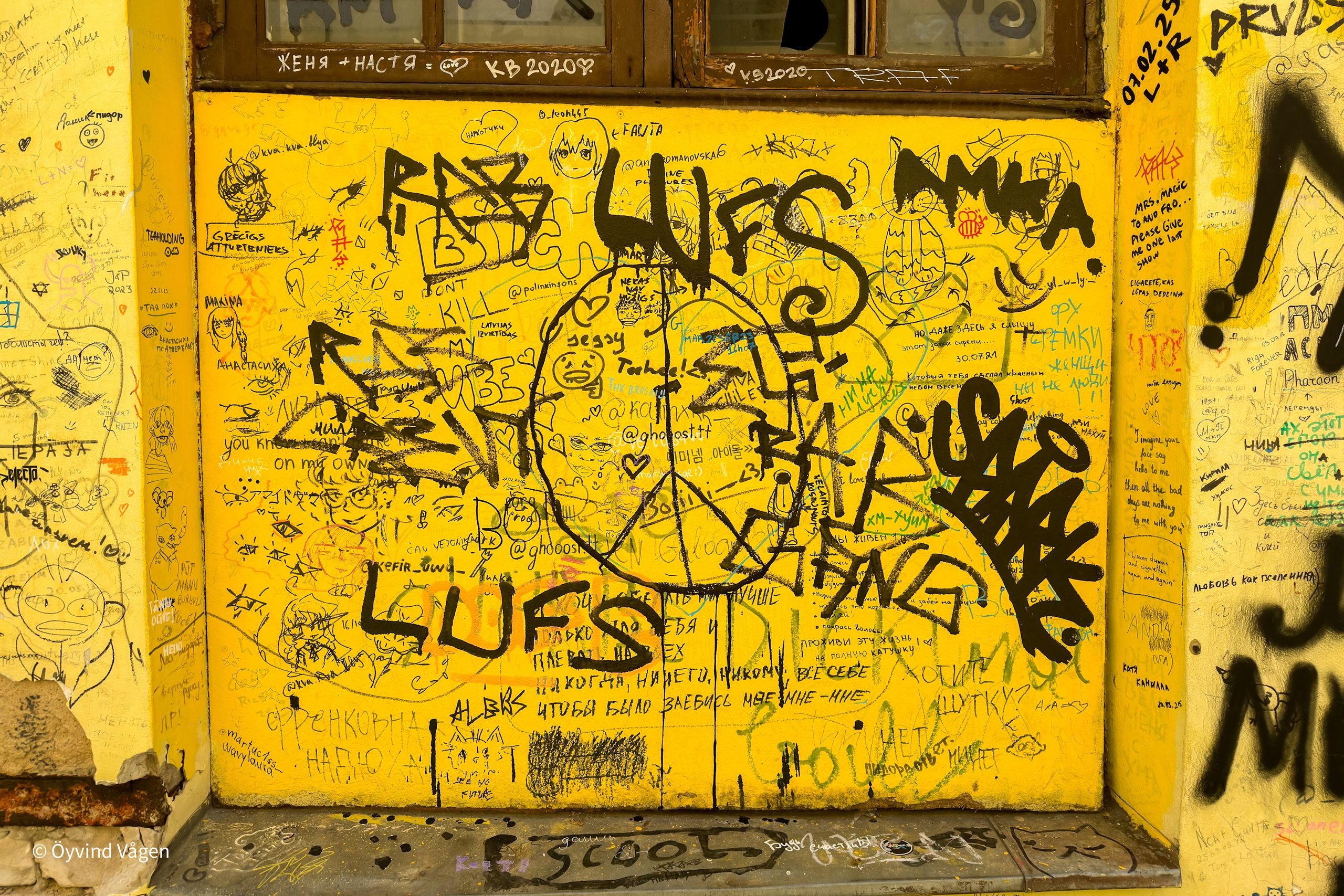
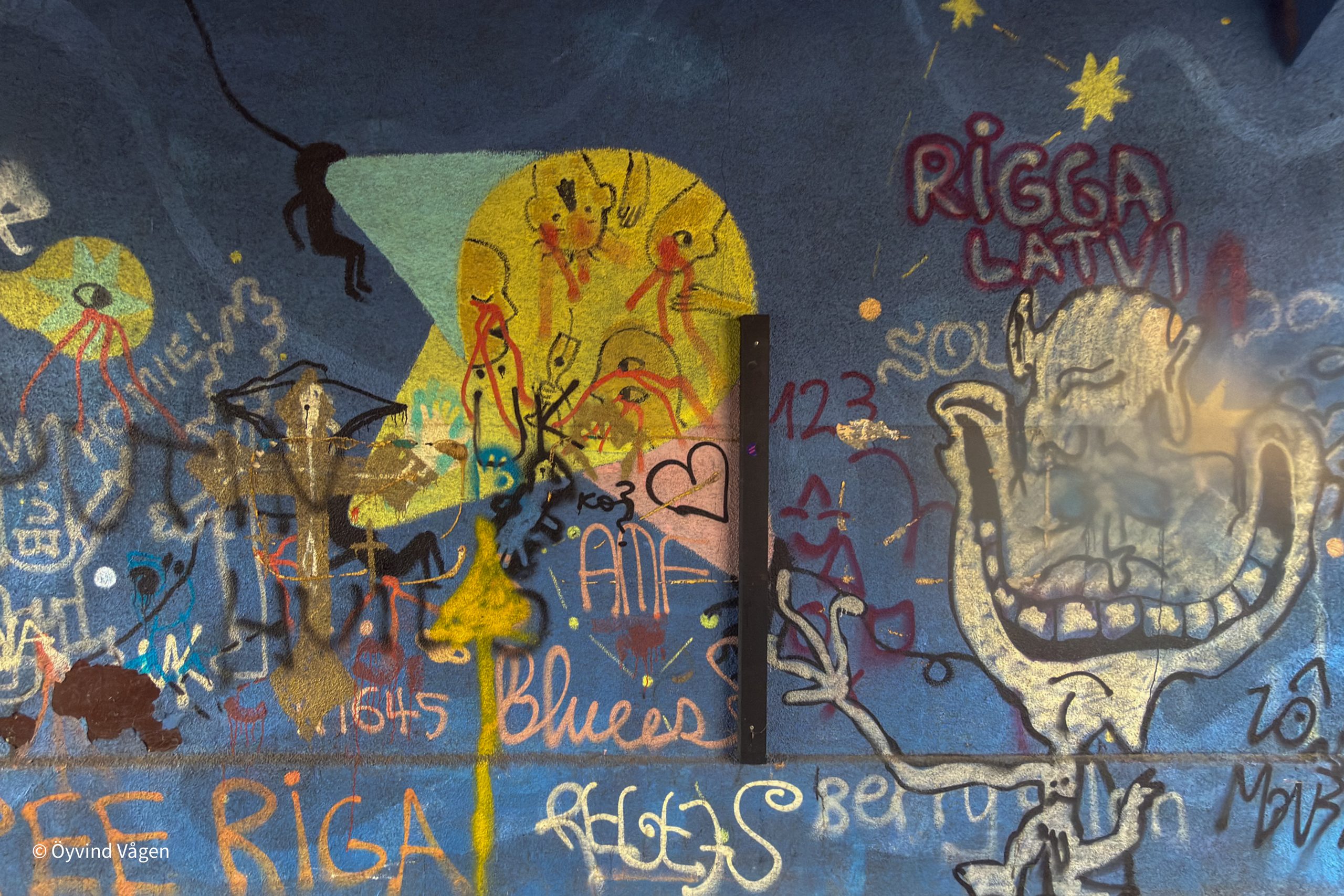
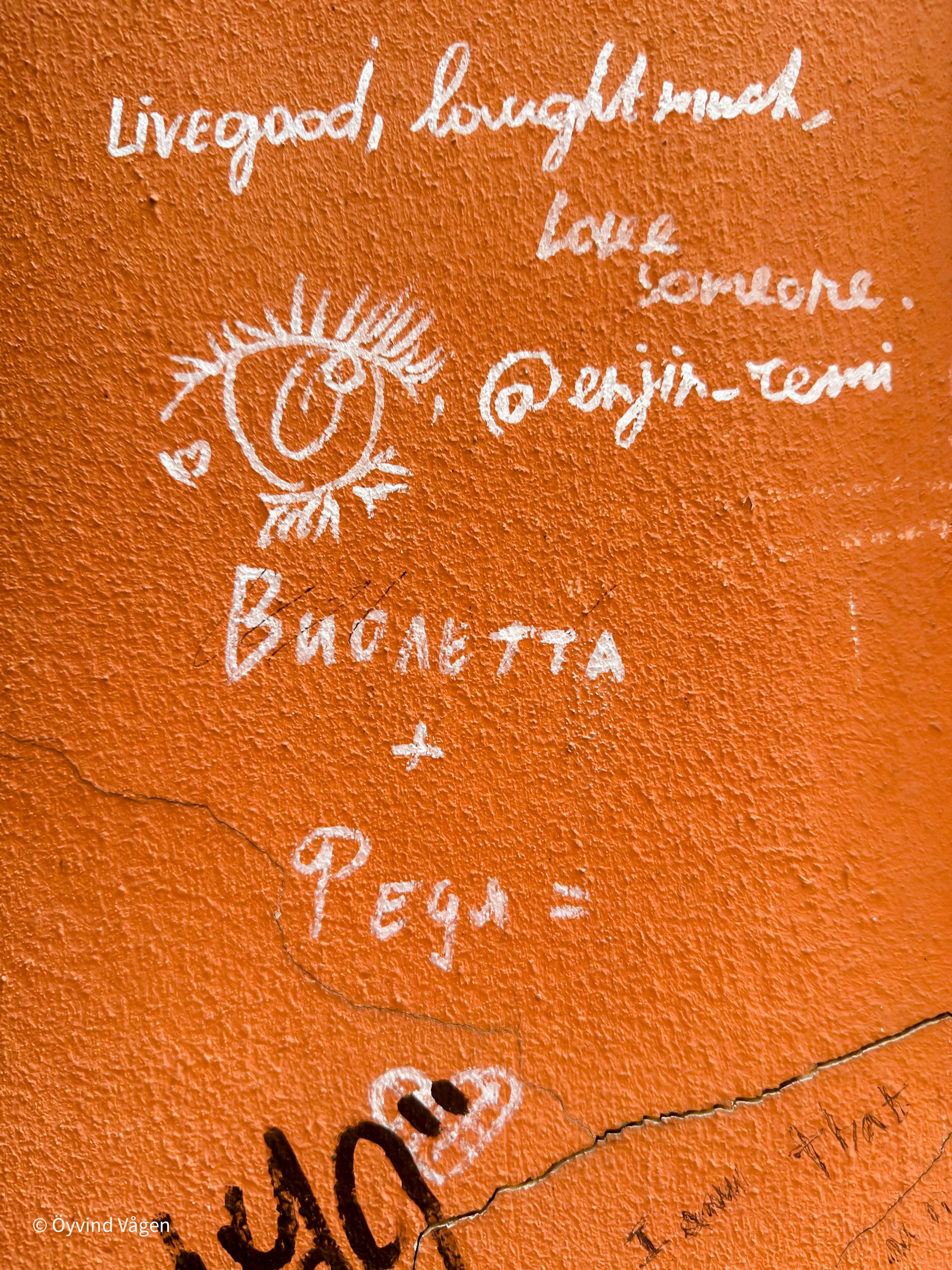
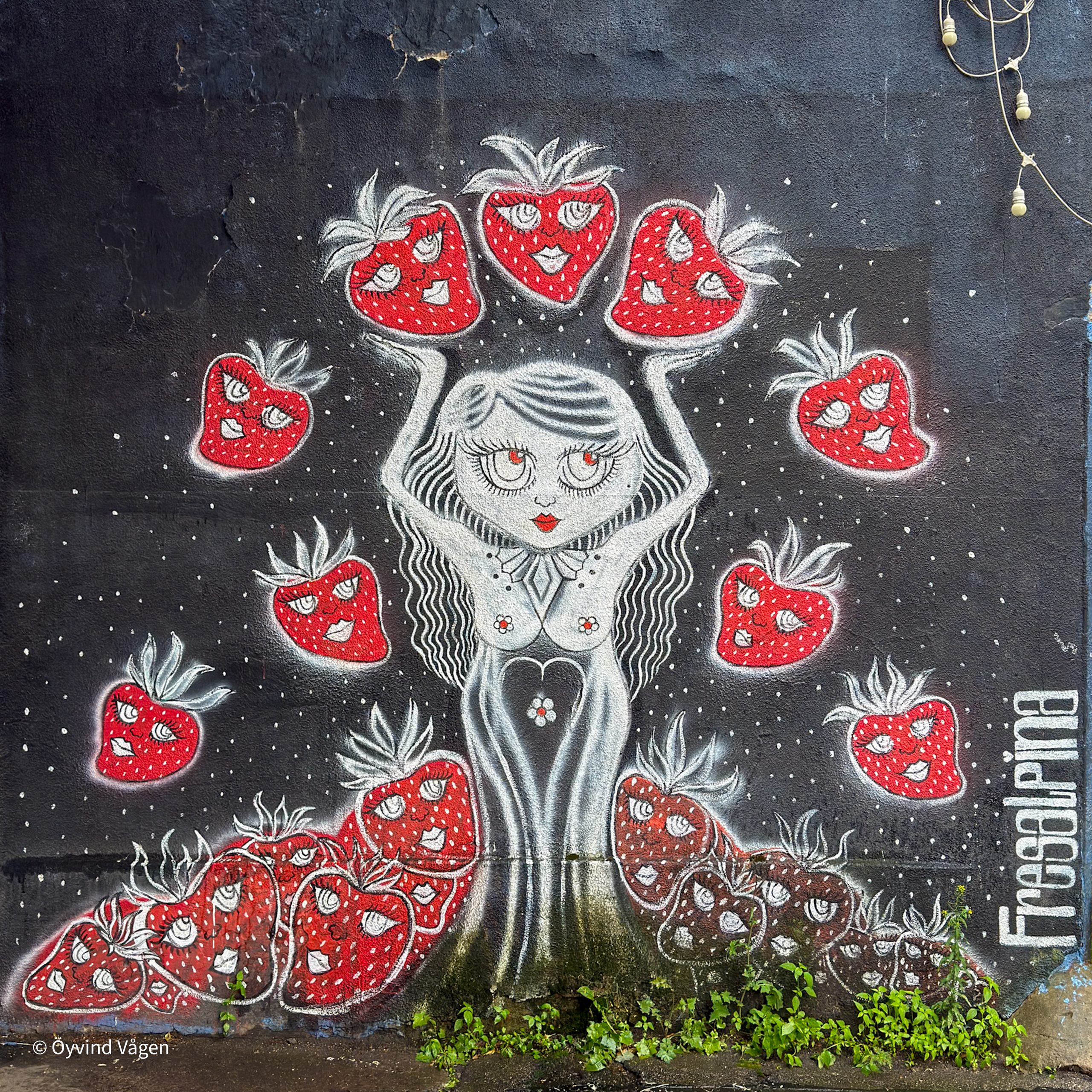
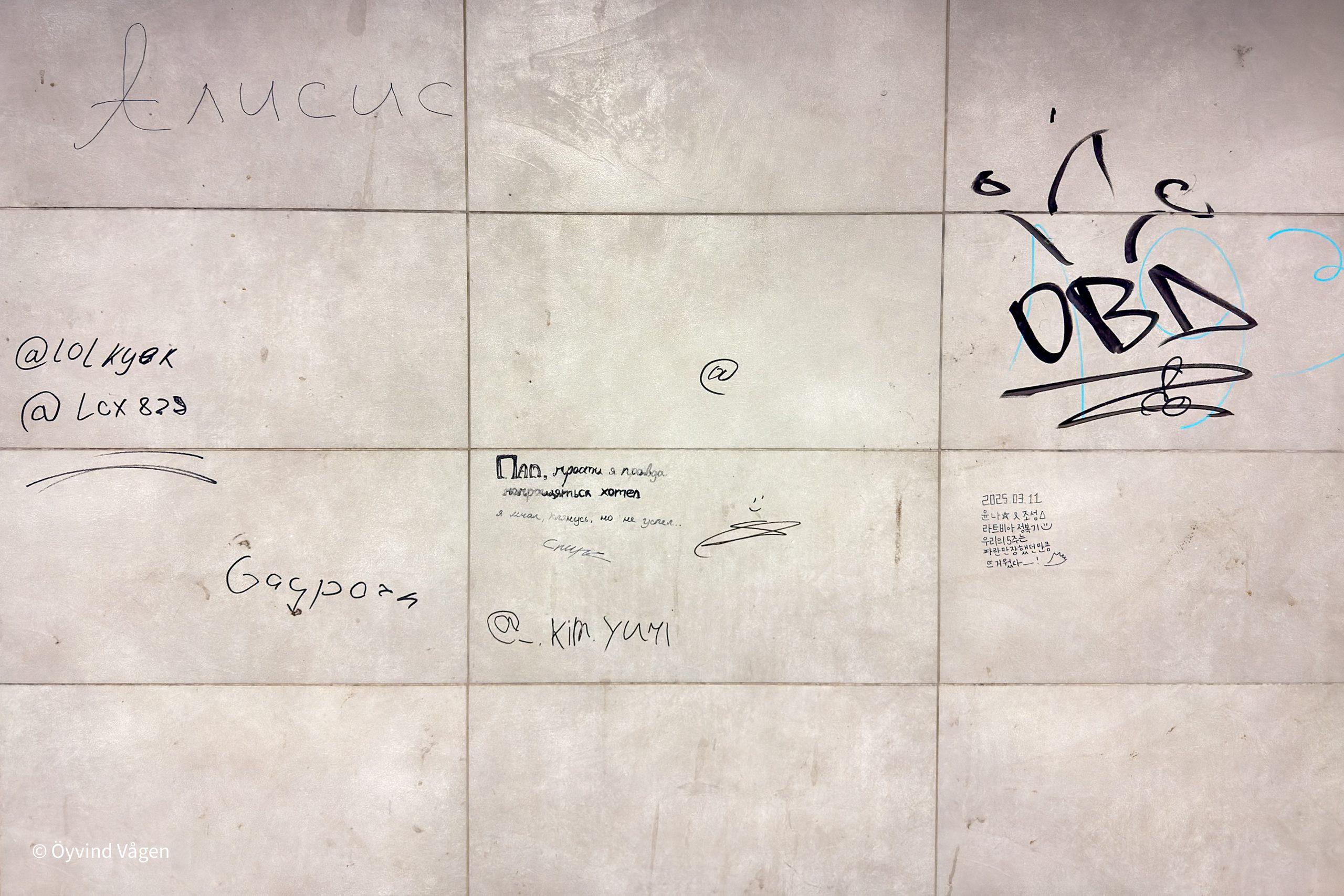
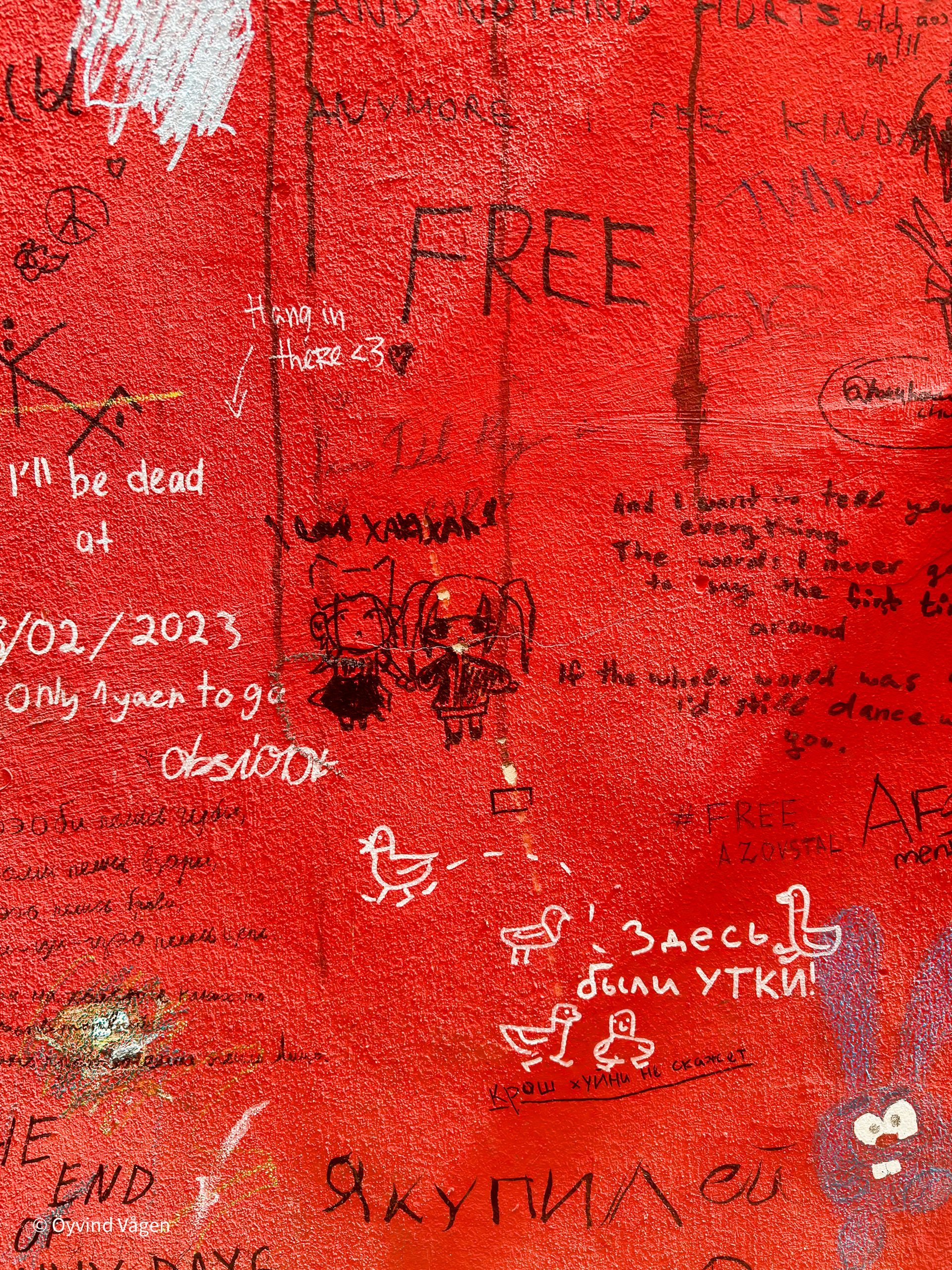
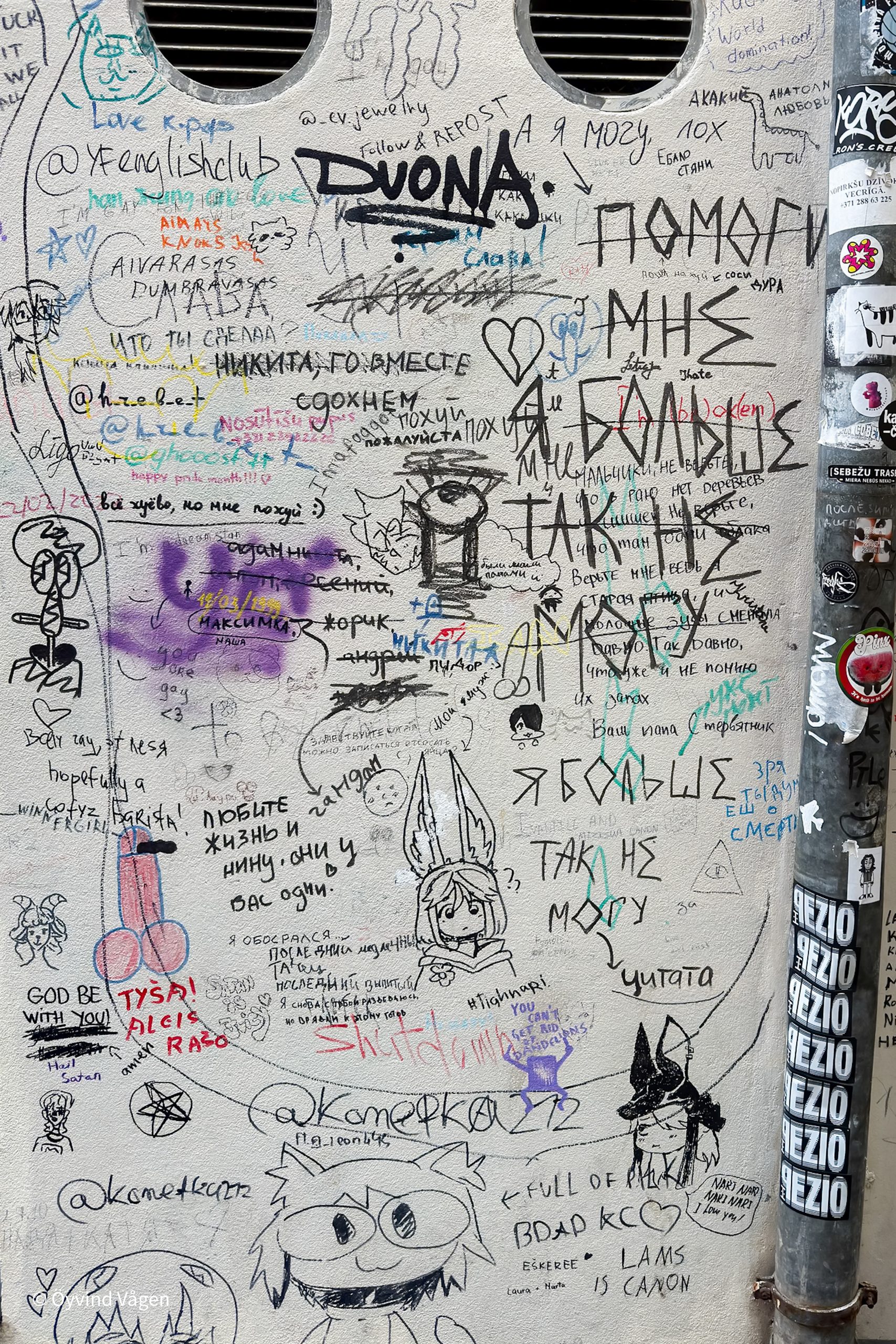
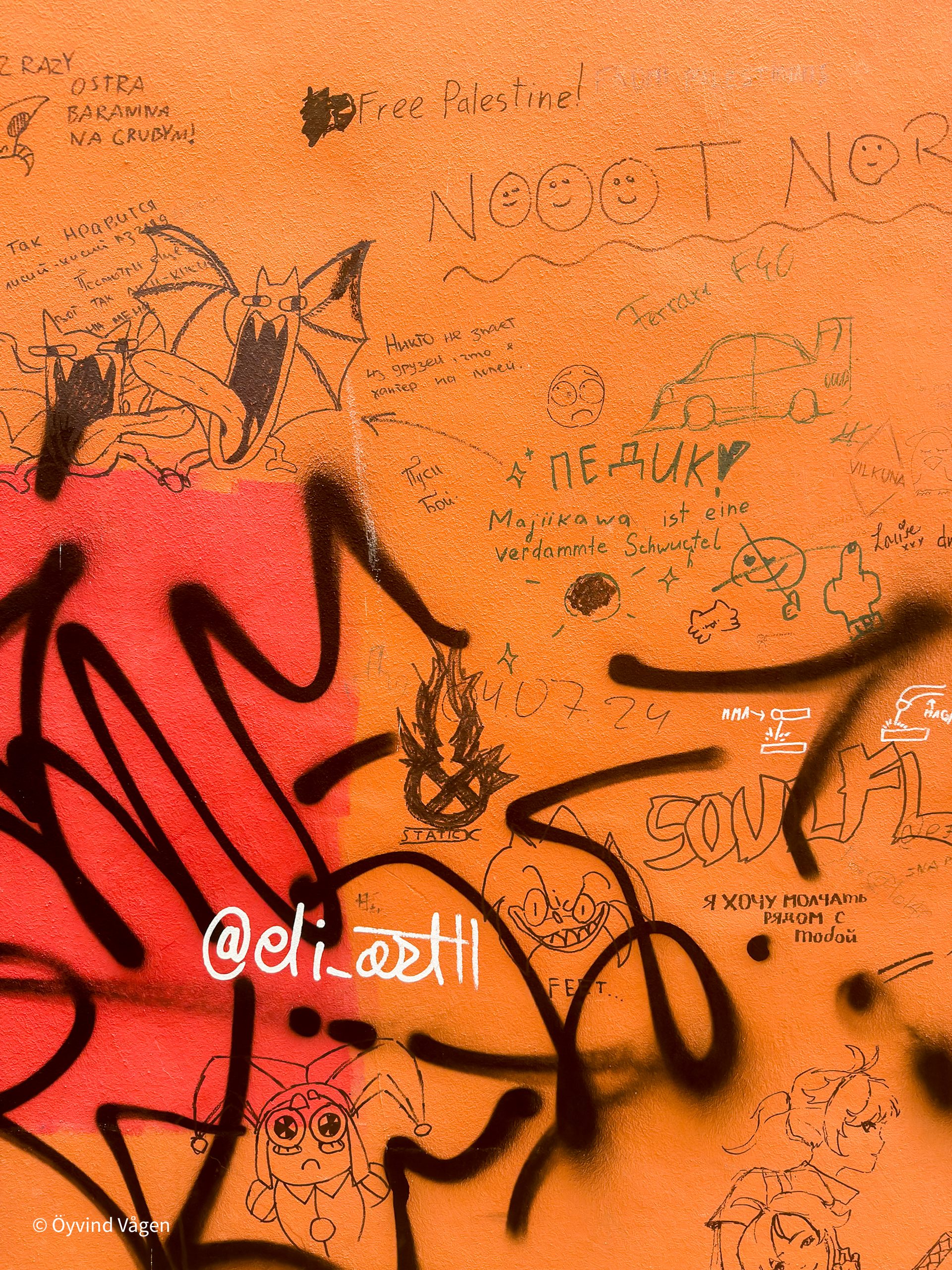
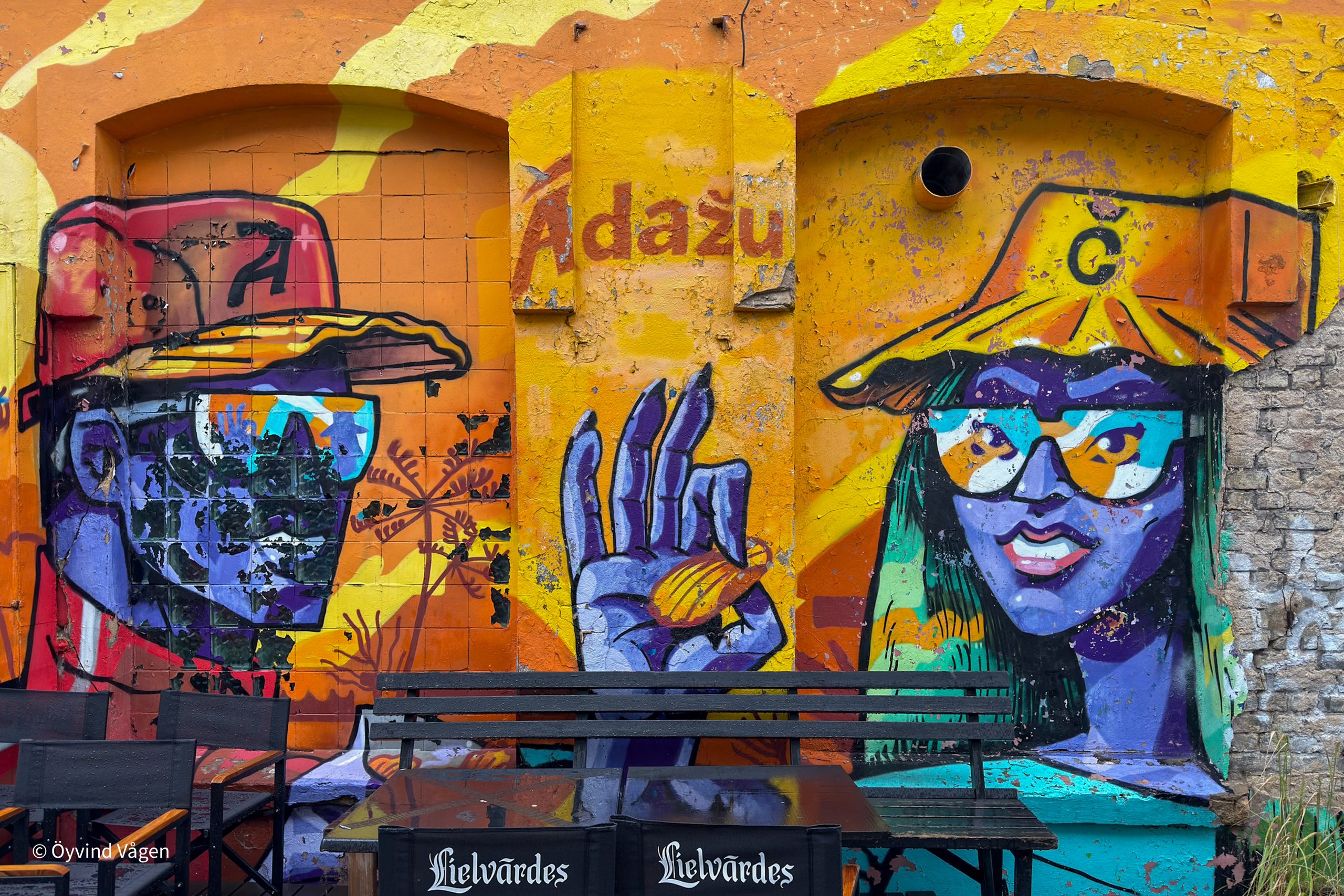
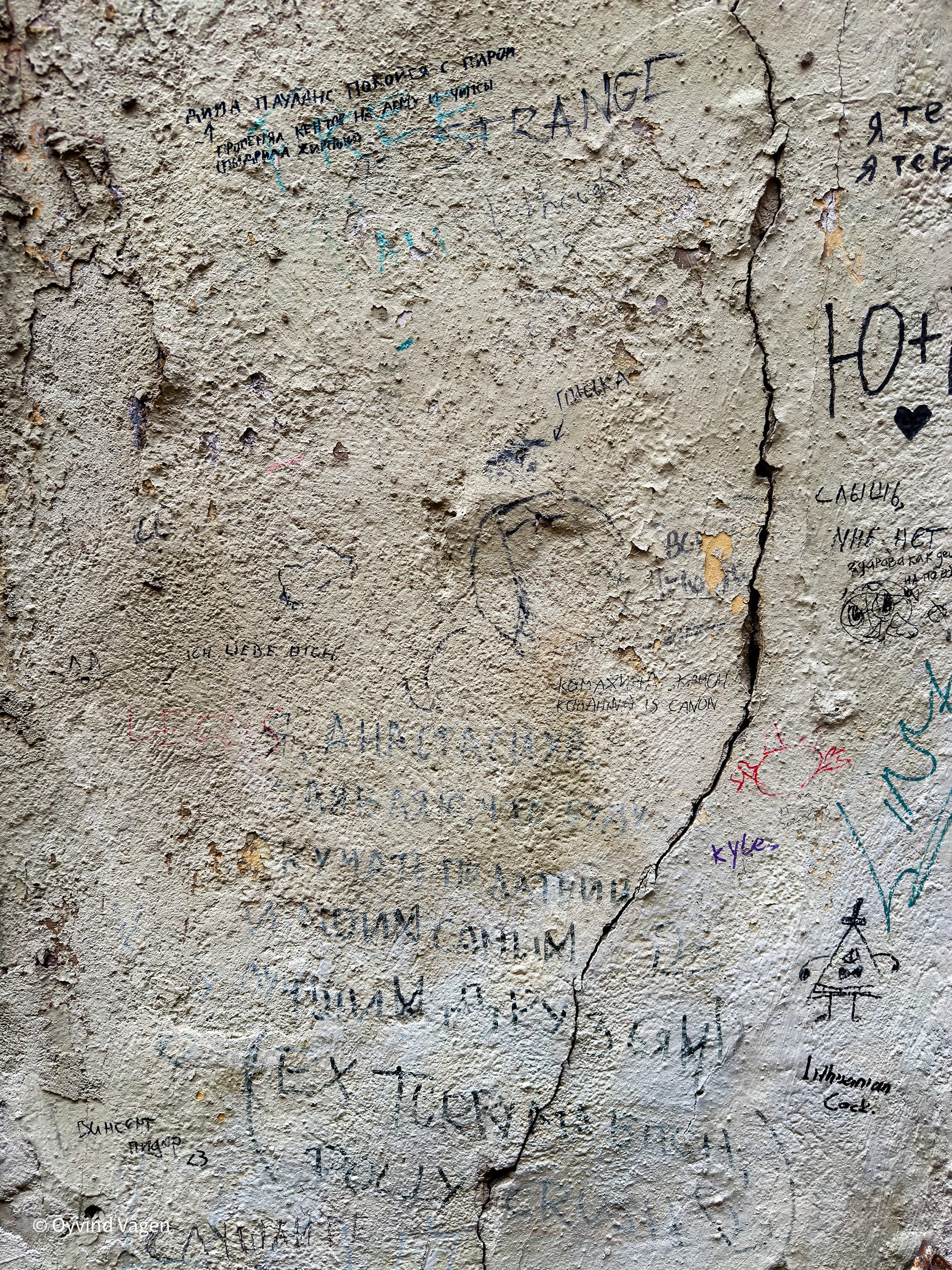
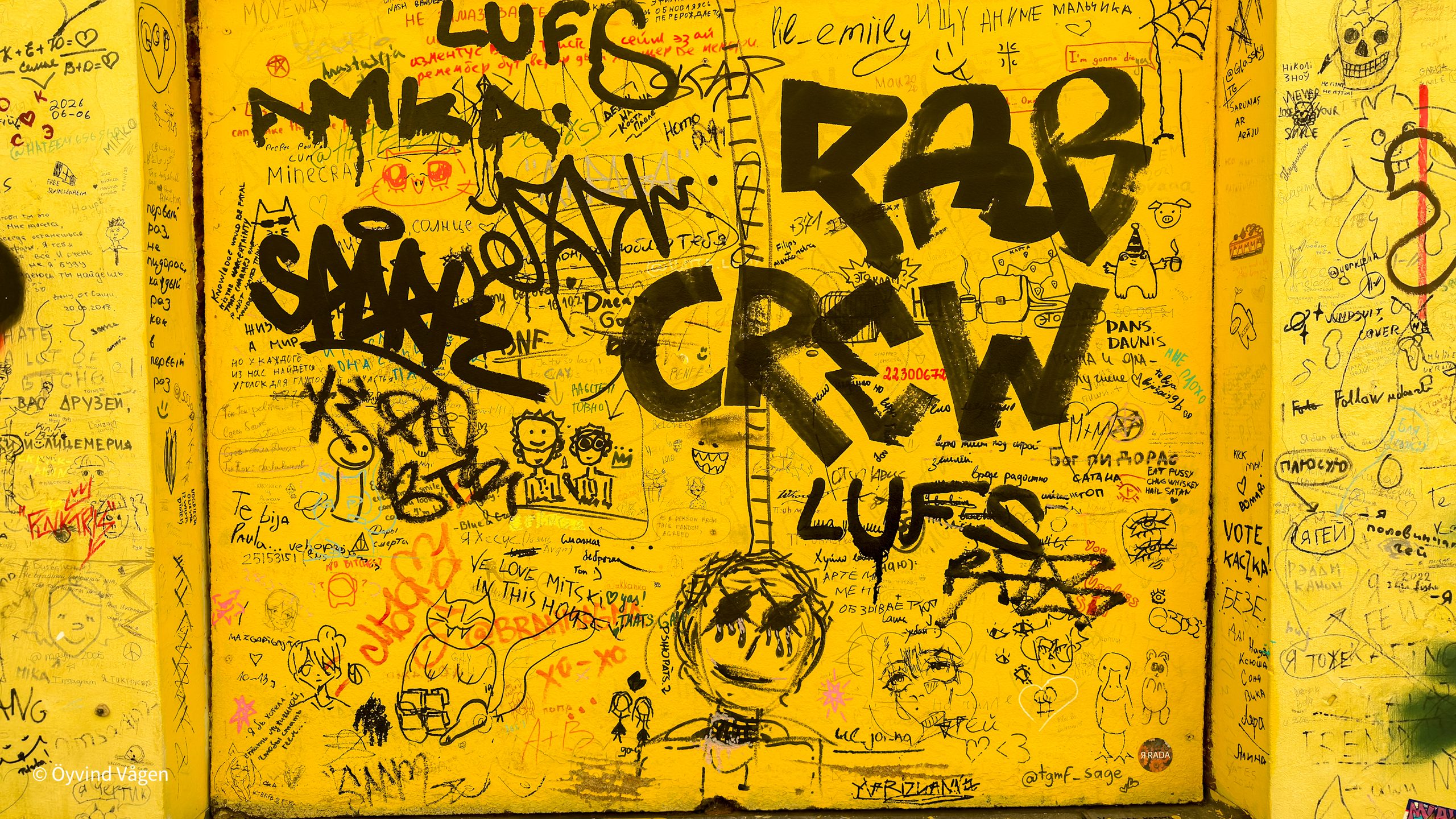
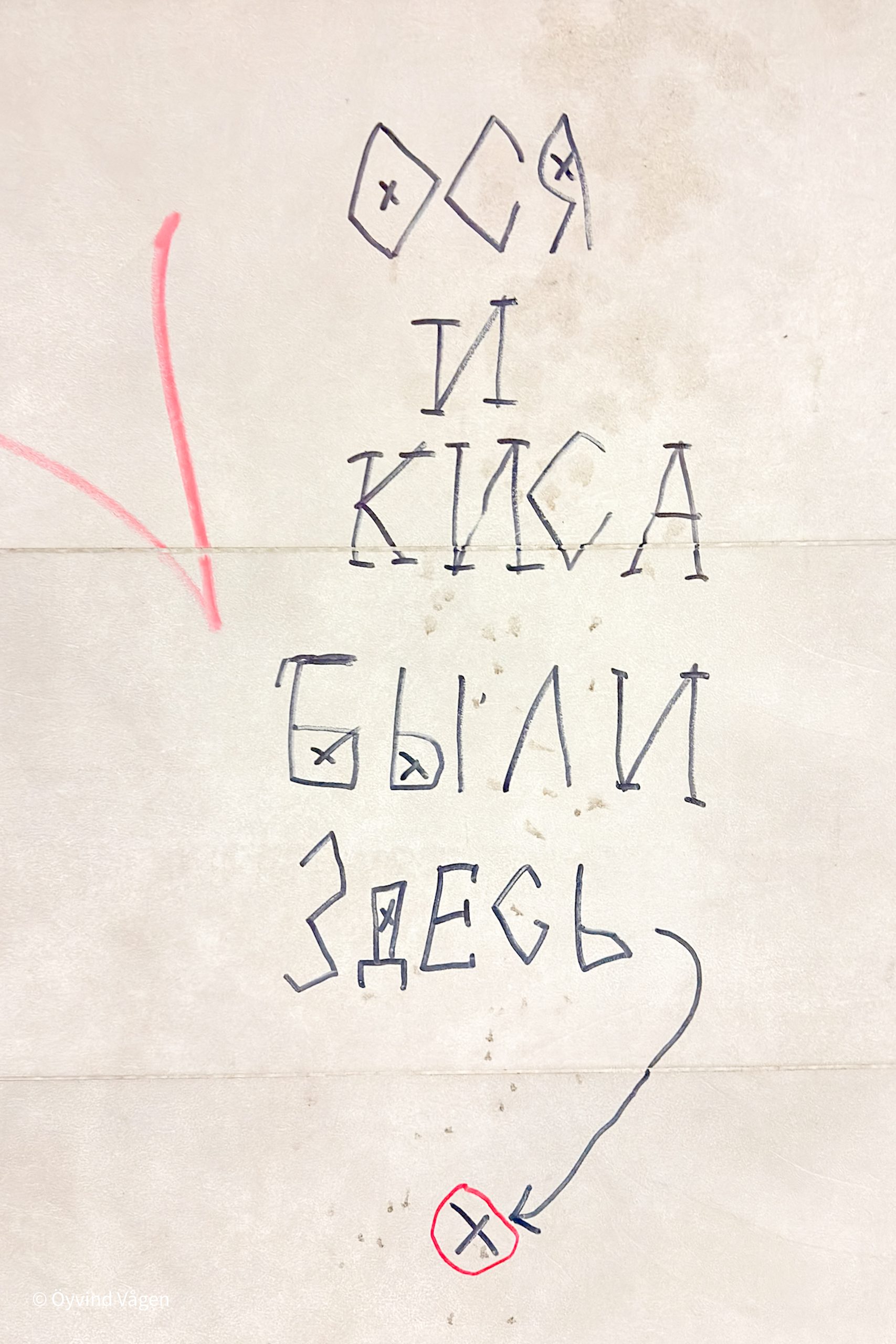
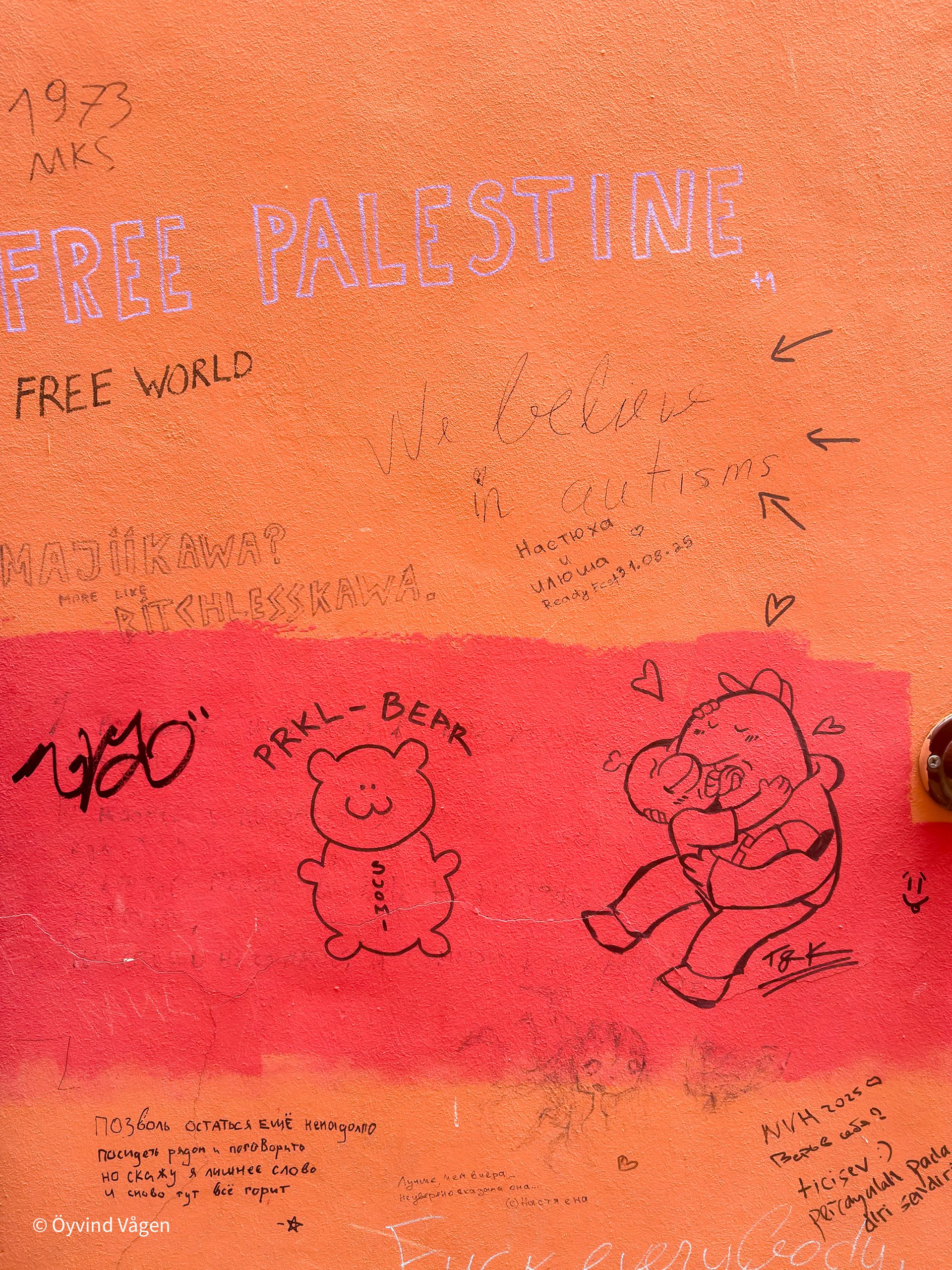
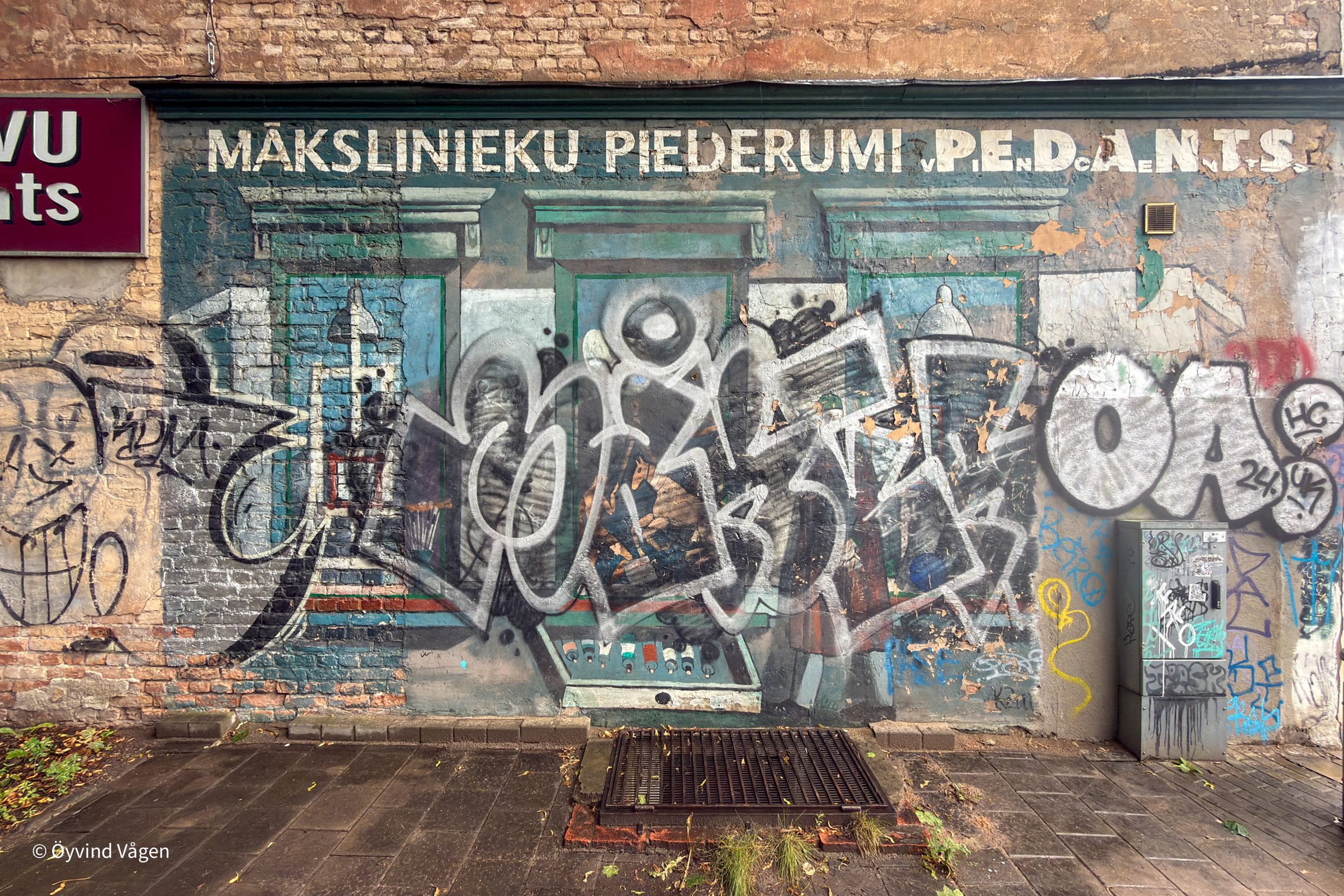
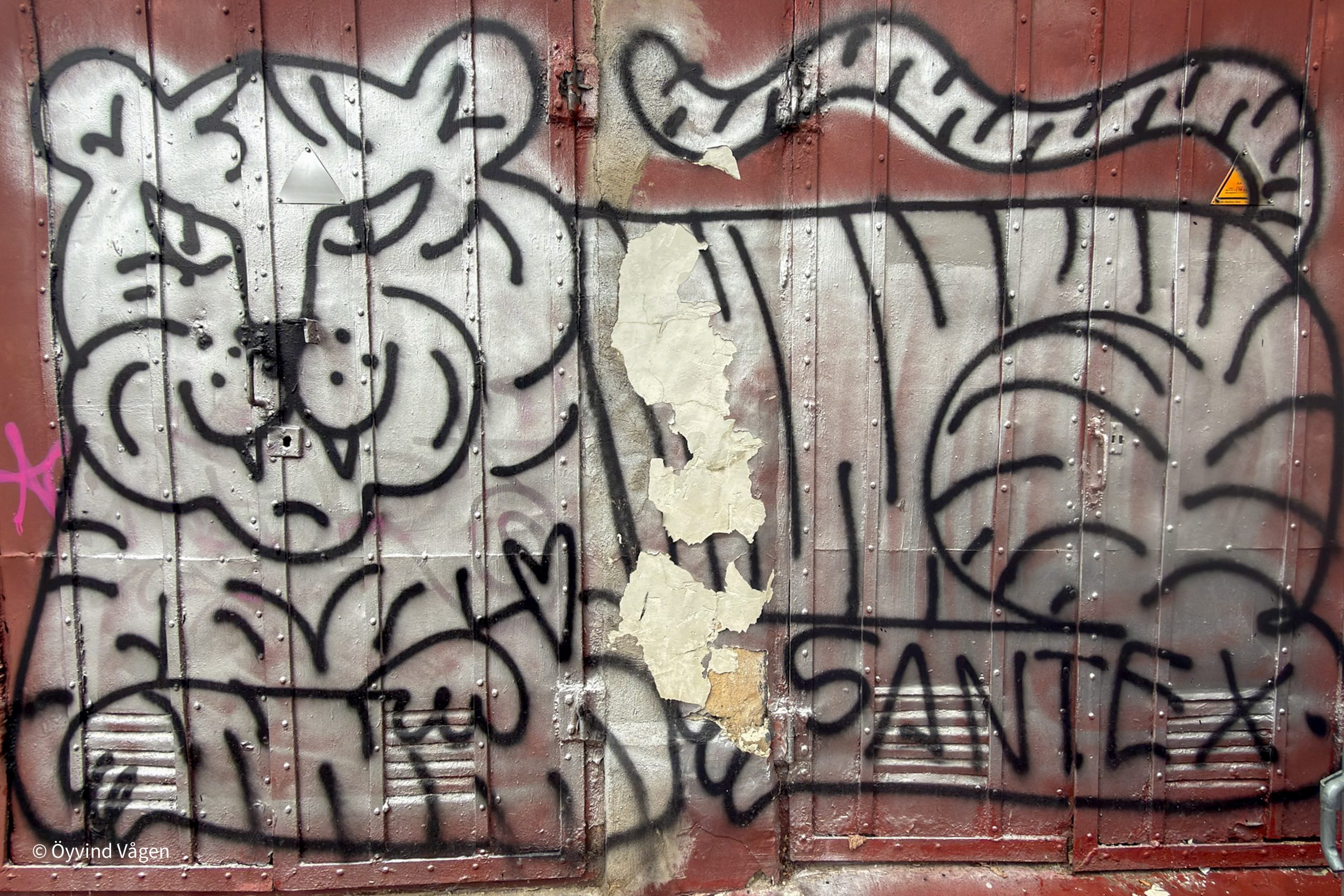
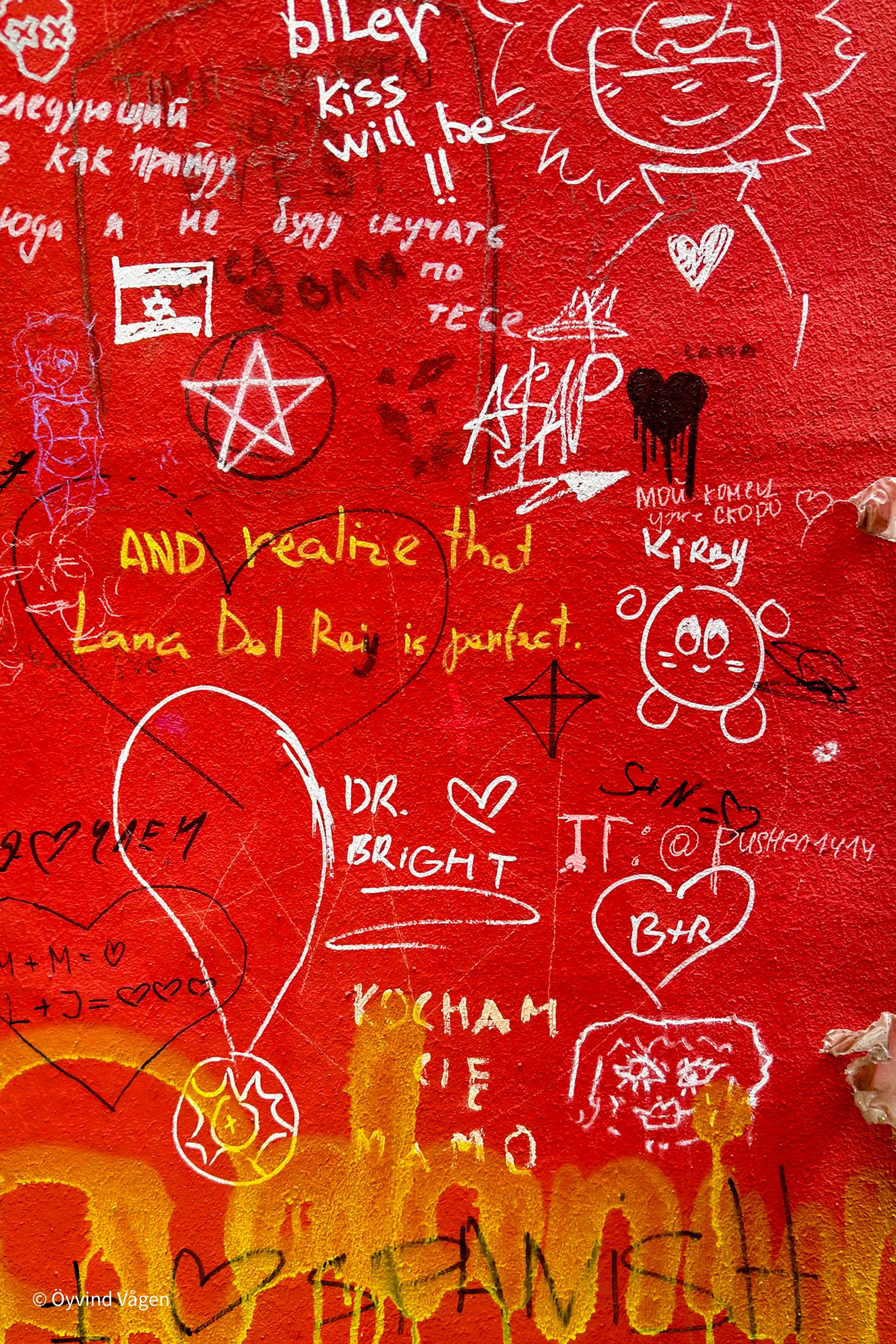
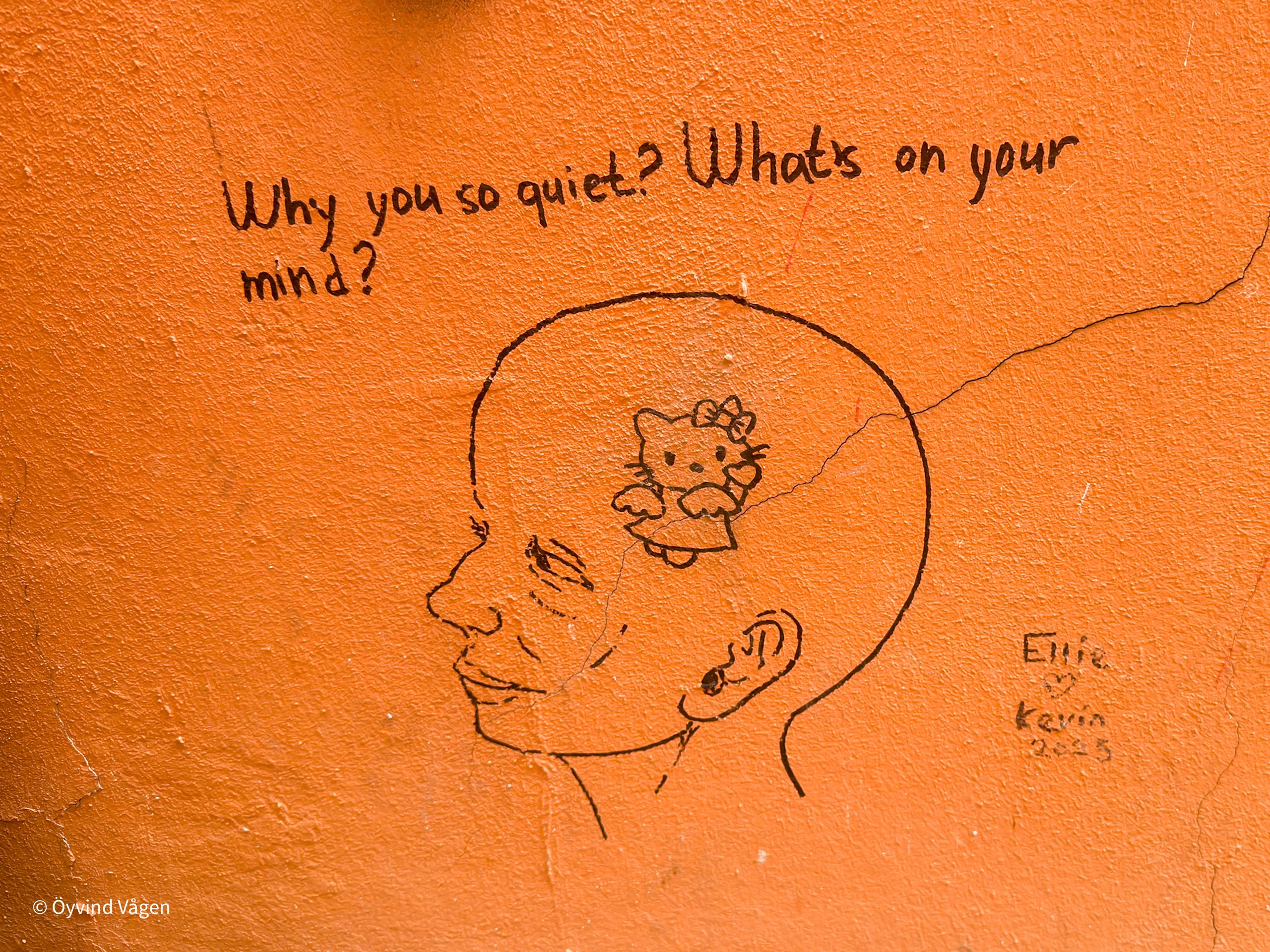
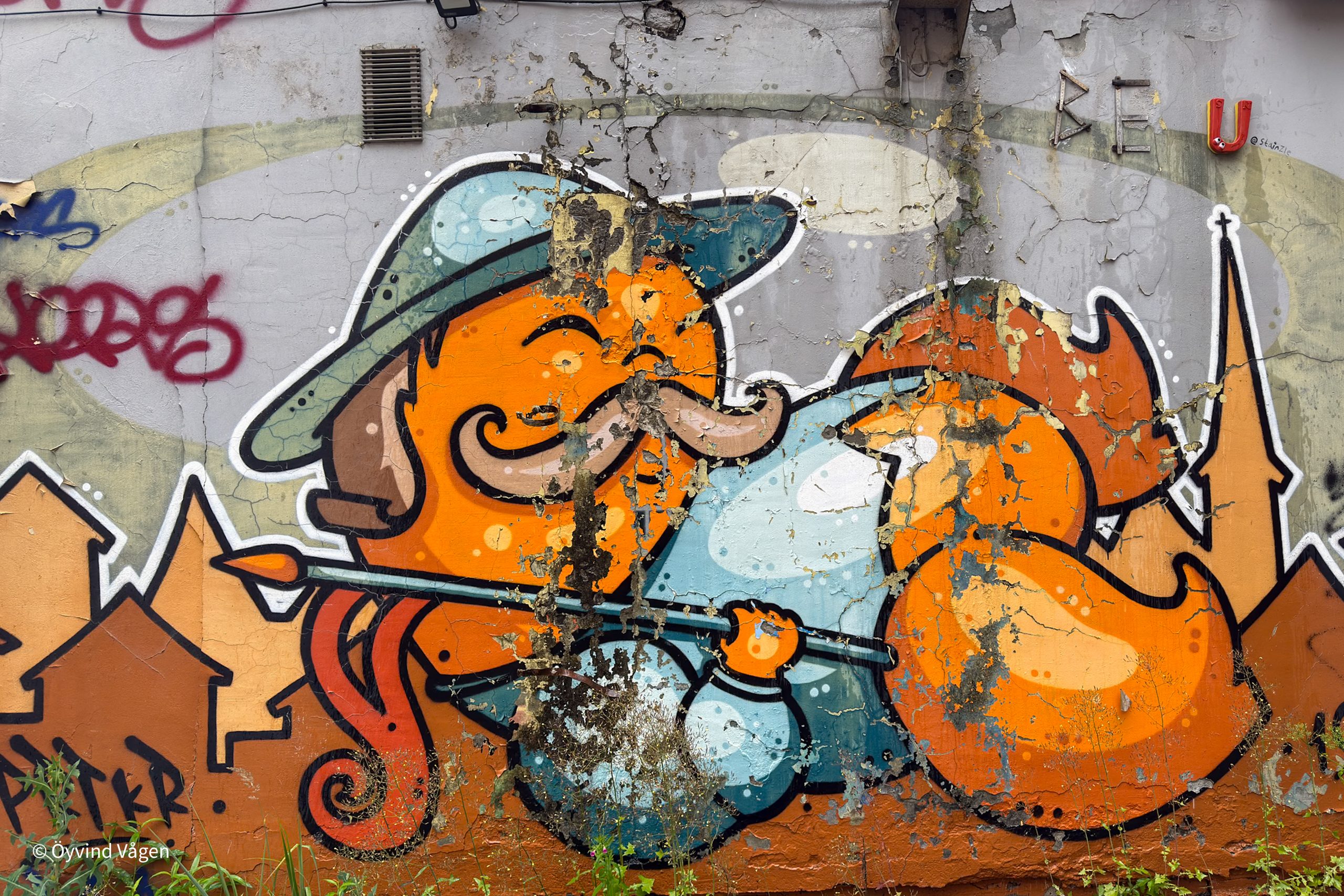
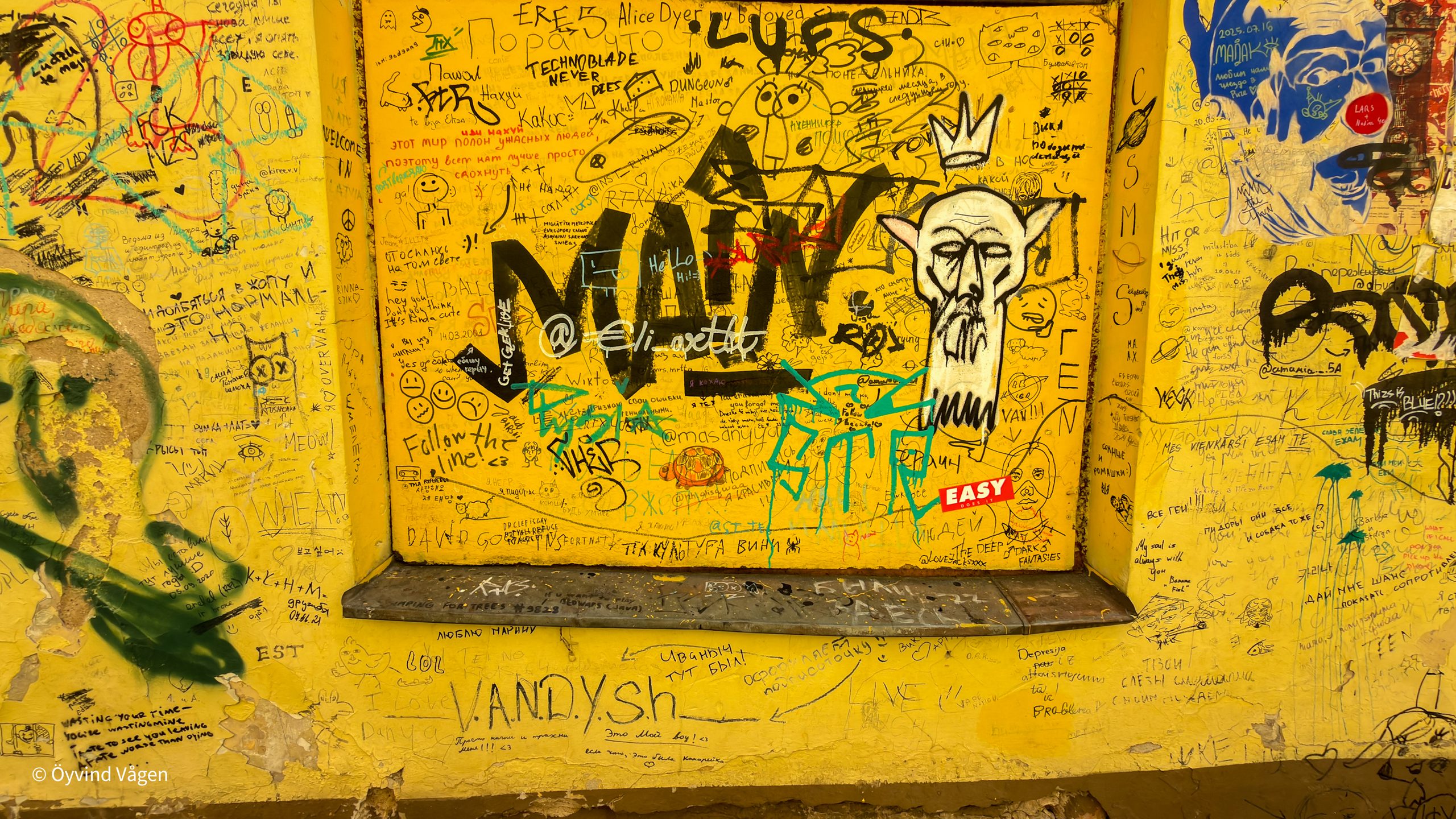
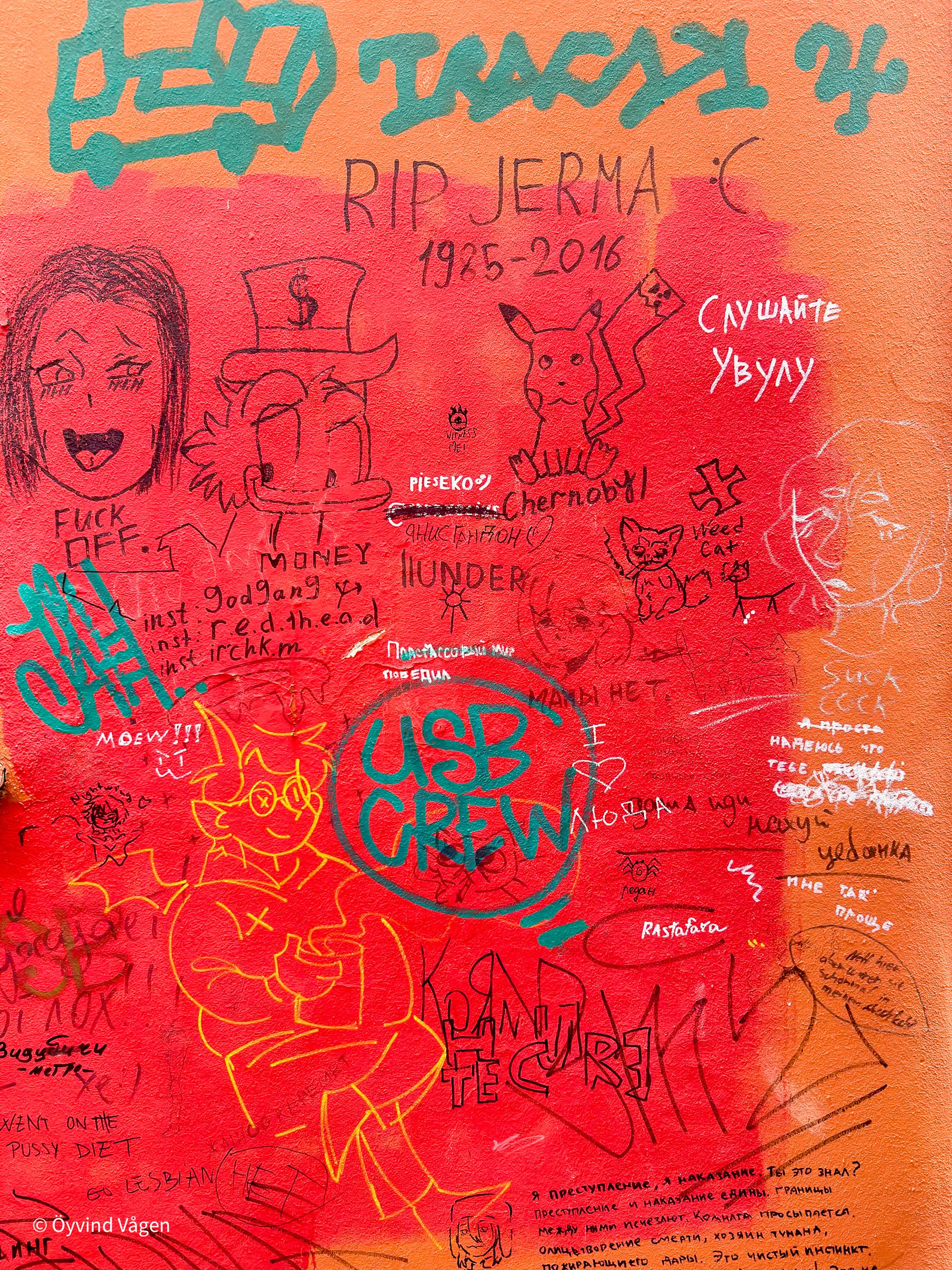
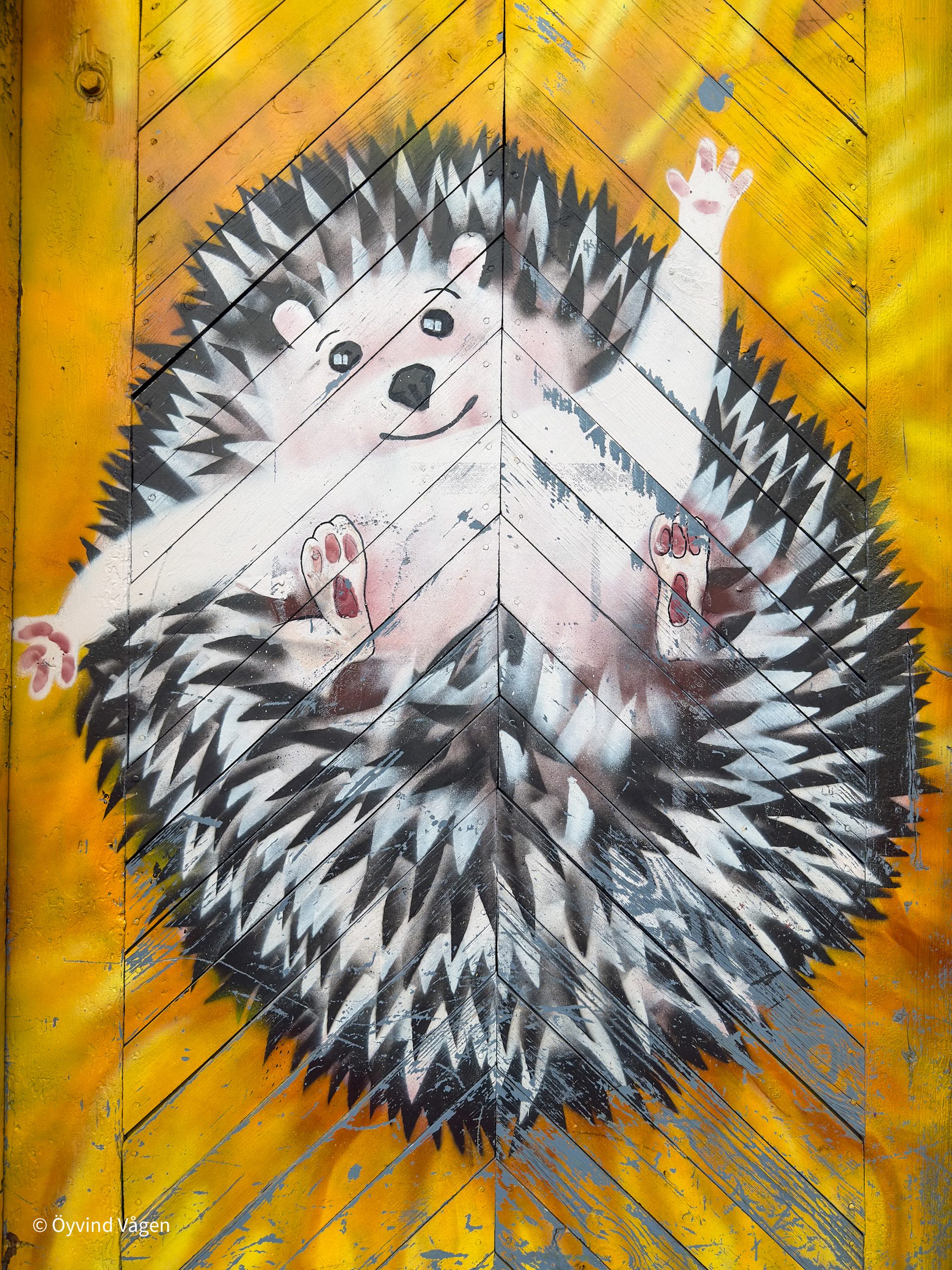
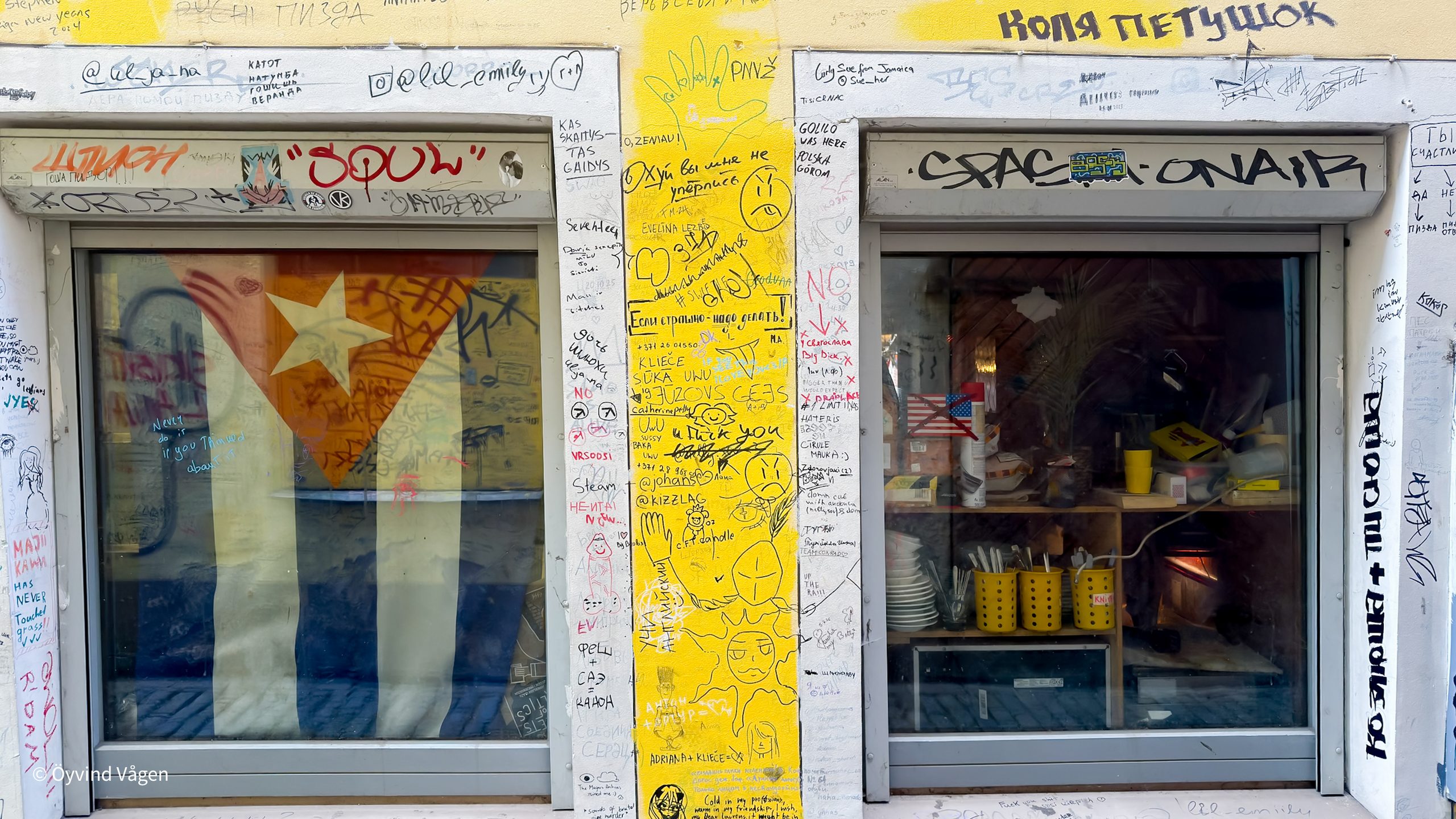
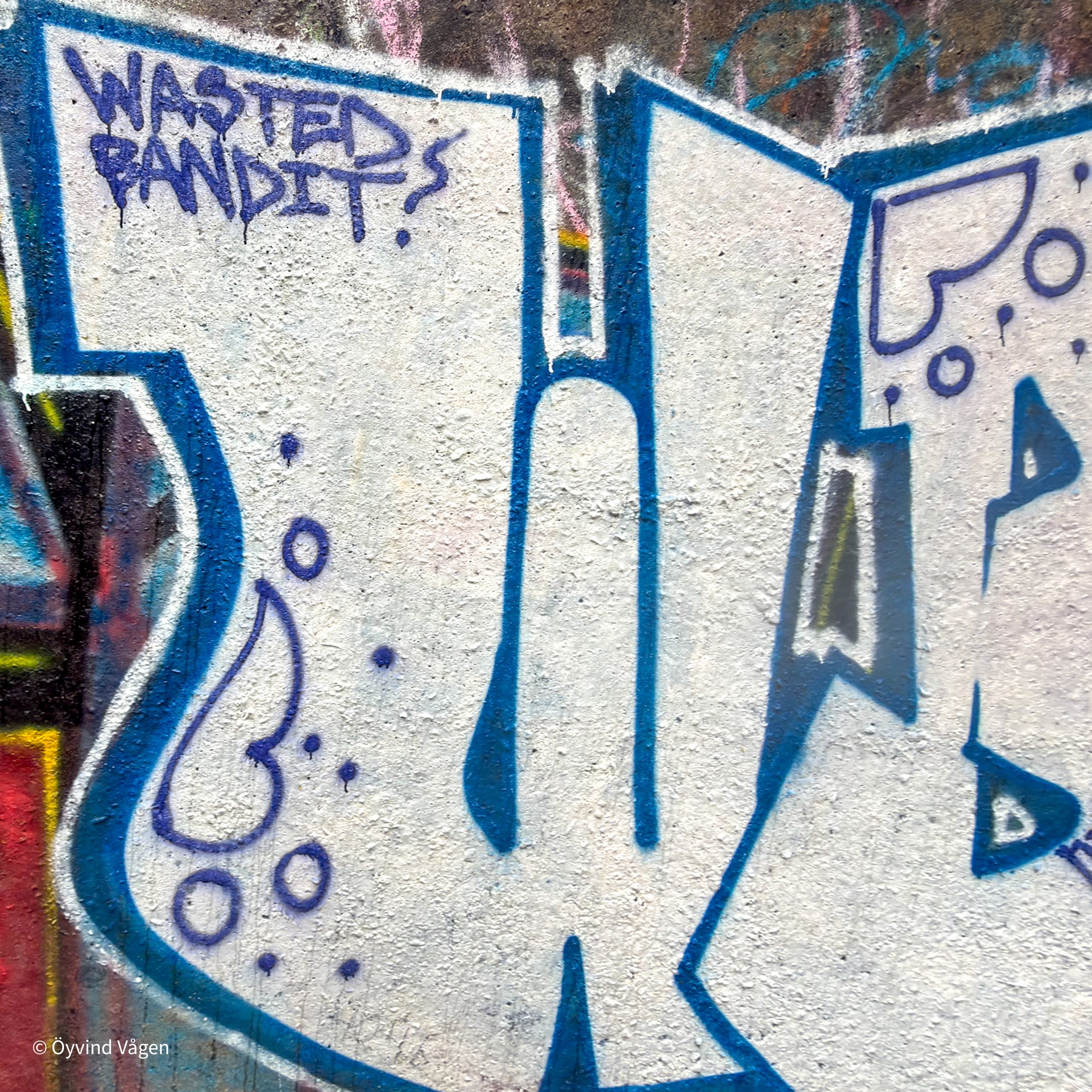
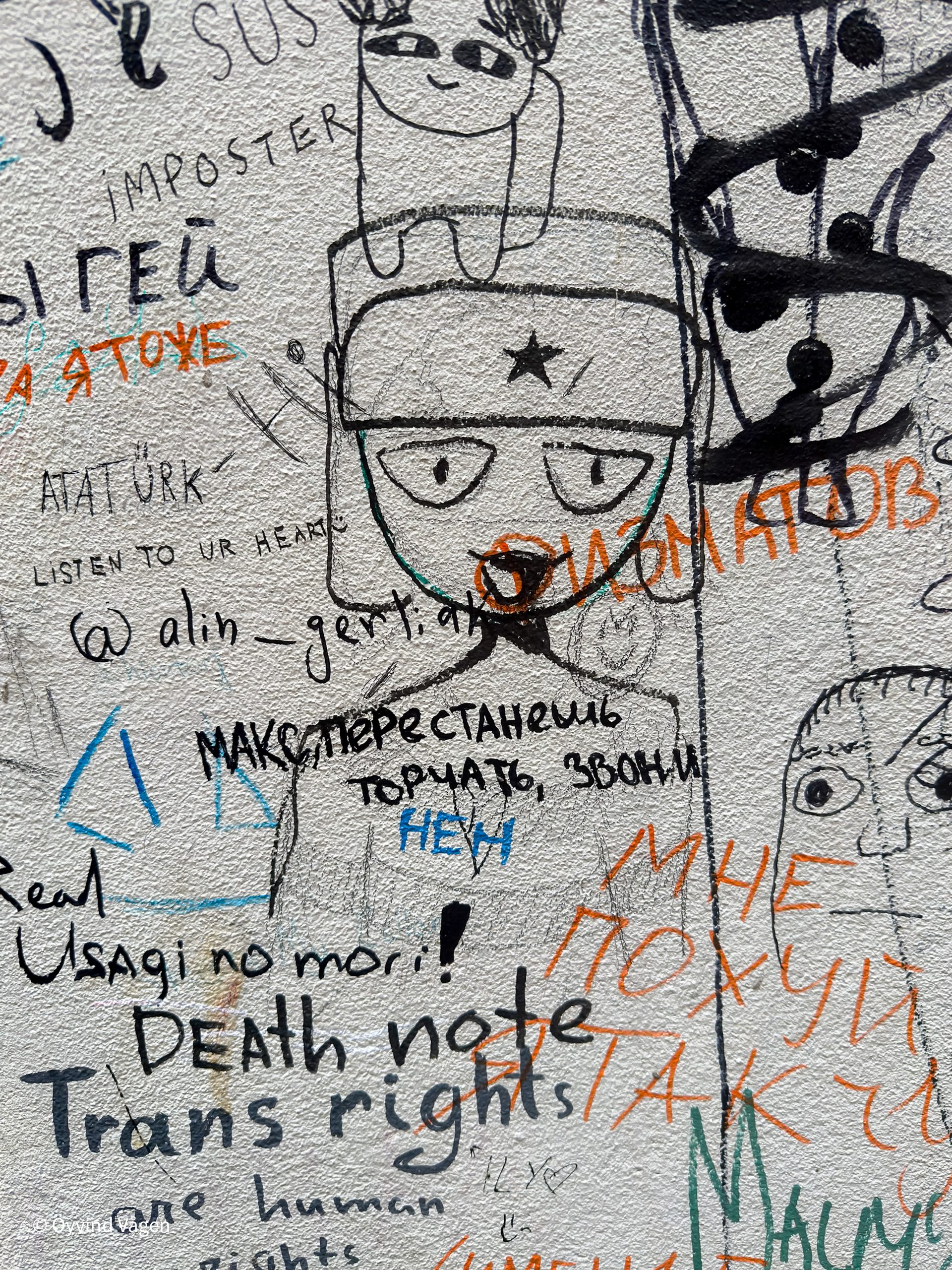
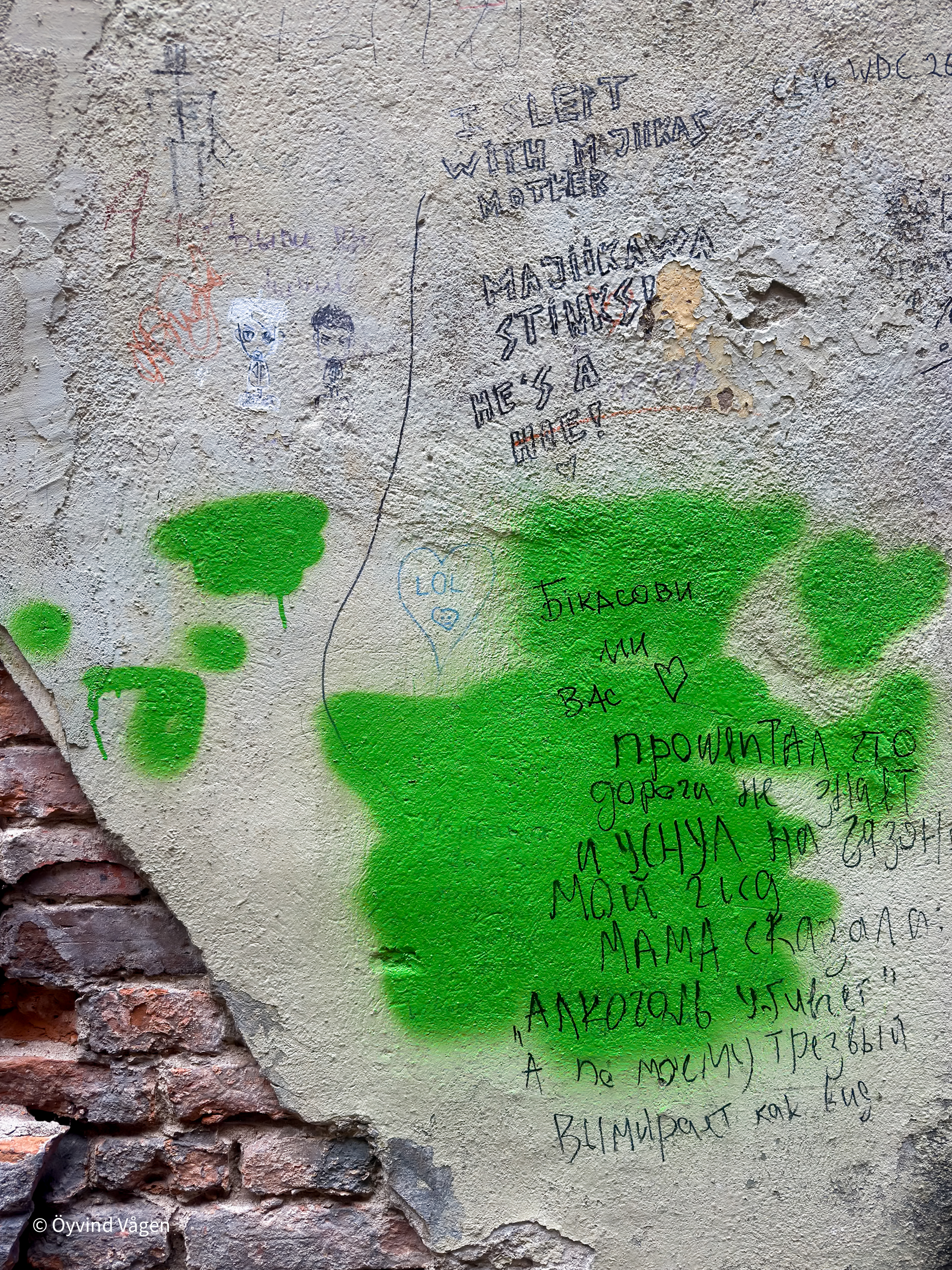
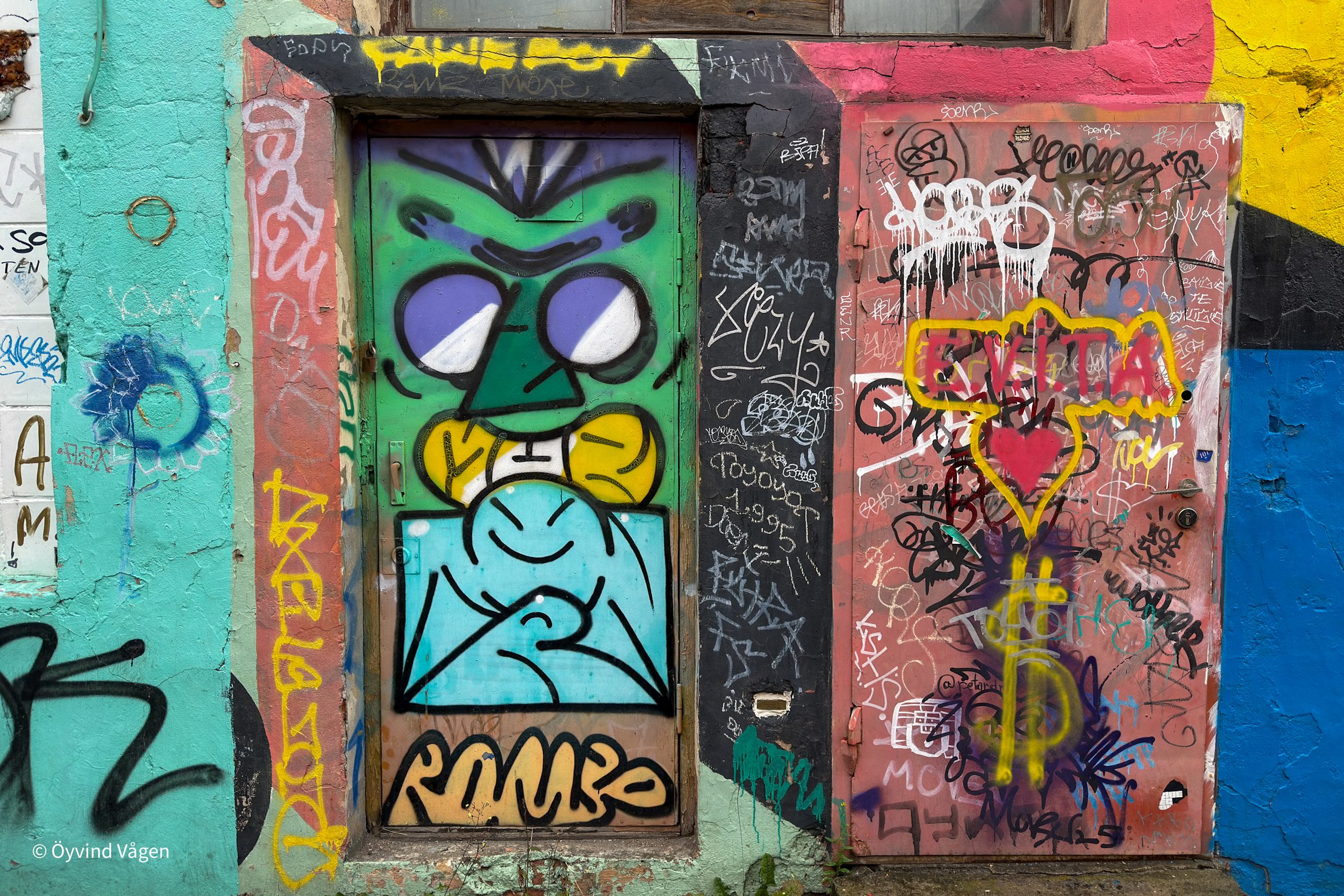
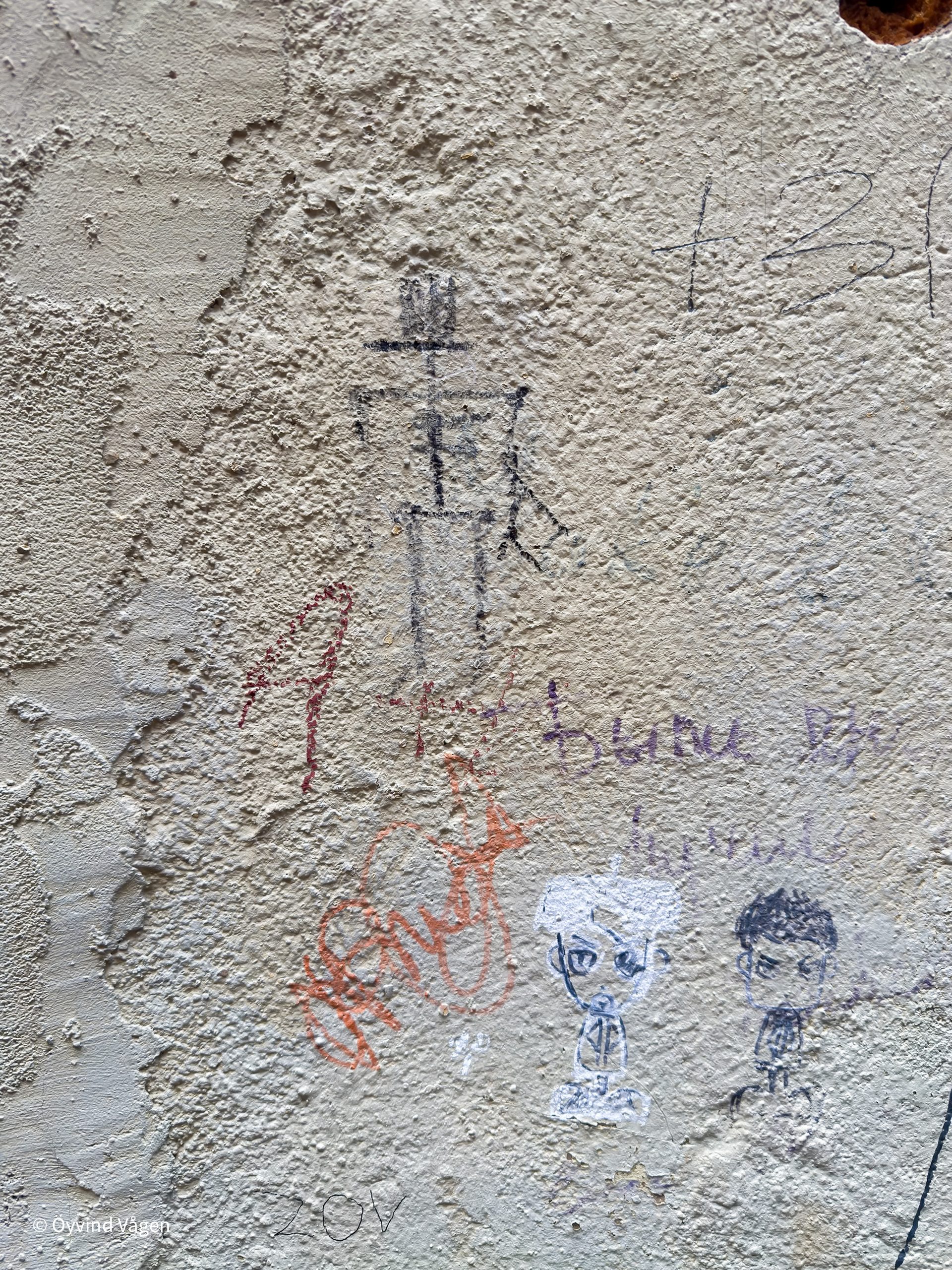
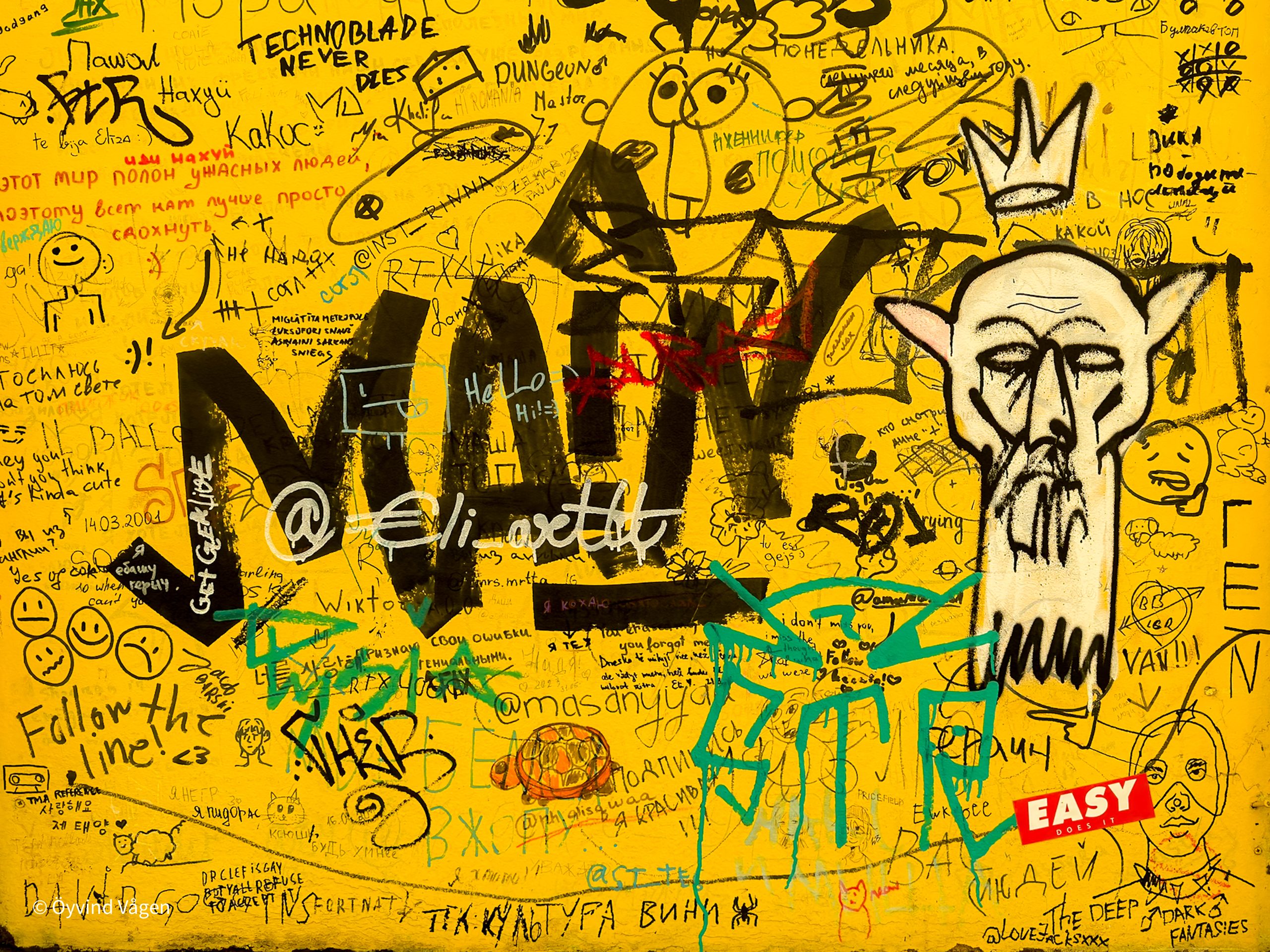
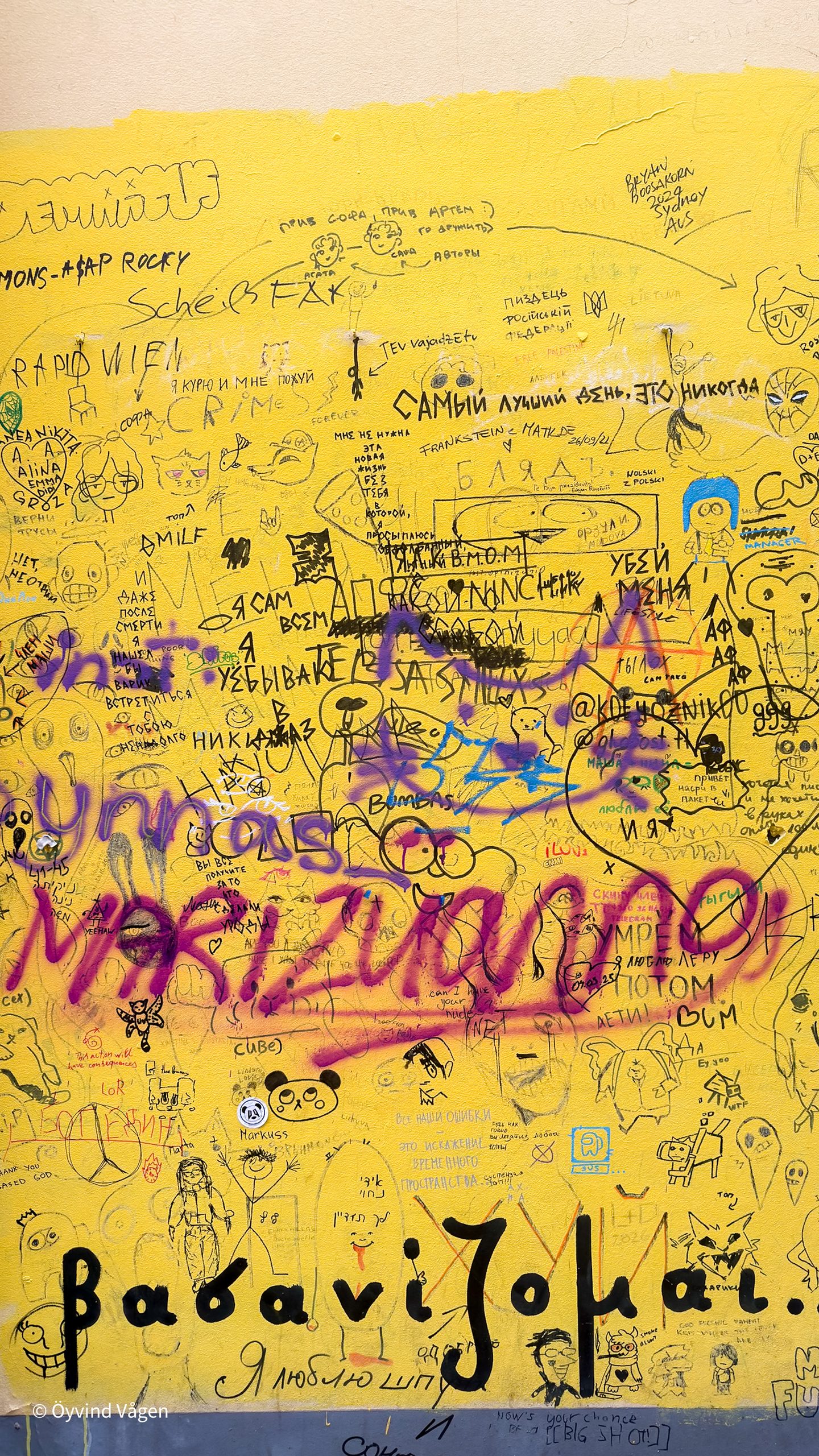
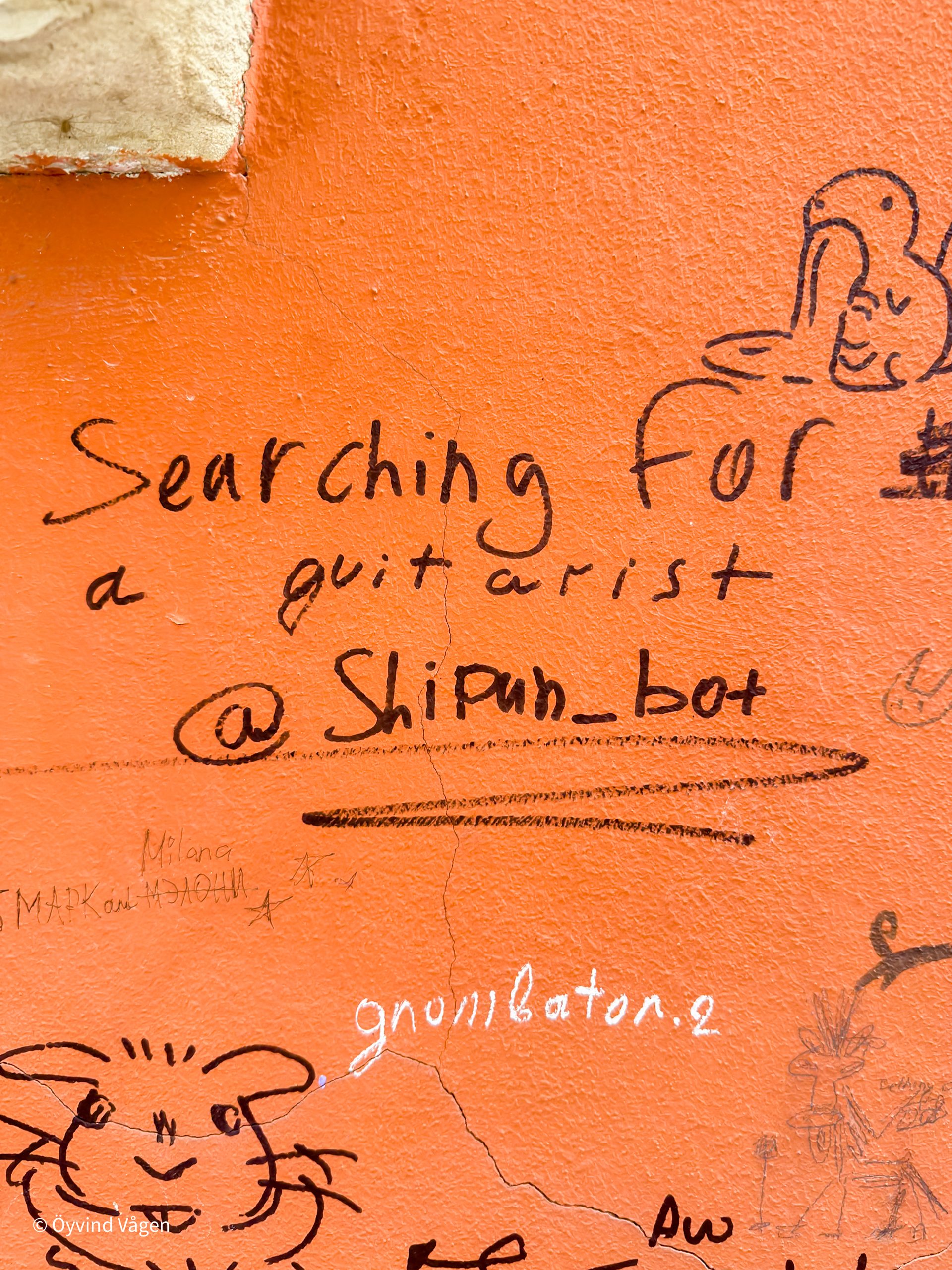
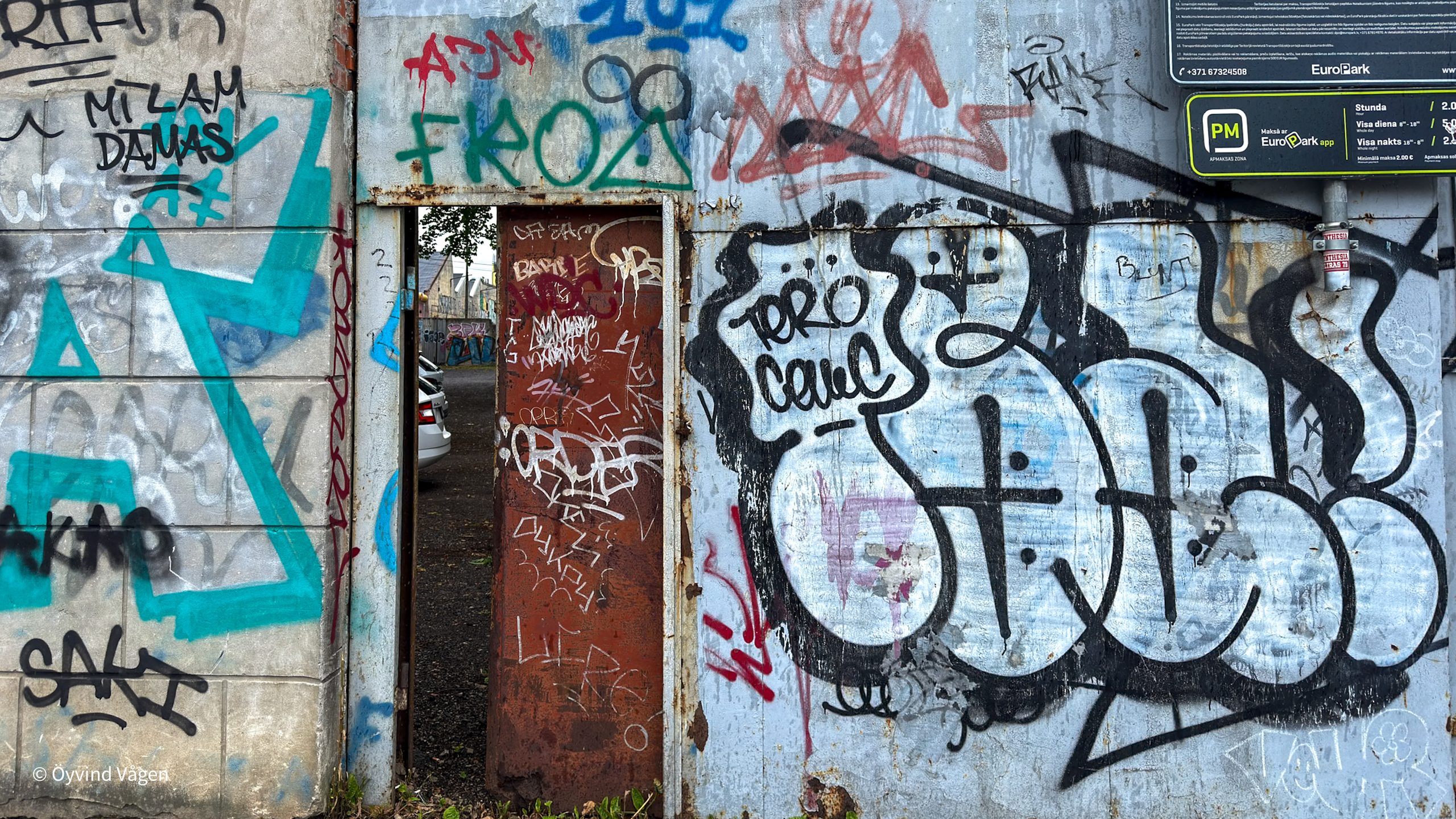
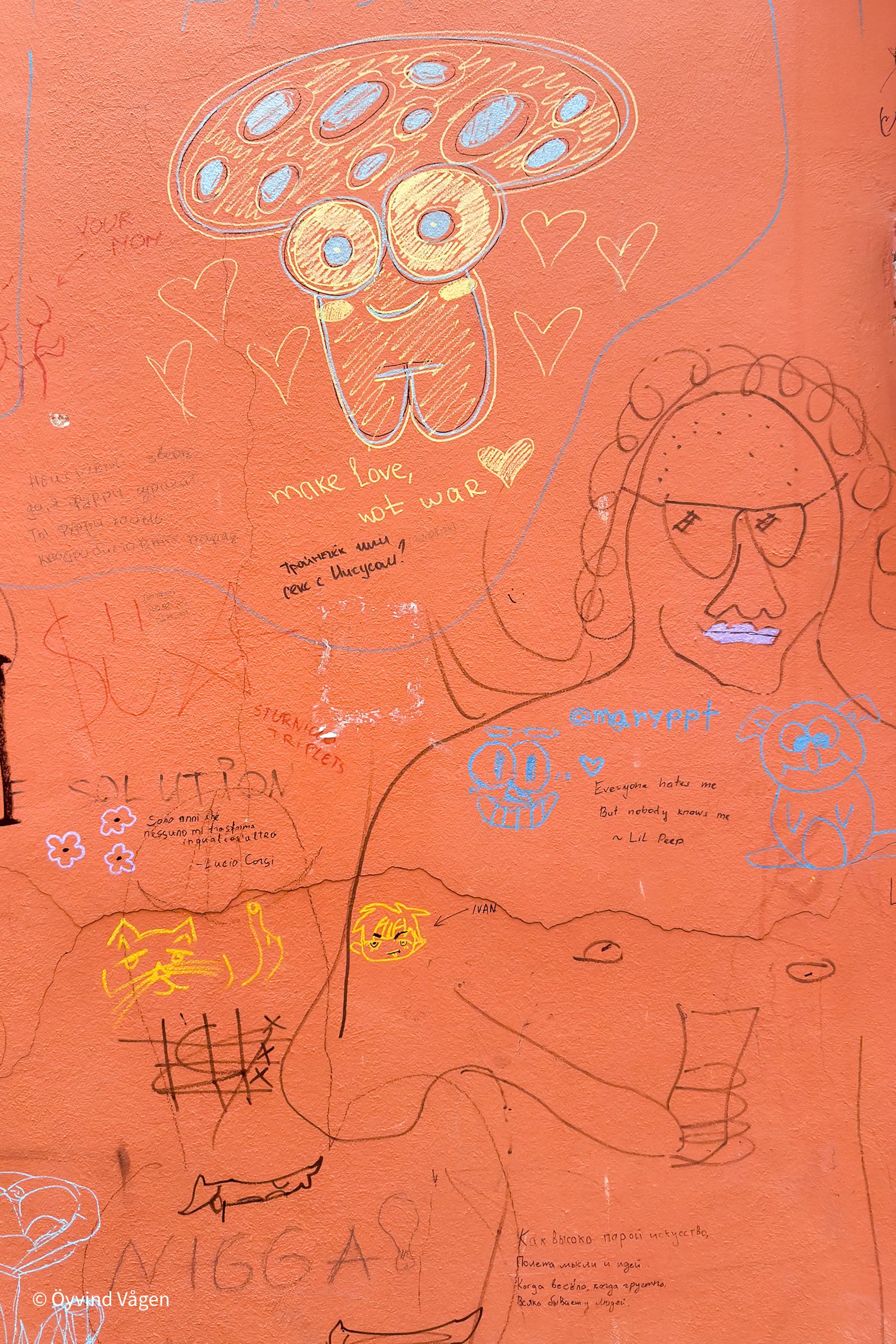
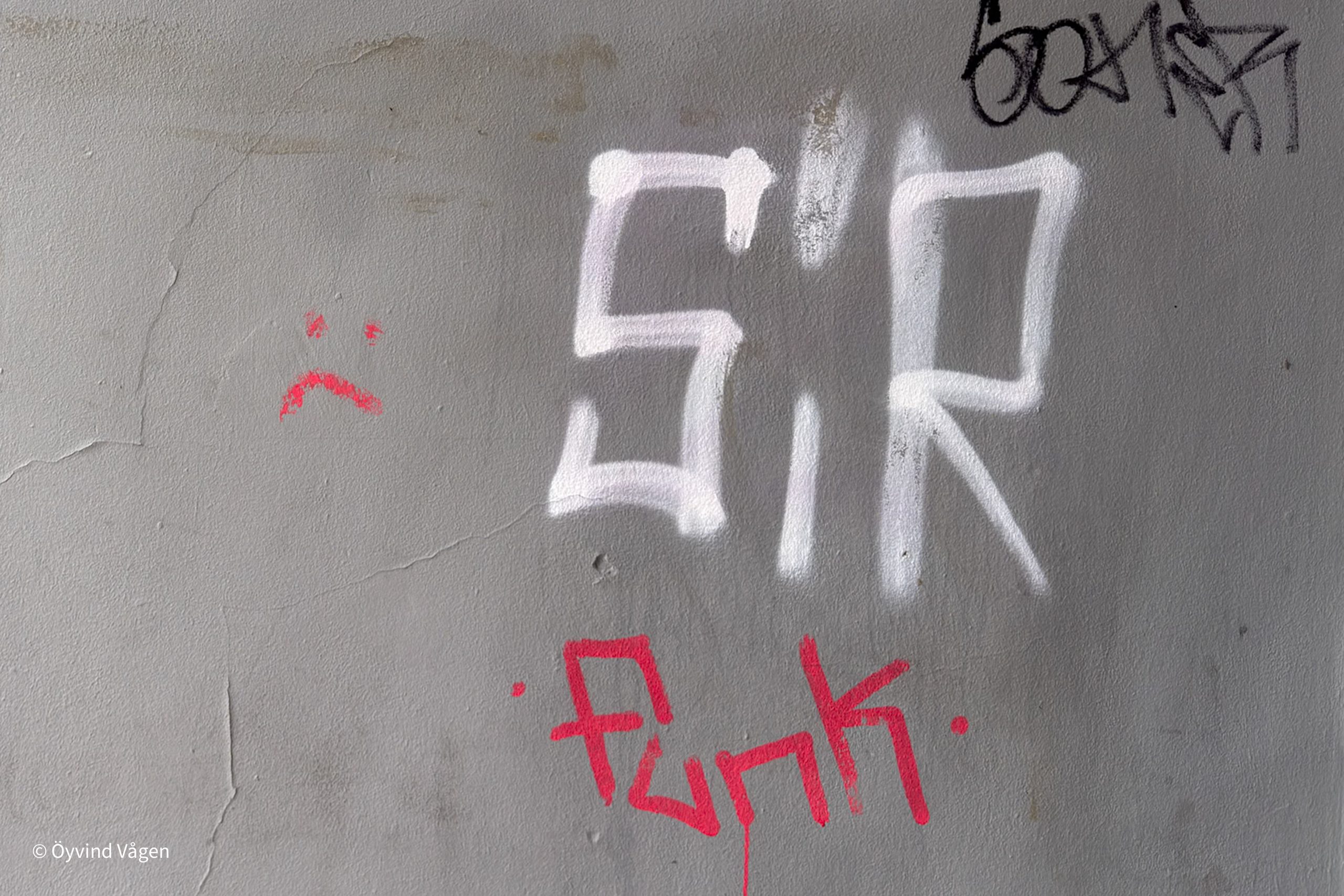
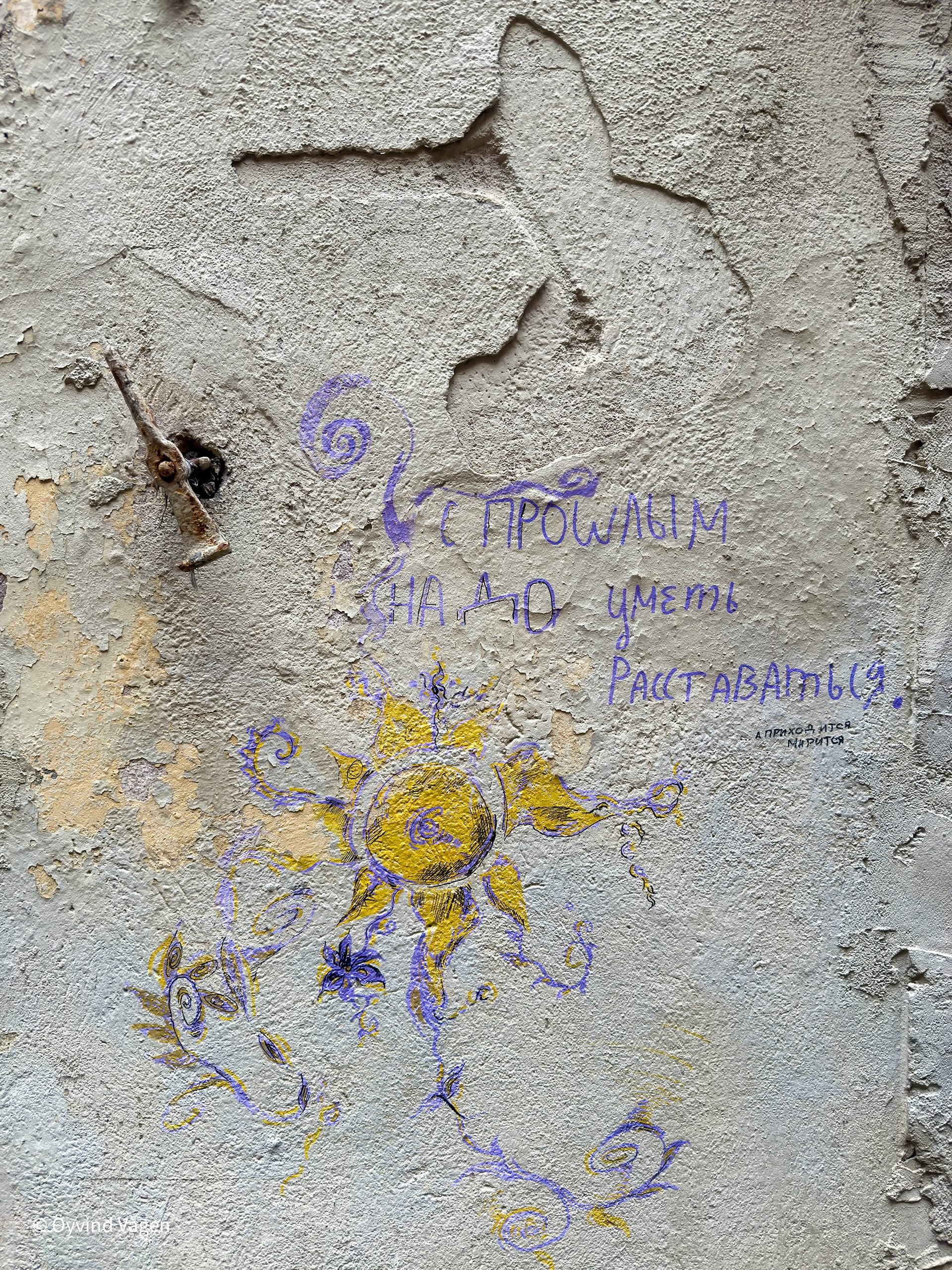
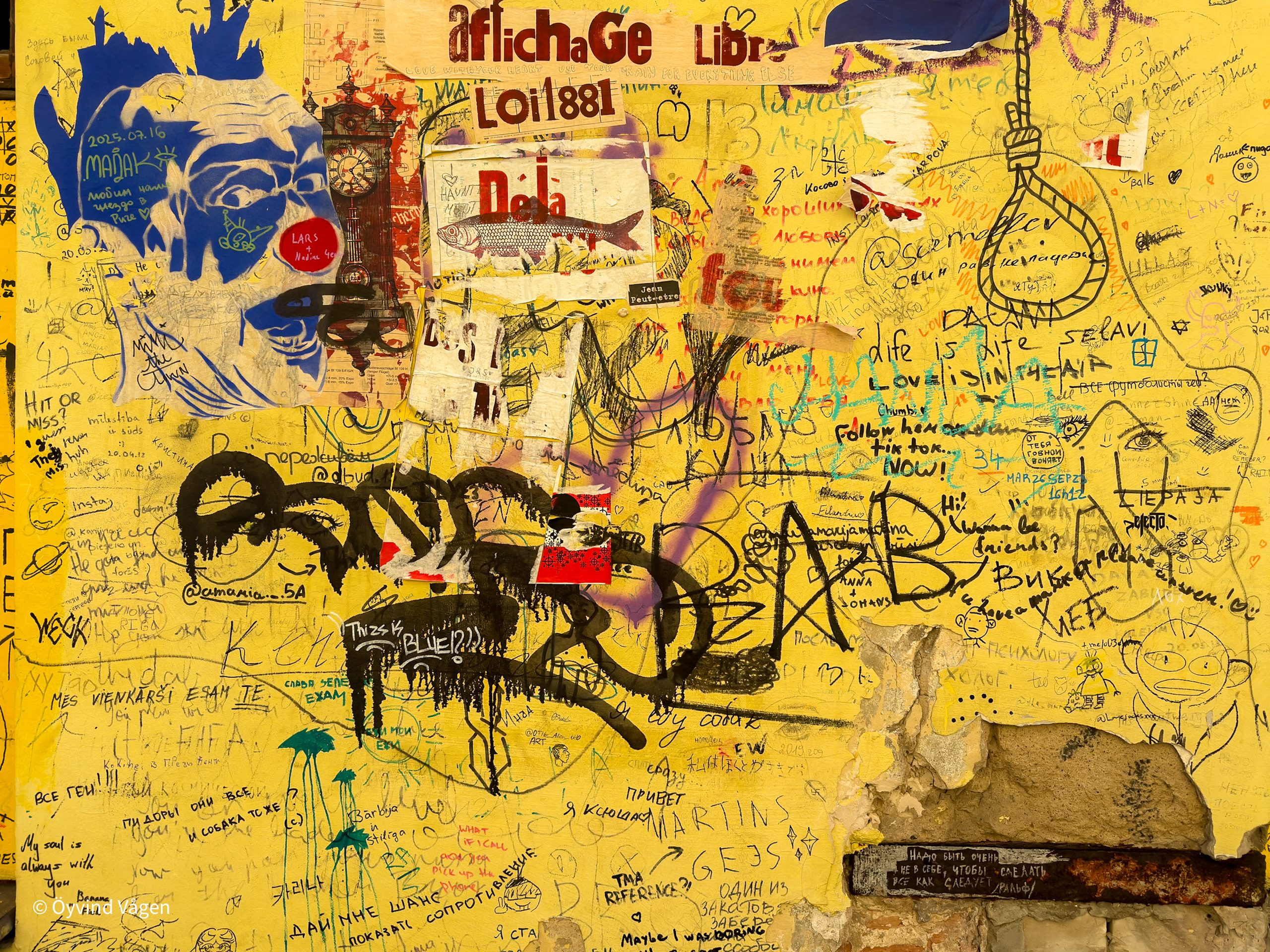
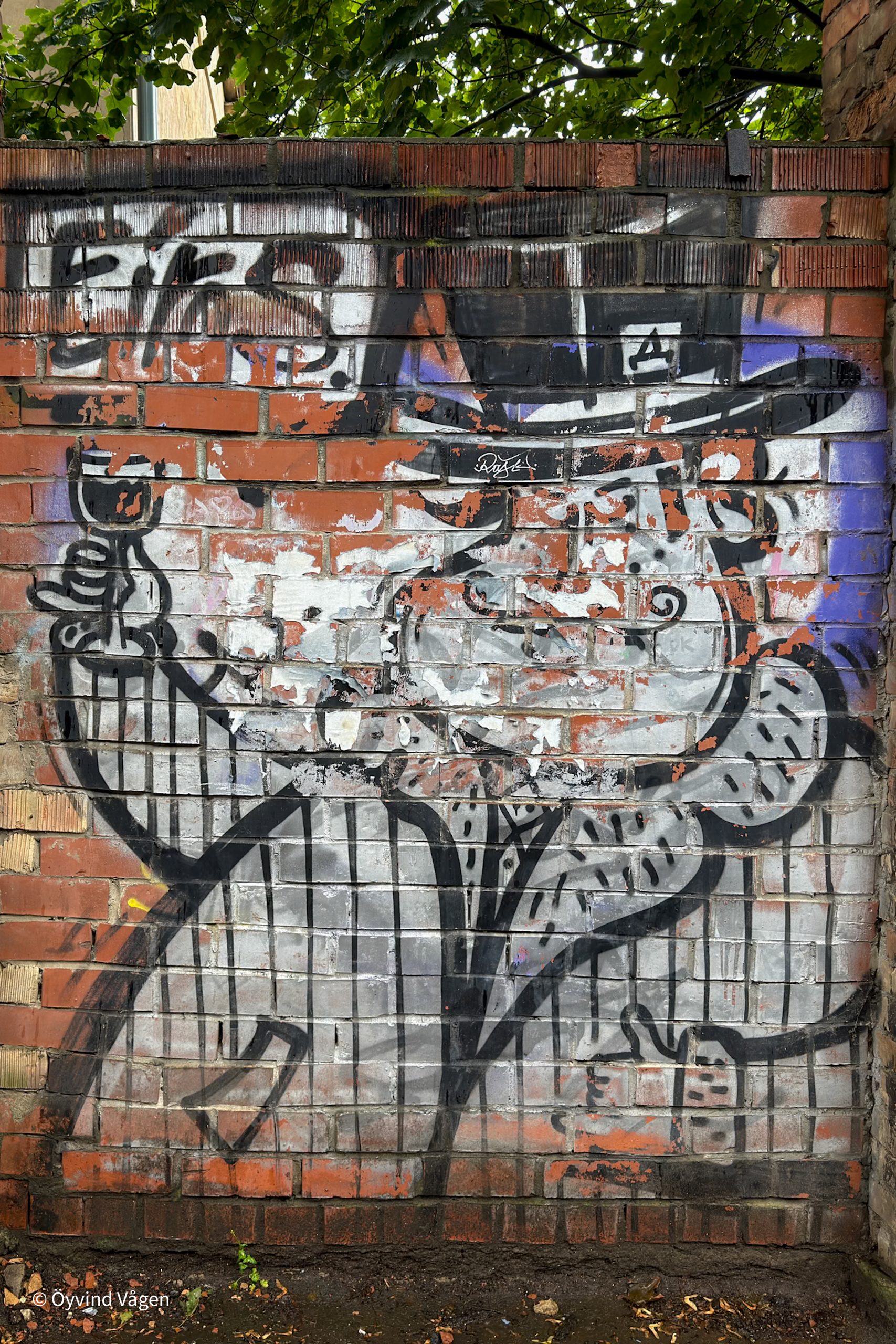
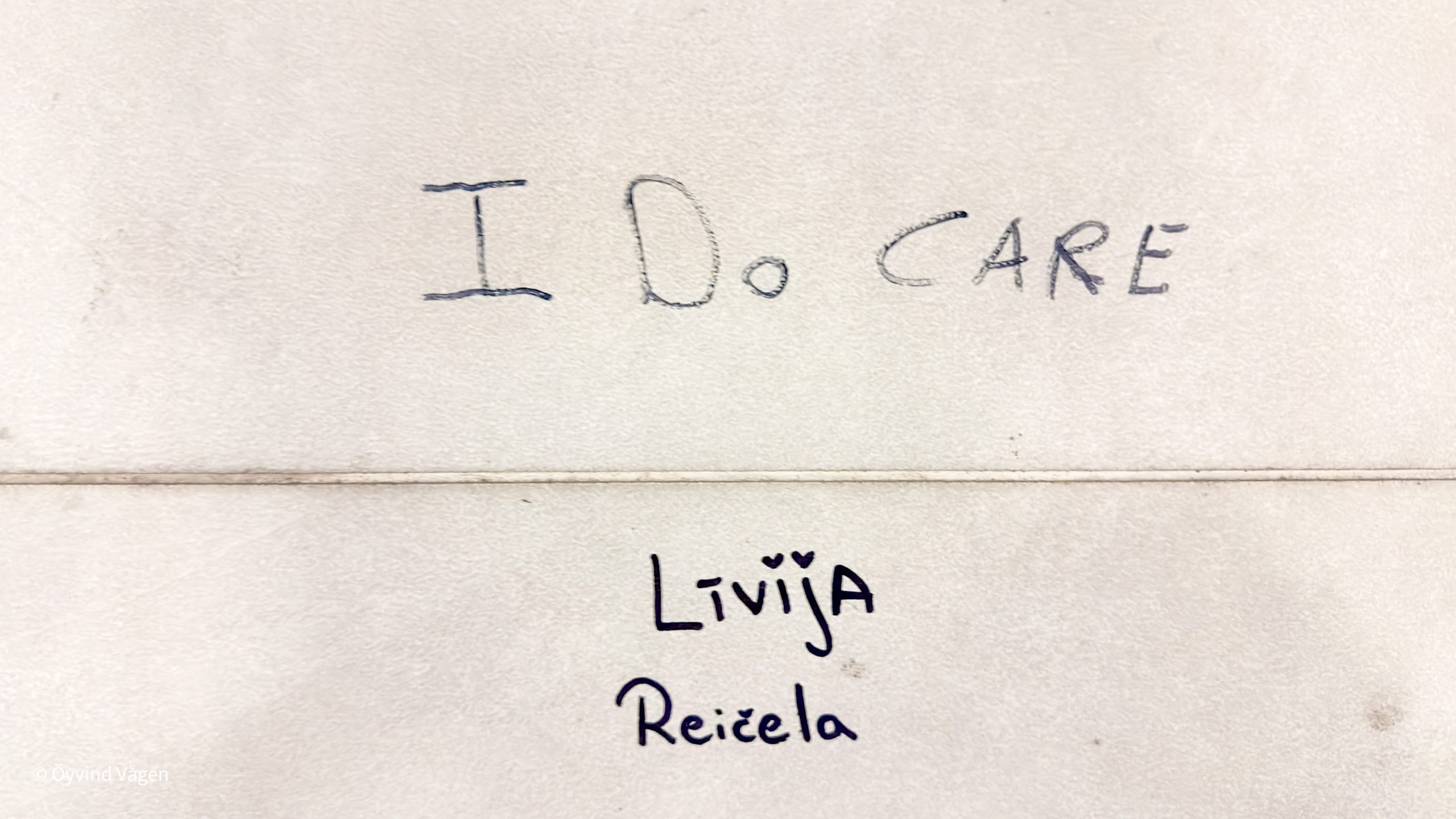
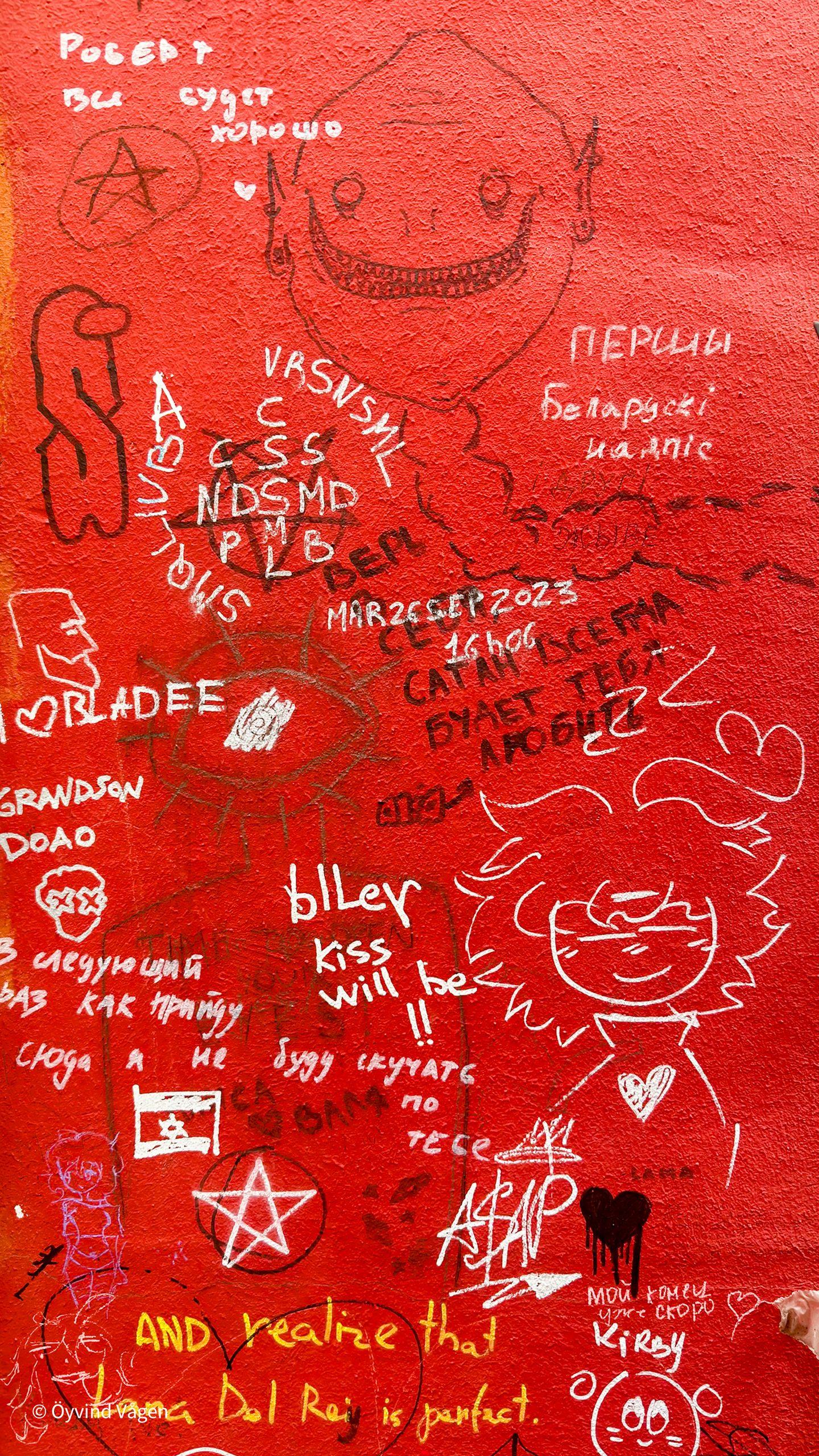
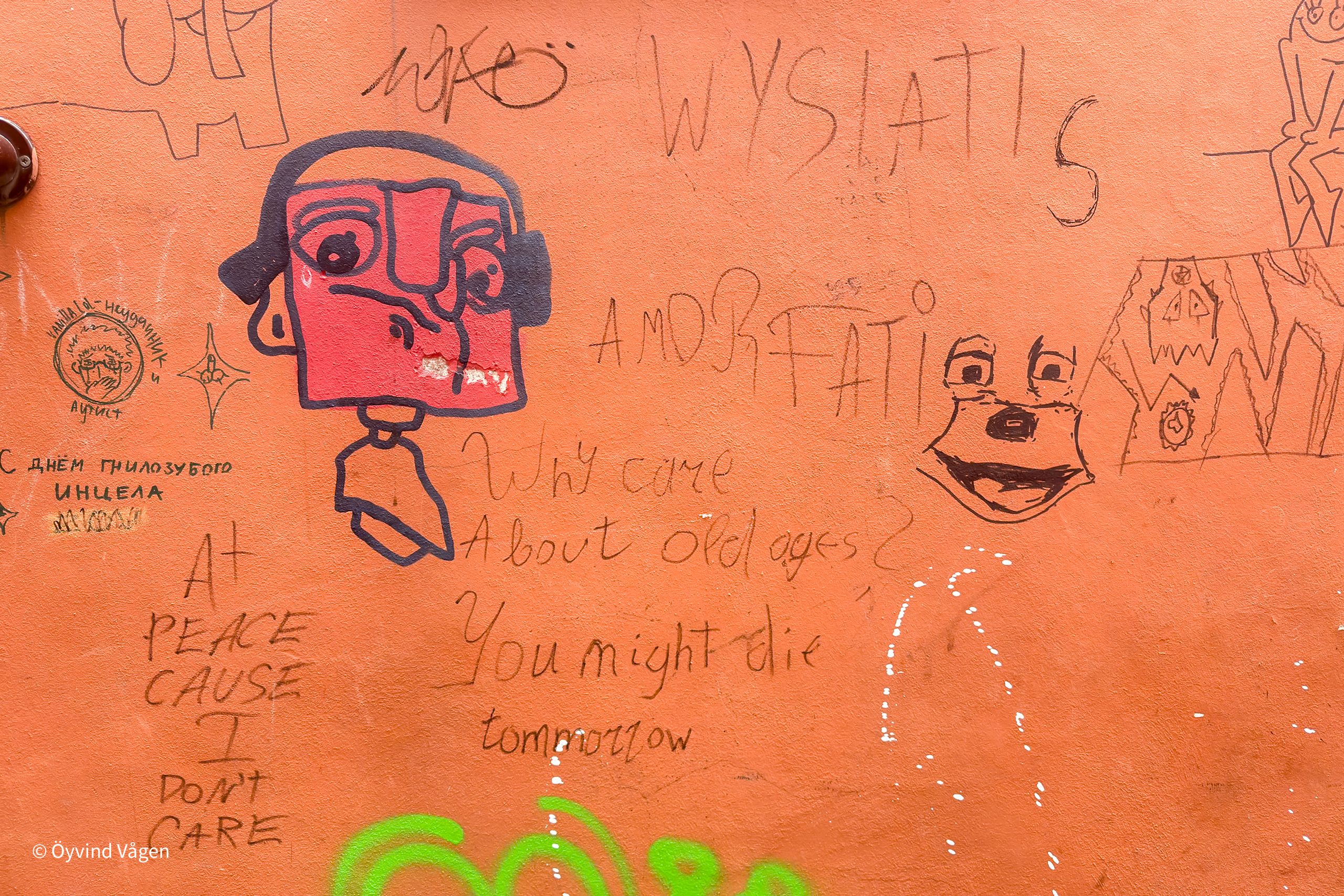
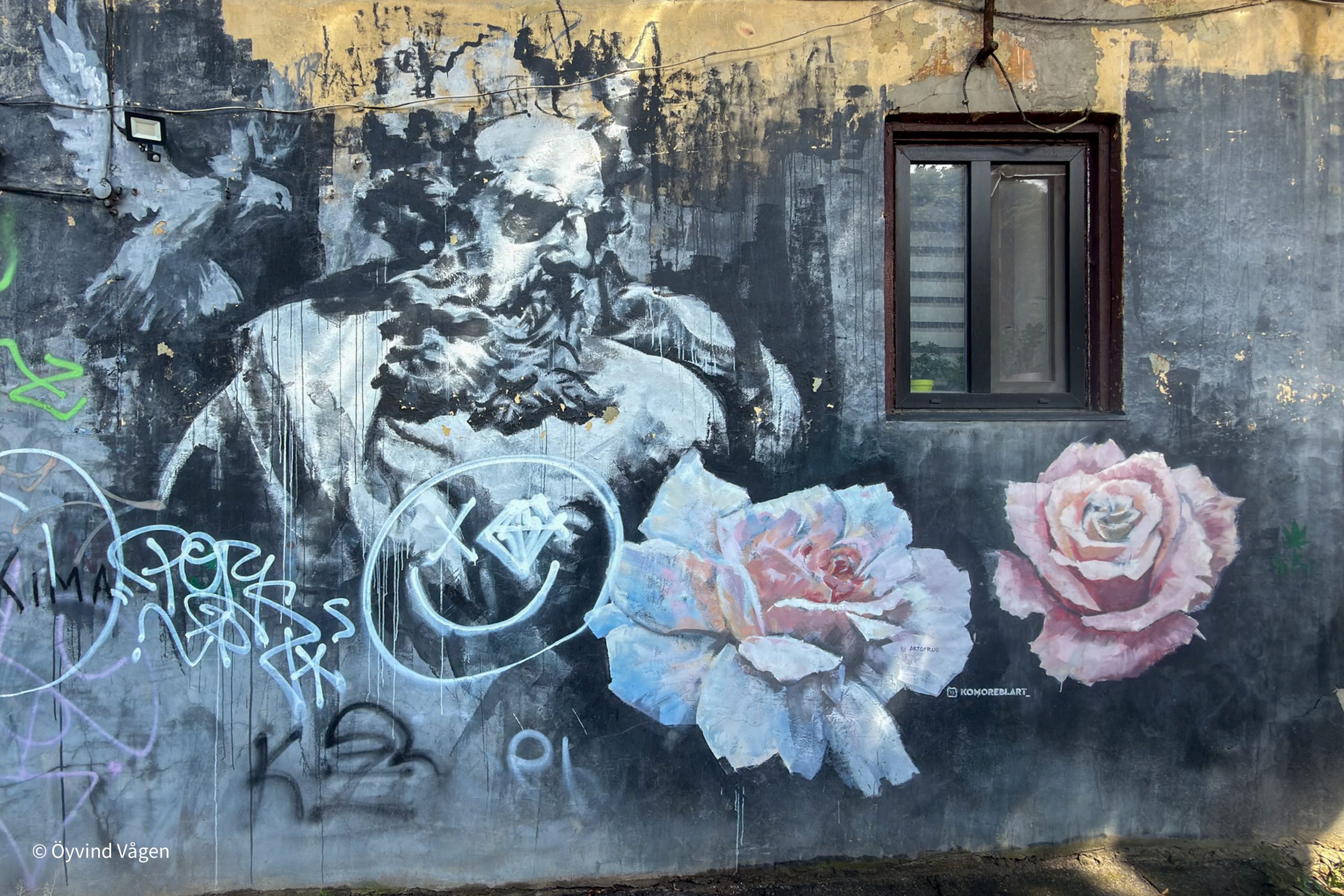
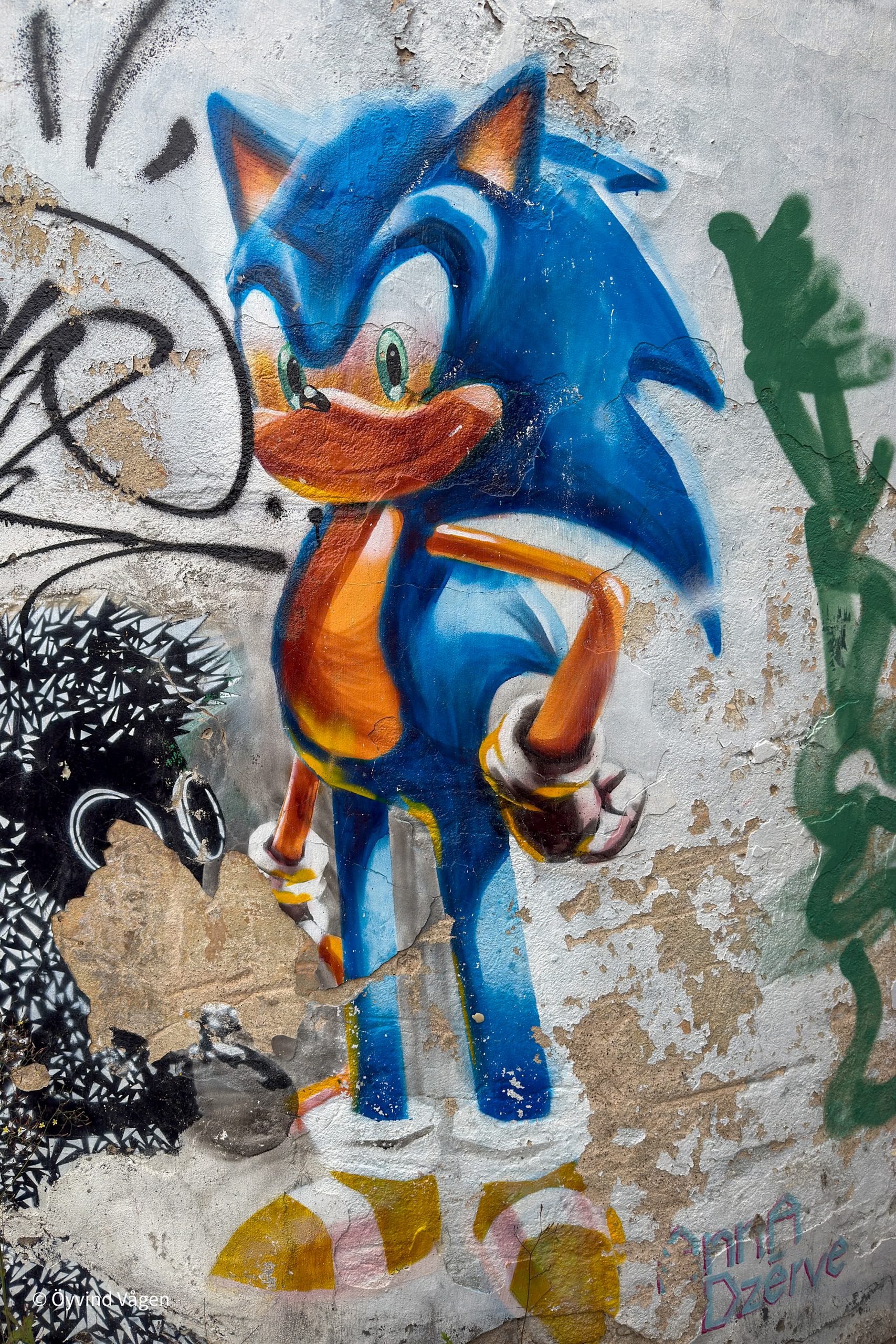
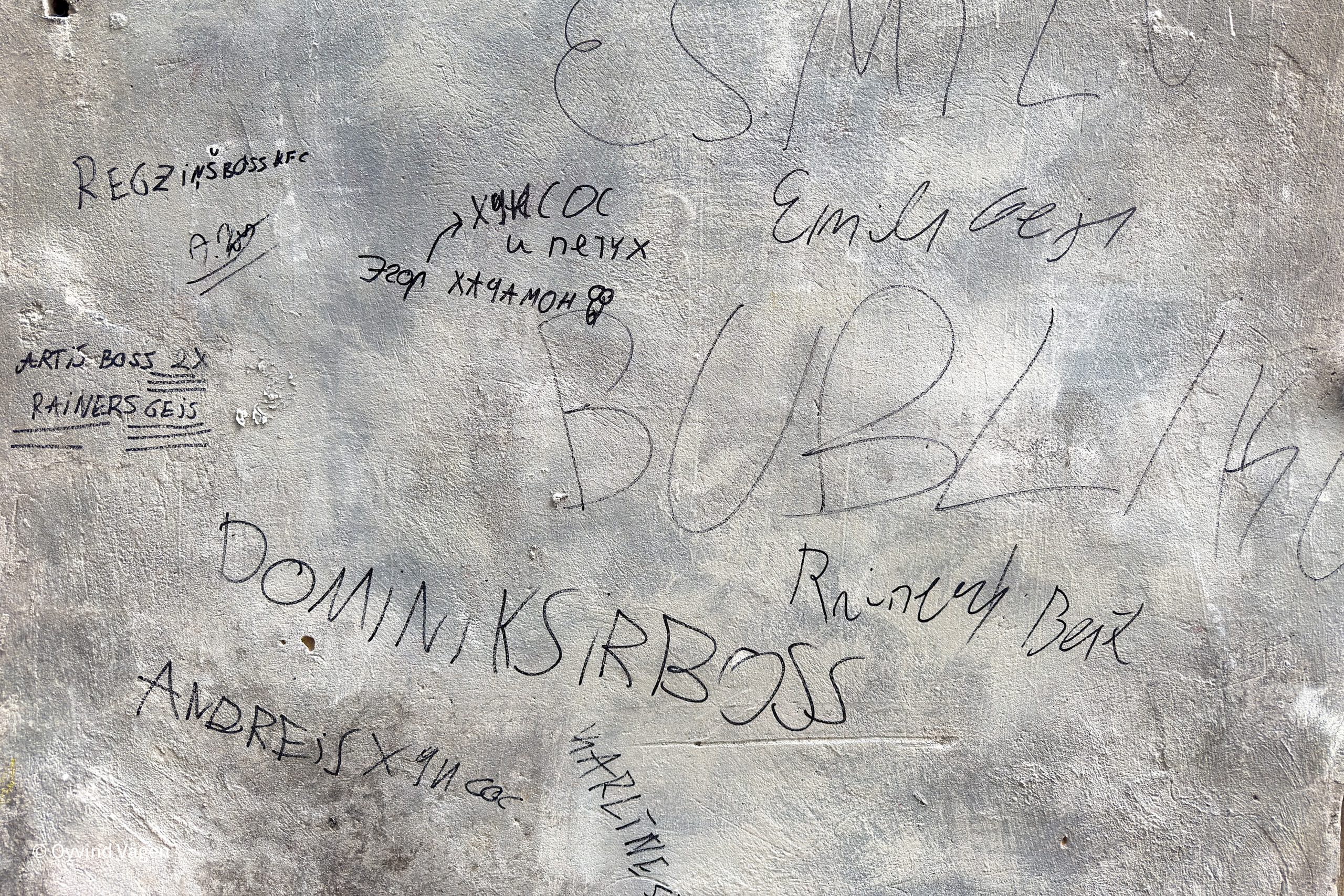
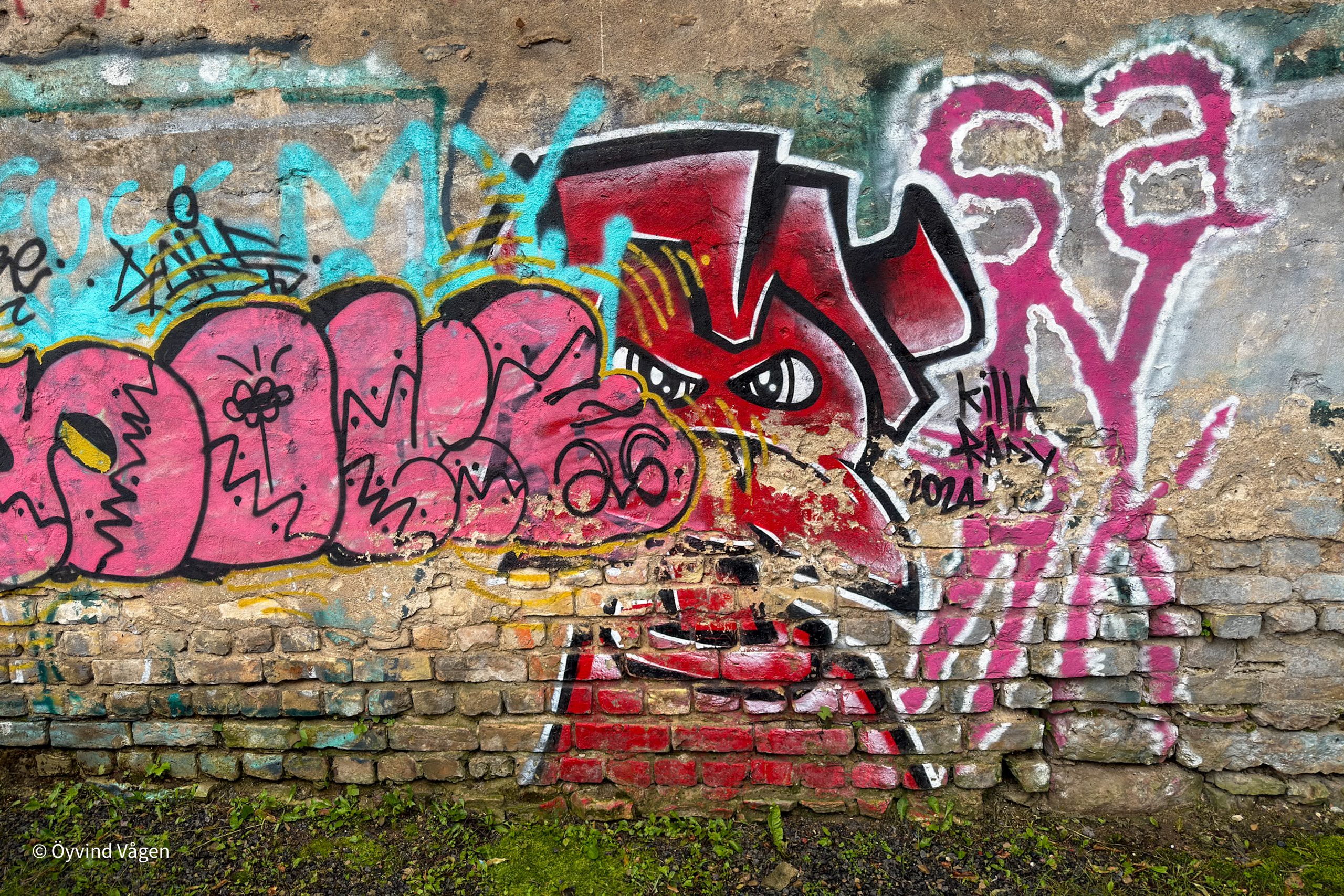
The walls of Riga speak in many registers, just as those residing inside and outside them do. Some carry carefully composed murals; others have become crowded notebooks in which political appeals, private confessions, jokes, insults, drawings, and declarations of love compete for the passer-by’s attention, overlaying, intercepting, and juxtaposing one another and viewers. Together, the photographs in this gallery reveal street art not as a single artistic movement that speaks with one voice, but as an unstable public conversation—an anonymous, multilingual, and continually revised chorus consisting of whoever writes, paints, pastes over, or tears away what came before.
”This gallery reveals street art not as a single artistic movement that speaks with one voice, but as an unstable public conversation—an anonymous, multilingual, and continually revised chorus consisting of whoever writes, paints, pastes over, or tears away what came before.”
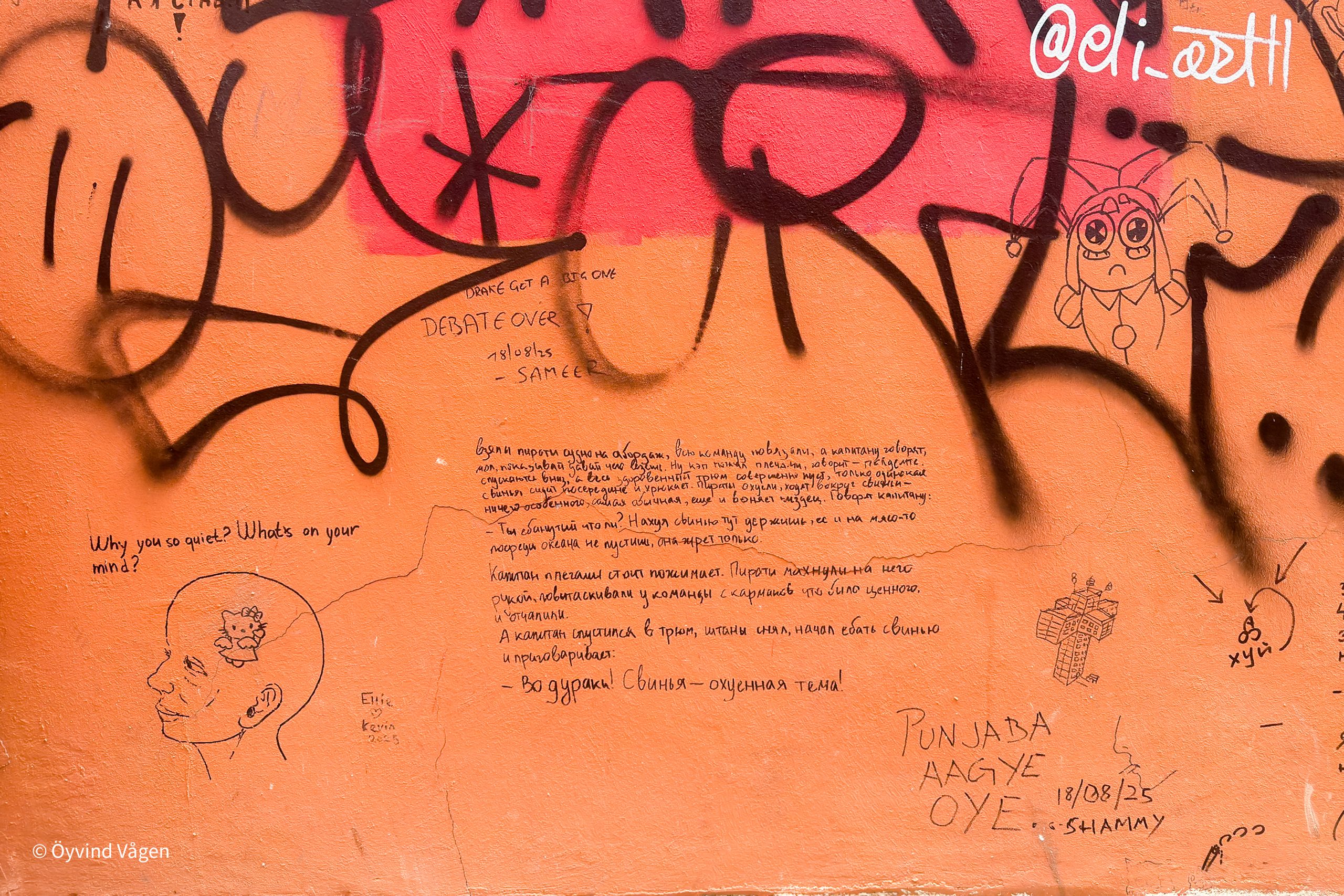
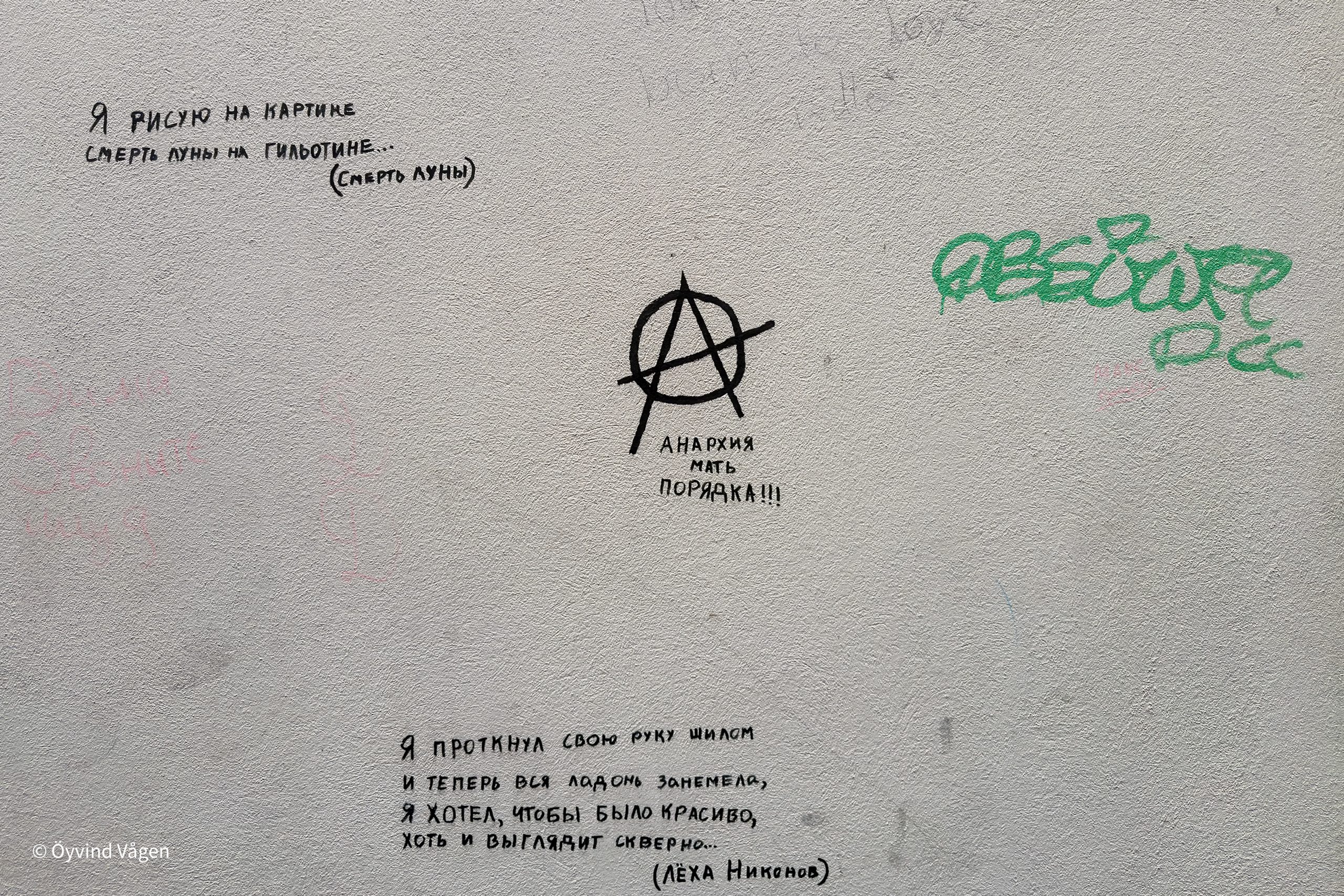
Riga is an especially resonant setting for such a conversation. The city’s walls bear the material traces of successive historical periods and of a society still negotiating questions of language, identity, memory and belonging. Latvian, Russian and English appear side by side, sometimes joined by other languages.
Their coexistence does not necessarily produce agreement; rather, it turns the urban surface into a meeting place for communities that occupy the same city while addressing different audiences. From there, the political messages reach far beyond Latvia.
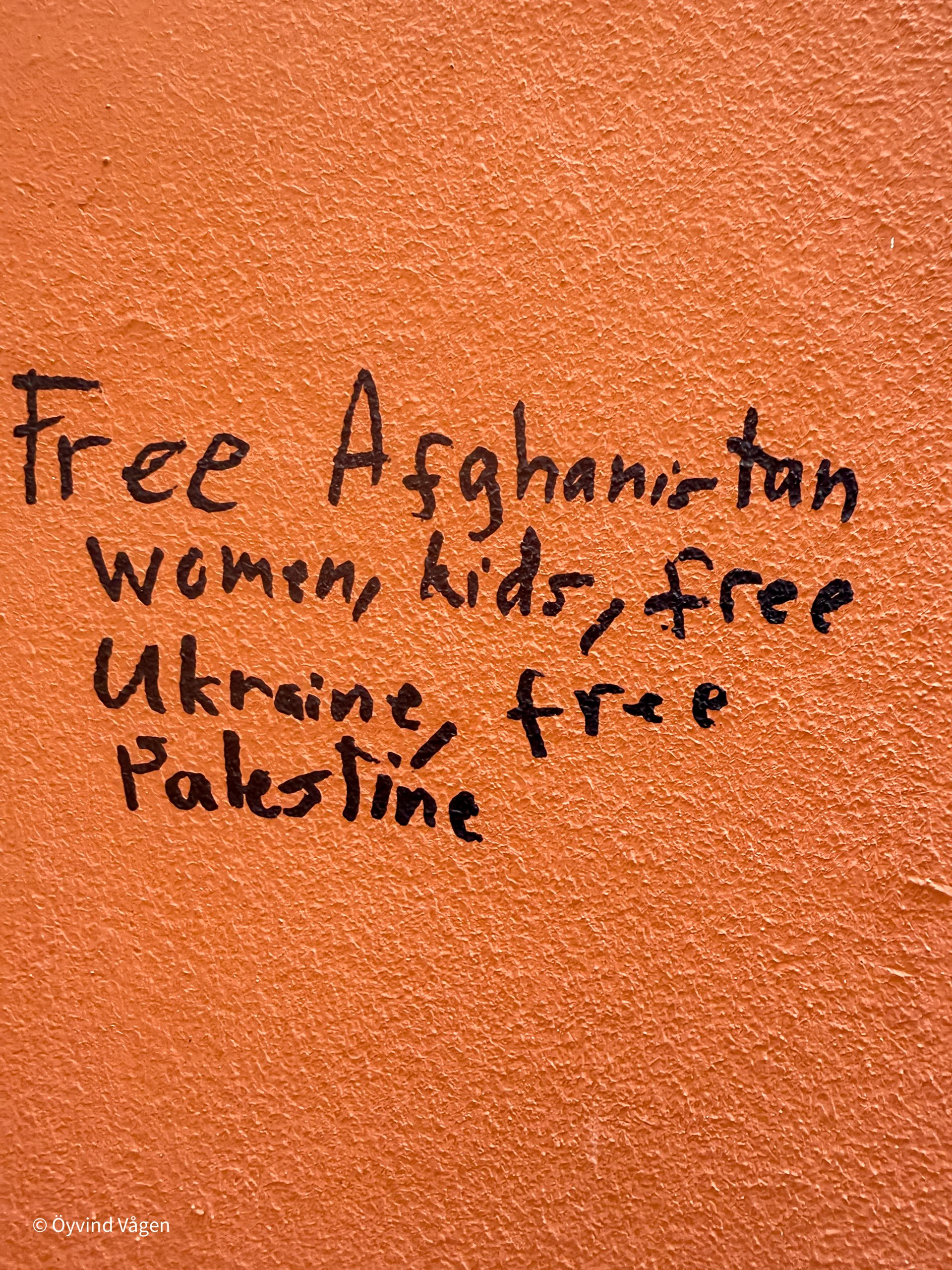
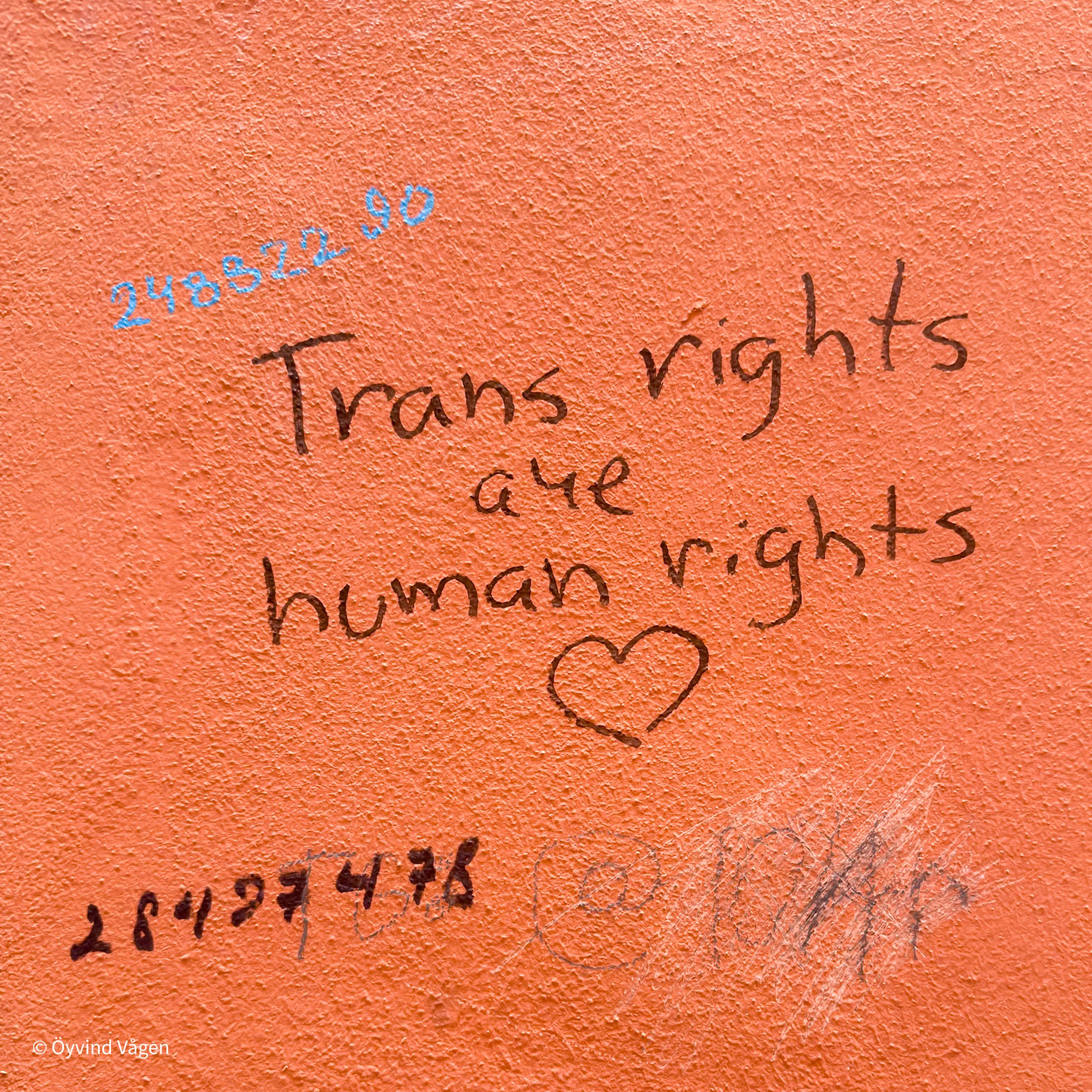
Calls for a free Palestine, peace in Belarus, freedom for Afghanistan and Ukraine, trans rights, and a vaguely threatened “Pax Europa” place Riga within the wider anxieties of the present, highlighting Latvia’s precarious position, as it is close to its former occupier, (Soviet) Russia.
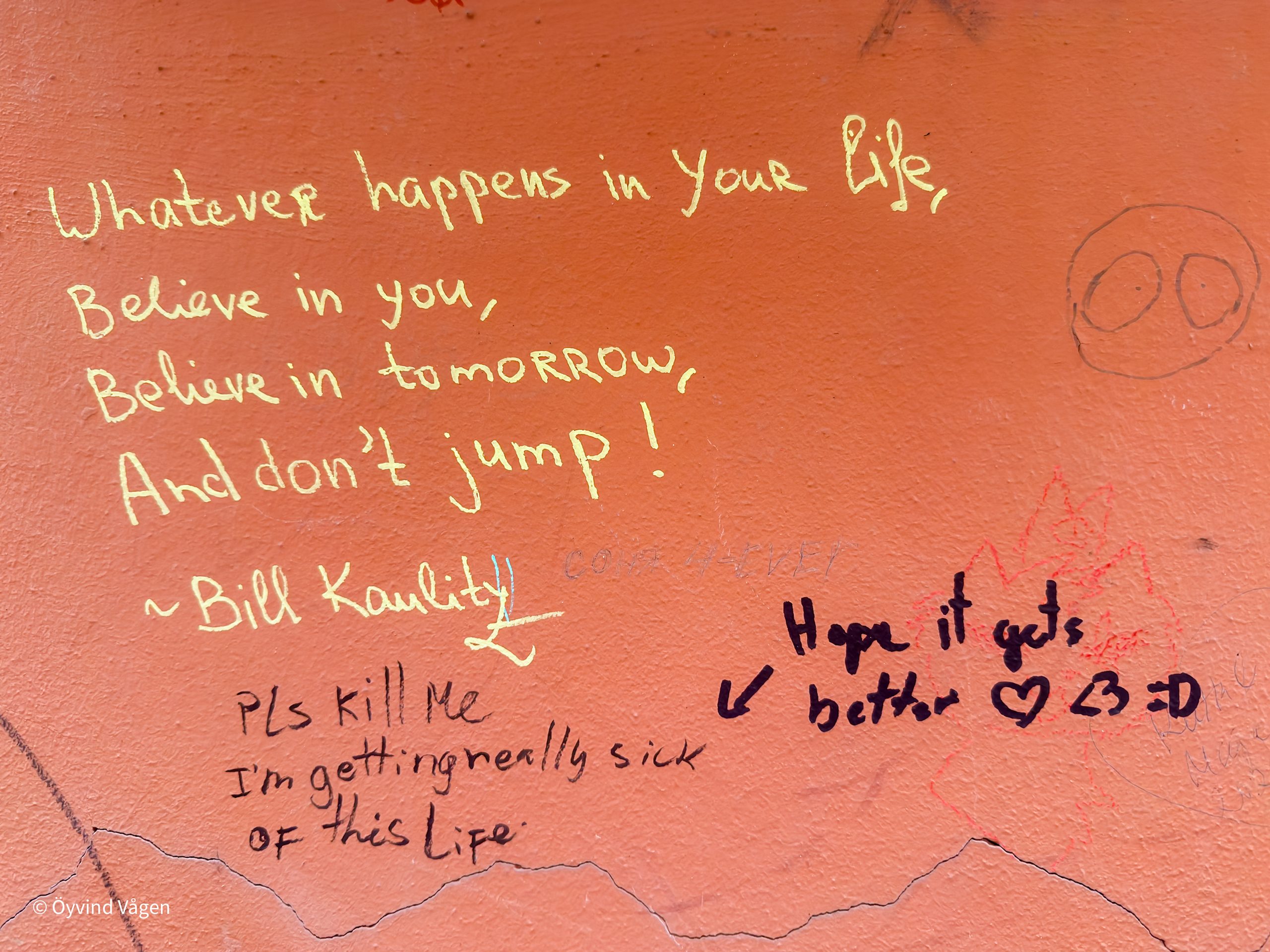
”Yet politics is only one of many layers. Elsewhere, the walls offer absurd advice, existential resignation and improvised encouragement.”
Hastily Written and Quickly Erased
These statements may be hastily written and quickly erased, but their location matters: unlike an online post, a slogan on a wall occupies shared physical space. It confronts strangers who did not choose to read it and briefly makes distant conflicts part of the immediate streetscape.
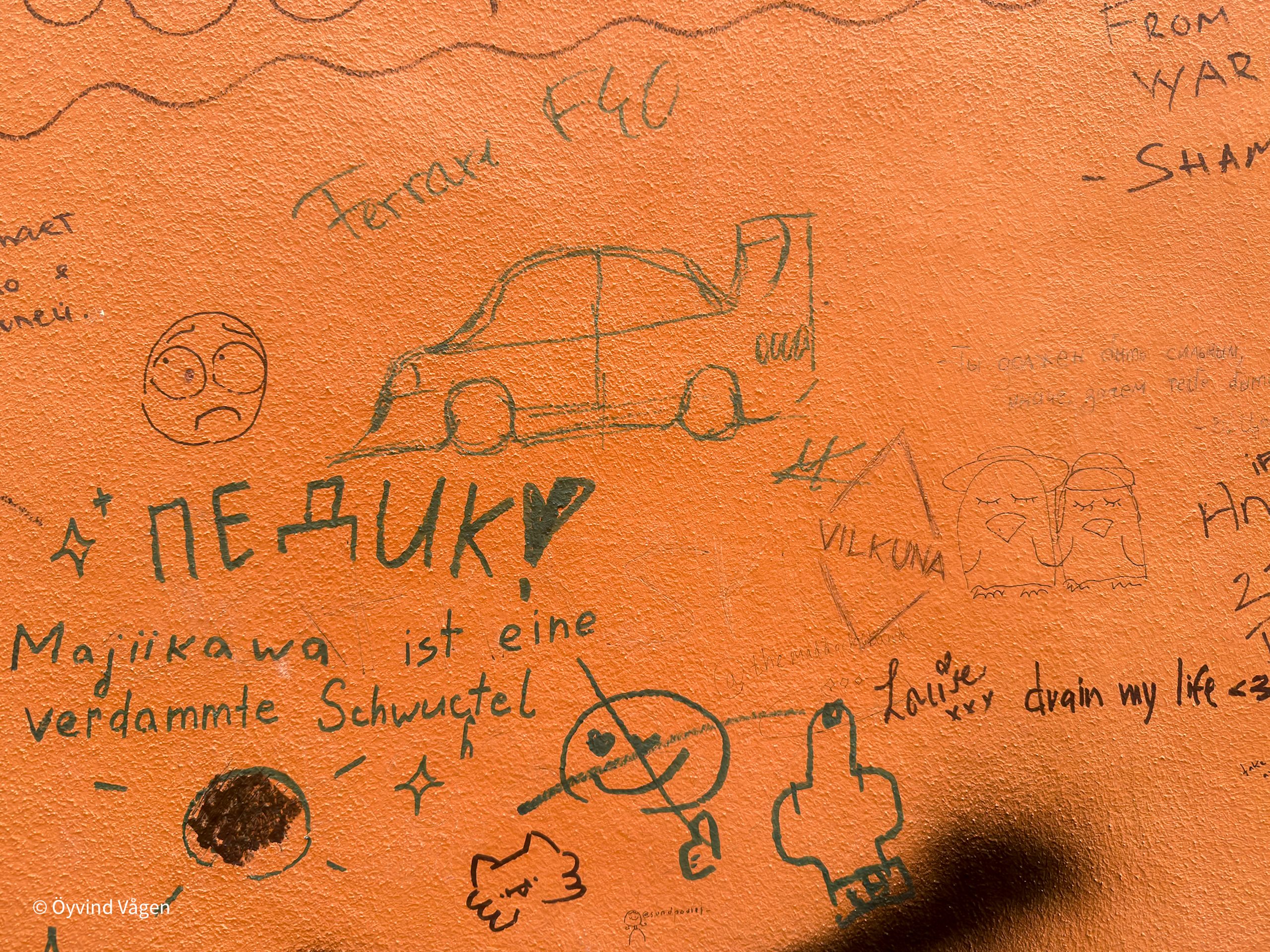
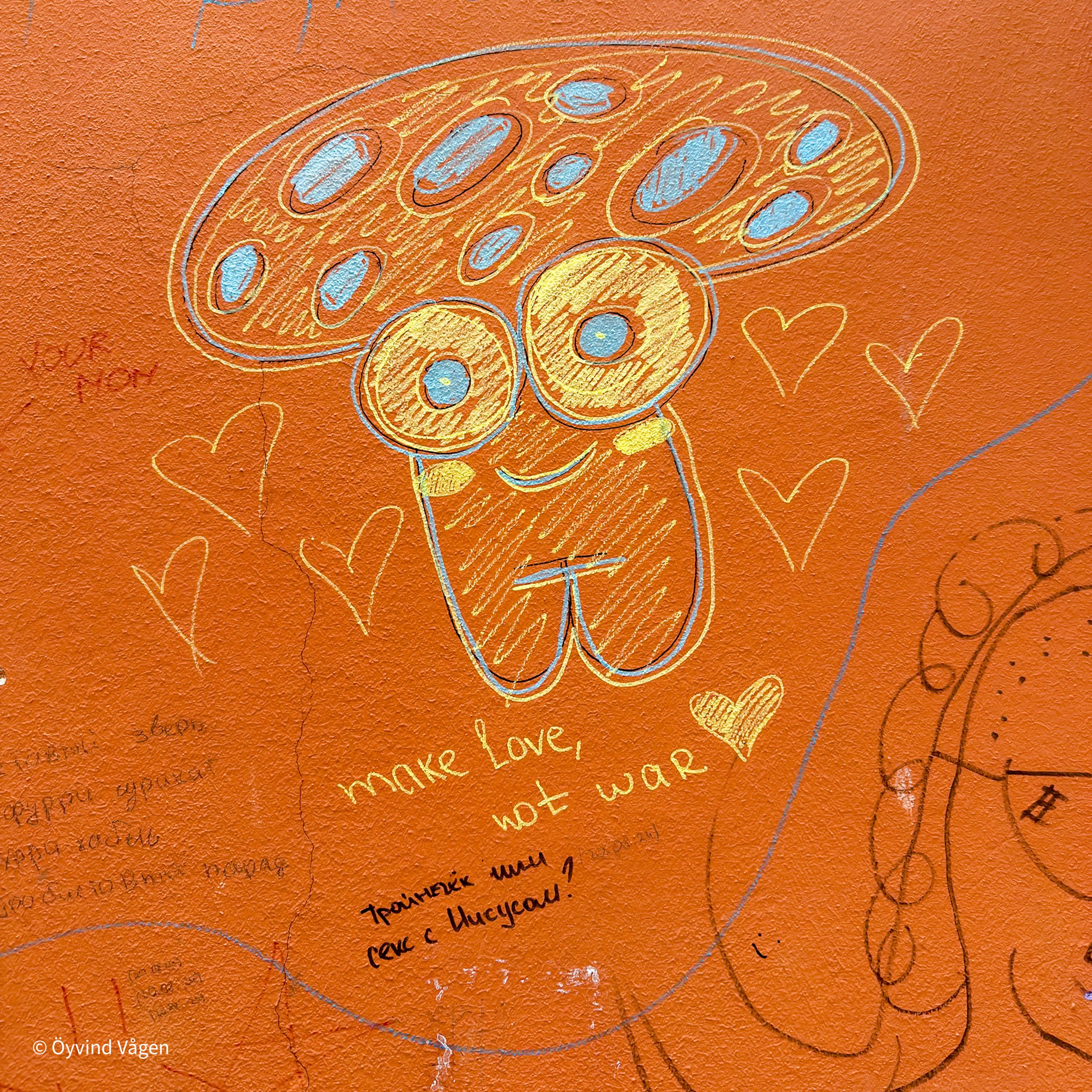
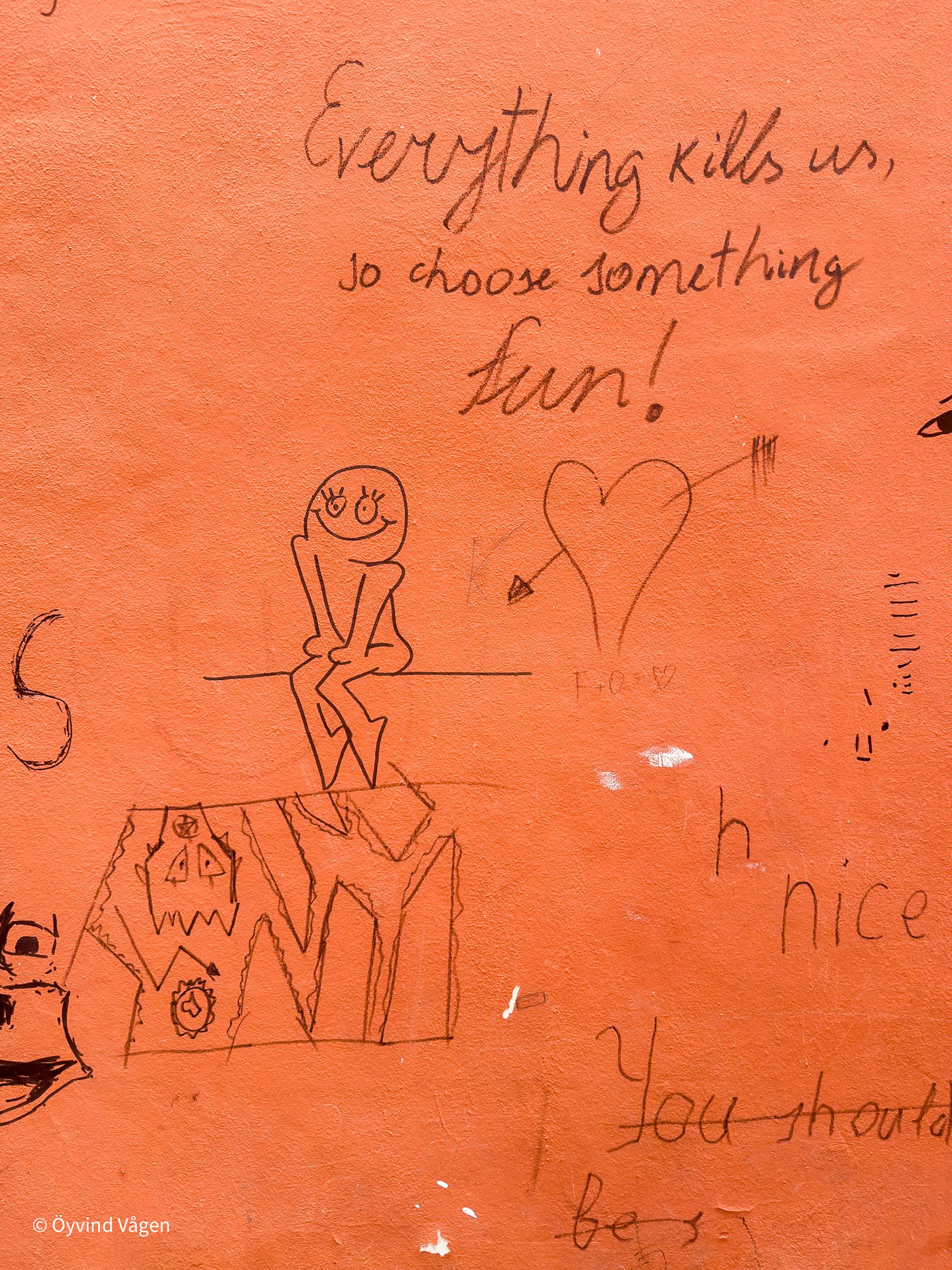
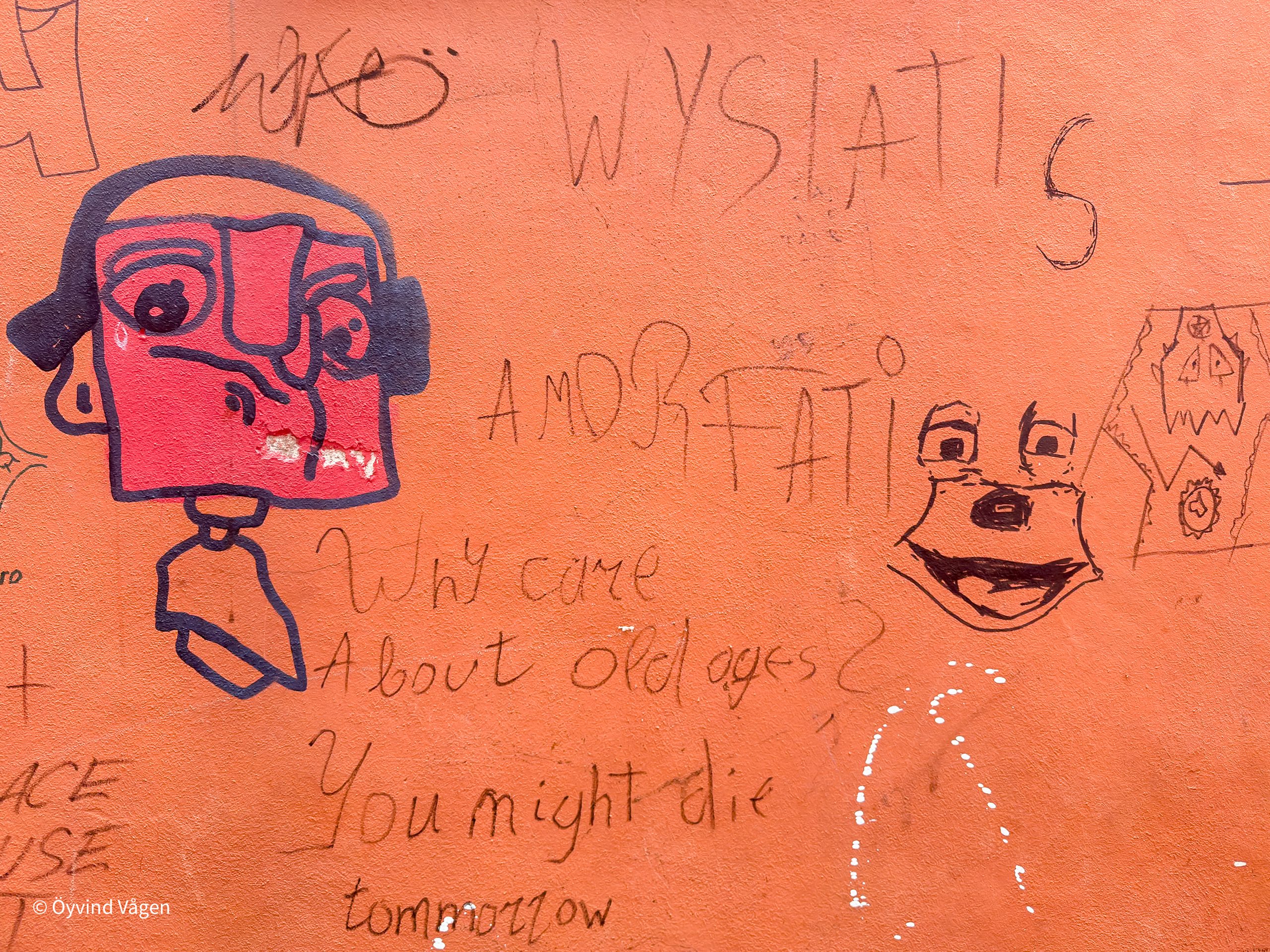
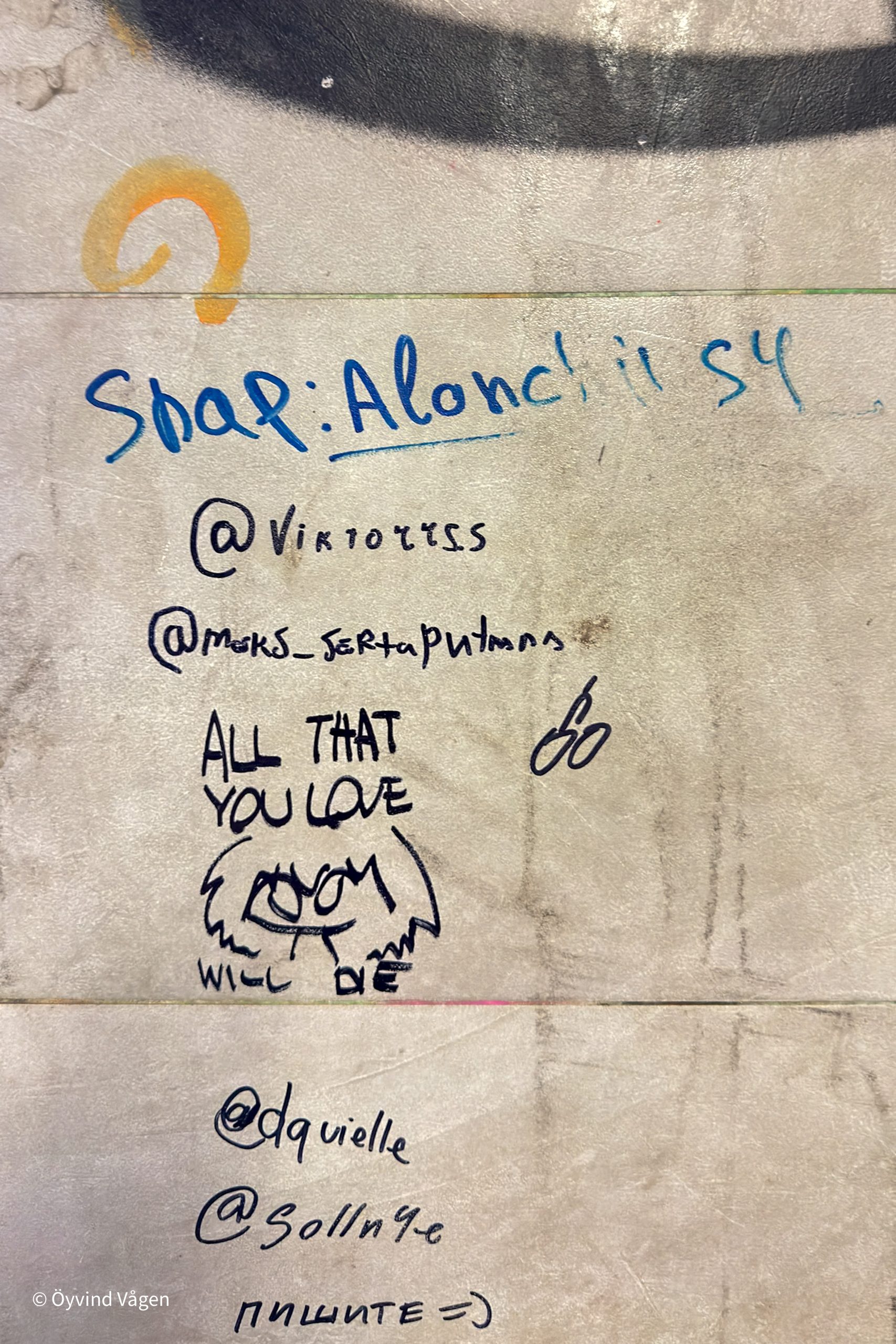
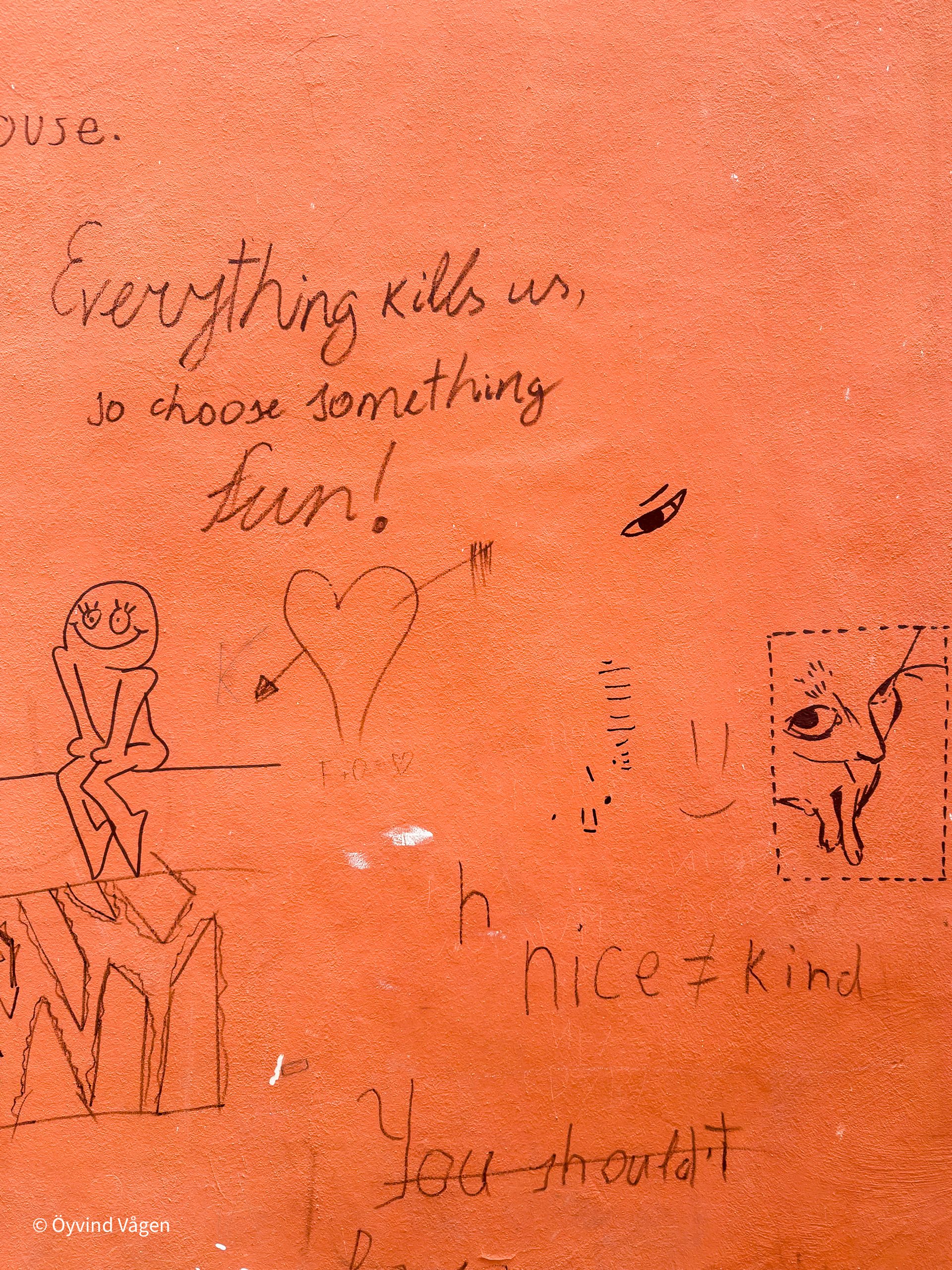
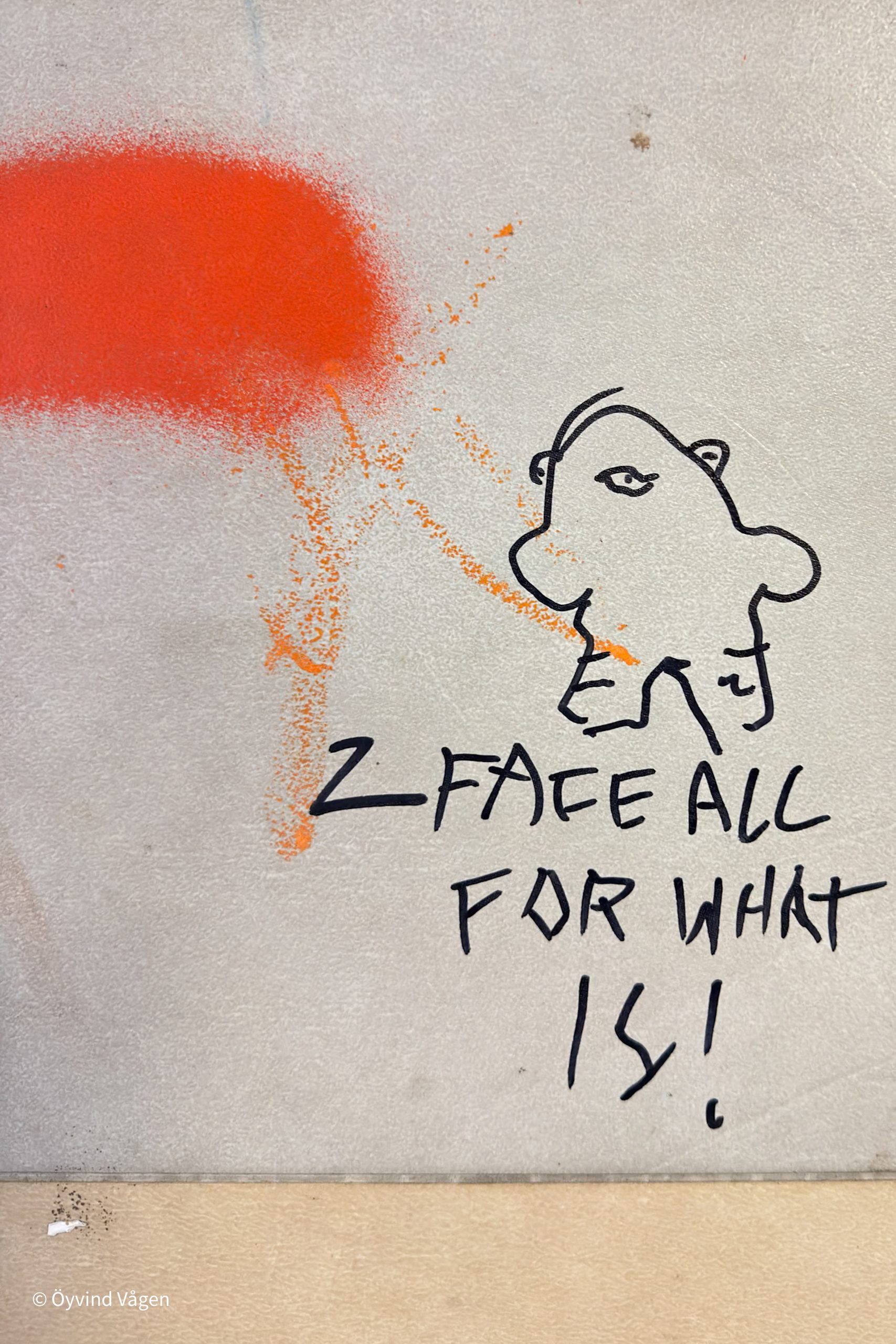
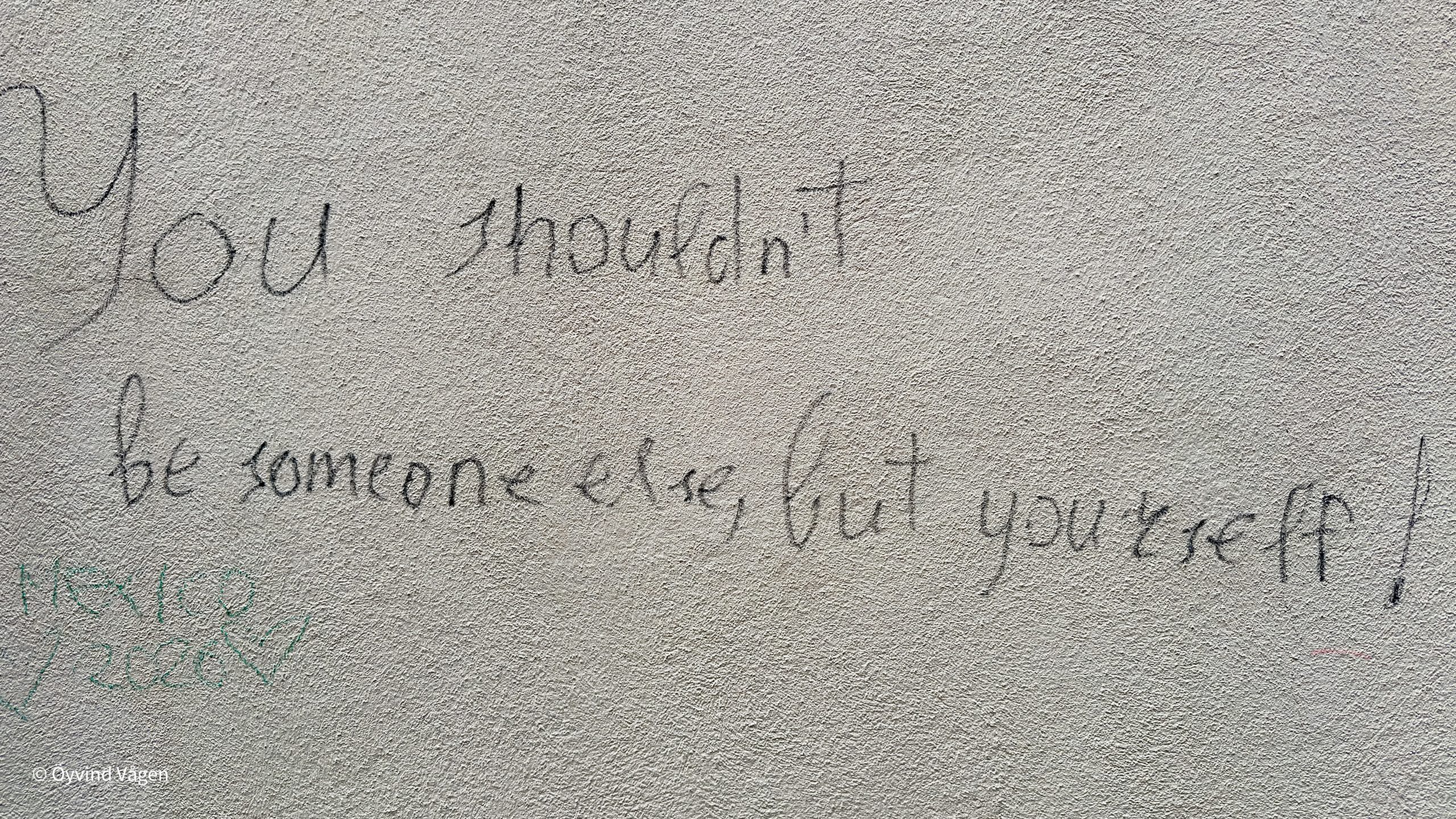
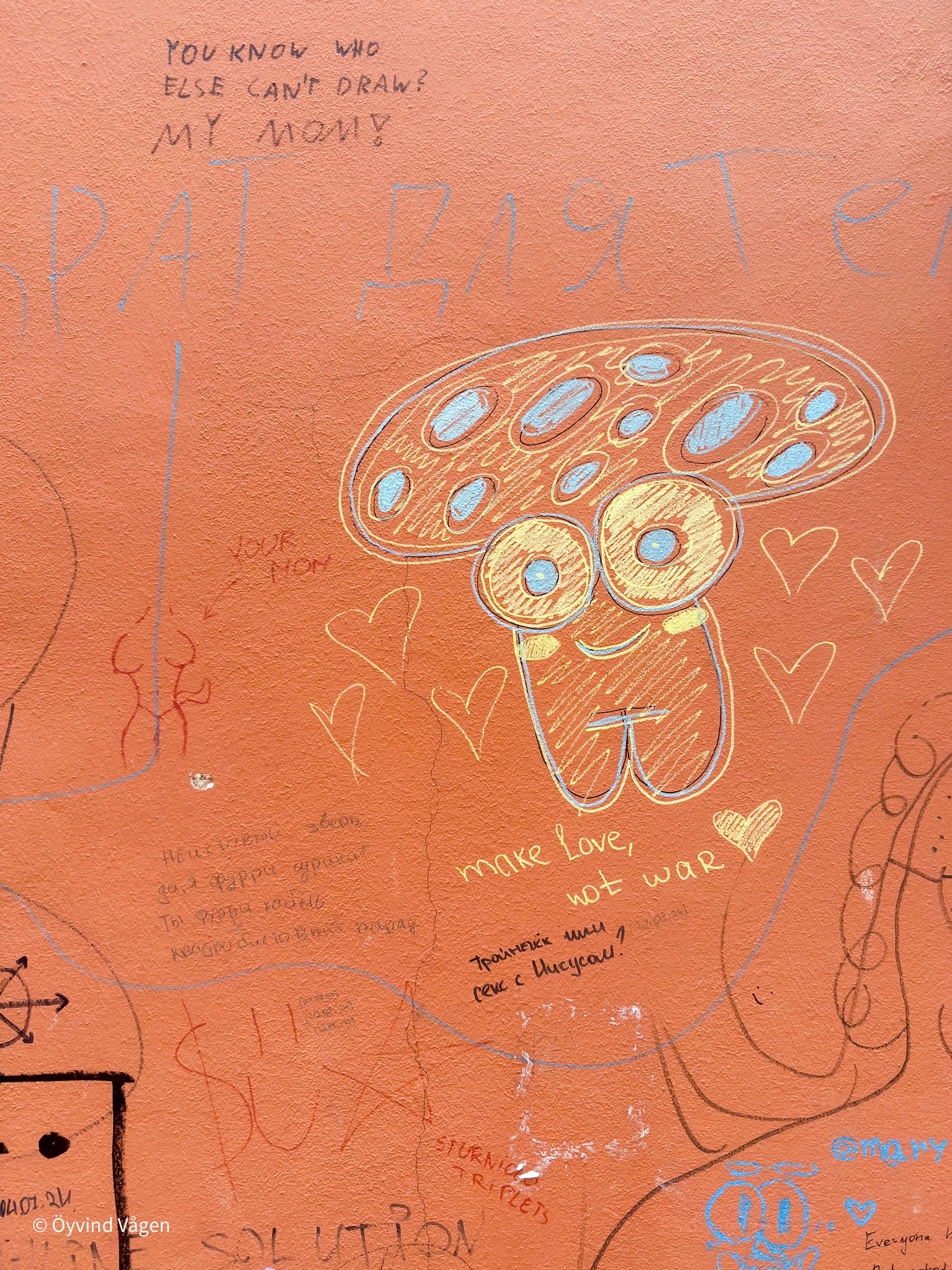
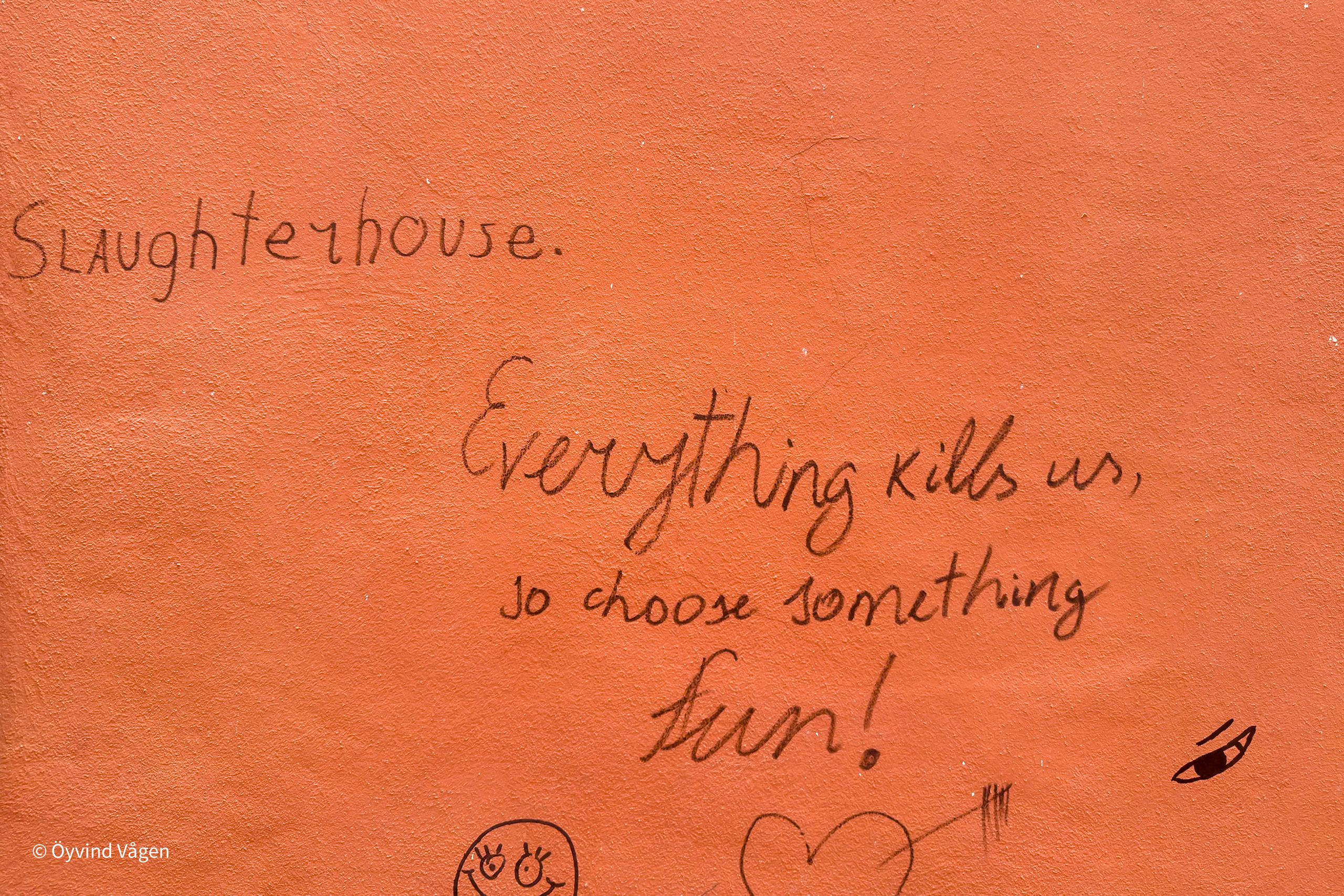
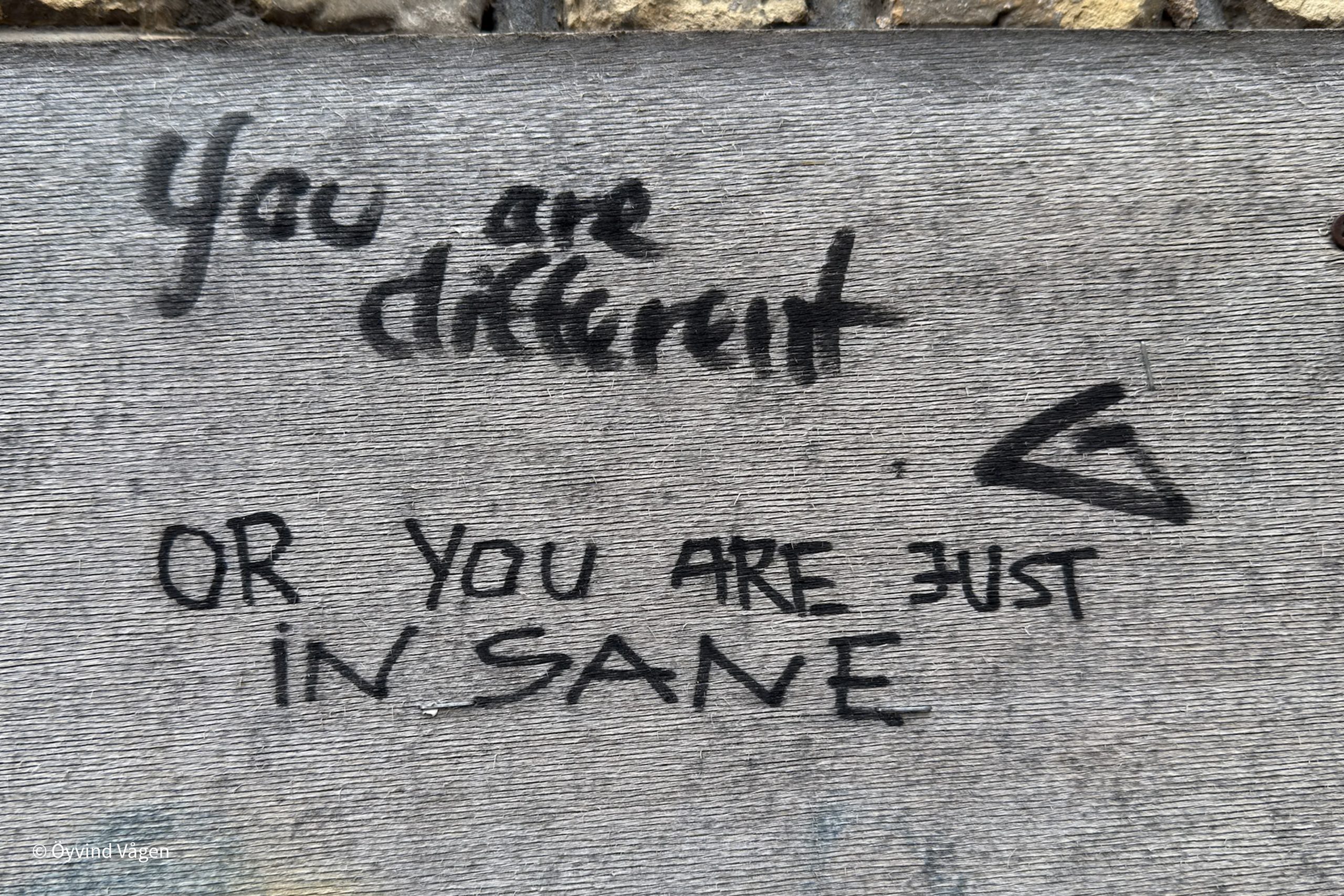
Yet politics is only one of many layers. Elsewhere, the walls offer absurd advice, existential resignation and improvised encouragement: “Everything kills us, so choose something fun”; “Make love, not war”; “You are different—or you are just insane.”
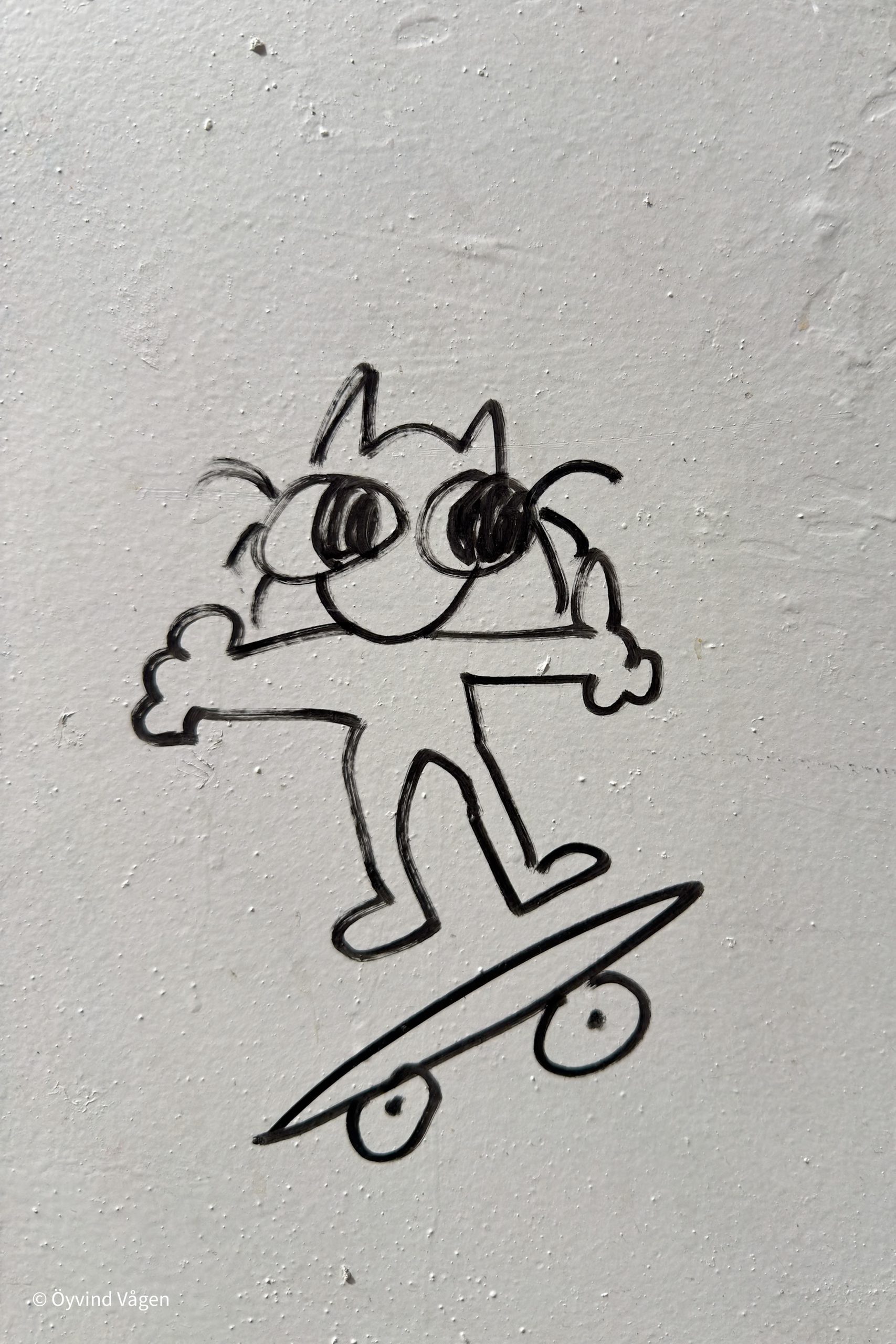
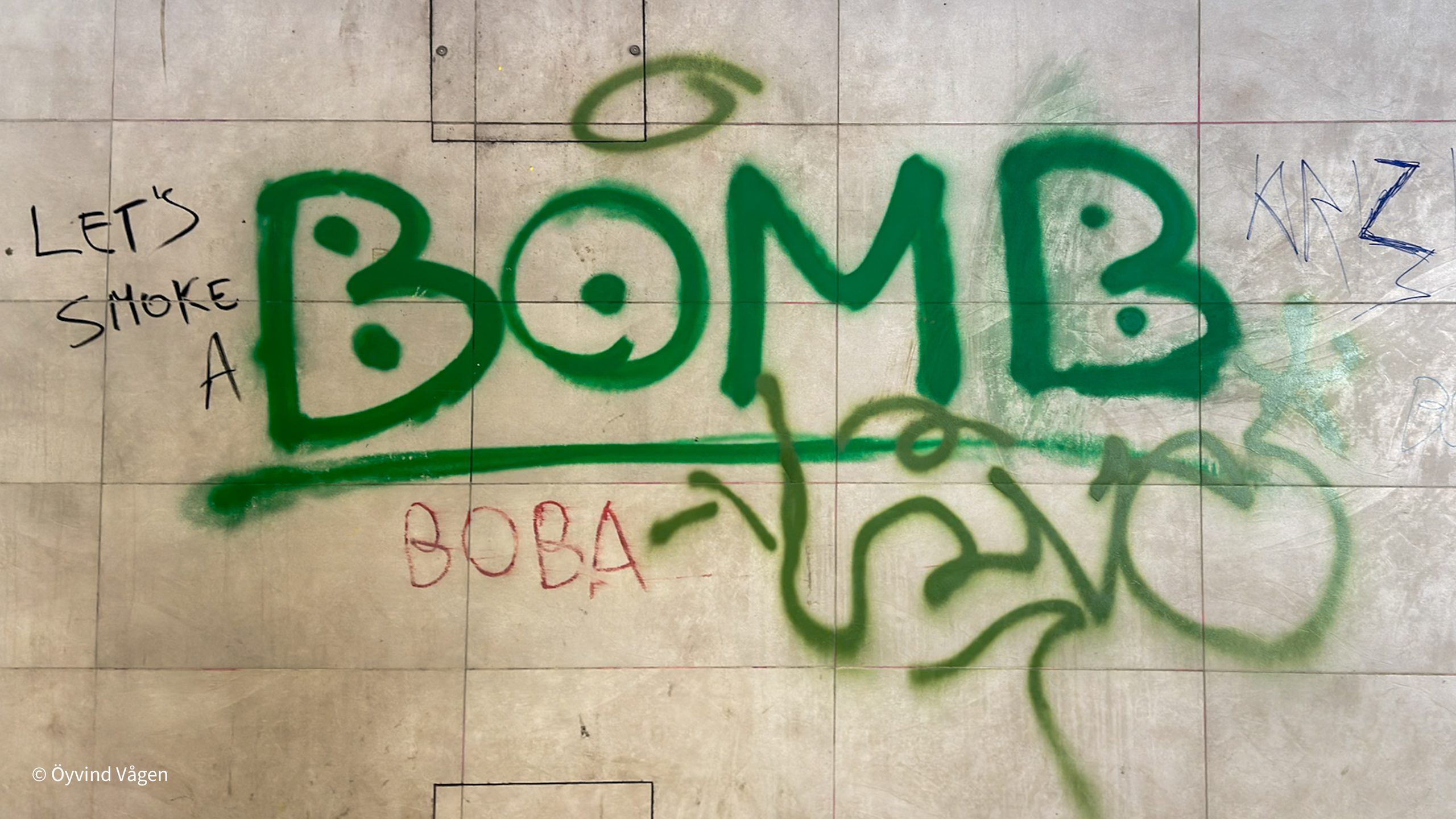
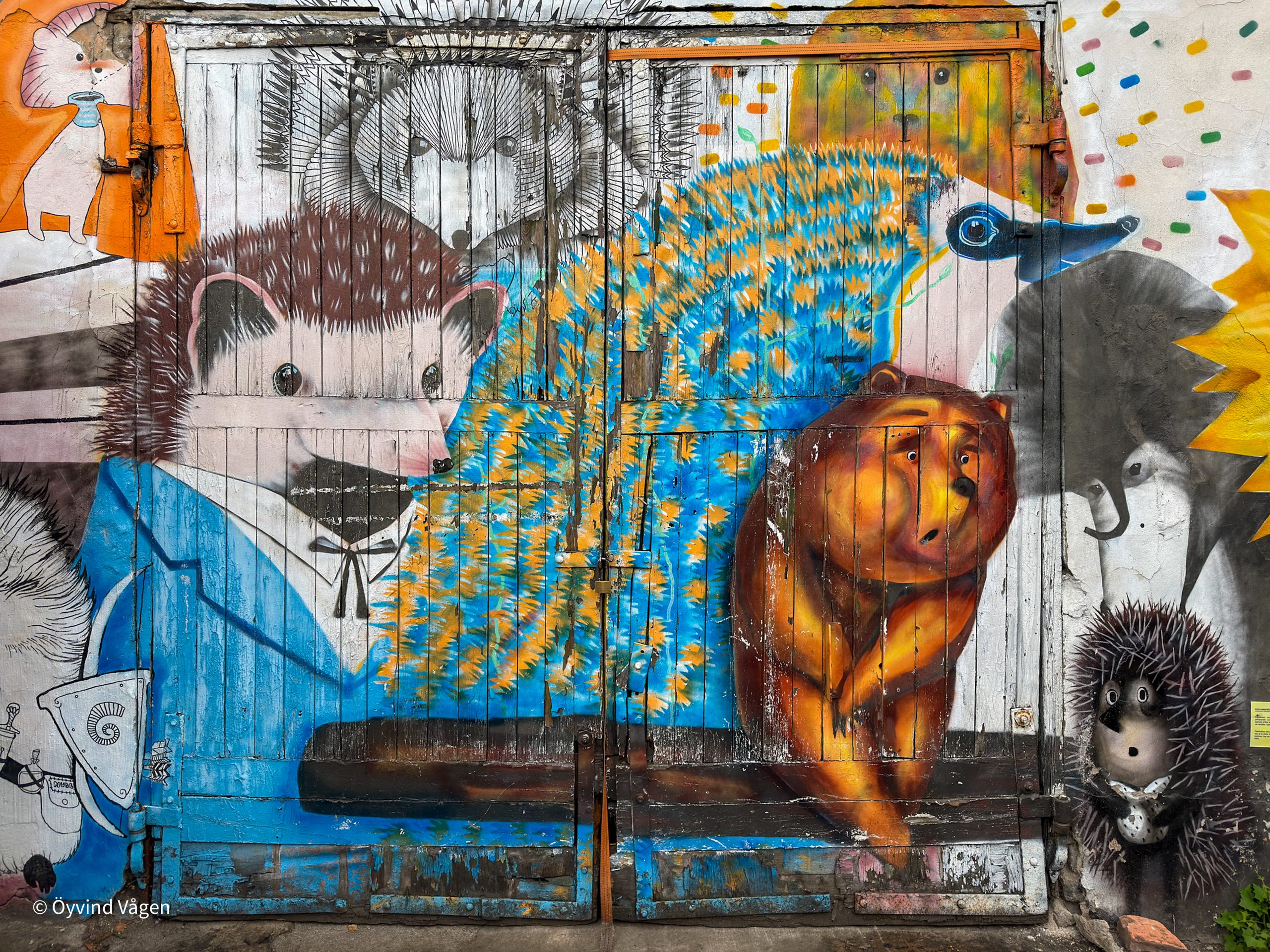
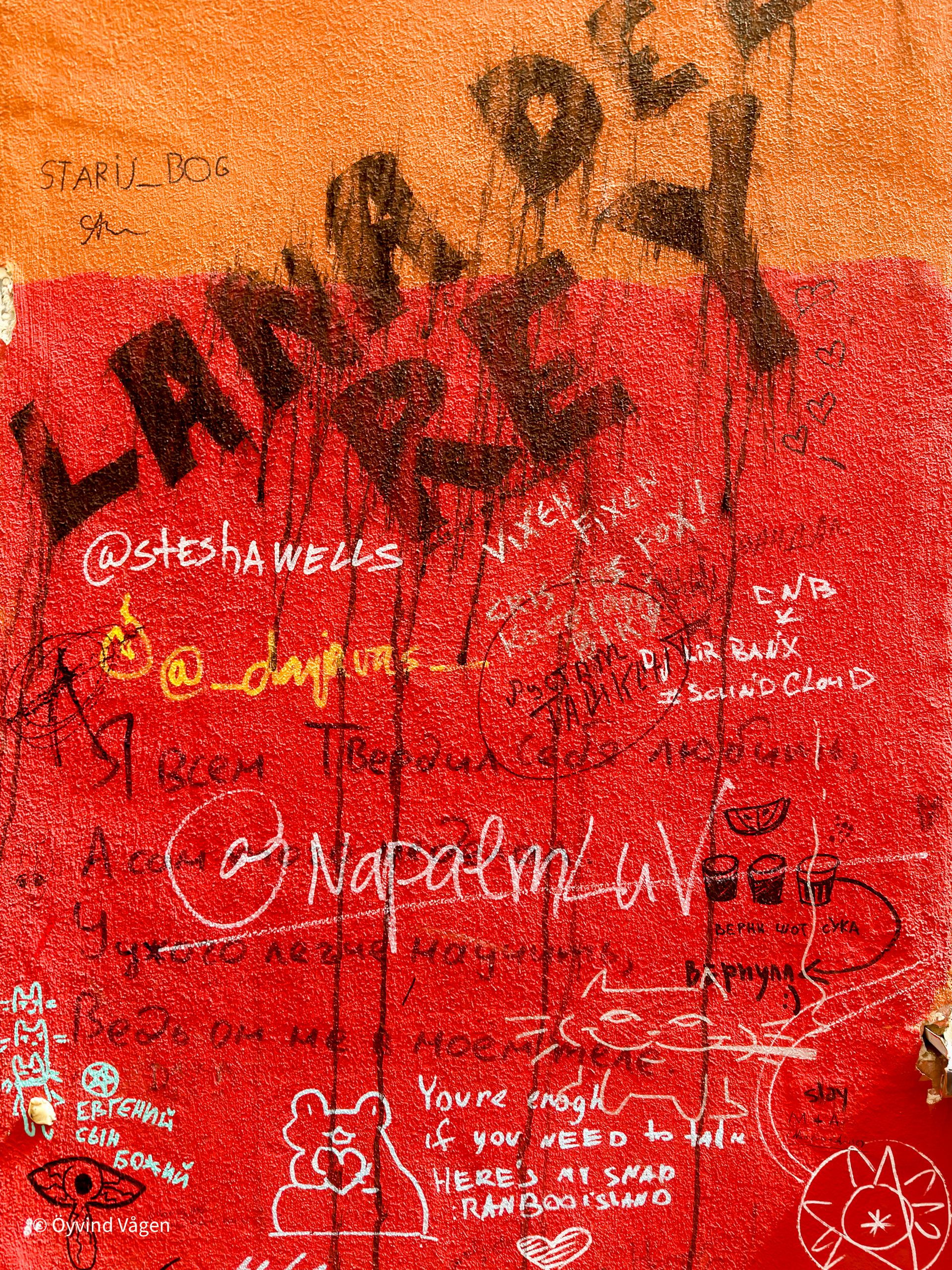
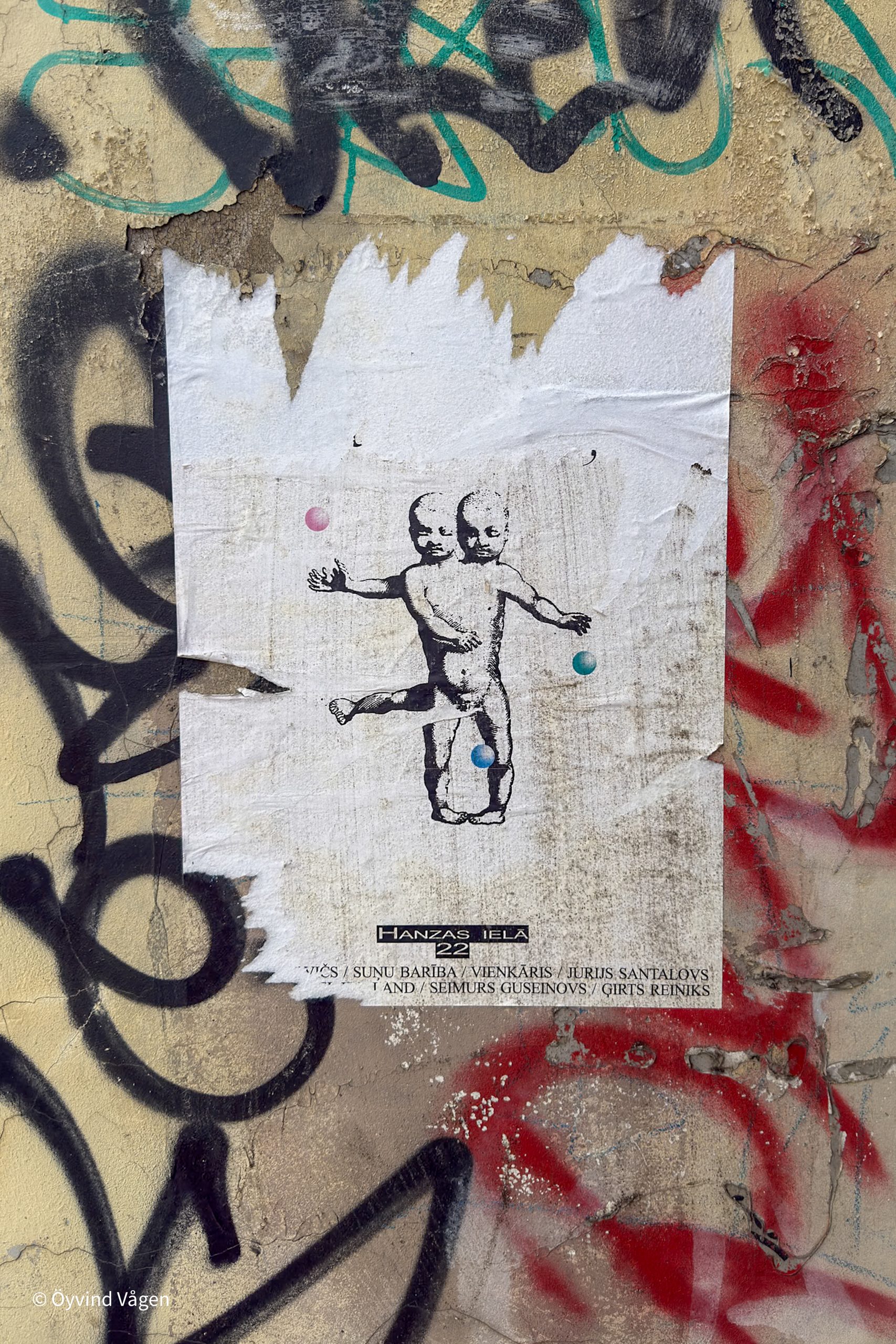
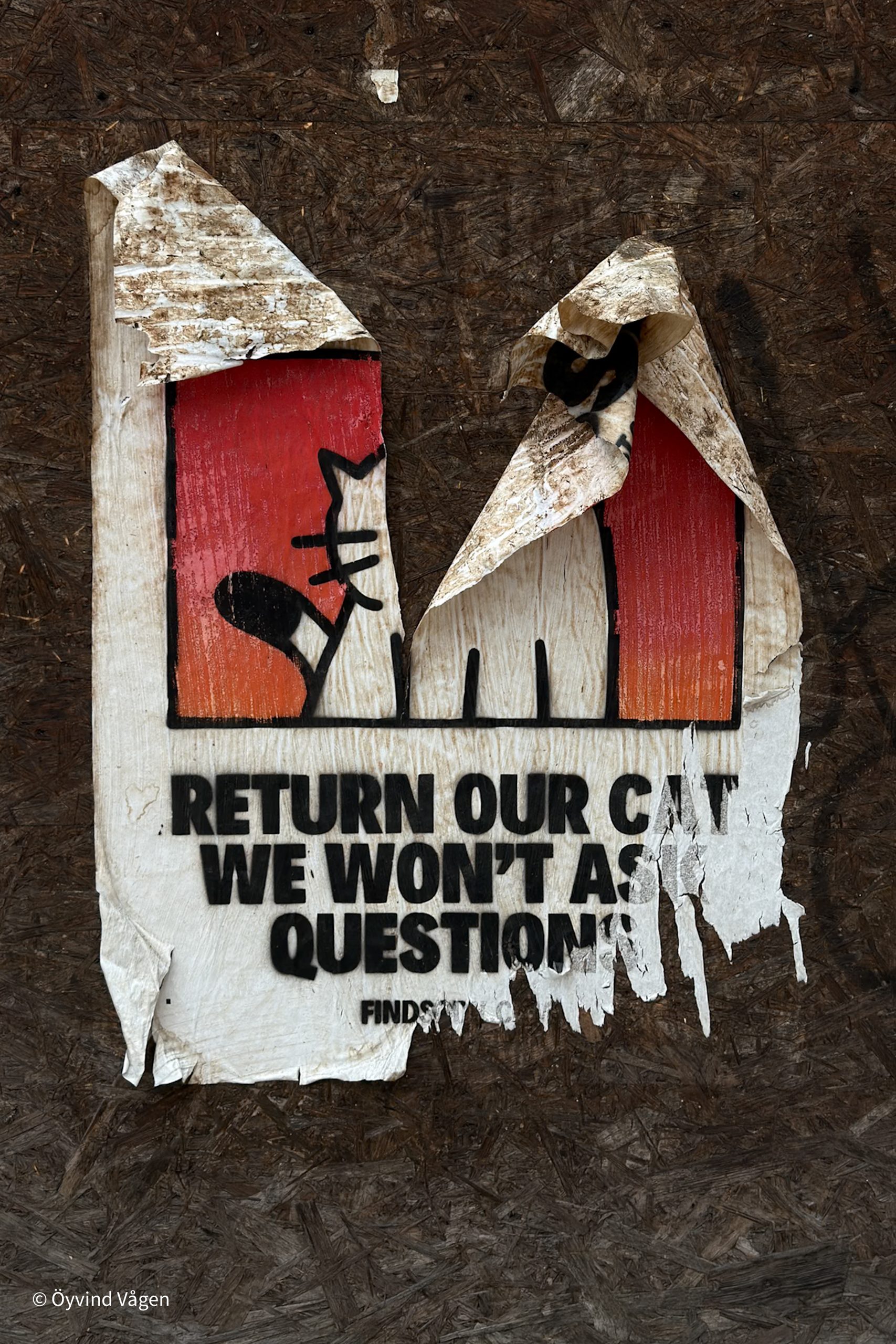
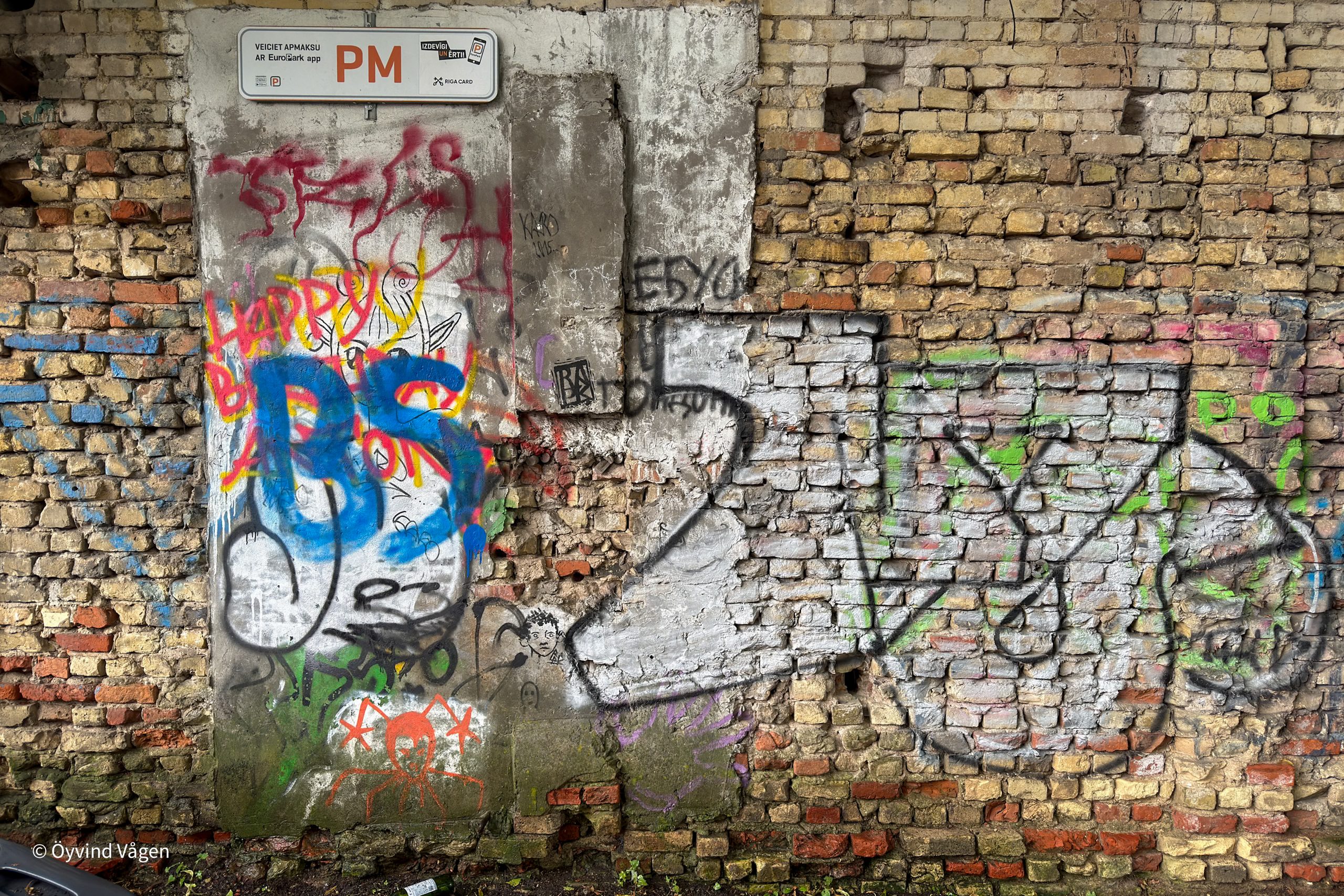
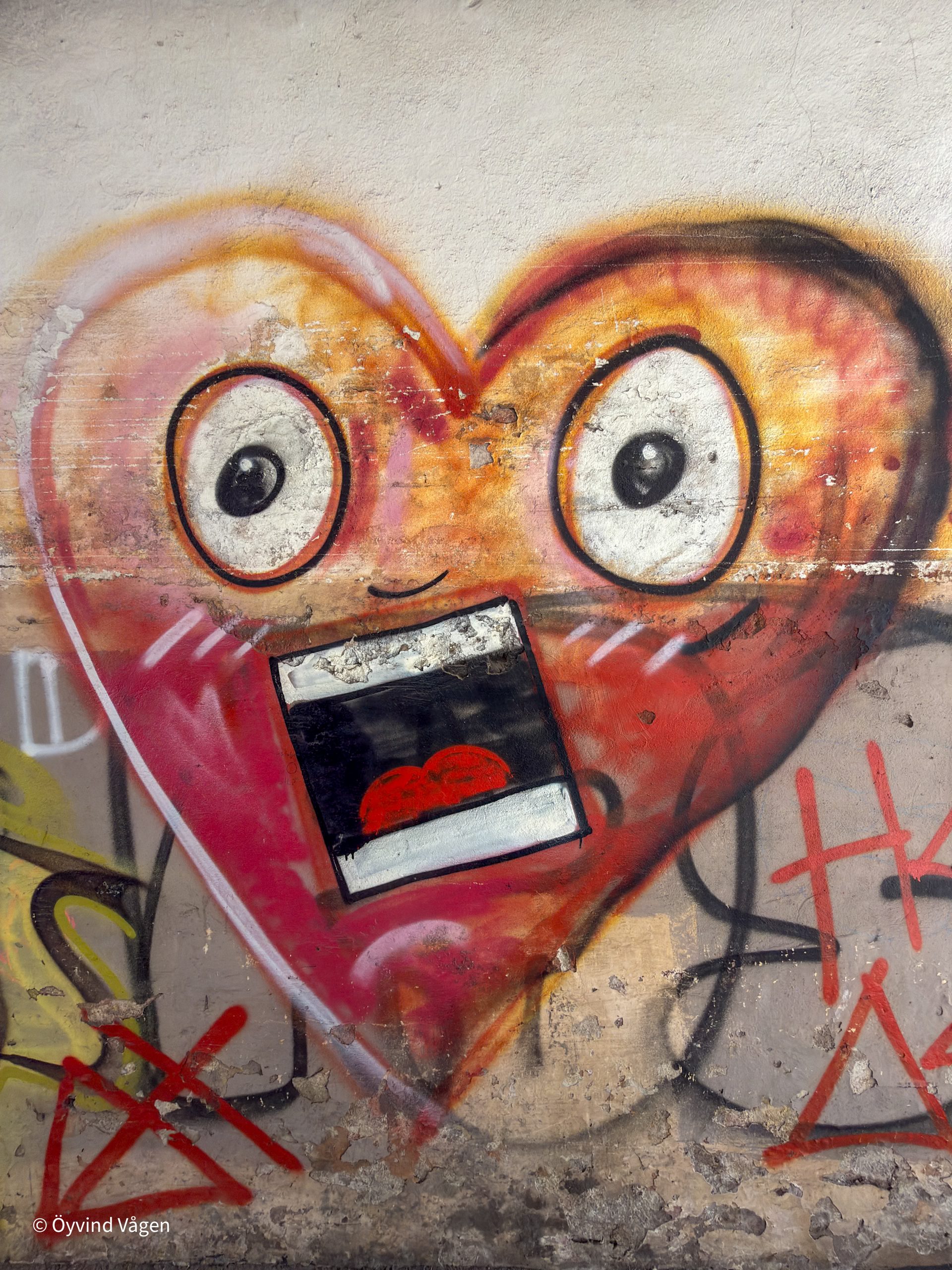
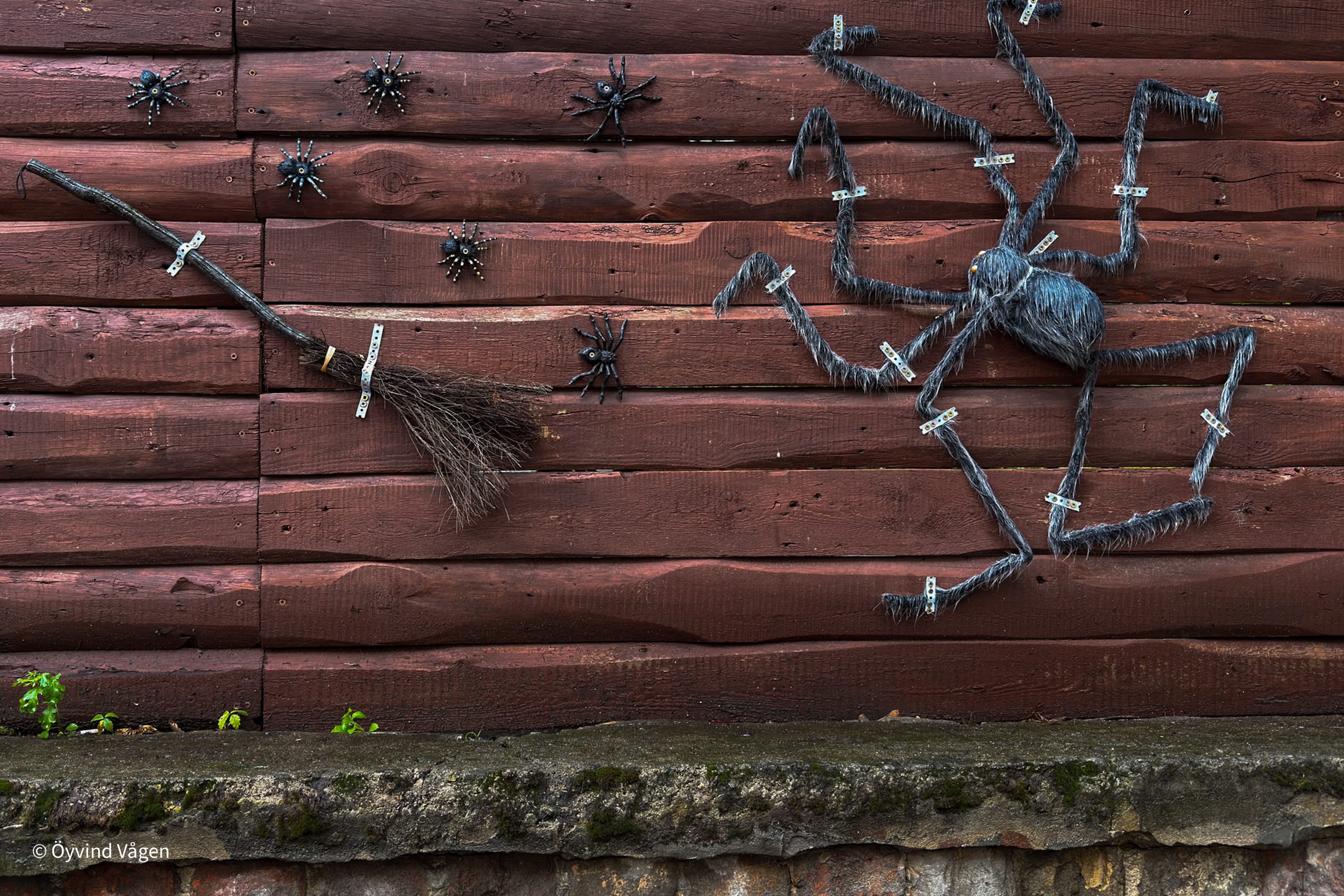
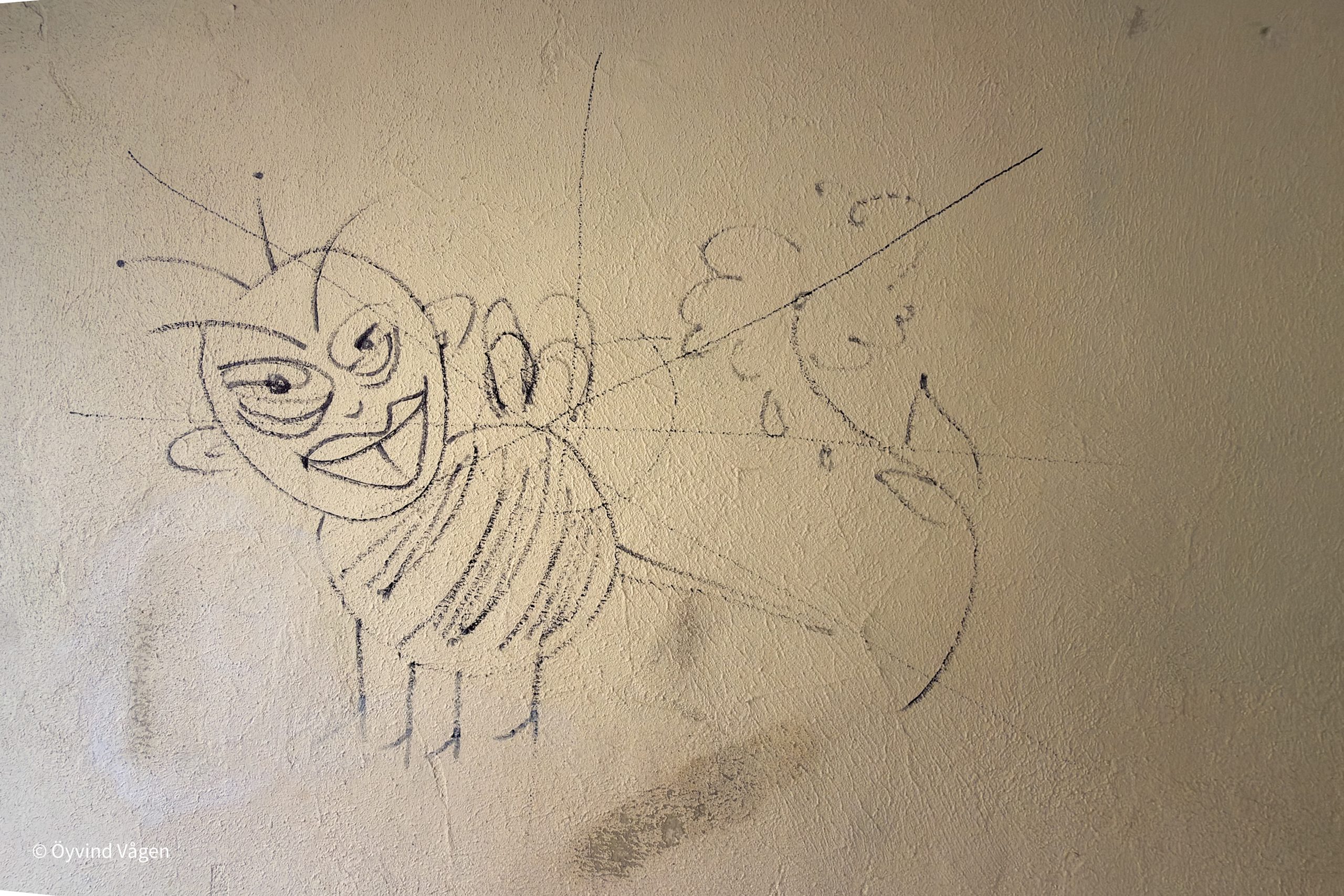
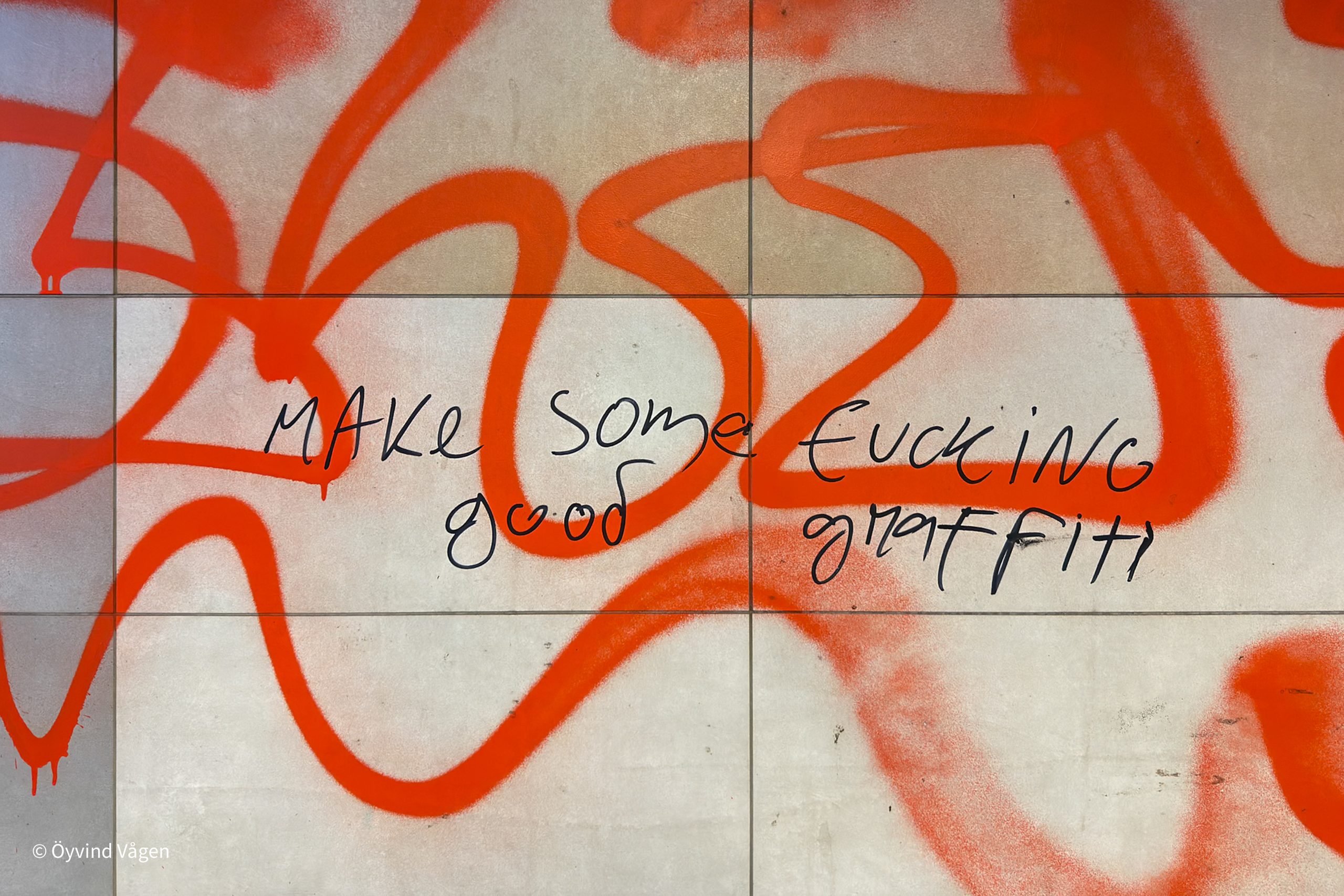
There are advertisements for bands, fragments of poems, cartoon animals, hearts, faces and messages intended for one unknown person. The solemn and the ridiculous coexist without hierarchy. A declaration of solidarity may be followed by a crude drawing; a philosophical aphorism may disappear beneath a tag. Even so, the walls keep changing.
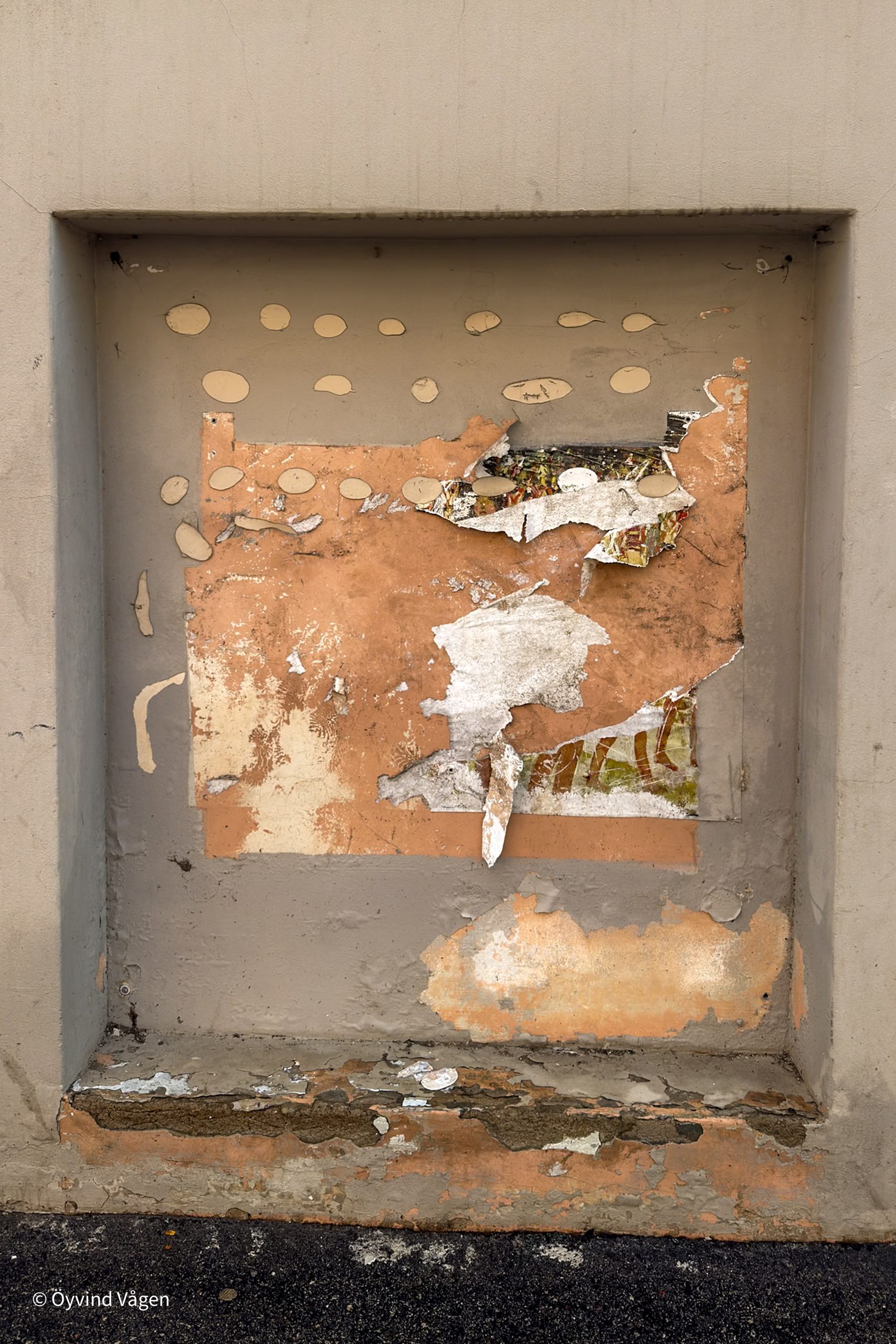
”The wall is therefore both medium and archive, preserving not a stable message but the evidence of repeated interventions. Each image captures only one moment in a process that will continue after the photographer has left.”
The Wall is Both Medium and Archive
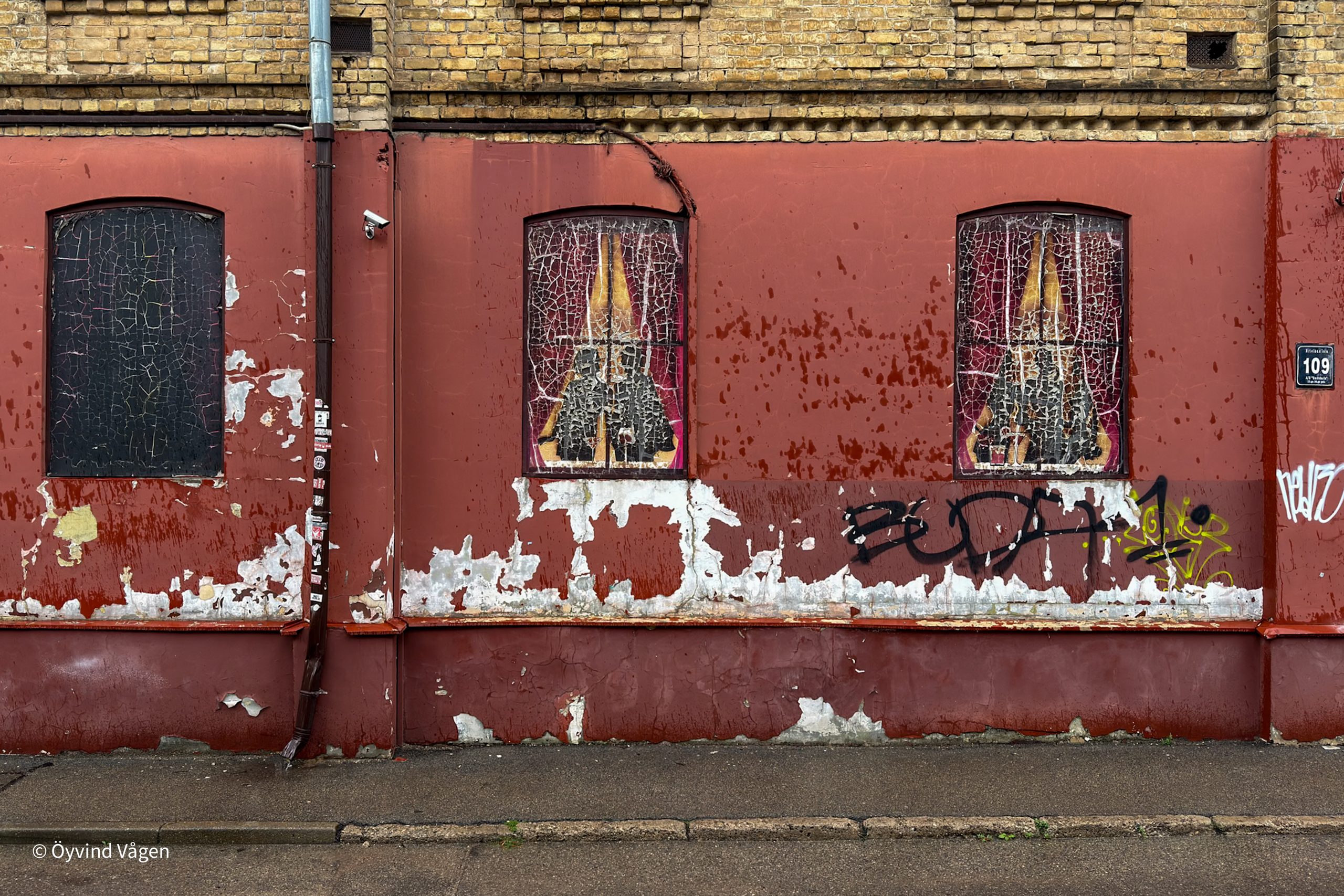
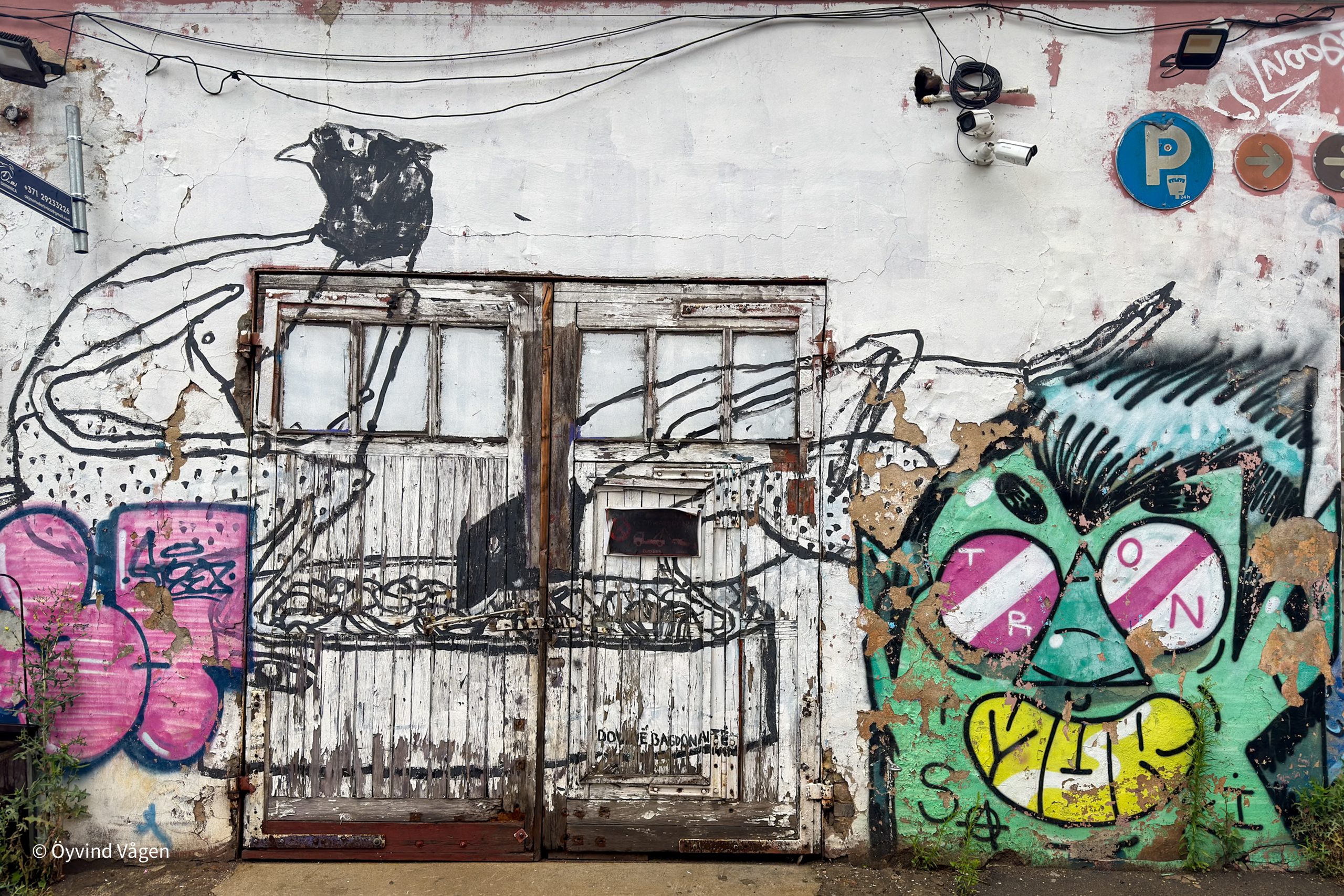
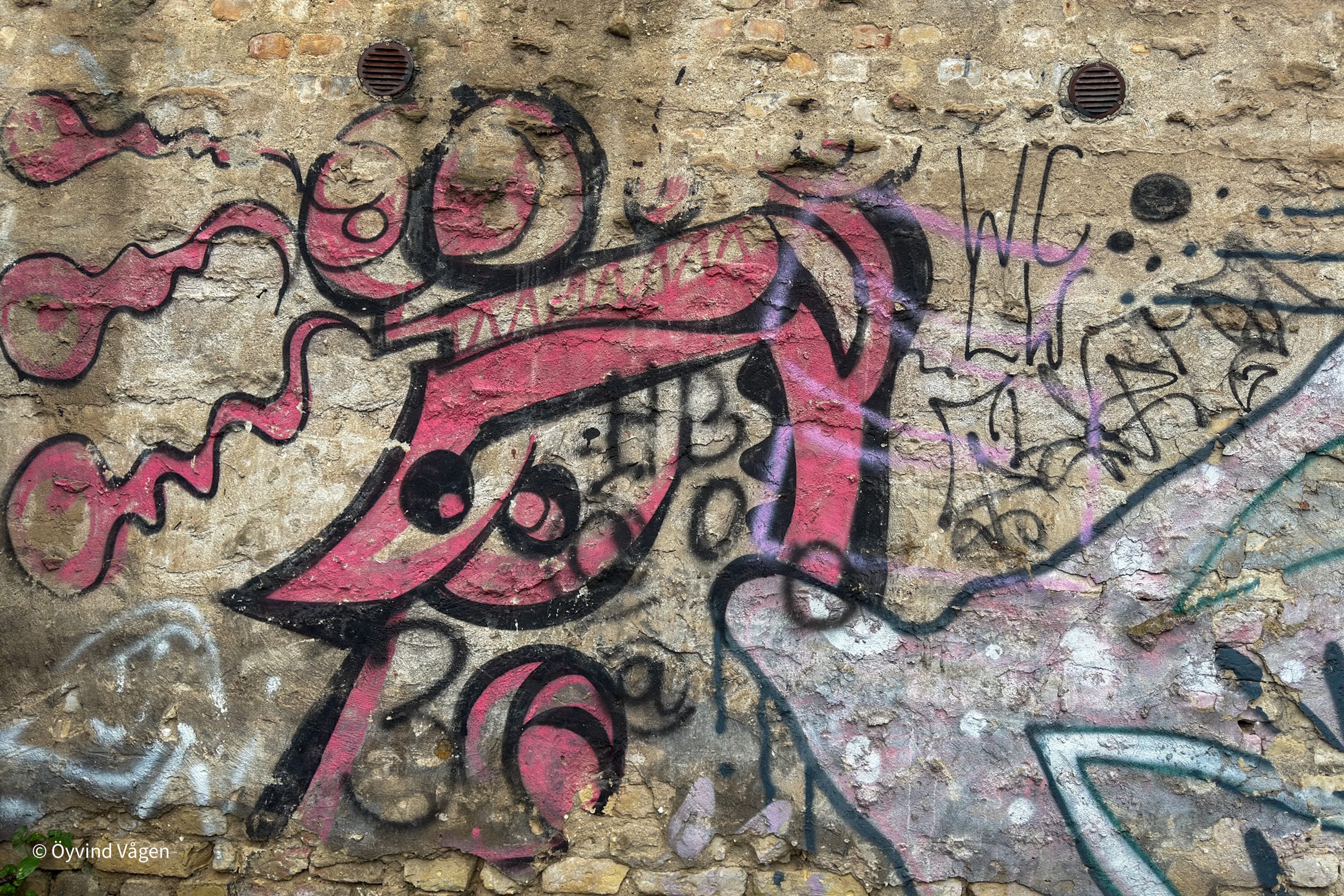
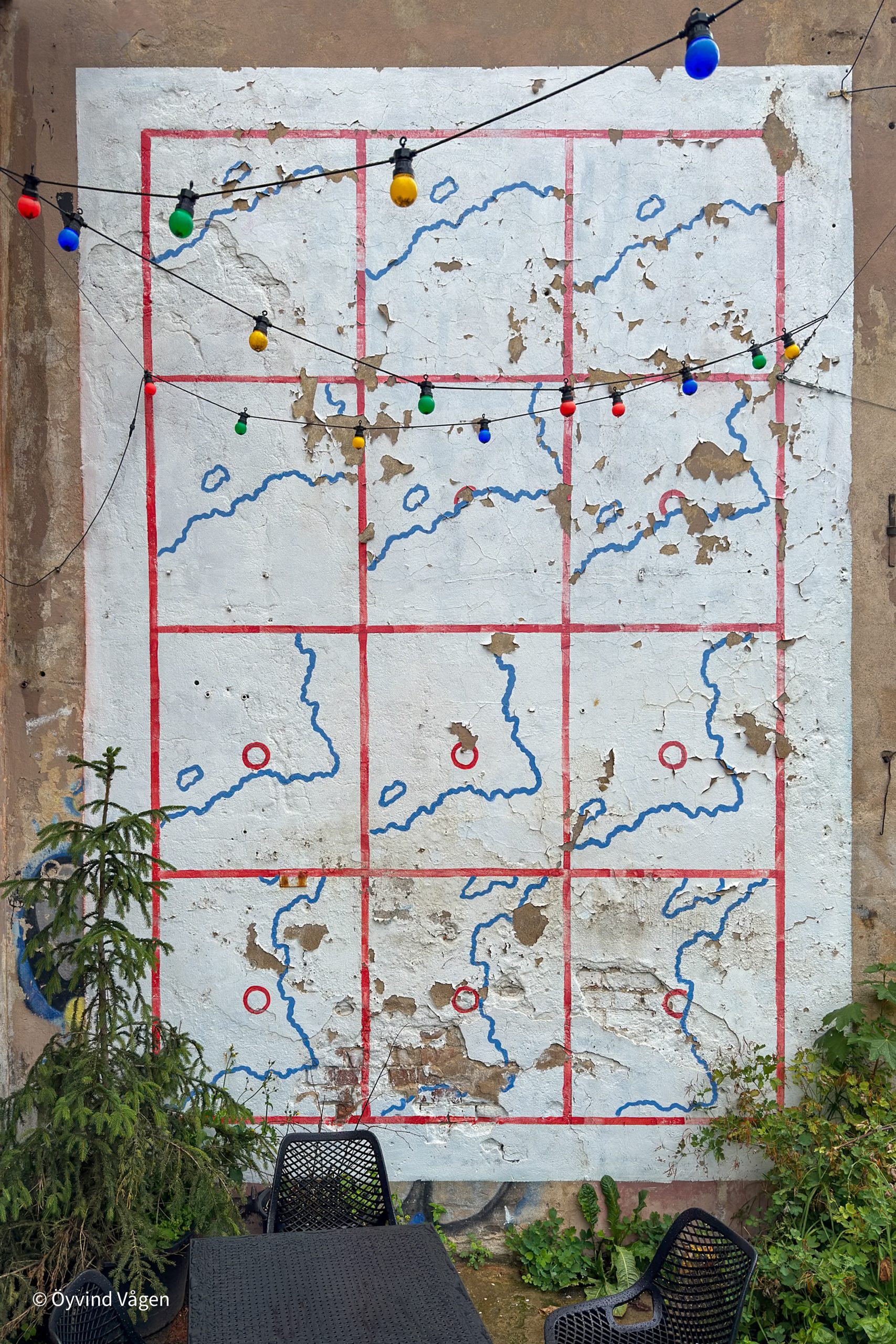
The photographs also record erosion, removal and overwriting. Torn posters leave behind ghostly rectangles; paint flakes from old façades; elaborate murals are interrupted by hurried signatures. The wall is therefore both medium and archive, preserving not a stable message but the evidence of repeated interventions. Each image captures only one moment in a process that will continue after the photographer has left. That process shapes the portrait of Riga that follows.
What emerges is a collective portrait of Riga assembled from unofficial voices. It is contradictory, untidy, and sometimes indecipherable, like the city itself — like any city — but that is precisely its value. These walls show that the city is being shaped by many different people trying, however briefly, to make themselves visible within it; they do not tell us what the city thinks, but what its inhabitants dwell upon.
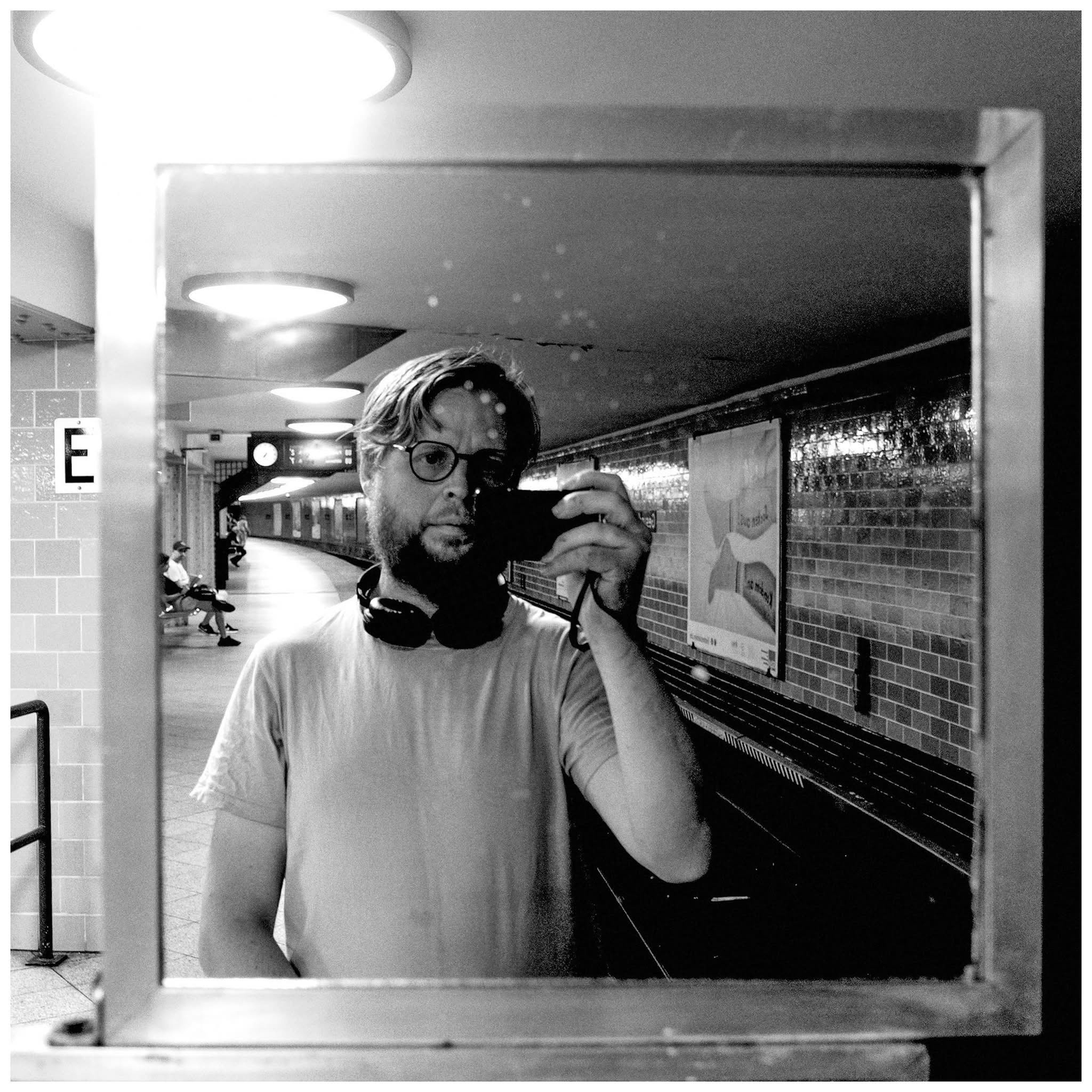
Öyvind Vågen is the editor of Critical Point and responsible for the publication. He is also a translator from English, Danish, German, and Norwegian into Swedish and English, a writer and a photographer. See a list of his translated books or a gallery with his photos. Read more articles by Öyvind Vågen here!
SAMTLIGA ARTIKLAR I CRITICAL POINT #2 2026 : Sara Shamloo Ekblad & Öyvind Vågen Critical Point: Ledare #13 – The tidskrift must go on I Sara Shamloo Ekblad & Öyvind Vågen Andreas Engström – en outtröttlig kraft i konstmusikens och kulturtidskrifternas värld I Petra Werner Staffan Westerberg och barnets magiska allvar I Mira Horovitz Barns rätt till kultur och det substantiella medborgarskapet i en orolig samtid I Öyvind Vågen It’s Written on the Wall I – Street Art the Riga Edition I Chiara Gelmini Welcome to Art Basel 2026? Inside and Outside the Fair I Sofia Thoresdotter Tankar om terapi eller boken om det jag aldrig skrev i journalen I Sofia Thoresdotter Bokutdrag: Julgransplundringen och den döde chefen I Carolina Hindsjö Bokutdrag: Solboken I Sara Shamloo Ekblad ”Gå till änglarna när du har det svårt” – intervju med konstnären Carolina Hindsjö I Sonia Engström Jarema i Kraków – en mångfacetterad polsk konstnär på tvärs mot konventionerna och genrekraven I Chiara Gelmini House of Nisaba: New Stories of Painting I Freke Räihä Vem tjänar på all denna AI-stöld? I Petra Werner När Filmarkivet släcks – Petra Werner om en digital kulturskatt som försvinner I Petra Werner När Stanley Kubrick låter musiken öppna avgrunden – filmmusik, övermänniska och det kosmiskt okända I Petra Werner När musiken tänker hos Woody Allen – Manhattan, filmmusik, nutidsmänniska och kollektivt minne I Sam Carlquist Nyskrivet: De fyra hästarna I Mickaela Persson Nyskrivet: Sapfisk strof till Lady Kait I Mickaela Persson Sex frågor om poesi till Mickaela Persson I Emil Erdtman Nyskrivet: Allt försvinner utom det förflutna I Emil Erdtman Sex frågor om poesi till Emil Erdtman I Öyvind Vågen Nyskrivet: Den store rorsmannen och årtullarna I Öyvind Vågen Sex frågor om poesi till Öyvind Vågen I Simon Carlfjord Mellan Stenbordet och Kvaldalen I Simon Carlfjord Bubblor och skum – senmodernitetens symboliska koherens I Sonia Engström Historien som slagfält: Polen, Ukraina och UPA:s långa skugga




13 svar på ”It’s Written on the Wall I – Street Art the Riga Edition”